Does your dog follow you everywhere, hoping for a tasty bite from your plate? If you’re tired of constant begging at mealtime, you’re not alone.
Dog begging can be frustrating and hard to ignore, but the good news is—you can teach your furry friend to stop. You’ll discover simple, effective steps to end begging behavior for good. Keep reading, and you’ll soon enjoy peaceful meals without your dog pleading for food every few seconds.
Why Dogs Beg
Dogs beg because they want something. It is a natural behavior that they learn quickly. They use begging to get attention or food from their owners. Understanding why dogs beg helps stop this habit effectively.
Common Causes
Hunger is a main reason dogs beg. They feel hungry and ask for food. Sometimes, dogs beg because they see others eating. They want to join in and share the food.
Another cause is boredom. Dogs may beg if they feel lonely or bored. Begging becomes a way to get attention from people around them. Some dogs beg because they were rewarded before. If they got food once, they keep trying.
Behavioral Triggers
Dogs learn to beg by watching people’s reactions. Smiling or giving food teaches dogs to beg more. The sound of food packets or cooking smells can trigger begging. Certain places like the dining table make dogs beg often.
Begging can also be a habit from puppyhood. Puppies beg to get treats or playtime. This behavior can continue into adulthood if not stopped early. Dogs also beg due to stress or anxiety. They seek comfort from their owners through begging.
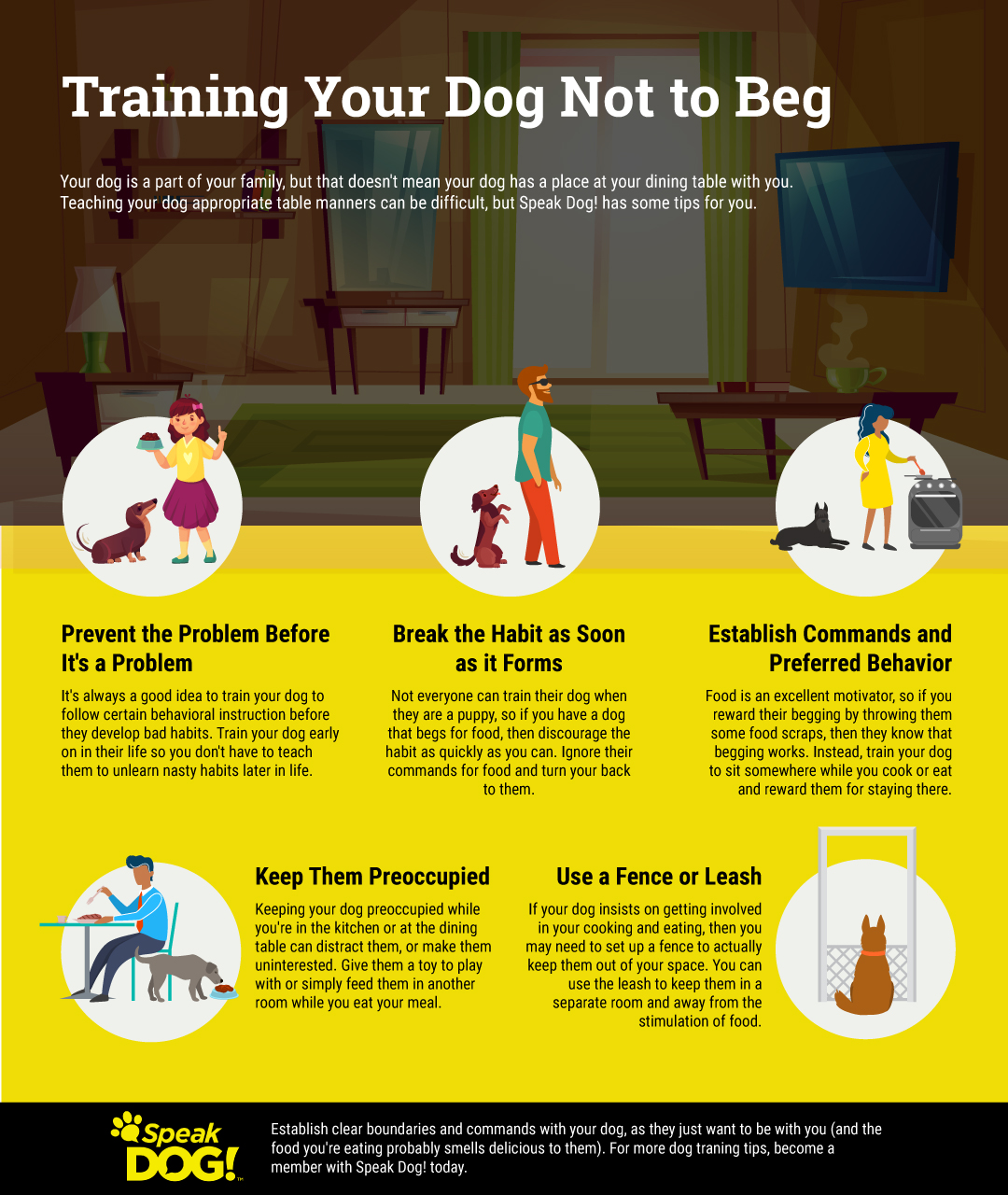
Credit: speakdog.com
Setting Clear Boundaries
Setting clear boundaries is key to stop your dog from begging. Dogs need to know what is allowed and what is not. Boundaries help your dog feel safe and understand your expectations. Without clear limits, begging can become a habit hard to break.
Start by deciding rules about food and table behavior. Be firm and patient. Consistency will help your dog learn faster. This section explains how to set clear boundaries through consistent rules and family involvement.
Consistent Rules
Set simple, clear rules about begging. For example, no food at the table or in the kitchen. Always follow these rules every meal time. Do not give your dog food from the table, even as a treat. Mixed signals confuse your dog.
Use the same commands each time. Teach your dog to stay in a specific spot during meals. Reward good behavior with praise or a treat after eating. Consistency helps your dog understand what you want.
Family Involvement
Everyone in the family must follow the same rules. Different rules from family members cause confusion. Talk about the rules with everyone. Make sure children understand not to share food with the dog.
Ask family members to support training and avoid giving in to begging. Consistent actions from all sides create a strong message. Teamwork helps your dog learn faster and stop begging for good.
Training Techniques
Training your dog to stop begging needs patience and clear methods. Dogs learn best through simple, consistent actions. These training techniques help your dog understand what you expect. They also build good habits for both of you. Follow these steps to guide your dog away from begging.
Positive Reinforcement
Reward your dog for good behavior to encourage it. Use treats, praise, or petting to show approval. Give rewards only when your dog stays calm or sits quietly. This teaches your dog that good behavior brings rewards. Avoid giving treats when your dog begs. This stops the habit from growing stronger.
Ignoring Begging
Ignore your dog completely when it begs. Do not look, talk, or touch your dog during begging. This takes away attention, which dogs often want. Consistent ignoring helps your dog learn begging does not work. It may take time, but your dog will stop trying. Everyone in the family must ignore the begging too.
Teaching Alternative Behaviors
Give your dog a different task instead of begging. Teach your dog to go to a spot or lie down. Use commands like “place” or “stay” to guide your dog. Reward your dog for following these commands calmly. This shifts focus from begging to positive actions. Alternative behaviors keep your dog busy and happy.

Credit: www.ovrs.com
Managing Meal Times
Managing meal times plays a big role in stopping your dog from begging. Dogs learn habits quickly. When meal times are clear and consistent, dogs feel secure. They know when to expect food. This reduces their need to ask for more.
Scheduled Feeding
Feed your dog at the same times every day. This builds a routine. Dogs thrive on routine. It helps them understand when they will eat next. Avoid free feeding or leaving food out all day. Scheduled feeding helps control begging. It also supports your dog’s health and weight.
Avoiding Table Scraps
Do not give your dog food from your plate. Table scraps teach dogs to beg at the table. This makes begging worse. Instead, feed your dog in their own space. Give treats only during training or special times. This helps your dog learn good behavior during meal times.
Using Tools And Aids
Using tools and aids can help stop your dog from begging. They guide your dog’s behavior and create clear boundaries. These tools support your training efforts and make your home environment easier to manage. Simple devices can reduce begging without harshness.
Leashes And Barriers
Leashes keep your dog close and under control during meals. You can gently pull them away from the table. Barriers like baby gates or playpens block your dog’s access to dining areas. These physical limits help your dog learn that begging is not allowed near food. Using barriers gives your dog a safe space away from temptation.
Interactive Toys
Interactive toys keep your dog busy while you eat. Puzzle feeders and treat-dispensing toys provide mental stimulation. These toys distract your dog and reduce their focus on your food. Keeping your dog entertained helps stop the habit of begging. It also makes mealtime less stressful for everyone.
Addressing Anxiety And Attention Seeking
Dogs often beg because they feel anxious or want attention. They may not get enough mental or physical activity. This makes them restless and more likely to beg. Understanding their needs helps reduce begging behavior. Focus on calming their anxiety and giving them proper attention.
Mental Stimulation
Keeping your dog’s mind busy lowers anxiety. Use puzzle toys or treat-dispensing toys. These challenge your dog and keep them focused. Training sessions also provide mental work. Teach new commands or tricks in short sessions. A tired mind is less likely to beg for food.
Exercise Benefits
Exercise helps reduce anxiety and excess energy. Take your dog for daily walks or runs. Play fetch or other active games outside. Physical activity makes dogs feel calmer and happier. A well-exercised dog is less demanding for attention. Regular exercise also improves their overall health.
When To Seek Professional Help
Stopping your dog from begging can be tricky. Sometimes, home training is enough. Other times, professional help makes a big difference. Knowing when to seek help is key to solving the problem fast. This section explains who can help and why.
Behavioral Experts
Behavioral experts study dog habits and training. They can find the root cause of begging. Some dogs beg due to anxiety or attention needs. Experts create a plan to change these behaviors. They teach owners how to be consistent. This support often speeds up learning. If your dog’s begging does not stop, a behavioral expert can help.
Veterinary Advice
Sometimes begging links to health problems. Dogs might beg more if they feel hungry or sick. A vet can check your dog’s health. They rule out medical issues causing begging. Vets also advise on diet and nutrition. Proper feeding can reduce begging urges. Visit a vet if your dog’s begging is sudden or strange.

Credit: www.akc.org
FAQs For How To Stop Dog Begging
How Can I Train My Dog To Stop Begging?
Consistently ignore begging behavior and avoid feeding from the table. Use commands like “sit” and reward with treats only during meal times to reinforce good manners.
Why Does My Dog Beg For Food At The Table?
Dogs beg because they seek attention and hope for food rewards. Begging is often reinforced by past feeding habits or lack of proper training.
What Are Effective Alternatives To Stop Dog Begging?
Provide your dog with a designated spot during meals. Use interactive toys or chew treats to distract them and reward calm behavior away from the table.
Can Ignoring My Dog Completely Stop Begging?
Yes, ignoring begging reduces the behavior over time. Consistency is key; never give in, as occasional rewards encourage persistent begging.
Conclusion
Stopping dog begging takes patience and clear rules. Consistency helps your dog learn what is okay. Give attention and treats only at meal times. Avoid feeding from the table to break habits. Praise good behavior to encourage your dog. Over time, your dog will stop begging.
A calm and firm approach works best. Keep training short and positive every day. Your efforts will lead to a happier mealtime for all.