Costco dog food can be a good choice for many dogs in the United States, especially when you select a formula that matches your dog’s age, size, and health needs. Kirkland Signature dog food often offers solid nutrition at a lower cost than many national brands.
Still, a low price does not prove that a food is right for every dog. The best choice depends on the food’s nutritional adequacy statement, ingredients, calorie level, quality controls, and your dog’s response to it. Dogs with allergies, kidney disease, pancreatitis, or other medical needs may require a veterinary diet instead.
This guide explains what Costco dog food contains, how it compares with other options, which formulas may fit different dogs, and when you should choose something else.
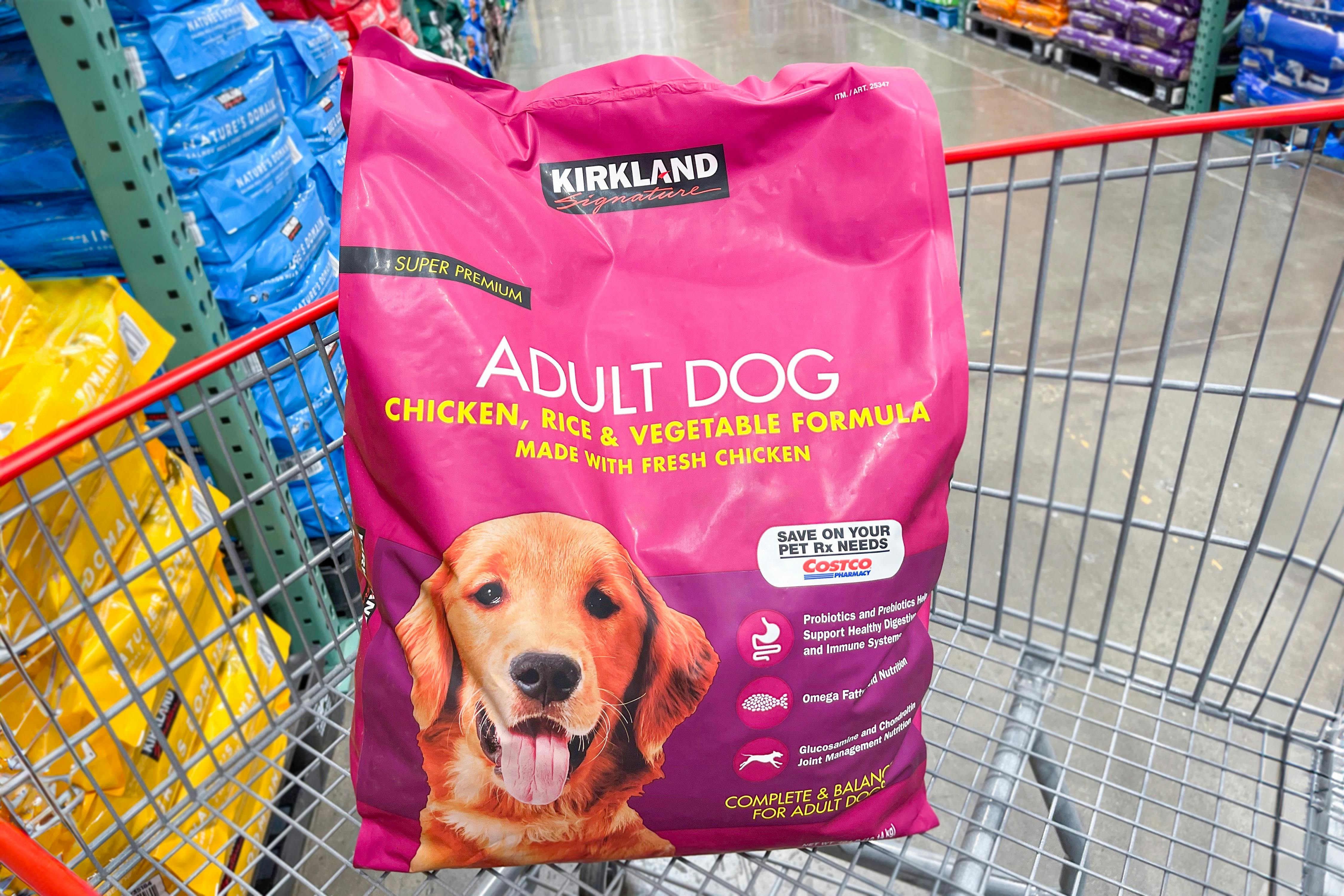
What Is Costco Dog Food?
Costco dog food is sold under the Kirkland Signature brand. Costco offers dry kibble, canned food, treats, and some specialty formulas for puppies, adult dogs, large breeds, and dogs with weight concerns.
Kirkland Signature dog food is made for Costco by outside pet-food manufacturers. The exact manufacturer, recipe, and ingredient sources can vary by product and may change over time. Because of that, assess the label on the specific bag or can you plan to buy.
A key point is that “Costco dog food” is not one recipe. It is a product line with different formulas. For example, one recipe may contain grains, while another may be grain-free. One may suit an adult dog, while another is made for puppies or large breeds.
The main label terms to understand
Before buying, check these parts of the package:
- Life stage: Look for food made for puppies, adults, seniors, or all life stages.
- Nutritional adequacy statement: This tells you whether the food meets an established nutrient profile or passed a feeding trial.
- Calorie content: This is usually listed as kilocalories per cup or can.
- Guaranteed analysis: This lists minimum crude protein and fat plus maximum crude fiber and moisture.
- Feeding directions: These are starting points, not exact prescriptions.
- Lot number and expiration date: Keep these in case of a recall or quality concern.
The Association of American Feed Control Officials, or AAFCO, sets model nutrient profiles used by U.S. states to regulate pet food. AAFCO does not approve or endorse individual brands. A label that says a food is “complete and balanced” for adult maintenance means it is intended to provide the required nutrients for that life stage when fed as directed.
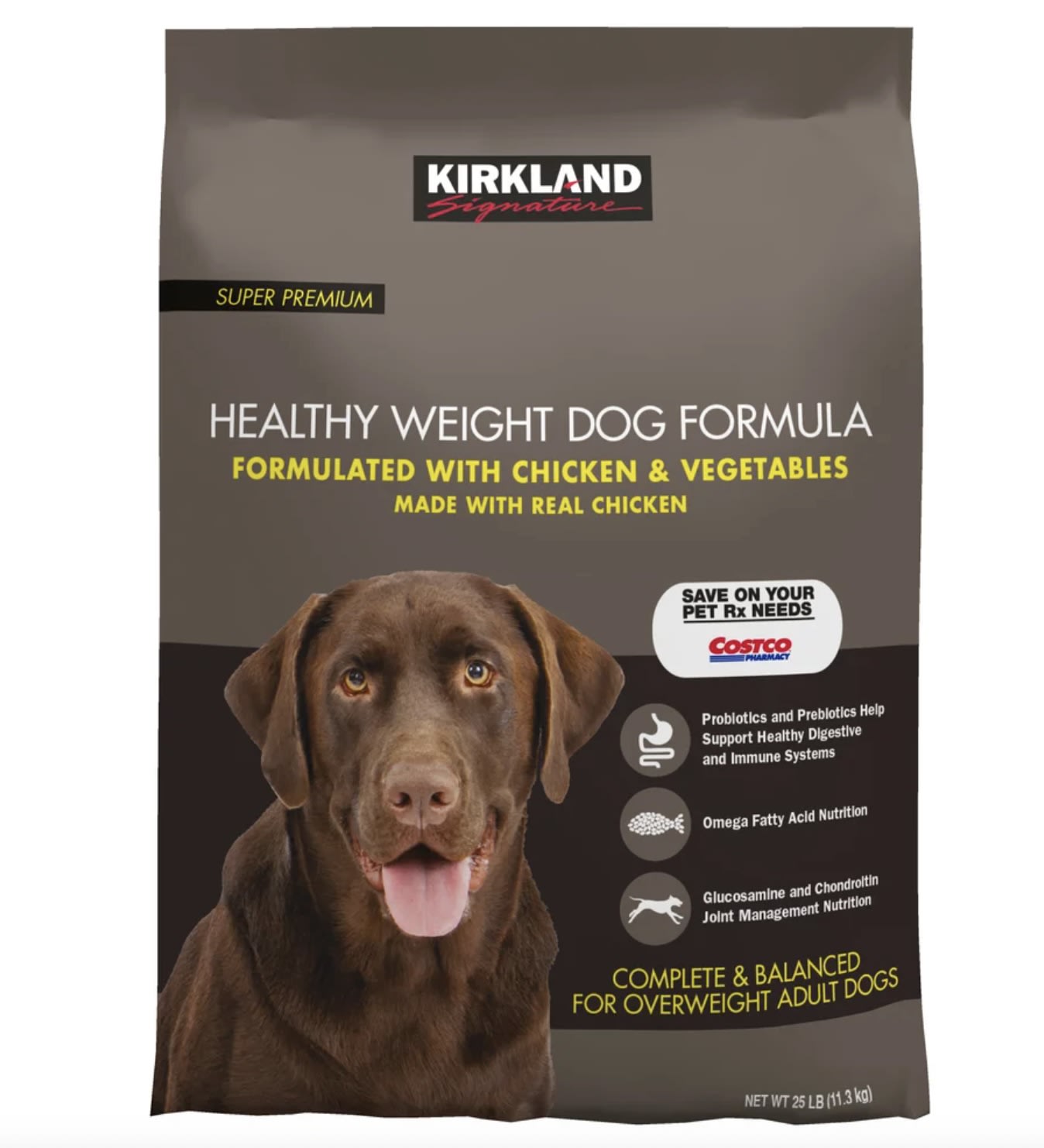
Is Kirkland Signature Dog Food Healthy?
Kirkland Signature dog food can be nutritionally sound, but the answer depends on the exact formula and your dog’s needs. Many recipes provide complete and balanced nutrition for adult dogs, while puppy formulas are designed for growth.
A food’s ingredient list can offer useful information, but it does not tell the whole story. The first ingredients show which ingredients weigh the most before processing. They do not show whether the recipe meets every nutrient requirement or how well an individual dog will digest it.
Protein and animal ingredients
Many Kirkland recipes include animal proteins such as chicken, lamb, salmon, turkey, or beef. These ingredients can provide essential amino acids. Some recipes also use meat meals, such as chicken meal or lamb meal.
“Meal” is not automatically a poor ingredient. Meat meal has had much of its water removed, so it can supply concentrated protein. The label still matters because the type of meal and the full recipe determine the food’s nutritional value.
Plant ingredients can also provide protein, fiber, vitamins, and energy. The important question is whether the finished food supplies adequate nutrients for the stated life stage.
Grains and grain-free recipes
Some Costco dog foods contain grains such as brown rice, barley, oatmeal, or sorghum. Other recipes replace grains with ingredients such as peas, lentils, chickpeas, or potatoes.
Grain-free food is not automatically healthier. Most dogs can digest properly cooked grains, and true grain allergies appear to be uncommon. A dog may have an allergy to a specific animal protein or another ingredient, but you should not diagnose the cause based on symptoms alone.
The U.S. Food and Drug Administration has investigated reports of canine dilated cardiomyopathy, or DCM, in dogs eating certain diets. Many reported diets were labeled grain-free and contained large amounts of peas, lentils, other pulses, or potatoes. The FDA has not established a simple cause-and-effect rule that makes every grain-free food unsafe. However, the concern is strong enough that dog owners should avoid choosing grain-free food only because it sounds more natural.
Speak with a veterinarian before feeding a grain-free diet for a long period, especially if your dog has heart symptoms, a heart murmur, fainting, weakness, or reduced exercise tolerance.
Supplements and probiotics
Some Kirkland formulas include added vitamins, minerals, fatty acids, or probiotics. These additions may support the recipe’s nutrient profile or digestive function.
However, words such as “probiotic,” “natural,” and “superfood” do not prove that a food will work better for your dog. Look first at the adequacy statement, calorie level, quality controls, and your dog’s health.

Advantages and Disadvantages of Costco Dog Food
Costco dog food has several practical advantages, but it also has limits. The right choice depends on whether price, access, recipe selection, or medical support matters most to you.
Potential advantages
Lower cost per pound: Kirkland Signature food is often priced below comparable premium brands. This can help households that need a complete diet without paying for heavy marketing or specialty packaging.
Broad product range: Costco offers dry and wet foods, puppy recipes, large-breed options, and formulas with different proteins. The selection may help you find a reasonable match for a healthy dog.
Clear U.S. labeling: Products sold in the United States must follow federal and state labeling rules. The package should list ingredients, guaranteed analysis, feeding directions, and the nutritional adequacy statement.
Easy bulk buying: A large bag can reduce the number of shopping trips. This is useful for owners with large dogs or more than one dog.
Return policy: Costco is known for a broad satisfaction guarantee. The exact terms can depend on Costco’s current policy and the condition of the product. Keep the receipt, package, and lot information if your dog does not tolerate the food.
Potential disadvantages
Large bags may reduce freshness: Dry food can lose quality after opening, especially when stored in heat, humidity, or direct sunlight. A giant bag is not a bargain if it sits open for months.
Recipe changes can happen: Manufacturers may change ingredients, protein sources, calorie levels, or packaging. Check the label when you buy a new bag.
Limited medical diets: Costco may not offer the same range of prescription diets used for kidney disease, urinary disease, severe allergies, or other conditions.
Membership requirement: You may need a Costco membership or another way to buy the product. Include that cost when comparing prices.
Not every dog tolerates every formula: A food can meet nutritional standards and still cause loose stool, itching, vomiting, or weight gain in a particular dog.
Cost comparison: look at price per day
Price per bag can be misleading. Use this simple calculation:
Daily food cost = price of bag ÷ total cups in the bag × cups fed per day
For a more accurate comparison, use calories:
Cost per 1,000 calories = price ÷ total calories in the bag × 1,000
These are hypothetical calculations. The actual result depends on the bag size, local price, calorie density, and your dog’s portion.
A food with a lower price per pound may not cost less per day if it contains fewer calories per cup and your dog needs a larger serving.
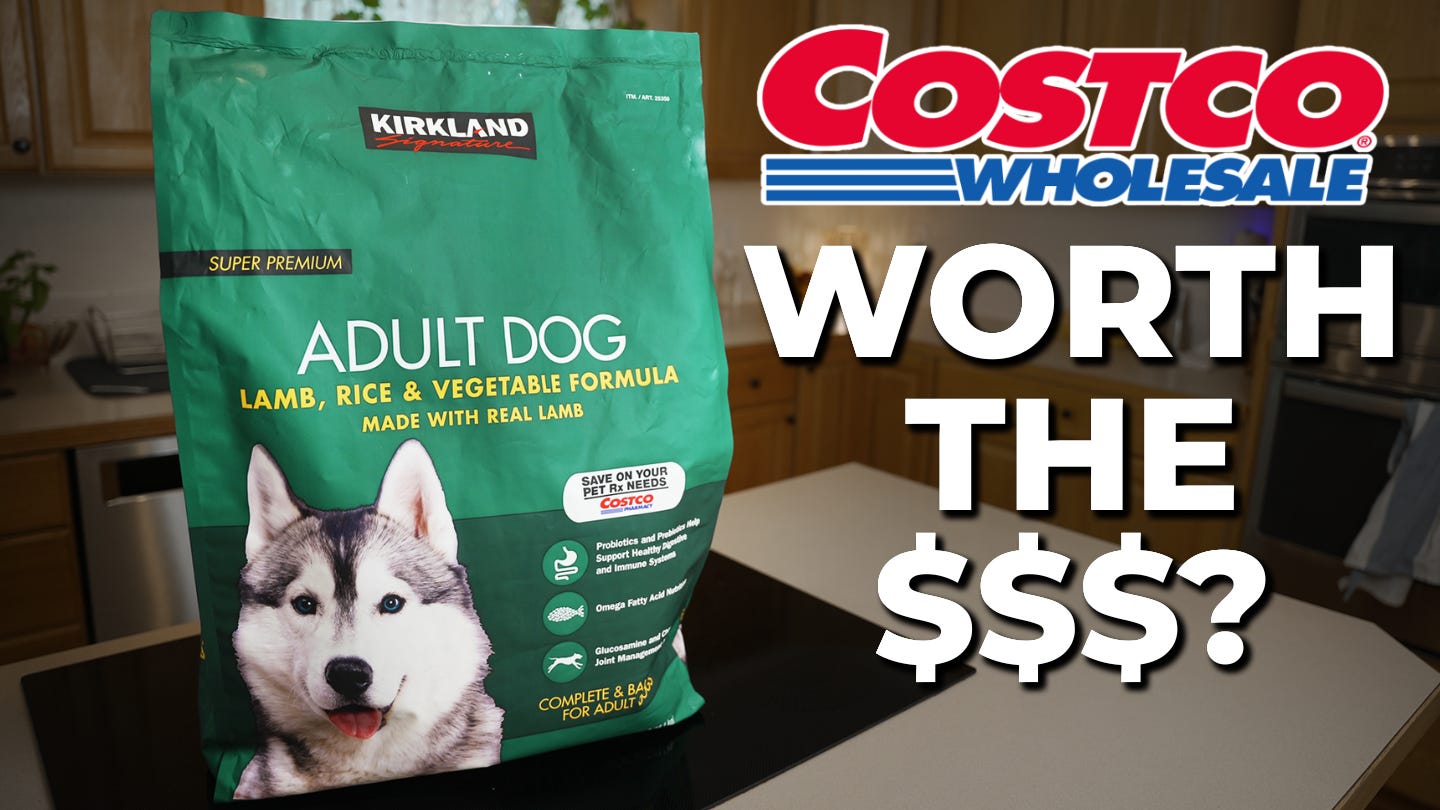
Which Costco Dog Food Is Best for Your Dog?
The best Costco dog food is the formula that fits your dog’s life stage, medical status, calorie needs, and tolerance. Do not choose only by the first ingredient or front-of-bag claims.
| Dog profile | What to look for | What may change the choice |
|---|---|---|
| Healthy adult dog | Adult-maintenance food with a complete and balanced statement | Weight gain, stool changes, or skin problems |
| Puppy | Growth or all-life-stages food made for growth | Large-breed puppies need carefully controlled growth nutrition |
| Large-breed adult | A calorie-controlled adult formula with suitable feeding guidance | Joint disease or obesity |
| Overweight dog | Lower calorie density and measured portions | A veterinarian may recommend a weight-loss diet |
| Senior dog | A complete diet that supports a healthy weight | Kidney, heart, dental, or mobility problems |
| Sensitive stomach | A simple formula with gradual transition | Persistent diarrhea or vomiting needs veterinary care |
| Suspected food allergy | A veterinarian-guided elimination diet | Store-bought limited-ingredient foods may not be enough |
| Kidney or urinary disease | A therapeutic veterinary diet when prescribed | Standard retail food may not meet medical targets |
For puppies
Puppies need food made for growth. Large-breed puppies have special concerns because excessive calories and unbalanced minerals can affect skeletal development.
Check the AAFCO statement for growth. If your puppy is expected to weigh more than about 70 pounds as an adult, ask your veterinarian whether the food is suitable for large-breed growth.
Do not rely on the word “puppy” alone. Confirm that the complete formula matches your puppy’s expected adult size and your veterinarian’s advice.
For adult dogs
A healthy adult dog may do well on a standard Kirkland adult formula if the dog maintains a healthy body condition, has firm stools, and shows normal energy.
Feed by measured amount, not by filling the bowl whenever it looks empty. Feeding charts give starting amounts. Your dog may need more or less based on age, activity, breed, neuter status, and metabolism.
For older dogs
“Senior” is not one regulated nutrient profile in the same way that puppy growth and adult maintenance are defined. A senior dog may need fewer calories, but the ideal protein, fat, phosphorus, and other nutrients depend on health status.
An older dog with kidney disease, diabetes, heart disease, or dental pain may need a veterinary exam and a specific diet rather than a general senior formula.
For dogs with allergies
Food allergies can cause itching, repeated ear infections, skin problems, vomiting, or diarrhea. Yet fleas, environmental allergies, parasites, and infections can cause similar signs.
A proper elimination diet usually requires a strict trial under veterinary direction. Treats, flavored medicines, table food, and shared pet bowls can affect the result. Switching among several retail formulas may delay the right diagnosis.

How to Switch Your Dog to Costco Food Safely
Change food over about seven days unless your veterinarian gives different instructions. A slow change can reduce the chance of stomach upset.
| Days | Old food | New food |
|---|---|---|
| 1–2 | 75% | 25% |
| 3–4 | 50% | 50% |
| 5–6 | 25% | 75% |
| 7 | 0% | 100% |
For very sensitive dogs, extend each step for several days. Keep treats below a small share of daily calories, and do not add several new foods at once.
Signs the transition is going well
Look for:
- Normal appetite
- Firm, regular stools
- No repeated vomiting
- Stable body weight
- Normal energy
- No new itching or ear problems
Mild stool changes can occur during a switch. If your dog has repeated vomiting, bloody diarrhea, severe lethargy, facial swelling, trouble breathing, or signs of pain, contact a veterinarian promptly.
If loose stool continues, return to the last well-tolerated mix and call your veterinarian. Do not keep changing foods every few days without finding the cause.
Store dry food correctly
Keep kibble in a cool, dry place. The safest practice is to keep the food in its original bag, then place that bag in a clean, airtight container. The original package preserves the lot number and ingredient information.
Wash the storage container between bags. Do not pour new food over old food. Discard food that smells rancid, looks moldy, has insects, or has been exposed to water.
Open canned food should be covered, refrigerated, and used according to the package or veterinary guidance. Do not leave wet food at room temperature for long periods.

Is Costco Dog Food Safe?
Costco dog food is subject to U.S. pet-food rules, but no commercial food is risk-free. Safety depends on manufacturing controls, storage, handling, and the individual dog.
Check the FDA’s pet-food recall page and Costco’s notices when you have a concern. A recall may affect one product, lot, date range, or region. Do not assume that a recall of one recipe applies to every Kirkland product.
If you suspect a product problem:
- Stop feeding the affected food.
- Save the bag or can and lot code.
- Write down when symptoms began.
- Contact your veterinarian if symptoms are significant or persistent.
- Report suspected adverse events to the FDA and the manufacturer.
Do not discard the packaging before recording the lot number. That information helps identify the product and supports a report.
When to ask a veterinarian before choosing Costco food
Get professional advice first if your dog has:
- Chronic vomiting or diarrhea
- Recurrent pancreatitis
- Kidney or liver disease
- Urinary stones
- Diabetes
- Heart disease
- A history of food allergy
- Poor growth
- Sudden weight loss
- A prescription diet
A general retail food may be suitable for a healthy dog but not for a dog with a condition that requires controlled phosphorus, sodium, fat, protein, magnesium, or other nutrients.

Costco Dog Food vs. Other Brands
Costco dog food may compare well on value, but brand names alone do not show which food is best. Compare the actual formula and the support behind it.
Consider these factors:
- Who formulates the food?
- Does the package provide a complete and balanced statement?
- Is the food made for the correct life stage?
- Does the company provide nutrient and quality-control information?
- Can you buy the food consistently?
- Does your dog maintain a healthy weight and good stool quality?
- Is veterinary support available if a medical problem develops?
The World Small Animal Veterinary Association recommends looking beyond marketing terms and asking manufacturers about formulation, quality control, research, and nutrition expertise. A company’s ability to answer detailed questions is one useful part of a brand comparison.
Do not treat a long ingredient list as proof of better nutrition. Do not assume a higher price guarantees better health. The strongest practical test is whether the specific food is complete for your dog’s needs and produces good results under proper feeding.

Common Mistakes When Buying Costco Dog Food
The most common mistake is choosing a formula because it sounds healthy rather than because it fits the dog.
Avoid these errors:
- Choosing grain-free food without a clear medical reason
- Feeding puppy food to an adult dog for too long
- Ignoring calorie content
- Measuring food with an oversized scoop
- Changing foods suddenly
- Buying a large bag that will sit open for months
- Treating “natural” as a guarantee of safety
- Assuming brown rice, peas, or meat meal are automatically good or bad
- Using a general food for a dog that needs a prescription diet
- Failing to check the package after a recipe or label change
Body condition matters more than a target cup amount. You should be able to feel your dog’s ribs under a thin layer of fat, see a waist from above, and see an abdominal tuck from the side. If you cannot, ask your veterinarian to assess your dog’s body condition and calorie needs.

Costco Dog Food FAQs
Is Kirkland dog food made in the USA?
Many Kirkland Signature pet foods sold in the United States state that they are made in the USA, but the wording and ingredient sourcing can vary by formula. Check the package of the exact product. “Made in the USA” does not mean every ingredient came from the United States.
Is Costco dog food good for puppies?
Some Kirkland formulas are made for puppies or all life stages. Confirm the AAFCO nutritional adequacy statement and choose a formula suited to your puppy’s expected adult size. Large-breed puppies may need more specific guidance.
Is Kirkland dog food linked to heart disease?
The FDA has investigated reports of canine DCM involving many diets, including some grain-free foods with high amounts of peas, lentils, other pulses, or potatoes. This does not prove that every Kirkland grain-free food causes heart disease. Discuss long-term grain-free feeding with your veterinarian.
Does Costco dog food cause diarrhea?
Any new food can cause diarrhea if the switch is too fast or if the food does not suit the dog. Persistent diarrhea can also result from parasites, infection, stress, allergies, or disease. Slow the transition and contact a veterinarian if symptoms continue or become severe.
Can dogs eat Kirkland wet food and dry food together?
Most healthy dogs can eat wet and dry food together if both foods are complete and balanced and the total daily calories are controlled. Reduce the amount of dry food when adding wet food to avoid overfeeding.
Final Verdict: Is Costco a Good Dog Food?
Costco can be a good dog-food option for many healthy dogs in the United States. Its main strengths are value, broad availability, and formulas that may provide complete and balanced nutrition for specific life stages.
It is not automatically the best choice for every dog. Read the exact label, compare calorie density, avoid choosing grain-free food without a sound reason, transition slowly, and watch your dog’s weight, stool, skin, and energy.
For dogs with ongoing symptoms or diagnosed disease, ask your veterinarian before switching. For a healthy dog, start with a suitable formula, measure portions, store the food well, and reassess your dog rather than the marketing on the bag.