Introduction
Dog food is high in protein when it provides more protein than the basic amount needed for the dog’s life stage. In the United States, the best choice is not always the bag with the largest protein number. Look for a complete and balanced food with a clear protein source, a nutrient profile suited to your dog, and guidance that matches your dog’s age, size, health, and activity level.
Dry dog foods often contain about 24% to 32% protein on an as-fed basis. Some high-protein recipes contain more than 30%. Canned foods may show a lower number because they contain much more water. The label must be compared on a dry-matter basis to make a fair comparison.

What Counts as High-Protein Dog Food?
There is no single legal U.S. cutoff that defines “high protein” for every dog food. A recipe is generally considered high in protein when its protein level is well above the minimum needed for the dog’s life stage.
The Association of American Feed Control Officials (AAFCO) lists these minimum crude protein levels on a dry-matter basis:
| Dog’s life stage | AAFCO minimum crude protein |
|---|---|
| Adult maintenance | 18% |
| Growth and reproduction | 22.5% |
| All life stages | Must meet the growth and reproduction profile |
These are minimum nutrition targets, not recommended goals for every dog. A food with 25% protein may meet a dog’s needs, while a food with 35% may not be suitable for every dog.
Common high-protein ranges
These ranges are useful for comparing similar types of food:
- Dry food: About 26% to 32% protein as fed is often viewed as high.
- Very high-protein dry food: More than 32% as fed.
- Canned food: Often 8% to 12% protein as fed, but this can equal a much higher percentage after removing water.
- Freeze-dried or dehydrated food: Often 30% or more, depending on the recipe and how it is prepared.
- Raw food: Protein levels vary widely. A raw diet is not automatically complete, balanced, or safe.
The guaranteed analysis on a package reports crude protein. It does not show how much of that protein comes from meat, plants, or other ingredients. It also does not measure protein quality by itself.
Why the protein number can mislead you
A dry food and a canned food cannot be compared by their label numbers alone. Water changes the percentage.
For example, imagine two foods:
- Dry food: 30% protein and 10% moisture
- Canned food: 10% protein and 75% moisture
The dry-matter calculation is:
Protein ÷ (100 − moisture) × 100
For the dry food:
30 ÷ 90 × 100 = 33.3% protein on a dry-matter basis
For the canned food:
10 ÷ 25 × 100 = 40% protein on a dry-matter basis
The canned food has a lower protein number on the label but more protein after water is removed.

Which Types of Dog Food Are Highest in Protein?
The highest-protein dog foods are usually dry foods labeled for active dogs, freeze-dried foods, dehydrated foods, and some complete-and-balanced canned diets. Still, the label and nutrition statement matter more than the food’s marketing terms.
1. High-protein dry dog food
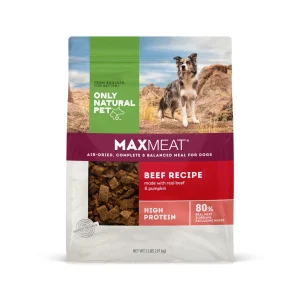
dry food is the easiest type to compare because its moisture level is usually low. Recipes with chicken, turkey, beef, fish, lamb, or egg near the start of the ingredient list often provide substantial animal protein.
A dry food may be a good fit when your dog:
- Needs a calorie-dense meal
- Has high exercise demands
- Maintains a healthy weight on a richer diet
- Prefers a crunchy texture
- Does well on a complete and balanced formula
Check the calorie content as well as protein. Some high-protein foods are also high in fat and calories. A small serving may provide more energy than your dog needs.
2. Freeze-dried and dehydrated dog food
Freeze-dried and dehydrated foods often have concentrated protein because much of the water has been removed. They may be sold as complete meals, meal toppers, or treats.
The key question is whether the package says the food is complete and balanced for a specific life stage. A food meant only for intermittent or supplemental feeding should not replace your dog’s main diet unless your veterinarian gives you a plan.
Some freeze-dried products are sold as raw. The U.S. Food and Drug Administration warns that raw pet food can carry pathogens such as Salmonella and Listeria. Freeze-drying does not guarantee that all harmful bacteria are gone.
3. Canned dog food
Canned dog food can be high in protein after you adjust for water. It may help dogs that need more moisture, have poor appetite, or prefer soft food.
Compare canned recipes by dry-matter protein, not by the as-fed number. Also compare calories per can because water-rich foods may require larger portions.
4. Fresh and gently cooked dog food
Some fresh foods have moderate to high protein levels. Their value depends on the full nutrient profile, not just the meat content.
Choose a food that provides a nutritional adequacy statement, such as:
“Formulated to meet the nutritional levels established by the AAFCO Dog Food Nutrient Profiles…”
The statement should also name the life stage. A fresh food without this information may be a topper rather than a complete diet.
5. Raw diets
Raw diets can contain a lot of protein, but high protein does not make a diet nutritionally complete. Problems may include too much or too little calcium, an incorrect calcium-to-phosphorus ratio, missing vitamins, and bacterial contamination.
The American Veterinary Medical Association and other veterinary groups have raised safety concerns about uncooked animal products. If you are considering raw feeding, ask a board-certified veterinary nutritionist to review the exact recipe.

How to Read a Dog Food Label for Protein
A label gives you several clues, but no single line tells the whole story. Use the following order.
Step 1: Check the guaranteed analysis
Find the crude protein percentage. Then find moisture.
Do not compare “30% protein” in dry food with “10% protein” in canned food without converting both to dry matter.
Step 2: Convert the protein number to dry matter
Use this formula:
Dry-matter protein = crude protein ÷ (100 − moisture) × 100
Example
A food lists:
- Crude protein: 28%
- Moisture: 10%
Calculation:
28 ÷ 90 × 100 = 31.1% dry-matter protein
This tells you the food contains about 31.1% protein after removing water.
Step 3: Read the nutritional adequacy statement
Look for a statement that says the food is complete and balanced for:
- Growth
- Adult maintenance
- Gestation and lactation
- All life stages
A high-protein food made for puppies may not be the right choice for an older adult dog. Large-breed puppies also need careful control of calories and minerals.
Step 4: Review the calorie content
The label may list calories as:
- Kilocalories per cup
- Kilocalories per can
- Kilocalories per kilogram
Protein percentage does not tell you how many calories your dog receives. Two foods with the same protein percentage can have very different fat, fiber, and calorie levels.
Step 5: Look at the ingredient list
Ingredients are listed by weight before processing. Meat ingredients contain water, so their position on the list does not tell you the exact amount of meat in the finished food.
Useful protein sources may include:
- Chicken
- Turkey
- Beef
- Lamb
- Fish
- Egg
- Pork
- Meat meals, such as chicken meal or fish meal
A named meat meal can be a concentrated source of protein because much of its water has already been removed. By contrast, words such as “meaty,” “natural,” or “premium” do not prove that a food is high in usable protein.
Step 6: Check for feeding directions
Feeding directions are a starting point, not a perfect prescription. Adjust portions based on body condition, weight changes, activity, and veterinary advice.

Does More Protein Mean Better Dog Food?
More protein is not automatically better. Dogs need enough protein to support muscle, skin, hair, organs, enzymes, hormones, and immune function. Once their needs are met, adding more may not provide a clear benefit.
Protein quality also matters. A food’s amino acid balance, digestibility, calories, and overall nutrient profile all affect its value.
Protein is not the same as muscle gain
A dog cannot build muscle from protein alone. Muscle condition also depends on:
- Total calories
- Exercise
- Age
- Health
- Hormone status
- Recovery from illness or injury
- Adequate vitamins and minerals
A sedentary dog may gain unwanted weight on a high-protein, high-calorie food. An active dog may need more calories, but the right amount depends on the work performed and the dog’s body condition.
Protein does not cause kidney disease in healthy dogs
Current veterinary guidance does not support avoiding protein in every healthy senior dog. Older dogs may need a nutrient-dense diet, and some may benefit from more protein to help preserve muscle.
However, dogs with diagnosed kidney disease may need a veterinary therapeutic diet. These diets often manage phosphorus, protein amount, calories, and other nutrients together. Do not change a dog with kidney disease to a high-protein food without veterinary advice.
Protein can be a problem in some medical diets
A high-protein food may not suit a dog with:
- Certain kidney disorders
- Some liver conditions
- Urinary disease
- Pancreatitis
- Severe food allergies
- A condition requiring a prescription diet
The correct diet depends on the diagnosis. A food that helps one dog may worsen another dog’s condition.

How Much Protein Does Your Dog Need?
Your dog’s protein needs depend on life stage, size, health, activity, and the food’s digestibility. AAFCO minimums are useful reference points, but they are not individualized feeding plans.
Puppies
Puppies need more protein than adult-maintenance dogs because they are building tissue. Choose a food labeled complete and balanced for growth.
Large-breed puppies need extra care. Rapid growth, excess calories, and mineral imbalance can harm developing bones and joints. Use a food designed for large-breed growth when appropriate.
Adult dogs
Many healthy adult dogs do well on a complete and balanced adult-maintenance food with protein above the AAFCO minimum. The best amount is the amount that supports lean muscle without causing unwanted weight gain.
Senior dogs
Senior dogs do not all need the same protein level. Some older dogs lose muscle and may benefit from a nutritious diet with adequate, highly digestible protein. Others have medical conditions that require a specific formula.
A senior label alone does not guarantee that a food is right for your dog. Watch body weight, muscle loss, appetite, thirst, stool quality, and activity.
Working and athletic dogs
Dogs that run, hunt, herd, compete, or perform physically demanding work may need more calories and a diet with enough protein and fat. Their needs can change during the training season, competition, pregnancy, or recovery.
A working dog that loses weight despite eating the recommended amount may need a veterinary nutrition review. Increasing food without checking calories can lead to digestive upset or an unbalanced diet.
Dogs that need to lose weight
Weight loss depends mainly on controlled calorie intake, not simply on adding protein. A higher-protein food may help preserve lean mass during weight loss, but the diet must still provide the right calories.
Ask your veterinarian to set a weight goal and feeding plan. Use body condition, not just the scale, to judge progress.

High-Protein Ingredients to Look For
The ingredient list can help you identify likely protein sources, but it cannot tell you the exact digestibility or amino acid score of a finished food.
Animal-based ingredients
Common animal-based protein sources include:
- Chicken and chicken meal
- Turkey and turkey meal
- Beef and beef meal
- Lamb and lamb meal
- Fish meal
- Egg
- Pork
- Venison
- Duck
“Meal” is not automatically a low-quality ingredient. A named meat meal can supply concentrated protein. The full recipe and adequacy statement still matter.
Plant-based ingredients
Peas, lentils, chickpeas, potatoes, corn, wheat, rice, and soy can contribute nutrients and protein. Plant proteins are not automatically harmful, but a recipe may rely heavily on them to raise its crude protein number.
The ingredient list does not show the exact amount of protein from each source. For a dog with allergies, a carefully selected limited-ingredient or veterinary elimination diet may be more useful than simply choosing a food with a meat ingredient near the top.
Meat by-products
By-products can include nutrient-rich organs and other edible animal parts. The word “by-product” does not by itself prove poor quality.
Look for the animal source when possible, such as “chicken by-product meal,” rather than judging the ingredient by name alone. Dogs evolved to use many parts of prey, not only muscle meat.

How to Choose a High-Protein Food Safely
Use this short checklist before changing your dog’s diet:
- Confirm the life stage. Choose growth, adult maintenance, or another label that fits your dog.
- Check the adequacy statement. Make sure the food is complete and balanced if it will be the main diet.
- Compare dry-matter protein. Use the moisture-adjusted number.
- Check calories. High-protein foods may also be energy-dense.
- Review fat and fiber. These affect weight, digestion, and fullness.
- Look for named protein sources. Choose ingredients your dog tolerates.
- Consider medical needs. Ask your veterinarian about kidney, liver, urinary, digestive, or allergy concerns.
- Change food slowly. Mix the new food with the old food over about seven days, unless your veterinarian gives different instructions.
- Watch your dog. Check stool, appetite, itching, vomiting, energy, body weight, and body condition.
- Stop and seek help for serious signs. Repeated vomiting, severe diarrhea, weakness, refusal to eat, or rapid weight loss needs veterinary attention.
A slow transition can reduce stomach upset. It cannot prevent every reaction, so monitor your dog during the change.

Common Mistakes When Buying High-Protein Dog Food
Choosing the largest protein number
The largest number may come with too many calories, too much fat, or an unsuitable mineral profile. Compare the complete label instead.
Comparing foods without adjusting for moisture
This makes canned food look lower in protein than it may really be. Use dry-matter calculations.
Assuming grain-free means high protein
Grain-free food can still be low, moderate, or high in protein. It may also use peas, lentils, chickpeas, or potatoes in substantial amounts.
The FDA has investigated reports of canine dilated cardiomyopathy involving some diets, many of which had high proportions of pulses and potatoes or sweet potatoes. The issue is complex, and the available evidence does not show that every grain-free diet causes heart disease. Ask your veterinarian before choosing grain-free food without a medical reason.
Treating toppers as complete meals
Jerky, canned meat, freeze-dried bits, and meal toppers may contain protein but may not provide all required nutrients. Keep treats and supplemental foods to a small part of daily calories unless a veterinary professional gives you a different plan.
Switching food too fast
A sudden change can cause loose stool even when the new food is suitable. Transition gradually and monitor your dog.
Feeding by cup without checking body condition
A measuring cup can be inaccurate, and feeding guides are estimates. Use a level measure, track weight, and ask your veterinarian to assess body condition.

Key Takeaways
- High-protein dog food often contains about 26% to 32% protein as fed when dry, but there is no universal high-protein cutoff.
- Compare canned and dry foods using dry-matter protein.
- Choose a recipe that is complete and balanced for your dog’s life stage.
- Check calories, fat, minerals, ingredients, and feeding directions—not protein alone.
- Puppies, active dogs, seniors, and dogs with medical conditions may have different needs.
- Kidney disease and other health problems require veterinary nutrition advice before changing to a high-protein diet.
- A high-protein food is not automatically a better food.
Frequently Asked Questions
Is 30% protein high for dog food?
For most dry dog foods, 30% protein as fed is considered high or moderately high. If the food contains 10% moisture, 30% as fed equals about 33.3% protein on a dry-matter basis.
What meat has the most protein for dogs?
Lean meats such as chicken, turkey, beef, fish, and certain game meats can provide concentrated animal protein. In commercial dog food, named meat meals are also concentrated sources because they contain less water. The complete recipe matters more than choosing one meat as the “best.”
Is high-protein dog food good for older dogs?
It can be suitable for some healthy older dogs, especially those losing muscle. But senior dogs with kidney, liver, urinary, or other medical problems may need a different nutrient balance. Ask your veterinarian before changing the diet.
Can high-protein dog food cause kidney problems?
High protein is not known to cause kidney disease in every healthy dog. A dog with diagnosed kidney disease may need a therapeutic diet that manages protein, phosphorus, calories, and other nutrients. Follow your veterinarian’s plan.
Is raw dog food higher in protein?
Raw food may be high in protein, but the amount varies. Raw diets can also carry harmful bacteria and may be unbalanced. High protein does not prove that a raw diet is safe or complete.
Conclusion
The best high-protein dog food is not simply the one with the highest number on the package. Start with a complete-and-balanced formula made for your dog’s life stage. Then compare dry-matter protein, calories, fat, ingredients, and your dog’s health needs.
For a healthy dog, a dry food with roughly 26% to 32% protein may be a practical high-protein option. For canned, fresh, freeze-dried, or raw foods, convert the label and verify whether the food is intended to be a complete diet. If your dog has a medical condition, speak with a veterinarian before making a high-protein diet change.
Sources for further reading
- AAFCO Dog Food and Nutrient Profiles
- U.S. Food and Drug Administration: Pet Food
- FDA Investigation into Potential Link Between Certain Diets and Canine Dilated Cardiomyopathy
- World Small Animal Veterinary Association: Global Nutrition Guidelines
- Merck Veterinary Manual: Nutritional Requirements of Small Animals