If you’ve ever stood in the pet food aisle feeling confused, you’re not alone. Knowing what nutrients do dogs need is the first step to keeping your pup healthy and happy. In this guide, I’ll break down the basics in plain language, so you can make smarter choices at every meal.

Quick Answer
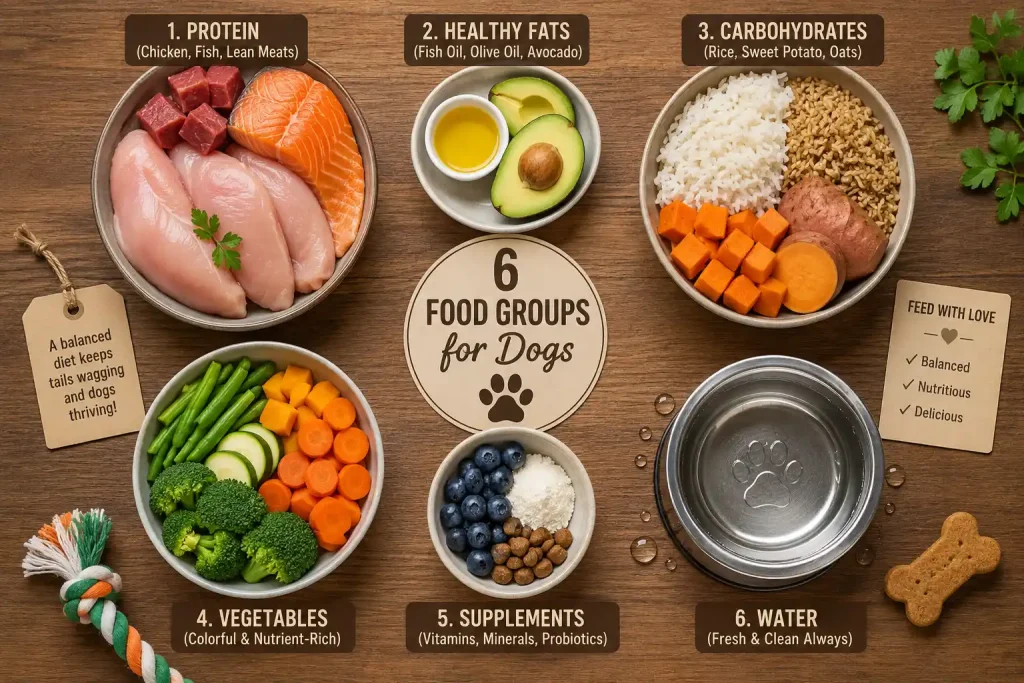
Dogs need six core nutrients: protein, fats, carbohydrates, vitamins, minerals, and water. Protein builds muscle, fats fuel energy, and carbs support digestion. Vitamins and minerals keep organs and bones working right. Water is the most overlooked, yet most vital, nutrient of all. A balanced diet covering each of these keeps dogs active and healthy for years.
The Six Essential Nutrients Dogs Need
Every dog, no matter the breed or size, relies on the same basic building blocks. Here’s what each one does.
1. Protein
Protein is the foundation of a dog’s diet. It builds muscles, repairs tissue, and supports a healthy coat. Good sources include chicken, beef, fish, and eggs. Puppies and active dogs usually need more protein than senior or less active dogs.
2. Fats
Fats give dogs concentrated energy. They also help absorb certain vitamins and keep skin and fur looking healthy. Omega-3 and omega-6 fatty acids, found in fish oil and flaxseed, are especially helpful for joint and skin health.
3. Carbohydrates
Carbs aren’t strictly required, but they offer quick energy and fiber for digestion. Sweet potatoes, brown rice, and oats are common, dog-friendly carb sources found in many commercial foods.
4. Vitamins
Vitamins support everything from vision to blood clotting. Dogs need vitamins A, D, E, K, and the B-complex group. Most complete commercial diets already include these in the right amounts.
5. Minerals
Minerals like calcium, phosphorus, potassium, and zinc keep bones strong and support nerve function. An imbalance, especially in growing puppies, can cause serious bone problems, so it’s best to stick with a complete and balanced food.
6. Water
Water might be the simplest nutrient, but it’s just as important as the rest. Dogs can survive longer without food than without water. Always keep a clean, full bowl available.
Nutrient Needs by Life Stage
A puppy’s nutrient needs look very different from a senior dog’s. Here’s a simple comparison to help you understand the shift.
| Life Stage | Protein Needs | Fat Needs | Key Focus |
|---|---|---|---|
| Puppy | High | High | Growth and brain development |
| Adult | Moderate | Moderate | Maintenance and energy balance |
| Senior | Moderate to High | Lower | Joint support and weight control |
These are general guidelines. Always check with your veterinarian for a personalized feeding plan based on your dog’s breed, weight, and health history.
Step-by-Step Guide to Balancing Your Dog’s Diet
- Check the label. Look for foods labeled “complete and balanced” by AAFCO standards.
- Match food to life stage. Puppy, adult, and senior formulas have different nutrient ratios.
- Watch portion size. Follow feeding guidelines based on your dog’s weight, not just the bag’s suggestion.
- Add variety carefully. If mixing in fresh foods, keep them under 10% of total daily intake.
- Monitor your dog’s body. A healthy weight, shiny coat, and steady energy are good signs.
- Schedule regular vet checkups. Bloodwork can catch nutrient imbalances early.
Common Mistakes Dog Owners Make
- Overfeeding treats. Treats should make up less than 10% of daily calories.
- Skipping the life-stage formula. Feeding puppy food to an adult dog, or vice versa, can throw off nutrient balance.
- Adding too many supplements. More isn’t always better. Excess vitamins can be just as harmful as a deficiency.
- Ignoring water intake. Some owners focus only on food and forget dogs need constant access to fresh water.
- Switching foods too quickly. Sudden diet changes can upset a dog’s stomach. Transition over 7 to 10 days.

Expert Tips for Getting Nutrition Right
- Choose foods with a named protein source listed first, like “chicken” rather than “meat by-products.”
- Rotate protein sources occasionally to reduce the chance of food sensitivities developing over time.
- Keep an eye on your dog’s stool. Consistent, firm stool often signals good digestion and nutrient absorption.
- If you’re considering a homemade diet, work with a veterinary nutritionist to avoid dangerous gaps in nutrients.
- Store dog food properly in a sealed container to protect fat content from going rancid.
Key Takeaways
- Dogs need protein, fats, carbohydrates, vitamins, minerals, and water every day.
- Nutrient needs shift with age, so match food to your dog’s life stage.
- Avoid common mistakes like overfeeding treats or skipping water.
- Always consult your vet before making major diet changes or adding supplements.
Frequently Asked Questions
What nutrients do dogs need most?
Dogs need a balance of protein, fats, carbohydrates, vitamins, minerals, and water. Protein and fat are especially important for energy and muscle health. Can dogs get all their nutrients from dry kibble?
Yes, if the kibble is labeled “complete and balanced,” it should meet your dog’s daily nutrient needs. Always check the label to confirm. Do dogs need vegetables in their diet?
Vegetables aren’t strictly necessary, but they can add fiber and antioxidants. Many balanced commercial foods already include small amounts. How much protein does a dog need daily?
This varies by age, size, and activity level. Puppies and active dogs generally need more protein than senior or less active dogs. Your vet can suggest a specific target. Are supplements necessary if my dog eats commercial food?
Usually not. Complete and balanced commercial diets are formulated to meet nutrient needs without extra supplements, unless a vet recommends one for a specific health issue. What happens if a dog doesn’t get enough nutrients?
Nutrient deficiencies can lead to poor coat quality, low energy, weak bones, or a weakened immune system over time. A vet visit can help identify and correct the issue early. Is homemade dog food a good way to control nutrients?
It can be, but only if it’s carefully balanced. Homemade diets without proper planning often lack key nutrients. Work with a veterinary nutritionist for guidance.

Final Thoughts
Understanding what nutrients do dogs need doesn’t have to feel complicated. Focus on protein, fats, carbs, vitamins, minerals, and water, and match food to your dog’s life stage. When in doubt, your vet is always the best resource for personalized advice. A little attention to nutrition now can mean a longer, healthier life for your best friend.
For more science-backed guidance, check resources like the Association of American Feed Control Officials, the American Veterinary Medical Association, or the Merck Veterinary Manual. You might also enjoy our guide to choosing the best dog food for your breed.