By Zak Fahim
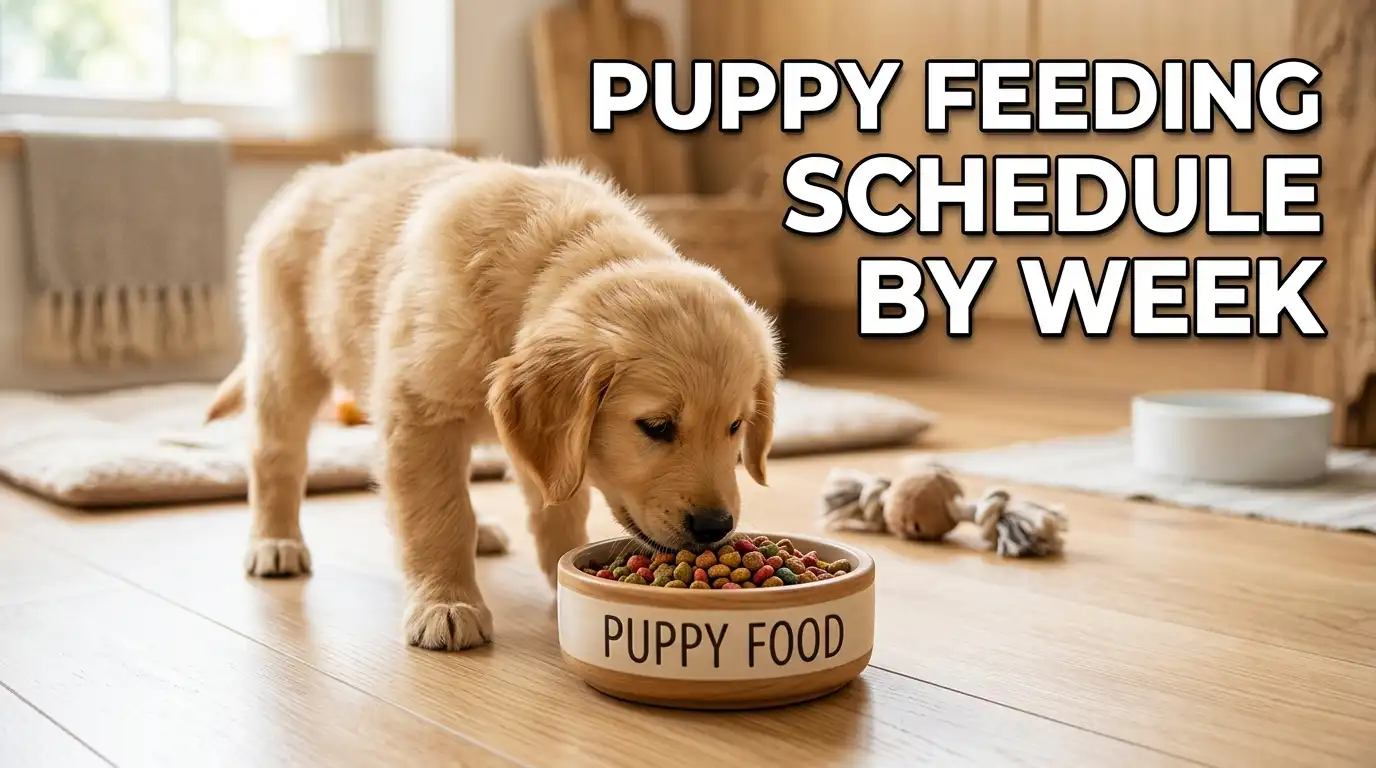
Puppy feeding changes fast. Newborns need milk, four-week-olds begin weaning, and older puppies eat fewer meals. This weekly puppy feeding guide shows what to feed, how often to feed, when to add water and treats, and when to switch food.
Safety note: This guide gives general information, not veterinary care. A licensed veterinarian should guide orphan feeding, poor growth, special diets, or feeding a sick puppy. Get veterinary help for poor appetite, weight loss, repeated vomiting, diarrhea, dehydration, weakness, belly swelling, trouble nursing, or any worrying change.
Quick Answer
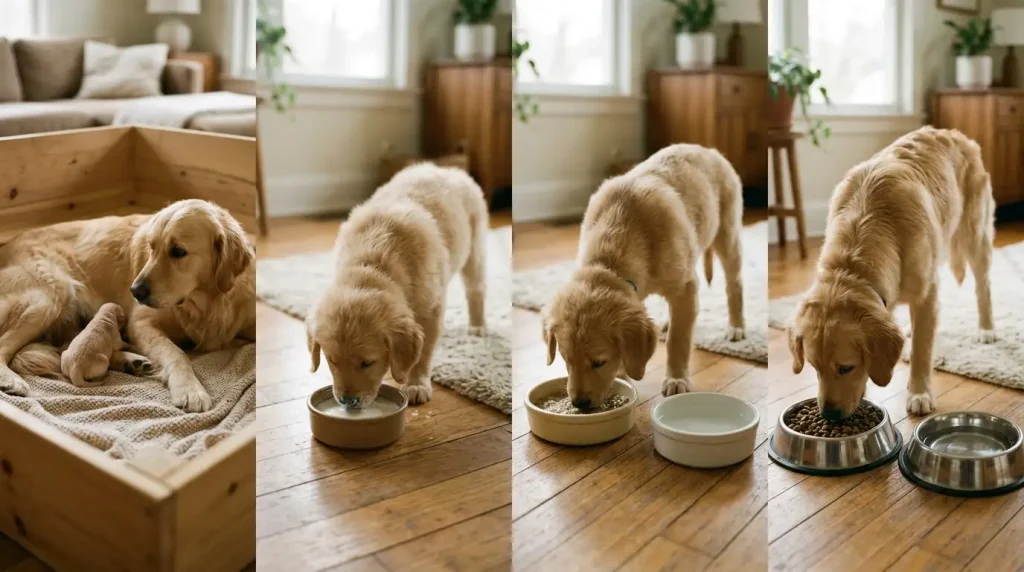
From birth to about three weeks, puppies usually get food and water from their mother’s milk. Weaning often starts between three and five weeks with soft puppy food and fresh water, then ends near eight weeks. Most puppies eat four meals a day from six to twelve weeks, three meals from about three to six months, and two meals from about six months onward. Toy breeds may need frequent meals longer, while large and giant breeds need slower, controlled growth. Adult food may start near eight to twelve months for small dogs but not until eighteen to twenty-four months for some giant breeds.
Understanding Puppy Growth Stages
Puppy feeding frequency changes as the stomach, teeth, digestion, activity, and growth rate change.
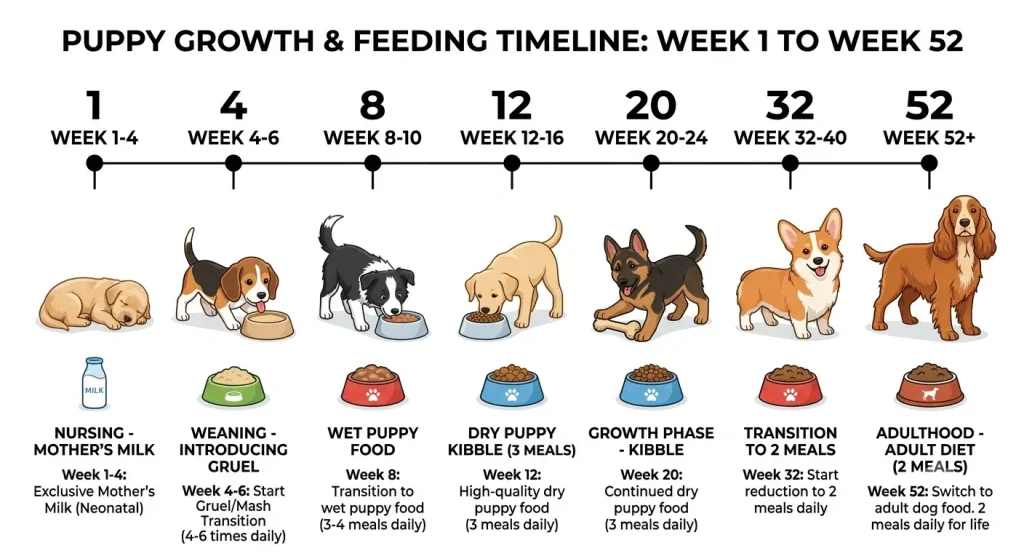
- Neonatal, 0–2 weeks: Sleeps, nurses, and depends on the mother.
- Transitional, 2–4 weeks: Eyes and ears open. Walking begins.
- Weaning, 4–8 weeks: Milk slowly gives way to soft puppy food.
- Early puppy, 8–12 weeks: A steady four-meal routine supports fast growth.
- Juvenile, 3–6 months: The stomach grows, so meals can decrease.
- Adolescent, 6–12 months: Growth slows. Most puppies eat twice daily.
Puppy milestones vary, but eyes commonly open during the second or third week, while walking and active exploration grow through weeks three and four. :contentReference[oaicite:1]{index=1}
Developmental Milestone Timeline
| Age | Milestone | Feeding Meaning |
|---|---|---|
| Birth | First nursing | Watch for a strong latch and steady gain. |
| 2–3 weeks | Eyes and ears open | Milk remains the main food. |
| 3–4 weeks | Walking and baby teeth | Offer shallow water and soft gruel when ready. |
| 4–6 weeks | Active weaning | Make gruel thicker over time. |
| 7–8 weeks | Near full weaning | Feed complete puppy food. |
| 3–6 months | Fast growth | Move from four meals to three. |
| 6–12 months | Adolescent growth | Most puppies move to two meals. |
Puppy Feeding Schedule by Week
This puppy feeding chart by week is a starting point. Use the food label and veterinary advice for the daily amount. Choose food labeled for growth or all life stages. Large-breed puppies need food approved for large-size growth.
| Age | Food | Meals | Interval | Water | Main Goal |
|---|---|---|---|---|---|
| Week 1 | Mother’s milk | Nurse often | Day and night | From milk | Warmth and weight gain |
| Week 2 | Mother’s milk | Frequent nursing | Day and night | From milk | Strong nursing |
| Week 3 | Milk and tiny gruel tastes if ready | Milk plus 1–2 tastes | Several hours apart | Shallow dish | Learn to lap |
| Week 4 | Thin puppy-food gruel | 4 meals plus nursing | Every 4–5 waking hours | Fresh shallow water | Begin weaning |
| Week 5 | Thicker gruel | 4 meals | Every 4–5 hours | Available | More bowl feeding |
| Week 6 | Softened puppy food | 4 meals | Every 4–5 hours | Available | Reduce milk |
| Week 7 | Mostly puppy food | 4 meals | Every 4–5 hours | Available | Near full weaning |
| Week 8 | Complete puppy food | 4 meals | Evenly spaced | Always available | Build a stable routine |
| Weeks 9–12 | Complete puppy food | 4 meals | Every 4–5 waking hours | Always available | Support fast growth |
| Weeks 13–16 | Complete puppy food | 3 meals | Every 5–6 hours | Always available | Maintain steady energy |
| Weeks 17–24 | Complete puppy food | 3 meals, then 2 if ready | Every 6–8 hours | Always available | Adjust portions |
| Weeks 25–52 | Puppy food until mature | 2 meals | About 10–12 hours apart | Always available | Maintain lean growth |
Week 1
Mother’s milk gives calories, fluid, and early immune support. A healthy newborn latches, nurses, sleeps quietly, and gains weight. Orphaned or weak puppies need a veterinarian-led milk replacer plan. Do not use cow’s milk as a simple replacement.
Week 2
Milk still supplies all nutrition. Feeding stays frequent because the stomach is tiny. Crying, coolness, poor latching, or falling behind the litter needs fast veterinary care. Never force-feed a weak or chilled puppy.
Week 3
Many puppies begin walking. Milk remains the main food. Offer shallow water and a tiny amount of soft puppy gruel when interest begins. Let puppies lick by choice. Never push a puppy’s face into a bowl.
Week 4
This is a common time to start weaning. Mix complete puppy food with warm water or canine milk replacer until it is easy to lap. Offer four small meals while nursing continues. Slow change helps digestion.
Week 5
Make the gruel thicker. Puppies should get more calories from the bowl. Use a wide, low dish. Watch smaller puppies during group meals and feed them apart if stronger littermates push them away.
Week 6
Use softened wet or dry food that is complete and balanced for growth. Four meals support steady energy. Remove leftovers after about fifteen minutes and clean the bowl.
Week 7
Most puppies now eat well. Add less liquid if chewing is easy and stools stay normal. Avoid several food changes during weaning because sudden changes can cause loose stool.
Week 8
Most healthy puppies are fully weaned. Feed four measured meals at set times. This supports digestion, potty training, and appetite tracking. If the puppy moves to a new home, keep the same food at first.
Weeks 9–12
Feed puppy food four times daily. Divide the label’s total daily amount between meals. Some puppies handle dry kibble, while others need warm water added. Use part of the daily kibble for training.
Weeks 13–16
Most puppies can move to three meals near four months. Toy breeds may need frequent meals longer. Weakness or shaking between meals is not something to guess about. Contact a licensed veterinarian.
Weeks 17–24
Continue three meals, then consider two near six months. Move the midday portion into breakfast and dinner over several days. Because growth may slow, check the puppy’s waist and ribs each week.
Weeks 25–52
Most puppies do well with breakfast and dinner. Keep puppy food until growth is near complete. Small dogs mature sooner than giant dogs. Delay hard running after a large meal.
How Much Should a Puppy Eat Each Week?
There is no one-cup rule because foods have different calories. Start with the package chart, then divide the daily total by the number of meals. Activity, breed, metabolism, health, and neuter status can change the need. Weigh weekly and check body condition. On the 1–9 Body Condition Score, 4–5 is usually ideal.
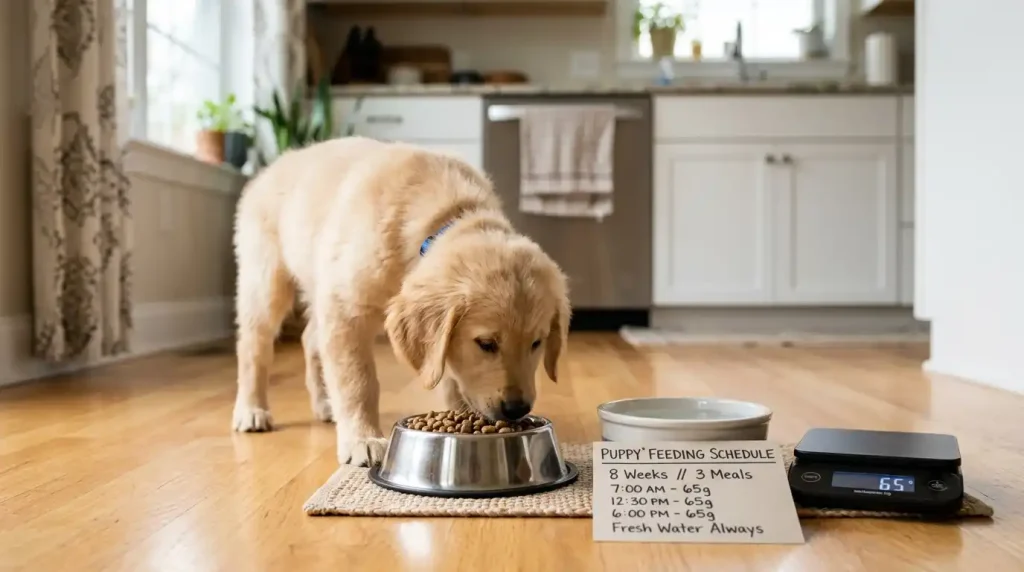
| Body Check | What It Looks Like | What to Do |
|---|---|---|
| Score 1–3 | Ribs or bones stand out | Call a veterinarian, especially with poor appetite or slow growth. |
| Score 4–5 | Ribs are easy to feel and the waist is visible | Keep the current plan and track growth. |
| Score 6–7 | Ribs are harder to feel and the waist is fading | Reduce extras and review the meal amount. |
| Score 8–9 | Heavy fat cover and little waist | Ask for a veterinary weight plan. |
| Weight is flat or falling | No gain, weight loss, or weakness | Contact a licensed veterinarian promptly. |
Portion Adjustment Guide
- Confirm the food is complete and balanced for growth.
- Measure the full daily amount.
- Subtract kibble used as treats.
- Split the rest between meals.
- Check weight, ribs, waist, stool, and energy weekly.
- Adjust in small steps and check again.
Feeding Schedule by Breed Size
Size affects meal frequency, growth speed, portion size, and adult-food timing. Tiny puppies have small stomachs. Large puppies grow longer and need controlled growth.
| Adult Size | Meal Pattern | Growth Need | Food Type | Adult-Food Window |
|---|---|---|---|---|
| Toy | Small, frequent meals for longer | Fast maturity | Toy or small-breed growth food | 8–12 months |
| Small | 4 meals, then 3, then 2 | Early maturity | Small-breed puppy food | 8–12 months |
| Medium | Often 2 meals near six months | Moderate growth | Complete growth food | About 12 months |
| Large | Measured meals; avoid free-feeding | Slow, lean growth | Large-breed growth food | 12–15 months |
| Giant | Measured meals with close weight checks | Longest growth period | Large or giant-breed growth food | 18–24 months |
These are ranges, not deadlines. Ask when growth is nearly complete, then change food over about five to seven days. :contentReference[oaicite:6]{index=6}
Weekly Feeding Milestones
- First nursing: Soon after birth.
- Eyes opening: Often during weeks two to three.
- Walking: Usually starts near weeks three to four.
- First solid food: Small tastes around weeks three to five.
- Complete weaning: Often near seven to eight weeks.
- First treats: After solid food is going well, often near eight weeks.
- Three meals: Common near three to four months.
- Two meals: Common near six months.
- Adult food: Based on growth and breed size.
Weaning Readiness Checklist
- The puppy can walk to a shallow bowl.
- Baby teeth are starting to appear.
- The puppy shows interest in food.
- The puppy can lap without coughing.
- Weight is rising and energy is good.
Sample Daily Feeding Schedules
4-Week Puppy
7:00 a.m., 11:00 a.m., 3:00 p.m., and 7:00 p.m.: soft gruel. Nursing may continue. Keep fresh water in a shallow dish.
8-Week Puppy
7:00 a.m., 11:30 a.m., 4:00 p.m., and 8:00 p.m.: measured puppy meals. Offer potty breaks after food, water, sleep, and play.
12-Week Puppy
7:00 a.m., noon, 5:00 p.m., and a small 9:00 p.m. meal if still using four meals. Keep water available.
6-Month Puppy
7:00 a.m. breakfast and 6:30 p.m. dinner. Some puppies still need a small midday meal.
Water Schedule by Week
Milk supplies fluid during the first weeks. Add a shallow water dish when weaning starts, often near three to four weeks. Once fully weaned, keep clean water available throughout the day.
A weaned puppy may drink about one-half to one ounce of water per pound daily. Heat, play, dry food, and illness can raise the need. Do not limit daytime water only to reduce potty trips.
Dry or sticky gums, low energy, sunken-looking eyes, and slow skin return may signal dehydration. Vomiting and diarrhea can dehydrate a puppy fast. Contact a licensed veterinarian for these signs or a major drinking change. :contentReference[oaicite:8]{index=8}
Treat Schedule by Age
Treats can start after solid food is going well, often near eight weeks. Use kibble or tiny soft treats. Keep treats below about 10% of daily calories.
Avoid bones, very hard chews, large chunks, and table scraps. Never give chocolate, grapes, raisins, xylitol, onions, garlic, alcohol, caffeine, macadamia nuts, or raw yeast dough. Call a veterinarian or animal poison service at once after possible toxin exposure.
Common Weekly Feeding Problems
| Problem | Possible Cause | What to Do | When to Call a Vet |
|---|---|---|---|
| Puppy will not nurse | Chilling, weakness, poor latch, or illness | Keep the puppy warm and do not force-feed. | Immediately |
| Refuses solid food | Texture, stress, food change, or illness | Try softer food and a quiet feeding area. | If it lasts or comes with other symptoms |
| Eats too fast | Competition or strong hunger | Feed separately and slow the meal. | For choking, repeated vomiting, or swelling |
| Vomits after meals | Fast eating, a large meal, food change, or illness | Stop extras and note the timing. | For repeated vomiting, pain, blood, or weakness |
| Loose stool | Food change, excess food, parasites, or infection | Avoid more changes and track stools. | For repeated diarrhea, blood, dehydration, or poor appetite |
| Poor weight gain | Low intake, competition, parasites, or illness | Track weight and food intake. | Promptly |
| Constant hunger | Growth, a small portion, habit, or a medical issue | Check the label, weight, portions, and treats. | If paired with weight loss or illness signs |
Signs Your Puppy Is Growing Normally
- Weight: Newborns gain steadily and may nearly double their birth weight in the first week. Older puppies follow a steady breed-based growth curve.
- Body condition: Ribs are easy to feel but do not sharply stand out.
- Energy: The puppy is alert and rests after play.
- Stool: Bowel movements are formed and fairly steady.
- Coat: The coat looks clean and healthy.
Track age, weight, food, daily amount, treats, stool, and notes each week. Bring the record to veterinary visits.
Common Feeding Mistakes
| Unhealthy Feeding Habit | Better Choice |
|---|---|
| Feeding adult food too early | Use food labeled for growth until the puppy nears maturity. |
| Giving too many treats | Use tiny rewards and count them in the daily intake. |
| Serving too much food at once | Split the daily amount into small meals. |
| Switching food suddenly | Change food over about five to seven days. |
| Ignoring weight changes | Weigh weekly and check the ribs and waist. |
| Free-feeding | Offer measured meals at set times. |
| Skipping meals | Keep a steady routine, especially for young or toy-breed puppies. |
Feeding Decision Tree
- Is the puppy under three weeks? Use mother’s milk when possible. Orphan feeding needs veterinary guidance.
- Is the puppy walking, teething, and interested in food? Add shallow water and soft gruel.
- Is the puppy eating gruel with normal stool? Make the food thicker every few days.
- Is the puppy near eight weeks and fully weaned? Feed complete puppy food four times daily.
- Is the puppy near four months and growing well? Move toward three meals.
- Is the puppy near six months with steady energy? Move toward two meals.
- Is growth nearly complete? Ask a veterinarian about the adult-food transition.
Practical Tips from Zak
My main rule is to measure, record, and adjust. I prefer a kitchen scale because scoops can vary. I write the daily amount first, then divide it into meals.
I use part of the meal for training, feed in a calm place, plan a potty break, and allow quiet time before hard play. I do not chase a “chunky puppy” look. Lean, steady growth is the goal.
Printable Week-by-Week Puppy Feeding Planner
- ☐ Week and date: __________
- ☐ Current weight: __________
- ☐ Food type: __________
- ☐ Total food per day: __________
- ☐ Meals per day: __________
- ☐ Water introduction or intake checked: __________
- ☐ Weaning stage: nursing / thin gruel / thick gruel / fully weaned
- ☐ Body Condition Score: __________ out of 9
- ☐ Appetite and stool notes: __________
- ☐ Veterinarian visit: due / completed
- ☐ Vaccination reminder from veterinarian: __________
- ☐ Next feeding change: __________
Frequently Asked Questions
How often should I feed my puppy each week?
Weaning puppies often need four small meals. Most eat four meals through twelve weeks, three meals from about three to six months, then two meals.
What should a 4-week-old puppy eat?
Offer thin gruel made from complete puppy food and warm water or canine milk replacer while nursing continues.
When do puppies stop drinking milk?
Weaning often starts between three and five weeks and ends near seven to eight weeks.
When should puppies eat three meals a day?
Many puppies move to three meals near three or four months.
When should puppies switch to two meals?
Many puppies can switch near six months, but toy breeds may need more frequent meals for longer.
Can puppies skip meals?
Repeated refusal is not normal. Call a veterinarian for weakness, vomiting, diarrhea, weight loss, or poor appetite.
When can puppies eat dry kibble?
Puppies can try softened kibble during weaning. Many eat dry kibble by eight to thirteen weeks, depending on their size and comfort.
When can puppies eat treats?
Treats can often begin near eight weeks after solid food is going well. Keep treats tiny and below about 10% of daily calories.
How much should my puppy weigh each week?
There is no single target because breeds grow at different rates. Track the weekly trend against breed size, body condition, and veterinary advice.
When should puppies switch to adult dog food?
Small breeds may switch at eight to twelve months, medium breeds near twelve months, large breeds at twelve to fifteen months, and giant breeds at eighteen to twenty-four months.
Should I leave puppy food out all day?
Measured meals make portions, appetite, and potty habits easier to track. Remove uneaten food after about fifteen minutes unless a veterinarian advises another plan.
What if my puppy gets diarrhea after a food change?
Stop adding new foods and call a veterinarian, especially for repeated diarrhea, blood, vomiting, weakness, dehydration, or poor appetite.
Conclusion
A puppy feeding schedule by week should change with growth. Milk supports newborns. Soft food teaches weaning. Small, frequent meals support early puppy development. Two measured meals later help an older puppy stay lean.
Use the food label as a starting point. Track weight, appetite, body condition, water, stool, and energy. Contact a licensed veterinarian when growth is not steady or warning signs appear.
Sources and Review Basis
- American Kennel Club: Puppy Feeding Fundamentals
- American Kennel Club: Adult Food Transition by Breed Size
- Association of American Feed Control Officials: Selecting Pet Food
- World Small Animal Veterinary Association: Nutrition Guidelines
- American Society for the Prevention of Cruelty to Animals: Foods to Avoid