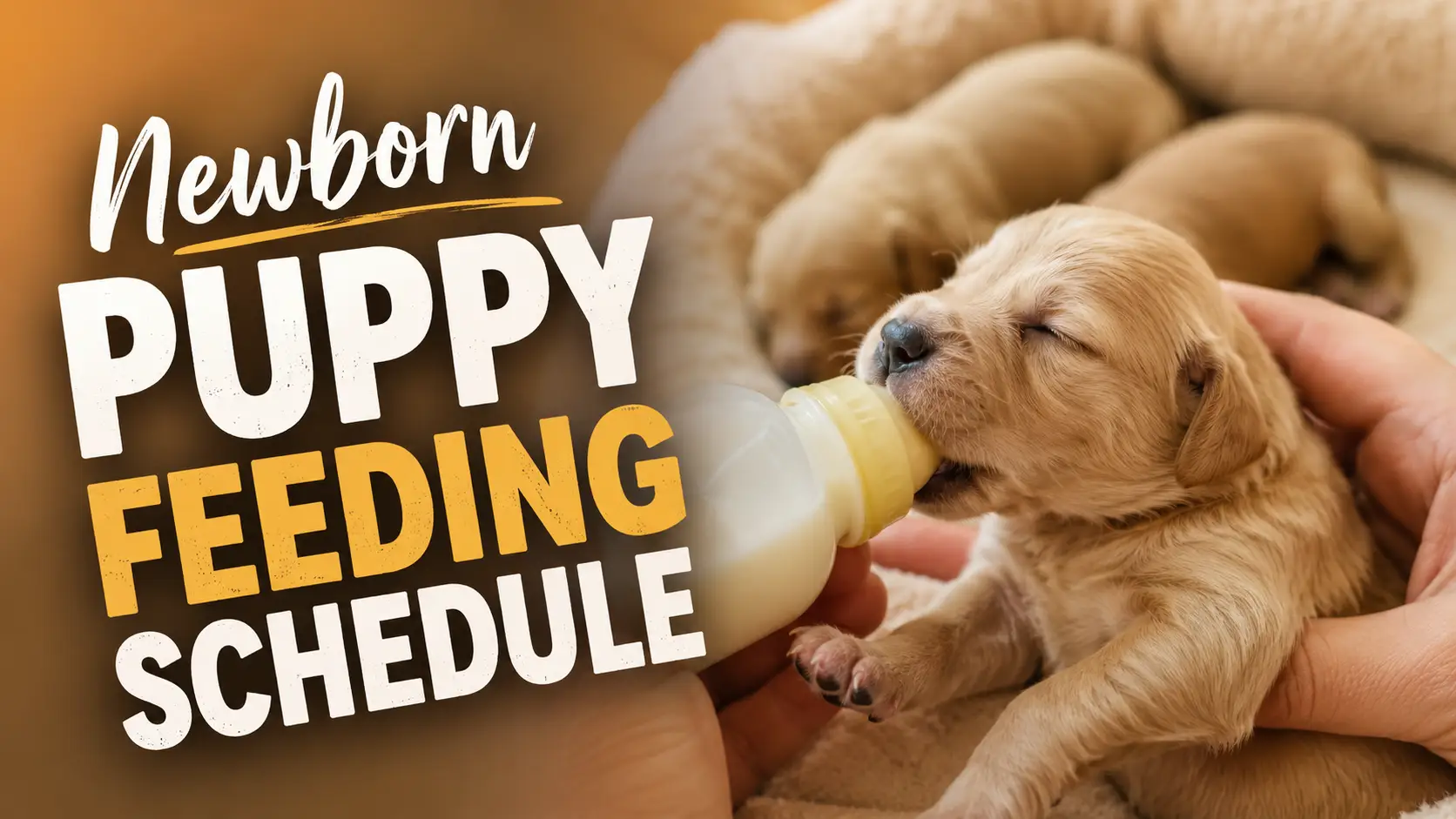
Hi, I am Zak Fahim from PetFreakz.com! If you are reading this, you probably have a tiny, squeaking newborn puppy in your hands. First of all, take a deep breath. Caring for newborn puppies is one of the most rewarding things you will ever do, but it is also one of the toughest.
During a puppy’s first month of life, everything moves so fast. Their eyes open, they learn to walk, and they double in size in the blink of an eye. Because they grow so fast, getting their diet right during these first four weeks is critical. A strict newborn puppy feeding schedule can mean the difference between a weak, struggling pup and a strong, happy, bouncing dog.
I have put together this guide to make things easy for you. I will walk you through exactly how often your puppies need to eat, what a proper feeding chart looks like, how to bottle feed safely, and when to step in if a mother dog needs help.
Before we start: I am a passionate pet writer and researcher, not a veterinarian. If your newborn puppy is ever weak, cold, crying non-stop, refusing food, or struggling to breathe, please call a licensed veterinarian right away. Tiny puppies can fade very quickly, and a doctor’s care is often the only thing that can save them.
Quick Answer
Newborn puppies need to eat very often. From birth to one week old, they should nurse or be bottle-fed every 2 hours, day and night. By week two, you can space meals out to every 3 to 4 hours. By week three and four, puppies can eat every 4 to 5 hours, and you can begin slowly mixing puppy milk replacer with soft food to start the weaning process. Always use a high-quality puppy formula if the mother cannot nurse, and never give a puppy cow’s milk.
Understanding Newborn Puppy Nutrition
To give your puppies the best start, it helps to understand why they eat the way they do.
Why Newborn Puppies Must Eat Frequently
Puppies are born with very small stomachs. They cannot hold a lot of food at once, but they are growing rapidly and burning energy fast. This means they need small, frequent meals to keep their blood sugar levels stable and stay warm.
The Magic of Mother’s Milk and Colostrum
In a perfect world, the mother dog does all the feeding. Her milk is perfectly balanced with fat, protein, and calcium. More importantly, the very first milk she produces is called colostrum. Colostrum is packed with antibodies that give puppies immunity against diseases. Puppies must drink colostrum within the first 24 hours of life to get this protection.
Puppy Milk Replacer
If the mother dog is not around, or if she rejects her babies or has a large litter, you must step in. You will need a commercial puppy milk replacer. This formula is specially made to mimic the mother’s milk. It has the right mix of fats, proteins, and vitamins to help puppies grow.
Why Cow’s Milk is Unsafe
Never feed a newborn puppy cow’s milk. Cow’s milk does not have enough calories or protein for a growing puppy. Worse, it has too much lactose, which will give the puppy severe diarrhea. Diarrhea quickly leads to dehydration, which can be deadly for a newborn.
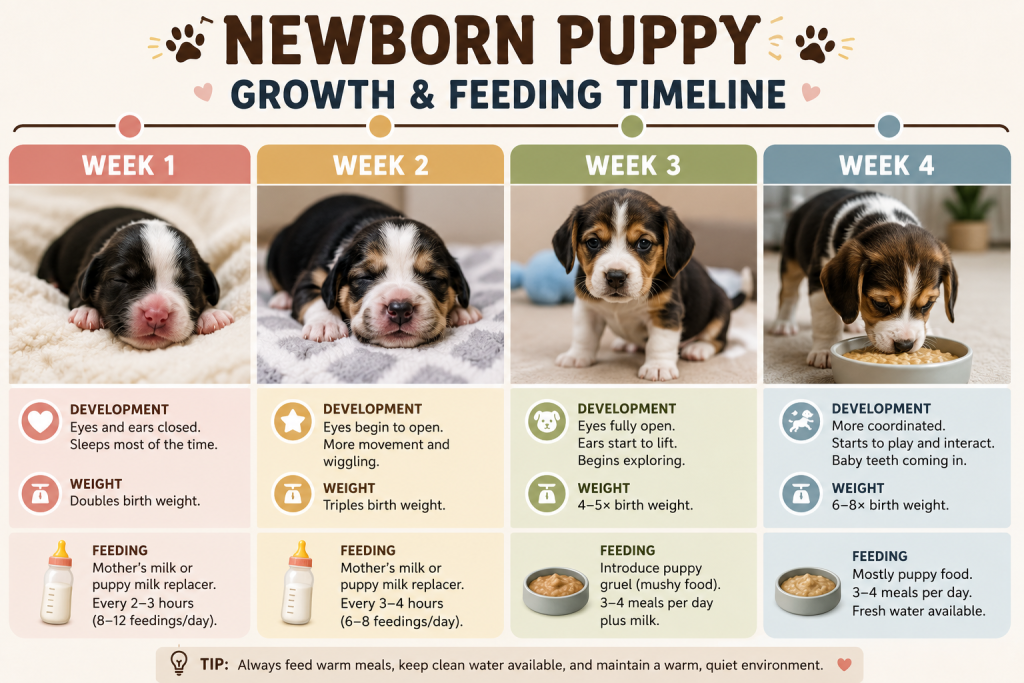
Newborn Puppy Feeding Schedule by Week
Feeding newborn puppies every 2 hours is a big commitment. To help you plan, here is a week-by-week timeline. Remember, this schedule is for bottle feeding newborn puppies. If they are with their mother, she will naturally feed them this often.
Birth to Week 1 (Days 1-7)
During the first week, puppies are blind, deaf, and helpless. They spend 90% of their time sleeping and 10% eating.
- Feeding Frequency: Every 2 hours, around the clock. Yes, this means overnight feeding is required!
- What to Feed: Mother’s milk or puppy milk replacer.
- Care Tip: Keep the puppies very warm. A cold puppy cannot digest food properly.
Week 2 (Days 8-14)
Puppies start to open their eyes this week. They will wiggle around a bit more but still mostly sleep.
- Feeding Frequency: Every 3 to 4 hours, day and night.
- What to Feed: Mother’s milk or puppy milk replacer.
- Care Tip: You should notice steady weight gain. Weigh them daily to make sure they are growing.
Week 3 (Days 15-21)
Ears begin to open, and puppies start trying to stand. They will interact with each other and start getting tiny teeth.
- Feeding Frequency: Every 4 to 5 hours.
- What to Feed: Mother’s milk or milk replacer. You might introduce a tiny taste of liquid puppy gruel at the very end of the week.
- Care Tip: They can now go slightly longer overnight without eating, maybe 5 to 6 hours.
Week 4 (Days 22-28)
Puppies are walking, playing, and getting curious. This is the start of the puppy weaning schedule.
- Feeding Frequency: 4 times a day (every 5-6 hours).
- What to Feed: Puppy gruel (milk replacer blended with high-quality puppy kibble or wet puppy food).
- Care Tip: Let them explore the gruel in a shallow dish. It will be messy, so keep some warm, damp towels ready for cleanup!
Feeding Schedule Summary Table
| Puppy Age | Feeding Frequency | Nighttime Feeding | Diet Type |
| Birth to 1 Week | Every 2 hours | Strictly every 2 hours | Mother’s milk or replacer |
| 1 to 2 Weeks | Every 3 to 4 hours | Every 3 to 4 hours | Mother’s milk or replacer |
| 2 to 3 Weeks | Every 4 to 5 hours | Every 5 to 6 hours | Mother’s milk or replacer |
| 3 to 4 Weeks | 4 times a day | Can sleep through night | Introduce puppy gruel |
How Much Should a Newborn Puppy Eat?
One of the biggest worries for first-time caregivers is knowing exactly how much formula to give. Feeding amounts are always based on the puppy’s body weight.
Formula Feeding Guidelines
Every brand of puppy milk replacer is a little different, so always read the label. A general rule of thumb is that a puppy needs about 1 tablespoon (15 mL) of formula for every 2 ounces (about 57 grams) of body weight each day.
You do not feed this all at once! You must divide that total daily amount by the number of feedings per day.
Portion Adjustments and Why Food Labels Vary
Some formulas are more concentrated than others, which is why following the specific canister instructions is crucial. If your puppy leaves a little bit of milk in the bottle but seems full and is gaining weight, do not force them to finish it. Overfeeding can cause milk to go into their lungs or cause severe stomach aches.
Newborn Puppy Feeding Chart by Weight (Example)
Note: This is a general estimate. Divide this total by the number of daily feedings (e.g., 12 feedings for Week 1).
| Puppy Weight (Ounces) | Total Daily Formula (Approximate) | Amount Per Feeding (If feeding 12x/day) |
| 4 oz | 2 tablespoons (30 mL) | approx. 2.5 mL per meal |
| 8 oz | 4 tablespoons (60 mL) | approx. 5 mL per meal |
| 16 oz (1 lb) | 8 tablespoons (120 mL) | approx. 10 mL per meal |
Bottle Feeding a Newborn Puppy
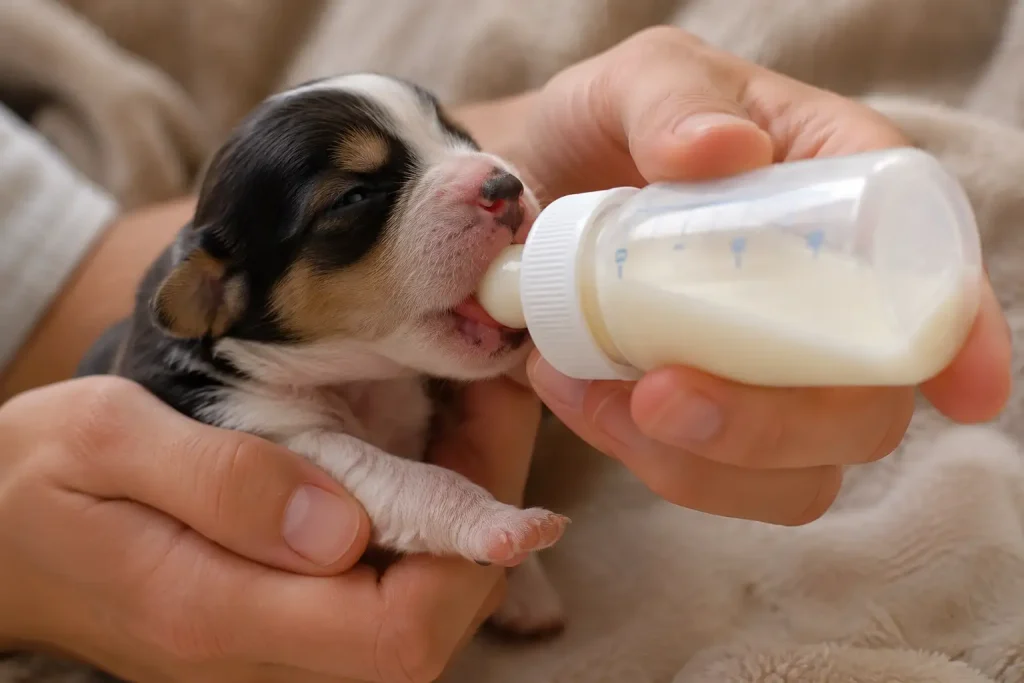
If you are taking on orphan puppy feeding, bottle feeding is an essential skill. Doing it correctly prevents aspiration, which is when milk accidentally goes into the puppy’s lungs and causes fatal pneumonia.
1. Choosing the Right Bottles
Buy a specialized pet nursing bottle. The nipples usually come without a hole. You will need to pierce a hole in the tip with a hot needle. The hole should be just big enough that when you hold the bottle upside down, one drop of milk falls out at a time. If it pours out in a stream, the hole is too big, and the puppy could choke.
2. Mixing the Milk Replacer
Mix the formula exactly as the package says. Use warm water to dissolve the powder completely, making sure there are no lumps.
3. Feeding Temperature
Puppies like their milk warm, similar to a mother’s body temperature (around 100°F or 38°C). Test the milk on the inside of your wrist just like you would for a human baby. It should feel pleasantly warm, never hot.
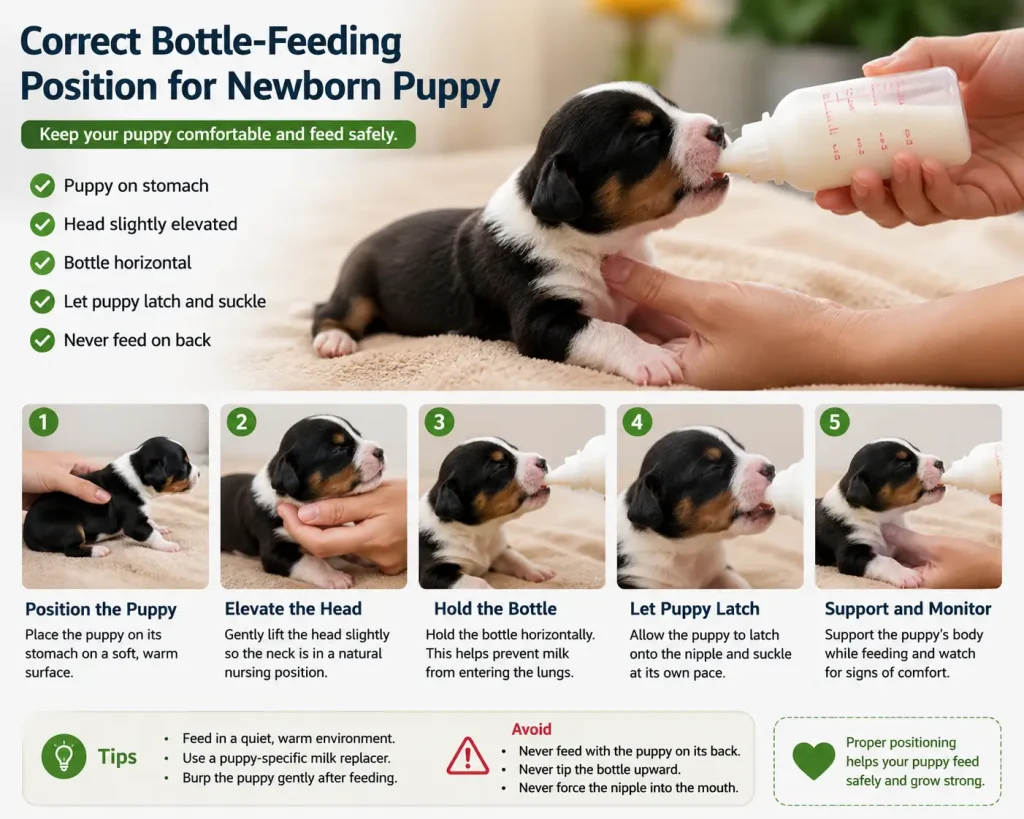
4. The Correct Feeding Position
Never feed a puppy on its back like a human baby! This is the most common and dangerous mistake. A puppy must be fed on its stomach. Place them on a warm towel, gently support their chest, and tilt their head slightly up to offer the bottle. This mimics how they nurse naturally.
5. Preventing Aspiration
Do not squeeze the bottle to force milk into the puppy’s mouth. Let the puppy suck at its own pace. If bubbles come out of the puppy’s nose, stop immediately, gently wipe their face, and let them catch their breath. This means milk is going down the wrong pipe.
6. Cleaning the Bottles
Wash bottles and nipples in hot, soapy water after every single use. Bacteria grows quickly in old milk and will make a newborn puppy very sick.
Feeding Orphaned Newborn Puppies
When you are fully responsible for newborn puppy care without a mother dog, you have to do more than just feed them.
Keeping Puppies Warm
A mother dog keeps her puppies very warm. Orphaned pups need a heat source, like a pet-safe heating pad set on low and placed under half of their box. Make sure they can crawl away to a cooler spot if they get too hot. Never feed a cold puppy. If a puppy feels cool to the touch, slowly warm them up against your own skin or a warm water bottle before offering food. A cold puppy’s stomach stops working, and milk will rot in their tummy.
Stimulating Urination and Bowel Movements
Newborn puppies cannot go to the bathroom on their own. The mother dog licks their bellies and bottoms to stimulate them. You must do this for them. After every feeding, take a warm, damp cotton ball or soft cloth and gently rub their genital and anal area in small circles. Keep rubbing until they pee and poop. This usually takes about 1 to 2 minutes.
Night Feeding Routine
Keep a dim light and your supplies ready by your bed. Waking up every two hours is hard, but it is temporary. Having your formula pre-measured (but unmixed) can save you precious minutes in the middle of the night.
Signs Your Puppy Is Eating Enough
How do you know if your feeding schedule is actually working? Watch for these happy signs:
- Healthy Weight Gain: The puppy should gain a little bit of weight every single day. Buy a digital kitchen scale and weigh them daily at the same time.
- Quiet Sleeping: A full puppy is a quiet puppy. After eating and going to the bathroom, they should sleep peacefully in a warm pile.
- Strong Nursing Reflex: When you put a clean finger near their mouth, they should try to suck on it eagerly.
- Normal Stool: Healthy puppy poop is firm and brownish-yellow. If it is green, white, or runny, something is wrong.
- Good Hydration: Gently pinch the skin on the back of the puppy’s neck. It should snap right back into place. If it stays tented, the puppy is dehydrated.
Warning Signs That Need Veterinary Care
Puppies are very fragile. If things go wrong, they go wrong fast. I cannot stress this enough: do not wait to see if a sick puppy gets better. Call a vet.
| Normal Behavior (All Good!) | Emergency Signs (Call the Vet!) |
| Sleeping quietly after meals | Crying constantly or sounding like a seagull |
| Gaining weight daily | Losing weight or staying the exact same weight |
| Eagerly grabbing the bottle nipple | Refusing to eat, weak sucking, or pushing food away |
| Warm and active when awake | Limp, cold to the touch, and severely lethargic |
| Firm, yellowish stool | Diarrhea, vomiting, or straining to poop |
| Normal breathing | Milk bubbling from the nose, wheezing, or gasping |
When to Start Weaning
Around three to four weeks of age, your puppy feeding by age chart shifts from 100% milk to the beginning of solid foods.
Signs Puppies Are Ready
Puppies are ready to start weaning when their eyes are fully open, they are walking steadily, and you can feel little sharp teeth breaking through their gums.
Making Puppy Gruel
You start weaning by making a mushy gruel. Blend a high-quality puppy kibble (or canned puppy food) with warm puppy milk replacer until it looks like thin oatmeal.
Gradual Transition Timeline
- Week 4: Offer a shallow saucer of thin gruel 2 to 3 times a day. Let them step in it, sniff it, and lick it. Continue bottle feeding to ensure they get enough calories.
- Week 5: Make the gruel a little thicker. Reduce bottle feeding as they eat more from the saucer.
- Week 6: The food can now be moistened kibble or canned food with less milk replacer. Most puppies are eating fully on their own by this point.
- Week 7-8: Transition entirely to dry puppy kibble or regular wet food.
Common Feeding Mistakes
Avoid these common traps when caring for newborn puppies:
- Feeding Cow’s Milk: Always use a proper puppy milk replacer.
- Feeding on Their Back: Always feed a puppy on its stomach.
- Feeding a Cold Puppy: Warm the puppy slowly before giving food; cold puppies cannot digest milk.
- Forcing Milk Too Fast: Let the puppy suck at their own pace. Squeezing the bottle causes aspiration.
- Forgetting to Stimulate: Orphaned puppies will die if you do not help them pee and poop after every meal.
- Reusing Old Formula: Make fresh formula for every feeding, or keep it in the fridge for a maximum of 24 hours. Never reheat milk in the microwave (it creates hot spots).
Practical Tips from Zak
Over the years of researching and talking to experienced breeders and fosters, I have picked up a few practical tricks:
- Use a Makeup Sponge: If a tiny newborn is struggling to latch onto a bottle nipple, some rescuers use a sterile, clean makeup sponge wedge dipped in formula to let the puppy suck the milk out. (Always consult an expert if you are having latching issues!)
- Track Everything: Buy a cheap notebook and write down the time, amount eaten, weight, and bathroom habits for every puppy, every single day. When you are sleep-deprived, this notebook will save your sanity.
- Color Code: If you have a litter of orphaned puppies that look alike, put different colored soft yarn collars on them so you know who has eaten and who hasn’t.
Daily Newborn Puppy Care Checklist
Feel free to print this out and tape it next to your feeding station!
- [ ] Weigh the puppy at the same time every day.
- [ ] Check the heating pad to ensure the box is warm (but not hot).
- [ ] Wash hands thoroughly before handling bottles or puppies.
- [ ] Prepare fresh formula (warm to 100°F).
- [ ] Feed the puppy on its stomach.
- [ ] Wipe the face clean of any spilled milk.
- [ ] Gently stimulate the belly/bottom with a warm, damp cotton ball until the puppy pees and poops.
- [ ] Wash the bottle and nipple in hot, soapy water.
- [ ] Mark the feeding amount and weight in your daily tracker notebook.
Frequently Asked Questions
How often should newborn puppies eat?
From birth to one week old, they should eat every 2 hours. At two weeks, they can eat every 3 to 4 hours. By three weeks, every 4 to 5 hours is sufficient.
Can newborn puppies go all night without eating?
No, not during the first two weeks. They must be fed every 2 to 3 hours overnight. By week three, they may be able to sleep for 5 to 6 hours at night, but they still need frequent daytime meals.
Can I feed newborn puppies cow’s milk?
No. Cow’s milk does not have the right nutrients and contains too much lactose, which will cause severe diarrhea and dangerous dehydration. Always use a commercial puppy milk replacer.
How do I know if my puppy is getting enough milk?
A well-fed puppy will sleep quietly between feedings, feel warm and plump, have a strong sucking reflex, and gain weight consistently every single day.
What if the mother won’t nurse?
If the mother rejects the puppies, has mastitis (a painful breast infection), or isn’t producing milk, you must separate the puppies, keep them warm, and begin bottle-feeding them with puppy milk replacer immediately. Also, contact your vet.
When do puppies open their eyes?
Puppies typically start to open their eyes between 10 and 14 days old. Their vision will be blurry at first, and their eyes will appear cloudy blue. Never force their eyelids open.
When should puppies start eating solid food?
You can begin the weaning process around 3.5 to 4 weeks of age by introducing a very thin puppy gruel (milk replacer blended with puppy food).
Should I wake sleeping newborn puppies for feeding?
During the first two weeks, yes. It is crucial to stick to the 2 to 3-hour schedule to prevent their blood sugar from dropping. Gently wake them up, feed them, and let them go right back to sleep.
Conclusion
Caring for newborn puppies is an exhausting labor of love, but nothing beats the feeling of watching a tiny, fragile creature grow into a healthy, playful dog. Sticking to a strict newborn puppy feeding schedule, keeping everything flawlessly clean, providing warmth, and tracking their daily weight will set you up for success.
Always remember that things can change fast with infant animals. If a puppy stops nursing well, feels cold, cries endlessly, or seems weak, do not guess what to do—reach out to a licensed veterinarian immediately. You have got this, and those puppies are so lucky to have you!