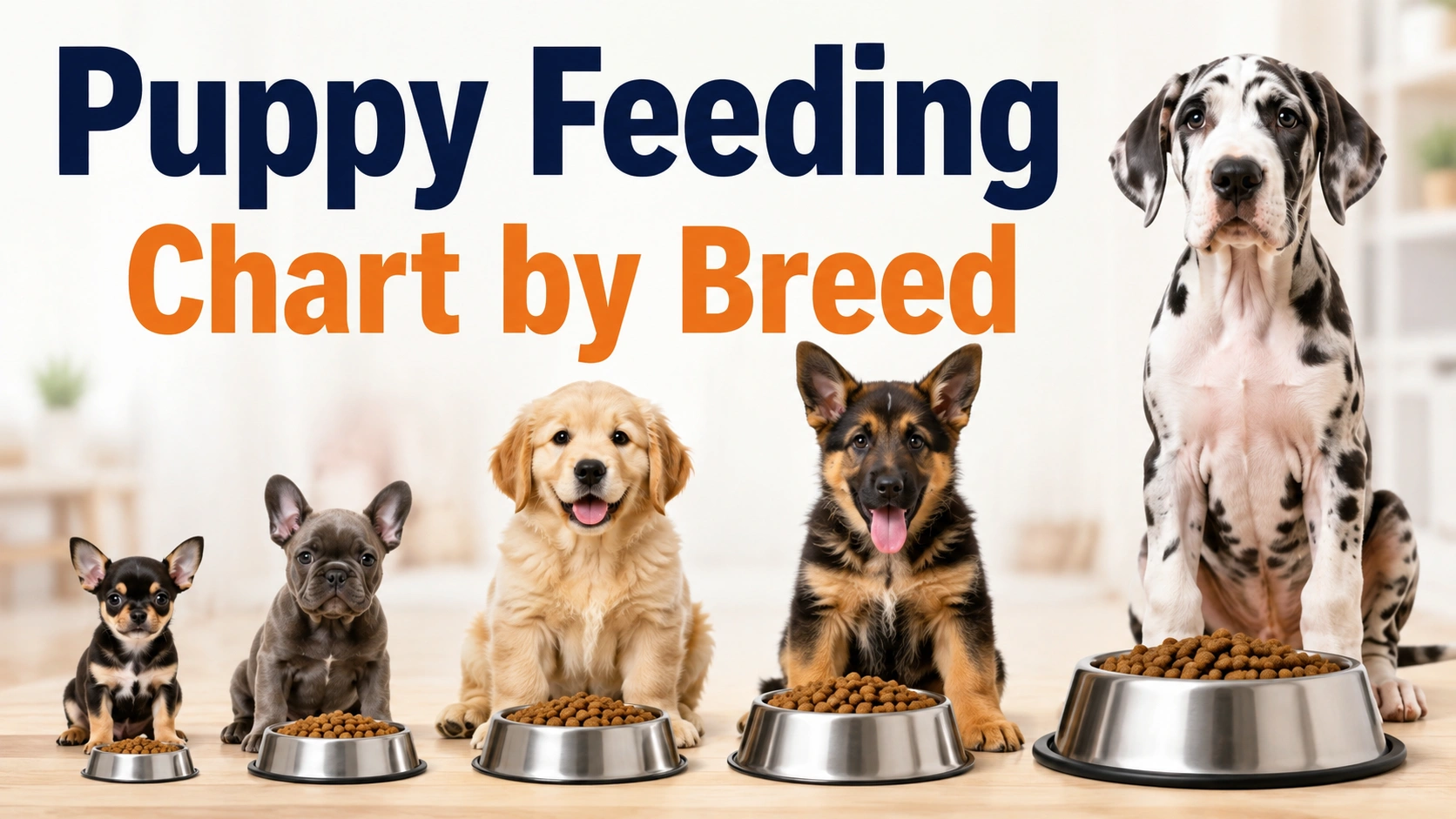
Choosing the right amount of food for a puppy can feel confusing, especially when every breed grows differently. A Chihuahua puppy and a Great Dane puppy may be the same age, but their bodies, metabolism, growth speed, and nutritional needs are completely different.
I’m Zak Fahim, and in this guide, I’ll explain how breed affects puppy nutrition and how to create a feeding plan based on your puppy’s size, growth stage, activity level, and body condition.
A good puppy feeding guide by breed is not just about counting cups of food. It is about understanding why different puppies need different portions. Toy breeds often need smaller but more frequent meals, while large and giant breeds need controlled growth to support healthy bones and joints.
In this complete breed-specific puppy feeding chart, I’ll cover toy, small, medium, large, and giant breeds, including popular breeds such as Labrador Retrievers, Golden Retrievers, French Bulldogs, Chihuahuas, German Shepherds, and Great Danes.
You’ll learn how much to feed different puppy breeds, how feeding schedules change by breed size, when puppies should transition to adult food, and how to adjust portions as your puppy grows.
.
Quick Answer: How Does Breed Affect Puppy Feeding?
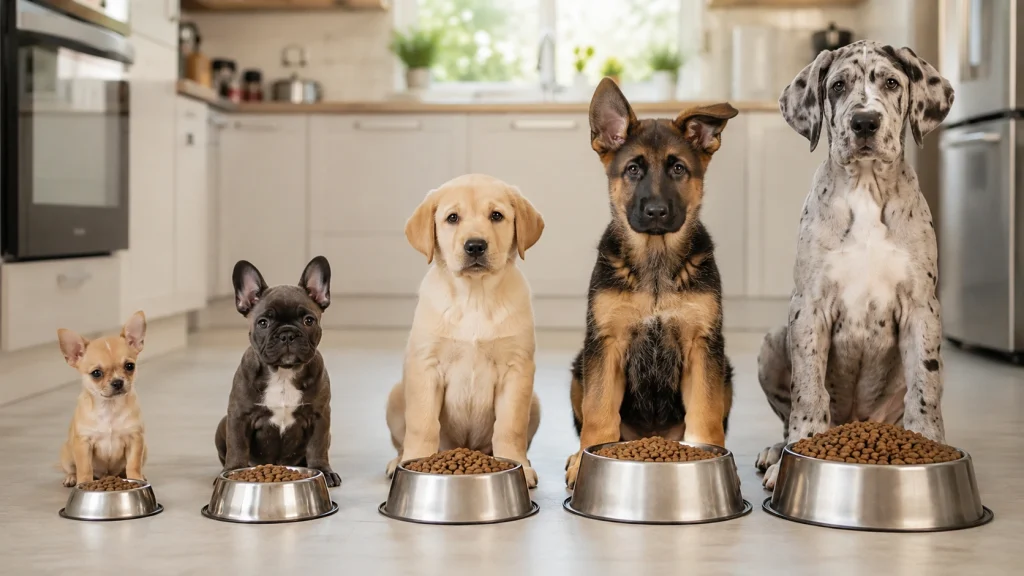
Different puppy breeds need different amounts of food because they grow at different speeds and reach different adult sizes. Small and toy breeds usually need smaller meals more often, while large and giant breeds need carefully controlled portions to support steady growth. A puppy’s food amount depends on breed size, current weight, age, activity level, and the calorie content of the food. The best feeding plan combines a breed-specific starting point with regular weight checks and body condition monitoring.
Why Breed Matters When Feeding Puppies
Breed is one of the most important factors when deciding how much food a puppy needs. Puppies are not simply smaller versions of adult dogs. Their bodies are developing rapidly, and their nutritional needs change depending on their expected adult size.
For example, a three-month-old Chihuahua may weigh only a few pounds, while a three-month-old Labrador Retriever may already weigh more than 20 pounds. Both puppies are young, but their food requirements are very different.
When creating a puppy feeding schedule by breed, I consider several important differences.
Growth Rate
Some breeds grow quickly during their first months of life, while others continue growing for much longer. Large and giant breeds often have extended growth periods, meaning their feeding plan needs careful management.
Adult Body Size
A puppy’s future adult size affects how much energy it needs. A Great Dane puppy may eventually weigh more than 100 pounds, while a Yorkshire Terrier may remain under 10 pounds.
Metabolism
Small dogs often have faster metabolisms and burn energy quickly. This is why some toy breeds may require more frequent meals compared with larger puppies.
Calorie Requirements
Puppies need more calories per pound than adult dogs because they are building muscle, bones, organs, and other tissues. However, the total amount varies greatly between breeds.
Bone and Muscle Development
Large and giant breed puppies need balanced nutrition to support healthy development. Feeding excessive calories does not make them grow better. Controlled growth is usually more important than rapid growth.
This is why two puppies of the same age may need completely different amounts of food. Breed size, metabolism, and growth pattern matter just as much as age.
Puppy Feeding Chart by Breed Size
The following chart provides a general overview of feeding differences between breed sizes. Exact portions depend on your puppy’s food formula, calorie density, weight, and activity level.
| Breed Size | Adult Weight | Meals Per Day | Approximate Daily Food | Growth Speed | Adult Food Transition Age |
|---|---|---|---|---|---|
| Toy Breeds | Up to 10 lb | 3–4 meals | 1/4–1 cup daily | Fast early growth | About 9–12 months |
| Small Breeds | 10–25 lb | 3 meals | 1/2–2 cups daily | Reach adult size quickly | About 10–12 months |
| Medium Breeds | 25–50 lb | 2–3 meals | 1 1/2–3 cups daily | Moderate growth period | About 12 months |
| Large Breeds | 50–90 lb | 2–3 meals | 2–5 cups daily | Longer growth period | About 12–18 months |
| Giant Breeds | 90+ lb | 2 meals | 4–7+ cups daily | Slow extended growth | About 18–24 months |
These numbers are general examples, not fixed rules. Always compare portions with the feeding instructions provided by your puppy food manufacturer.
Organizations such as the American Kennel Club (AKC), Association of American Feed Control Officials (AAFCO), and veterinary nutrition experts recommend choosing complete puppy nutrition and adjusting portions based on growth, body condition, and individual needs.
Feeding Chart for Toy Breeds
Toy breeds have unique feeding needs because their bodies are very small but often have high energy requirements. Breeds such as Chihuahuas, Yorkshire Terriers, Maltese, Pomeranians, and Toy Poodles grow quickly during their early months.
Because toy puppies have small stomachs, they usually do better with smaller meals spread throughout the day.
Common Toy Breeds
- Chihuahua
- Yorkshire Terrier
- Maltese
- Pomeranian
- Toy Poodle
Toy breed puppy feeding usually focuses on:
- Small, measured portions
- Frequent meals during early puppyhood
- Monitoring healthy weight gain
- Avoiding unnecessary calorie restriction
Very small puppies can be sensitive to long periods without food. If you have concerns about your toy puppy’s eating habits, growth, or energy level, consult a licensed veterinarian.
| Toy Breed | Typical Puppy Weight | Daily Food Range | Meals Per Day | Adult Transition |
|---|---|---|---|---|
| Chihuahua | 2–6 lb | 1/4–3/4 cup | 3–4 meals | 9–12 months |
| Yorkshire Terrier | 2–7 lb | 1/4–3/4 cup | 3–4 meals | 9–12 months |
| Maltese | 3–8 lb | 1/4–1 cup | 3 meals | 9–12 months |
| Pomeranian | 3–7 lb | 1/4–3/4 cup | 3–4 meals | 9–12 months |
| Toy Poodle | 4–8 lb | 1/3–1 cup | 3 meals | 9–12 months |
Feeding Chart for Small Breeds
Small breed puppies are slightly larger than toy breeds but still have faster growth patterns compared with many larger dogs. They often reach adult size earlier and may transition to adult food sooner.
Popular small breeds include:
- Beagle
- French Bulldog
- Boston Terrier
- Miniature Schnauzer
- Shih Tzu
Small breed puppies usually need:
- Energy-dense puppy food
- Consistent meal timing
- Portions adjusted as weight changes
- Careful monitoring to prevent excess weight gain
| Small Breed | Typical Puppy Weight | Daily Food Range | Meals Per Day | Adult Transition |
|---|---|---|---|---|
| Beagle | 8–15 lb | 3/4–1 1/2 cups | 3 meals | 10–12 months |
| French Bulldog | 8–18 lb | 3/4–1 1/2 cups | 3 meals | 10–12 months |
| Boston Terrier | 8–18 lb | 3/4–1 1/2 cups | 3 meals | 10–12 months |
| Miniature Schnauzer | 6–15 lb | 1/2–1 1/4 cups | 3 meals | 10–12 months |
| Shih Tzu | 5–12 lb | 1/2–1 cup | 3 meals | 10–12 months |
Feeding Chart for Medium Breeds
Medium breed puppies are often easier to feed than very small or giant breeds because their growth rate is usually more balanced. However, they still need carefully measured portions because their bodies are developing quickly during the first year.
Medium breeds typically become adults faster than large breeds but slower than toy breeds. Their feeding plan should support muscle development, healthy energy levels, and steady growth.
Common Medium Breeds
- Border Collie
- Australian Shepherd
- Bulldog
- Standard Schnauzer
- Cocker Spaniel
Medium breed puppy feeding usually focuses on:
- Adjusting food amounts as body weight increases
- Maintaining healthy activity levels
- Avoiding unnecessary weight gain
- Supporting muscle and bone development
| Medium Breed | Typical Puppy Weight | Daily Food Range | Meals Per Day | Adult Transition |
|---|---|---|---|---|
| Border Collie | 15–35 lb | 1–2 1/2 cups | 2–3 meals | 12 months |
| Australian Shepherd | 15–40 lb | 1 1/2–3 cups | 2–3 meals | 12–15 months |
| Bulldog | 15–40 lb | 1 1/2–2 1/2 cups | 2–3 meals | 12 months |
| Standard Schnauzer | 20–45 lb | 1 1/2–3 cups | 2–3 meals | 12 months |
| Cocker Spaniel | 15–30 lb | 1–2 cups | 2–3 meals | 12 months |
Feeding Chart for Large Breeds
Large breed puppies require special attention because they grow rapidly but have a longer development period. Feeding too many calories can encourage faster growth, which may not always support healthy development.
Large breed puppies often need food specifically designed for their size. These formulas are created with controlled nutrition to support growing bodies.
Common Large Breeds
- Labrador Retriever
- Golden Retriever
- German Shepherd
- Boxer
- Doberman Pinscher
Large breed puppy feeding focuses on:
- Controlled calorie intake
- Appropriate portion sizes
- Balanced nutrients
- Gradual growth rather than rapid weight gain
| Large Breed | Typical Puppy Weight | Daily Food Range | Meals Per Day | Adult Transition |
|---|---|---|---|---|
| Labrador Retriever | 20–60 lb | 2–4 cups | 2–3 meals | 12–18 months |
| Golden Retriever | 20–60 lb | 2–4 cups | 2–3 meals | 12–18 months |
| German Shepherd | 20–70 lb | 2–5 cups | 2–3 meals | 15–18 months |
| Boxer | 20–60 lb | 2–4 cups | 2–3 meals | 12–18 months |
| Doberman Pinscher | 25–70 lb | 2–5 cups | 2–3 meals | 15–18 months |
Feeding Chart for Giant Breeds
Giant breed puppies have some of the most unique feeding requirements. Although they become very large dogs, their growth should happen slowly and steadily.
Breeds such as Great Danes and Mastiffs can continue growing for nearly two years. Their feeding plan should focus on supporting healthy development rather than maximizing size quickly.
Common Giant Breeds
- Great Dane
- Saint Bernard
- Mastiff
- Newfoundland
- Irish Wolfhound
Giant breed puppy nutrition focuses on:
- Controlled calories
- Careful portion measurement
- Supporting joints and bones
- Avoiding excessive growth speed
| Giant Breed | Typical Puppy Weight | Daily Food Range | Meals Per Day | Adult Transition |
|---|---|---|---|---|
| Great Dane | 30–100+ lb | 4–8 cups | 2 meals | 18–24 months |
| Saint Bernard | 30–120+ lb | 4–8 cups | 2 meals | 18–24 months |
| Mastiff | 40–120+ lb | 5–9 cups | 2 meals | 18–24 months |
| Newfoundland | 30–100+ lb | 4–8 cups | 2 meals | 18–24 months |
| Irish Wolfhound | 40–120+ lb | 5–9 cups | 2 meals | 18–24 months |
Daily Food Amount by Popular Puppy Breeds
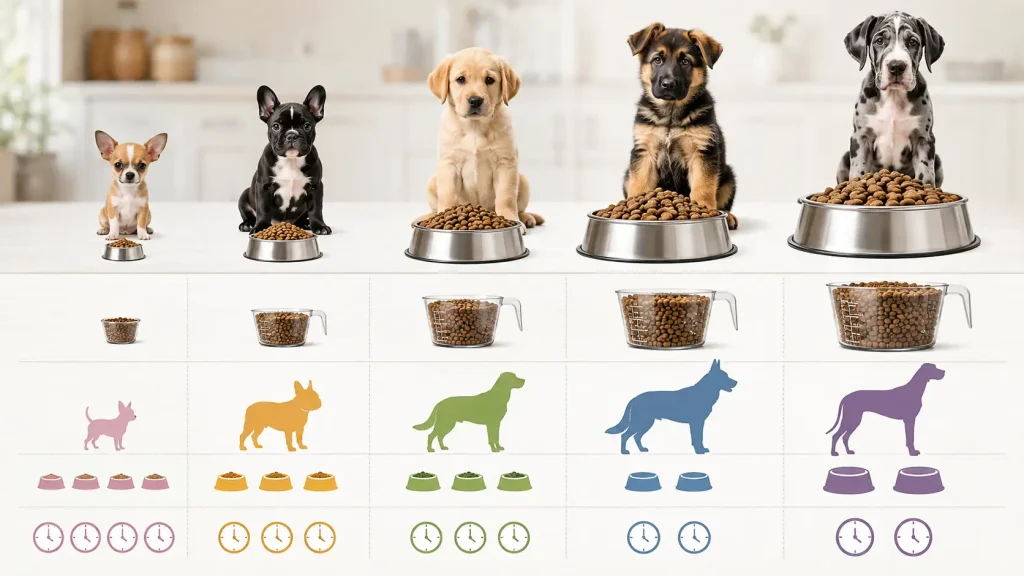
Many puppy owners search for feeding recommendations for specific breeds. The table below gives general starting estimates for some of the most popular breeds in the United States.
| Breed | Average Puppy Weight | Daily Food | Meals Per Day | Adult Transition Age |
|---|---|---|---|---|
| Labrador Retriever | 20–60 lb | 2–4 cups | 2–3 meals | 12–18 months |
| Golden Retriever | 20–60 lb | 2–4 cups | 2–3 meals | 12–18 months |
| German Shepherd | 20–70 lb | 2–5 cups | 2–3 meals | 15–18 months |
| French Bulldog | 8–18 lb | 3/4–1 1/2 cups | 3 meals | 10–12 months |
| Beagle | 8–25 lb | 3/4–2 cups | 3 meals | 10–12 months |
| Chihuahua | 2–6 lb | 1/4–3/4 cup | 3–4 meals | 9–12 months |
| Yorkshire Terrier | 2–7 lb | 1/4–3/4 cup | 3–4 meals | 9–12 months |
| Poodle | Varies by size | 1/2–3 cups | 2–3 meals | 10–18 months |
| Rottweiler | 20–80 lb | 2–5 cups | 2–3 meals | 15–18 months |
| Great Dane | 30–100+ lb | 4–8 cups | 2 meals | 18–24 months |
Feeding Frequency by Breed Size
The number of meals your puppy receives should match its breed size, age, and growth stage.
| Breed Size | Young Puppy Schedule | Older Puppy Schedule | Reason |
|---|---|---|---|
| Toy Breeds | 3–4 meals daily | 2–3 meals | Small stomach size and high energy needs |
| Small Breeds | 3 meals daily | 2 meals | Fast growth and active metabolism |
| Medium Breeds | 3 meals daily | 2 meals | Balanced growth pattern |
| Large Breeds | 3 meals daily | 2 meals | Supports controlled growth |
| Giant Breeds | 3 meals daily | 2 meals | Slow development and portion control |
Breed Growth Timeline: How Feeding Changes as Puppies Grow
Every puppy follows a different growth timeline. Breed size has a major impact on how quickly a puppy matures and when feeding adjustments should happen.
A Chihuahua may reach most of its adult size before one year, while a Great Dane may continue growing for nearly two years. This is why the same feeding plan cannot work for every breed.
Fast-Growing Breeds
Small and medium breeds often grow quickly during their first months. Their food portions may increase rapidly during early puppyhood and then stabilize as they approach adult size.
Examples include:
- Chihuahua
- Yorkshire Terrier
- French Bulldog
- Beagle
- Cocker Spaniel
Slow-Growing Breeds
Large and giant breeds develop over a longer period. Their feeding plans should focus on steady growth rather than rapid weight gain.
Examples include:
- German Shepherd
- Golden Retriever
- Labrador Retriever
- Great Dane
- Saint Bernard
| Age Stage | Small Breeds | Large Breeds | Feeding Focus |
|---|---|---|---|
| 8–12 Weeks | Rapid early growth | Rapid development begins | Small frequent meals and puppy nutrition |
| 3–6 Months | Increase portions as weight changes | Carefully control growth rate | Adjust food based on body condition |
| 6–12 Months | Approaching adult size | Still developing | Reduce unnecessary calorie increases |
| 12–24 Months | Usually adult | Continued growth in giant breeds | Transition based on breed maturity |
Choosing the Best Puppy Food for Your Breed
Choosing puppy food is not only about selecting a popular brand. The food should match your puppy’s growth needs, breed size, and life stage.
Small-Breed Puppy Food
Small-breed formulas are designed for puppies with faster metabolisms and smaller stomachs. They often provide concentrated calories in smaller serving sizes.
Large-Breed Puppy Food
Large-breed puppy food is designed for controlled growth. Large puppies need balanced nutrition that supports development without encouraging excessive growth.
Breed-Specific Formulas
Some companies create formulas based on breed characteristics. However, the most important factors are usually life stage, nutritional balance, calorie content, and your puppy’s individual needs.
Reading AAFCO Nutritional Statements
When selecting puppy food, look for products that meet nutritional standards established by organizations such as the Association of American Feed Control Officials (AAFCO). A complete puppy diet should provide balanced nutrition for growth.
Dry Food vs Wet Food
| Food Type | Advantages | Considerations |
|---|---|---|
| Dry Kibble | Easy to measure and store | Check calorie amount per cup |
| Wet Food | Higher moisture content and often more appealing | Usually requires larger portions |
| Mixed Feeding | Combines benefits of both types | Total calories should remain balanced |
Activity Level and Breed Differences
Breed influences energy needs because different dogs were developed for different purposes. A working breed puppy may burn more energy than a calm companion breed.
Sporting Breeds
Breeds such as Labrador Retrievers and Golden Retrievers are often active and may require careful adjustment based on exercise levels.
Herding Breeds
Border Collies and Australian Shepherds are naturally energetic dogs. Their food needs may increase when they have high daily activity.
Working Breeds
German Shepherds, Rottweilers, and similar breeds may have higher energy requirements depending on lifestyle and training activities.
Companion Breeds
Small companion breeds may require fewer calories if they have a calm lifestyle. Portion control is important because small changes can affect their body weight quickly.
| Activity Level | Possible Feeding Adjustment |
|---|---|
| Low Activity | Monitor portions carefully to prevent excess weight gain |
| Normal Puppy Activity | Follow standard feeding recommendations |
| High Activity | May require additional calories based on growth and condition |
Body Condition Score (BCS) by Breed
Body Condition Score is one of the best tools for checking whether your puppy’s feeding plan is working.
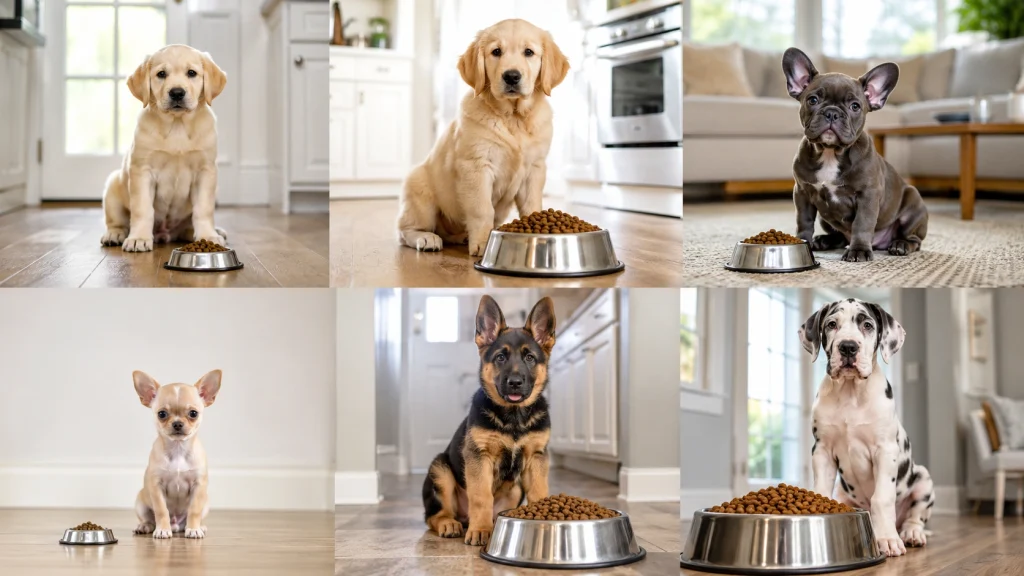
Different breeds naturally look different. A Greyhound-type body is naturally lean, while some breeds have heavier builds. The goal is not a specific appearance but a healthy body condition.
| Body Type | Healthy Signs | Feeding Consideration |
|---|---|---|
| Naturally Lean Breeds | Visible waist and easy-to-feel ribs | Do not mistake normal leanness for underfeeding |
| Muscular Breeds | Strong body structure with visible waist | Monitor fat levels, not only body weight |
| Heavy-Coated Breeds | Healthy body shape under the coat | Use touch instead of appearance alone |
Practical BCS Checklist
- Can you feel your puppy’s ribs with gentle pressure?
- Is there a visible waist when looking from above?
- Does the abdomen slightly tuck upward?
- Is your puppy growing steadily?
- Does your puppy have normal energy?
If your puppy has poor growth, sudden weight changes, loss of appetite, digestive problems, or other health concerns, consult a licensed veterinarian.
Common Breed-Specific Feeding Mistakes
Different breeds often have different feeding challenges. Understanding these common mistakes can help owners create better routines.
Overfeeding Labradors
Labrador Retrievers are known for their strong appetite. Many owners accidentally provide too many calories because the puppy always appears hungry. Measuring portions and monitoring body condition are important.
Feeding Giant Breeds for Rapid Growth
Some owners believe bigger puppies should grow faster. However, giant breeds usually benefit from controlled growth rather than excessive calorie intake.
Underfeeding Toy Breeds
Because toy breeds eat small amounts, owners may underestimate their nutritional needs. Small measured meals are important for maintaining steady energy.
Free-Feeding Active Puppies
Leaving food available all day can make it difficult to monitor calorie intake. Measured meals provide better control.
Feeding Adult Food Too Early
Puppies need nutrition designed for growth. Switching too early may not provide the same support as puppy-formulated food.
Ignoring Breed Metabolism
A feeding plan that works for one breed may not work for another. Breed characteristics should always be considered.
Practical Tips From Zak
When creating a feeding routine, I believe consistency is the most important factor. A simple system helps you understand what works for your puppy.
My practical approach is:
- Measure every meal instead of guessing.
- Track weight regularly during puppy growth.
- Adjust portions slowly when needed.
- Consider breed size before changing food amounts.
- Watch body condition instead of focusing only on the scale.
Every puppy is an individual. Breed gives you a useful starting point, but your puppy’s growth pattern will always provide the best guidance.
Printable Breed Feeding Tracker
| Date | Breed | Age | Weight | Daily Food | Meals Per Day | Body Condition | Growth Notes | Vet Visits |
|---|---|---|---|---|---|---|---|---|