When your furry best friend is feeling under the weather, getting them to eat can be incredibly stressful. You might find yourself staring at your pantry, wondering if a simple jar of pureed meat or sweet potatoes could be the solution.
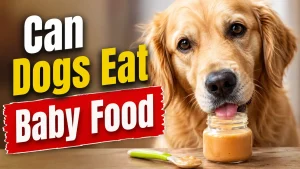
If you are asking, can dogs eat baby food, the short answer is yes—but with a few critical exceptions. As an experienced pet care advocate, I know that while baby food can be a fantastic temporary tool for sick or picky dogs, it is not a substitute for a balanced canine diet. Some jars contain hidden ingredients that are highly toxic to dogs.
This guide will break down exactly what baby food dogs can eat, how to safely use it to hide medication or soothe an upset stomach, and the dangerous ingredients you must absolutely avoid.
Quick Answer
Yes, dogs can eat certain types of baby food in moderation. Plain, meat-based baby foods (like pureed chicken, turkey, or beef) and simple vegetable purees are generally safe and often used to entice sick dogs to eat or to hide medication. However, you must always check the label to ensure the baby food does not contain toxic ingredients like onion powder, garlic, or artificial sweeteners. Baby food should only be used as a temporary treat or supplement, not a long-term meal replacement.
Is Baby Food Good for Dogs?
Baby food is not inherently “good” or “bad” for dogs; it is simply a tool that pet parents can use in specific situations. Because baby food is pureed and easy to swallow, it is highly palatable and gentle on the digestive tract.
Here are the main reasons pet owners use baby food:
- Encouraging sick dogs to eat: When a dog loses their appetite due to illness or surgery, the strong smell of pureed meat can often tempt them to take a few bites.
- Hiding medication: Crushing a pill or hiding a capsule inside a spoonful of savory baby food is one of the easiest ways to medicate a stubborn dog.
- Soothing a sensitive stomach: For dogs recovering from gastrointestinal distress, a bland diet is often recommended.
- Senior dogs with dental issues: Older dogs who struggle to chew hard kibble can benefit from soft food supplements.
While it is helpful in a pinch, baby food lacks the essential nutrients, calcium, and balanced proteins required for a dog’s long-term health. According to American Veterinary Medical Association pet care guidance, responsible pet care includes proper, species-appropriate nutrition, meaning human foods should never make up more than 10% of your dog’s daily caloric intake.
What Baby Food Can Dogs Eat?
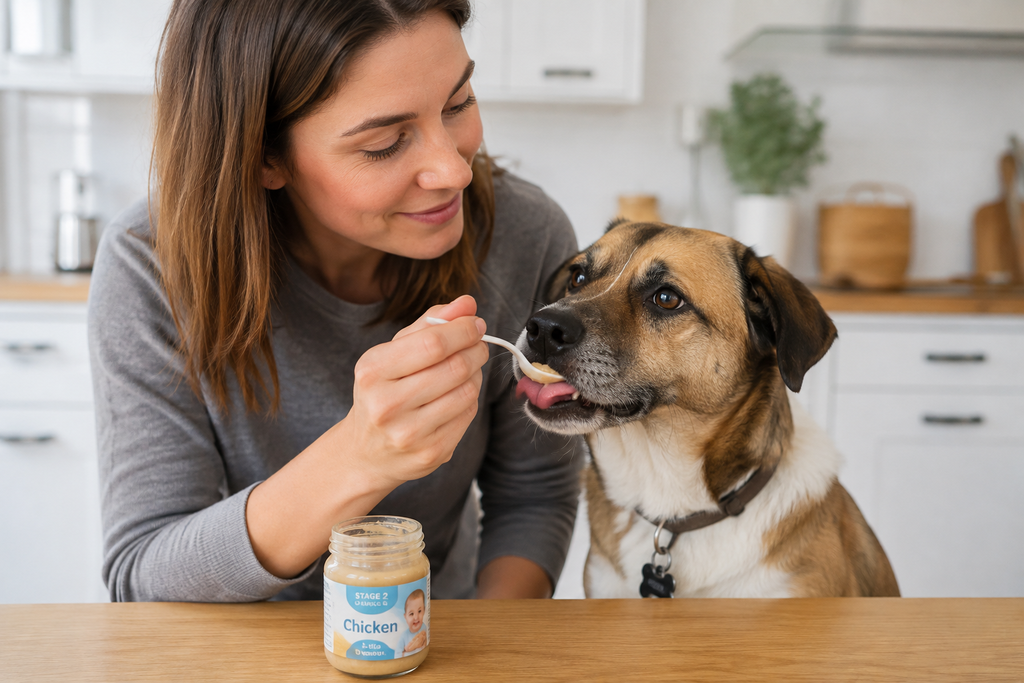
When shopping for baby food for your dog, simplicity is the ultimate rule. You want Stage 1 or Stage 2 baby foods, which are typically single-ingredient purees without added spices, chunks, or complex mixtures.
Safe Meat Purees
Meat-based baby foods are the most popular choice for dogs because the high protein content and strong aroma are highly appealing.
- Pureed chicken
- Pureed turkey
- Pureed beef
- Pureed lamb
Safe Fruit and Vegetable Purees
Some plain fruit and vegetable purees can provide a healthy, low-calorie treat or help with digestion.
- Sweet potato
- Pumpkin (excellent for digestion)
- Carrots
- Green beans
- Apples (without seeds)
- Bananas
Always read the ingredient list. The only things listed on the label should be the primary meat or vegetable, and perhaps water or a safe broth.
Toxic and Dangerous Ingredients to Avoid
The biggest risk of asking can dogs have baby food is accidentally feeding them something toxic. Many human baby foods contain seasonings that are safe for infants but deadly to canines.
Never feed your dog baby food containing the following:
- Onion powder or onions: This destroys a dog’s red blood cells and can lead to severe anemia.
- Garlic or garlic powder: Like onions, garlic is highly toxic to dogs.
- Grapes or raisins: Found in some fruit mixtures, these can cause rapid kidney failure.
- Xylitol (birch sugar): An artificial sweetener occasionally used in human foods that causes a fatal drop in canine blood sugar and liver failure.
- Macadamia nuts or walnuts: Avoid any baby food with nut blends, as these can cause neurological issues.
- High sodium: Avoid products with added salt, as dogs cannot process excessive sodium.
For further information on keeping dangerous human foods out of your dog’s diet, reviewing official FDA pet food information can help you understand the risks of cross-contamination and unsafe ingredients in the home.
Can I Give My Sick Dog Baby Food?
If your dog is experiencing mild stomach upset, lethargy, or recovering from a minor veterinary procedure, baby food can be an excellent bridge back to their normal diet.
When your dog is sick, their stomach needs a break. Vets often recommend a bland diet of boiled chicken and white rice. If you don’t have time to cook, a jar of plain chicken baby food can serve as a quick alternative to get some calories into their system.
However, if your dog is vomiting persistently, has severe diarrhea, or refuses water, do not try to force feed them baby food. These are signs of a more serious medical emergency that requires immediate veterinary intervention, not a home remedy.
Safe vs. Unsafe Baby Food Ingredients
| Ingredient / Feature | Safe for Dogs? | Why? / Considerations |
| Plain Chicken/Turkey | Yes | High value, gentle on the stomach, great for hiding pills. |
| Plain Sweet Potato | Yes | Good source of fiber; helps with mild digestive upset. |
| Onion/Garlic Powder | No (Toxic) | Can cause severe anemia and damage to red blood cells. |
| Added Salt/Sugar | No | Can lead to dehydration, obesity, and long-term health issues. |
| Grapes/Raisins | No (Toxic) | Can cause acute kidney failure in dogs. |
| Cornstarch | Yes (in moderation) | Safe but provides no nutritional value; used as a thickener. |
How to Safely Feed Baby Food to Your Dog
If you have verified that the baby food is safe, follow these steps to introduce it to your dog:
- Check the label twice: Read the ingredient list carefully to confirm there are absolutely no onions, garlic, or artificial sweeteners.
- Start small: Offer just a teaspoon or two to see how your dog’s stomach reacts.
- Mix it in: If your dog is a picky eater, stir a spoonful of baby food into their regular kibble to enhance the flavor.
- Use it for pills: Coat the medication completely in the baby food so your dog swallows it whole without tasting the pill.
- Store it properly: Once opened, baby food must be refrigerated and should be used within 2 to 3 days to prevent bacterial growth.
Expert Tip:
When buying baby food for your dog, always choose “Stage 1” or “Stage 2” purees. These are usually single-ingredient foods. “Stage 3” or toddler meals often contain complex carbohydrates, added sodium, and dangerous seasonings like onion powder that can make your dog very sick.
When to Call a Veterinarian or Pet Professional
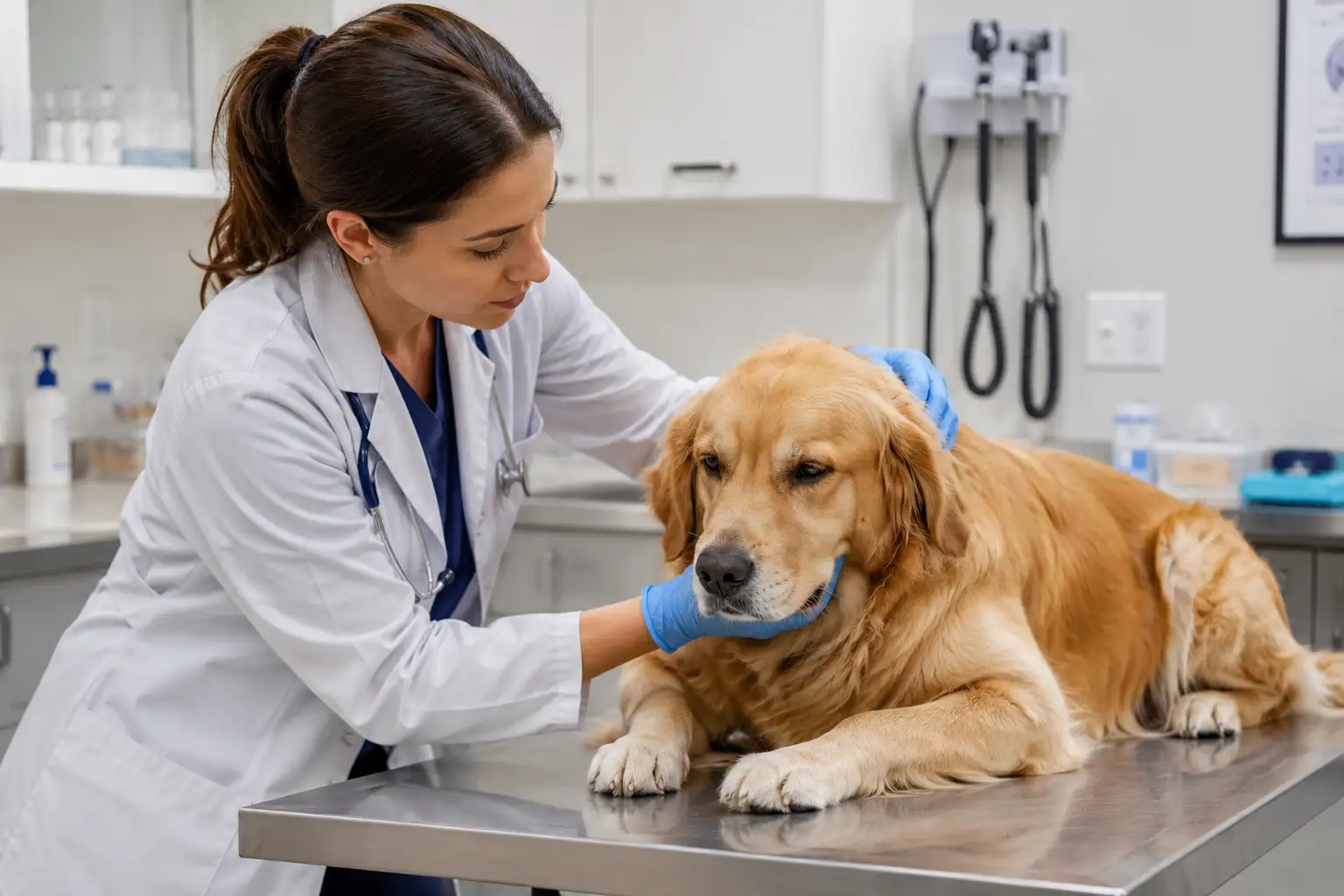
While baby food can help a dog with a mild stomach ache, it is not a cure for underlying illnesses. Knowing when to stop trying home remedies and seek professional help is a crucial part of responsible pet ownership.
Contact your veterinarian immediately if your dog experiences:
- Vomiting or diarrhea that lasts for more than 24-48 hours.
- Complete refusal to drink water, leading to signs of dehydration (dry gums, sunken eyes).
- Lethargy, weakness, or inability to stand.
- Signs of pain, such as whining when their stomach is touched, or adopting a “praying” posture.
- Accidental ingestion of baby food containing toxic ingredients like onion powder, garlic, or xylitol.
Do not use baby food to treat chronic weight loss or long-term dietary issues. If your dog is consistently refusing their normal food, a licensed veterinarian needs to rule out dental disease, kidney issues, or gastrointestinal blockages.
Common Mistakes Pet Owners Should Avoid
- Failing to read the ingredient list: Assuming all baby food is safe is the most dangerous mistake you can make.
- Feeding too much: Baby food is rich. Feeding a whole jar to a small dog can cause a sudden bout of diarrhea. Keep portions small.
- Replacing regular meals: Baby food does not have the taurine, calcium, and complex vitamins your dog needs. It should never replace a scientifically formulated dog food.
- Using glass jars as toys: Never let your dog lick directly from a glass baby food jar unsupervised. The dog’s tongue can get stuck, or the glass could break, causing severe injury. Always serve it on a spoon or in a bowl.
- Keeping open jars too long: Discard any open jars of baby food left in the fridge for more than 72 hours.
FAQs
Can dogs eat baby food with cornstarch?
Yes, dogs can eat baby food that contains cornstarch. Cornstarch is often used as a thickening agent in meat purees. While it is not toxic to dogs, it offers zero nutritional value and consists mostly of empty carbohydrates, so it should only be given in small amounts.
Is fruit baby food safe for dogs?
Many fruit baby foods are safe, such as pureed apples, bananas, and pears. However, you must avoid any fruit blends that contain grapes or raisins, as these are highly toxic to dogs and can cause kidney failure. Also, avoid fruit purees with added sugars.
Can puppies eat baby food?
Puppies can safely eat plain, meat-based baby food in very small quantities, often as a high-value training treat or to hide medicine. However, puppies have specific nutritional requirements for bone and brain development, so baby food should never replace their formulated puppy kibble.
How much baby food can I give my dog?
For small dogs, 1 to 2 teaspoons per day is sufficient. For larger dogs, 1 to 2 tablespoons can be given. Remember the 10% rule: treats and supplements (including baby food) should never make up more than 10% of your dog’s daily caloric intake.
What is the best baby food for a sick dog?
The best baby food for a sick dog is a Stage 1 or Stage 2 plain meat puree, such as pureed chicken or pureed turkey with broth or water. These are highly palatable, easy to digest, and lack the harmful seasonings found in more complex human foods.
Conclusion
So, can dogs eat baby food? Absolutely, as long as you are careful. Plain, single-ingredient meat or vegetable purees can be a lifesaver when you need to hide a bitter pill, soothe a mildly upset stomach, or entice a picky senior dog to eat.
The secret to using baby food safely is vigilance. Always read the ingredient label to ensure there is no onion powder, garlic, or dangerous artificial sweeteners lurking inside the jar. Treat baby food as a temporary tool rather than a dietary staple, and keep portions small to avoid further upsetting your dog’s digestion.
If your dog is sick and refuses even the most tempting jar of pureed chicken, do not wait. Reach out to your local veterinarian immediately to get your furry friend the professional care they need to feel better.