Imagine you are enjoying a delicious Sunday roast, and you accidentally drop a savory piece of meat on the floor. Your dog gobbles it up before you can even react, but panic sets in when you remember the meat was cooked with onions. You immediately begin to wonder, can dogs eat cooked onions in food, or is this a medical emergency?
As pet parents, we naturally want to share our lives—and sometimes our favorite meals—with our furry best friends. However, human foods can hide invisible dangers that threaten pet safety. Understanding which ingredients are harmless and which are toxic is a vital part of responsible pet ownership.
In this comprehensive guide, I will explain exactly why onions are dangerous to your dog, whether the cooking process changes the toxicity, the hidden pantry items you need to watch out for, and the immediate steps you must take if your dog eats something they shouldn’t.
Quick Answer
No, dogs cannot eat cooked onions in food under any circumstances. Onions contain a toxic compound that breaks down a dog’s red blood cells, leading to a life-threatening condition called hemolytic anemia. Cooking, boiling, frying, or pureeing the onions does not destroy this toxin. If your dog consumes onions in any form, contact your veterinarian or a pet poison hotline immediately.
Why Are Onions So Dangerous for Dogs?
To understand the danger, we have to look at how a dog’s body digests food compared to ours. All plants in the Allium family—which includes onions, garlic, leeks, chives, and shallots—contain a toxic principle known as N-propyl disulfide.
When a human eats an onion, our bodies break it down without issue. But when a dog eats an onion, this specific compound attaches itself to the oxygen molecules in your dog’s red blood cells.
Here is what happens inside your dog’s body:
- The toxin causes oxidative damage to the red blood cells.
- The damaged cells become fragile and eventually rupture.
- The dog’s body loses the ability to carry oxygen efficiently to its vital organs.
- This rapid destruction of red blood cells leads to severe anemia and, if untreated, can be fatal.
Because this internal damage takes time to build up, your dog might seem perfectly fine immediately after eating the onion. However, the internal damage has already started.
Does Cooking or Boiling Make Onions Safe?
A very common misconception among pet owners is that heat destroys food toxins. While cooking kills harmful bacteria like salmonella in raw meat, it does nothing to neutralize the toxic compounds in onions.
Cooked onions are just as toxic as raw onions.
Whether the onions are caramelized, boiled in a stew, baked in a casserole, or fried into onion rings, the N-propyl disulfide remains completely intact. Furthermore, if onions are cooked in a broth or gravy, the toxins leach into the surrounding liquid. This means that even if you pick the physical onion pieces out of your dog’s food, the meat and juices are still highly toxic.
Beware of Hidden Onions in the Pantry
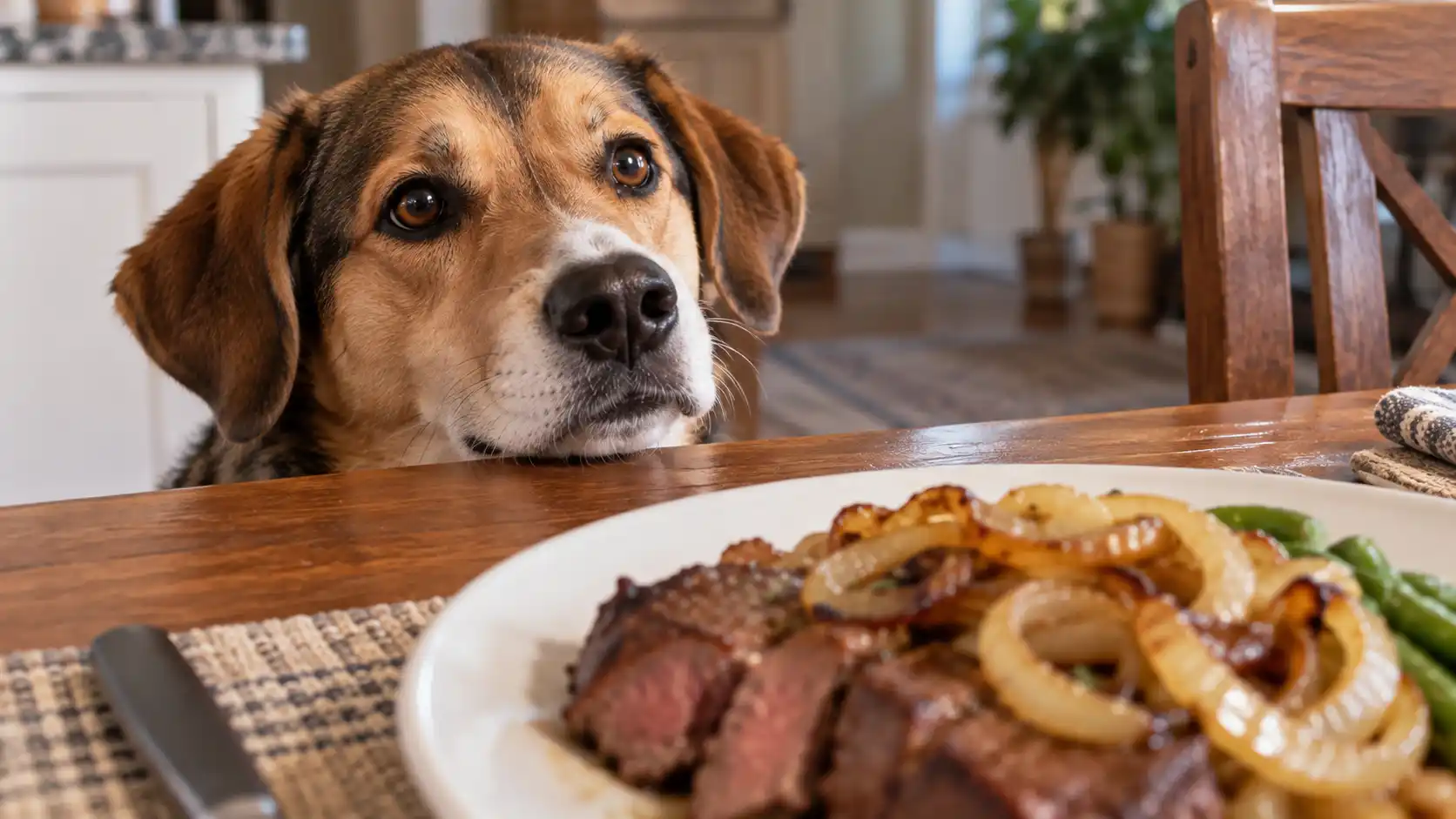
Accidental onion poisoning rarely happens because a dog ate a raw onion out of the garden. It almost always happens because a pet owner unknowingly fed their dog a human food product containing concentrated onions.
According to the FDA pet food safety guidelines, many common household foods and pantry staples contain hidden ingredients like onion powder and garlic powder, which are highly toxic to pets.
Keep these items away from your dog:
- Onion powder: This is highly concentrated and even more dangerous than raw onions per ounce.
- Soups and broths: Most store-bought chicken or beef broths contain onion and garlic for flavoring.
- Baby food: Some savory baby foods contain onion powder, which is a major risk if you use baby food to hide dog medication.
- Leftover takeout: Pizzas, stir-fries, and meat sauces almost always contain allium-family ingredients.
Recognizing the Warning Signs of Onion Toxicity
The tricky thing about onion poisoning is that the severe symptoms are often delayed. While gastrointestinal upset might happen within a few hours, the life-threatening signs of anemia might not appear for two to five days after ingestion.
Table: Stages of Onion Poisoning in Dogs
| Stage of Poisoning | Timeline | Common Warning Signs to Watch For |
| Early Signs | 1 to 24 Hours | Drooling, vomiting, diarrhea, abdominal pain, loss of appetite. |
| Progressive Signs | 1 to 3 Days | Lethargy, weakness, exercise intolerance, panting heavily after light movement. |
| Severe Signs | 3 to 5 Days | Pale or bluish gums, elevated heart rate, reddish or brown urine, fainting. |
If you notice your dog’s urine turning a dark red or brown color, this is a sign that their red blood cells are actively rupturing and being processed by the kidneys. This is an extreme medical emergency.
When to Call a Veterinarian or Pet Professional
If you know or even suspect that your dog has eaten cooked onions, onion powder, or food cooked with onions, do not wait for symptoms to appear.
Because the damage to the red blood cells is irreversible once it starts, early intervention is critical. The ASPCA Animal Poison Control Center strongly advises contacting a veterinary professional immediately upon ingestion so they can calculate the toxicity risk based on your dog’s weight.
What to do in an emergency:
- Remove the food: Immediately take away any remaining food to prevent further ingestion.
- Estimate the amount: Try to figure out roughly how much onion or onion-laced food the dog ate.
- Call your vet: Contact your local veterinarian or an emergency pet hospital.
- Follow instructions: Do not try to induce vomiting at home unless explicitly instructed to do so by a licensed veterinarian. Inducing vomiting improperly can cause aspiration pneumonia.
Expert Tip:
If you like to add broth to your dog’s kibble to encourage them to eat, never use human soup broth from the grocery store. Always purchase a pet-safe bone broth specifically formulated for dogs, which will be guaranteed free of onions, garlic, and excess sodium.
Common Mistakes Pet Owners Should Avoid
When dealing with a potential poisoning situation, panic and misinformation can lead to dangerous mistakes. Keep your pet safe by avoiding these common errors:
- Waiting it out: Assuming the dog will just “pass it” is the most dangerous mistake. By the time severe symptoms appear days later, the internal damage is extensive.
- Picking onions out of the food: As mentioned earlier, the toxins leach into the meat, rice, and gravy during the cooking process. Picking out the visible onion pieces does not make the food safe.
- Feeding human baby food blindly: Using baby food to hide pills is a great trick, but failing to read the ingredient label to check for onion powder can severely harm a sick dog.
- Ignoring the dog’s size: A piece of onion that might only give a Great Dane a mild stomach ache could be completely fatal to a Chihuahua or a Pomeranian. Toxicity is entirely dependent on body weight.
- Using home remedies to induce vomiting: Giving your dog hydrogen peroxide or salt to make them throw up without a vet’s exact dosage calculation can cause severe throat damage or sodium poisoning.
FAQs
Can a small piece of cooked onion hurt my dog?
Yes, even a small amount can be dangerous, especially for small dog breeds. It only takes about 15 to 30 grams of onion per kilogram of a dog’s body weight to cause toxic effects. Onion powder is even more potent and requires much less to cause severe harm.
How long does it take for onion toxicity to show in dogs?
Initial stomach upset (vomiting or diarrhea) may occur within a few hours. However, the more severe symptoms of red blood cell destruction—such as lethargy, pale gums, and dark urine—often take 2 to 5 days to become noticeable.
Can dogs eat food cooked with onions if I pick the onions out?
No. When food is cooked with onions, the toxic compounds leach into the surrounding juices, oils, and meats. Even if you remove all visible traces of the onion, the food itself remains toxic to your dog.
Are green onions and chives also toxic to dogs?
Yes. All members of the Allium family are toxic to dogs. This includes green onions (scallions), chives, leeks, shallots, and all varieties of garlic. Keep these entirely out of your dog’s diet.
What is the treatment for onion poisoning in dogs?
Treatment depends on how quickly you get to the vet. If ingestion just happened, a vet may induce vomiting and administer activated charcoal to block absorption. If the toxins have already entered the bloodstream, the dog may require IV fluids, oxygen therapy, and in severe cases, blood transfusions.
Conclusion
When it comes to the question, can dogs eat cooked onions in food, the answer is a resounding and absolute no. The cooking process does not neutralize the hidden toxins that destroy a dog’s red blood cells.
As a responsible pet owner, the best way to protect your dog is through prevention. Keep human leftovers out of their food bowl, double-check the labels on pantry items like broths and baby foods, and ensure your garbage cans are secured against curious noses.
If you ever suspect your dog has eaten onions in any form, bypass the internet home remedies and immediately call your veterinarian. Acting fast is the absolute best way to ensure your furry family member stays safe, healthy, and by your side for years to come.