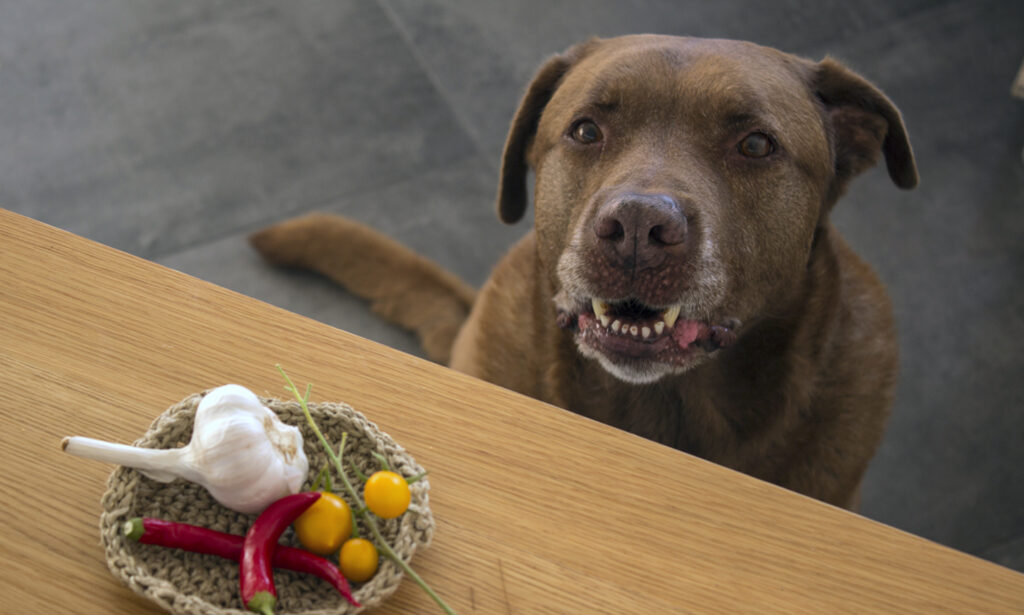
No, dogs should not eat garlic in food; even small amounts can damage red blood cells.
Garlic may seem harmless when it is mixed into dinner, but for dogs it can be a risky ingredient. I’ve seen a lot of pet owners assume that “a little bit won’t matter,” yet garlic is one of those foods that can quietly cause trouble if it shows up often enough. If you want a clear, practical answer on can dogs eat garlic in food, and how to keep your dog safe without guessing, this guide covers the facts, the risks, and what to do if your dog already ate some.

Why garlic is a problem for dogs
Garlic belongs to the allium family, along with onions, leeks, shallots, and chives. These plants contain compounds called organosulfides, which can damage a dog’s red blood cells. When that happens, the cells can break down faster than the body can replace them.
That can lead to anemia, weakness, and, in serious cases, organ strain. The tricky part is that garlic in food can be easy to miss. It may hide in sauces, soups, seasoning blends, garlic bread, marinades, and leftovers.
If you are wondering can dogs eat garlic in food when it is baked, cooked, or powdered, the safest answer is still no. Cooking does not make garlic safe for dogs. The risk may change by amount and dog size, but the hazard does not go away.
How garlic affects dogs
Dogs process garlic differently from people. Humans can eat garlic in normal food portions, but dogs are more sensitive to its toxic compounds. Even repeated small exposures can build up over time.
The damage happens because garlic can cause oxidative injury to red blood cells. Those cells can become fragile and burst. The body then has fewer healthy red blood cells to carry oxygen.
Common signs of garlic-related illness can include:
• Vomiting
• Diarrhea
• Drooling
• Weakness
• Pale gums
• Fast breathing
• Lethargy
• Dark urine
Not every dog will show the same signs right away. Some symptoms may take a day or more to appear, which is why owners often miss the connection between can dogs eat garlic in food and later health issues.
How much garlic is toxic to dogs
There is no truly safe amount of garlic for dogs. Toxicity depends on the dog’s size, the type of garlic, how often it was eaten, and the dog’s overall health.
A small dog can be affected by a smaller amount than a large dog. Garlic powder is also more concentrated than fresh garlic, so a tiny sprinkle can matter more than people expect. In my experience, the most common mistake is assuming that “seasoned food” is harmless because the garlic is not obvious.
A few important points:
• Larger doses raise the risk quickly
• Small dogs are more vulnerable
• Repeated exposure is especially concerning
• Garlic supplements are not safe without veterinary guidance
If you are asking can dogs eat garlic in food because your dog only got a bite of table food, the amount still matters. When in doubt, treat it seriously and call a vet.
Foods that often contain garlic
Garlic is not always easy to spot. It is often hidden in foods that dogs love to steal from counters or trash cans.
Common garlic-containing foods include:
• Pasta sauce
• Pizza
• Garlic bread
• Soups and broths
• Seasoned meats
• Marinades
• Salad dressings
• Mashed potatoes
• Frozen dinners
• Baby food with seasoning
This is why the question can dogs eat garlic in food comes up so often. The garlic may not be the main ingredient, but it can still be part of the dish and still cause harm.
What to do if your dog ate garlic in food
If your dog just ate food with garlic, stay calm and act quickly. Panic helps no one, but timing can matter.
Here is what to do:
- Check the food label or recipe if you can.
- Estimate how much garlic may have been eaten.
- Note your dog’s weight and any symptoms.
- Call your veterinarian or an emergency vet right away.
- Do not try home remedies unless a vet tells you to.
If the exposure was recent, a veterinarian may suggest bringing your dog in for care. Depending on the case, treatment may include monitoring, inducing vomiting if appropriate, fluids, or blood tests.
I always tell pet owners this: when asking can dogs eat garlic in food after the fact, the goal is not to guess. The goal is to act on facts fast.
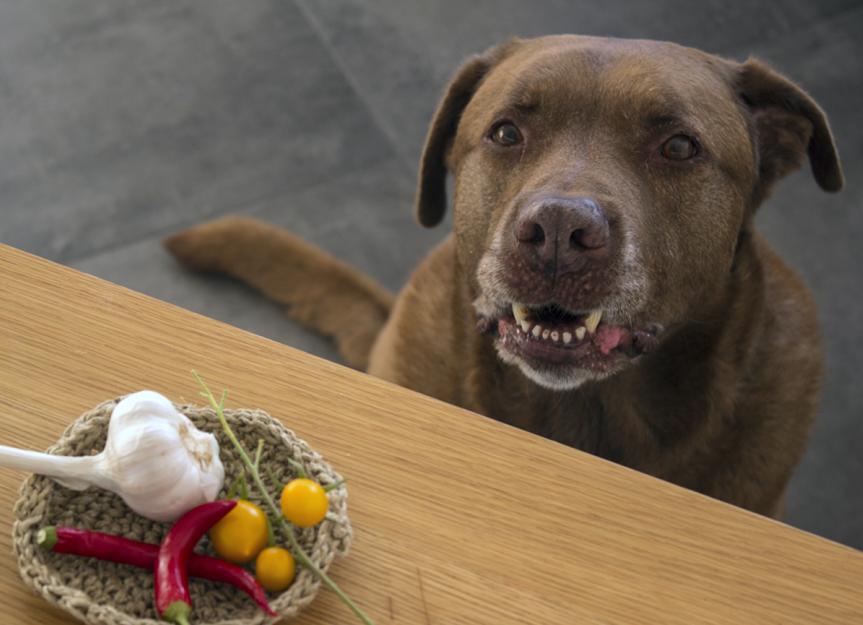
Signs of garlic poisoning in dogs
Garlic poisoning can start quietly. Some dogs seem fine at first, then become ill later. That delay is one reason garlic exposure should not be ignored.
Watch for these warning signs:
• Tiredness or low energy
• Loss of appetite
• Upset stomach
• Pale or white gums
• Rapid heartbeat
• Weakness when walking
• Collapse in severe cases
If you notice pale gums or trouble breathing, seek emergency help at once. Those can be signs that your dog is not getting enough oxygen from healthy red blood cells.
Can dogs eat garlic in food if it is only a little?
No, it is still not recommended. Even though a tiny amount may not cause obvious symptoms in every dog, garlic is not a safe ingredient for regular dog consumption.
The danger is that “a little” can turn into “a little again” and then become a pattern. Over time, repeated small exposures can still add up. That is why most veterinarians advise avoiding garlic altogether.
If you have asked can dogs eat garlic in food because your dog had a small bite of your dinner, the best move is to watch closely and contact a vet if you are unsure.
Safe alternatives for flavoring dog food
If you want to make dog meals more appealing, there are safer options than garlic. Dogs do not need strong seasoning to enjoy food, and their stomachs usually do better with simple ingredients.
Safer dog-friendly add-ins can include:
• Plain cooked pumpkin
• Plain cooked carrots
• Green beans
• Small amounts of plain chicken
• Plain rice
• Blueberries
• Plain sweet potato
Always keep seasoning light. No onion, garlic, heavy salt, or spicy sauces. When pet owners ask can dogs eat garlic in food, I often suggest thinking like a dog nutrition label instead of a human recipe.
Why garlic supplements are not a safe shortcut
Some people hear that garlic has health benefits for humans and assume supplements may help dogs too. That is a bad assumption. Garlic supplements can be more concentrated than food garlic, which increases the risk.
They may also cause stomach upset or blood-related harm. There is no reliable need for garlic in a dog’s diet, and no strong safety margin for casual use. If a supplement claims to “support immunity” or “repel fleas,” check with your vet first.
How veterinarians evaluate garlic exposure
A vet will usually ask what food was eaten, how much, when it happened, and your dog’s weight. They may also ask about symptoms like vomiting, weakness, or pale gums.
Depending on the situation, the vet may recommend:
• Observation at home
• Vomiting induction if the timing is right
• Activated charcoal in some cases
• Blood work
• Fluid support
• Hospital care for serious cases
A blood test can help check red blood cell health and catch anemia early. This is one reason it is better to call sooner rather than later after a garlic exposure.
My practical advice from real-world pet care
Over the years, one pattern has stayed the same: most garlic accidents happen during normal life, not during obvious “dog mistakes.” It is usually a dropped slice of pizza, a spoonful of sauce, or a plate left too close to the edge of the table.
My biggest lesson has been this: do not judge risk by how innocent the food looks. Garlic can hide in foods that seem mild. When people ask can dogs eat garlic in food, the safest habit is to treat any garlic exposure as something worth checking, not dismissing.
A few habits that help:
• Keep leftovers out of reach
• Read ingredient labels on sauces and seasonings
• Avoid sharing human meals without checking ingredients
• Teach family members not to slip table scraps
• Save your vet’s number in your phone
Frequently Asked Questions of Can dogs eat garlic in food
Can dogs eat garlic in food if it is cooked?
No, cooking does not make garlic safe for dogs. The harmful compounds can still affect red blood cells, even in cooked dishes.
What if my dog only ate garlic once?
A single exposure may or may not cause symptoms, but it should still be taken seriously. Call your vet if you know your dog ate garlic, especially if the amount is unclear.
Is garlic powder more dangerous than fresh garlic?
Garlic powder is usually more concentrated by volume, so it can be riskier in foods and seasonings. Even a small amount in powder form can matter more than fresh garlic.
How long after eating garlic will a dog get sick?
Symptoms can appear within hours, but in some cases they may take a day or more. That delay is why close monitoring is important after exposure.
Can garlic bread hurt dogs?
Yes, it can. Garlic bread often contains garlic, butter, salt, and sometimes onion seasoning, all of which can be a bad mix for dogs.
Conclusion
Garlic is one of those ingredients that looks harmless to people but can be dangerous for dogs. If you remember one thing, make it this: can dogs eat garlic in food? The safe answer is no, because garlic can damage red blood cells and lead to serious health problems.
The best protection is simple. Keep garlic off your dog’s plate, watch for hidden garlic in human food, and call a vet quickly if exposure happens. If this guide helped, share it with another dog owner or leave a comment with your question so you can make safer choices at mealtime.