Introduction
In the United States, meat by-products in dog food are clean, edible parts of slaughtered animals that are not skeletal muscle. They may include organs such as the liver, kidney, and heart. They do not mean waste, spoiled meat, or unsafe leftovers.
The term is defined by the Association of American Feed Control Officials (AAFCO), whose model rules guide pet food labeling in the U.S. A dog food with meat by-products can be complete and balanced when its full recipe meets the required nutrient standards.
The key is to read the whole label. The words “by-product” alone do not tell you whether a food is nutritious, well made, or right for your dog.
What Does “Meat By-Product” Mean?
“Meat by-product” is a regulated ingredient term. In AAFCO’s model definition, it means the non-rendered, clean parts of slaughtered mammals other than meat.
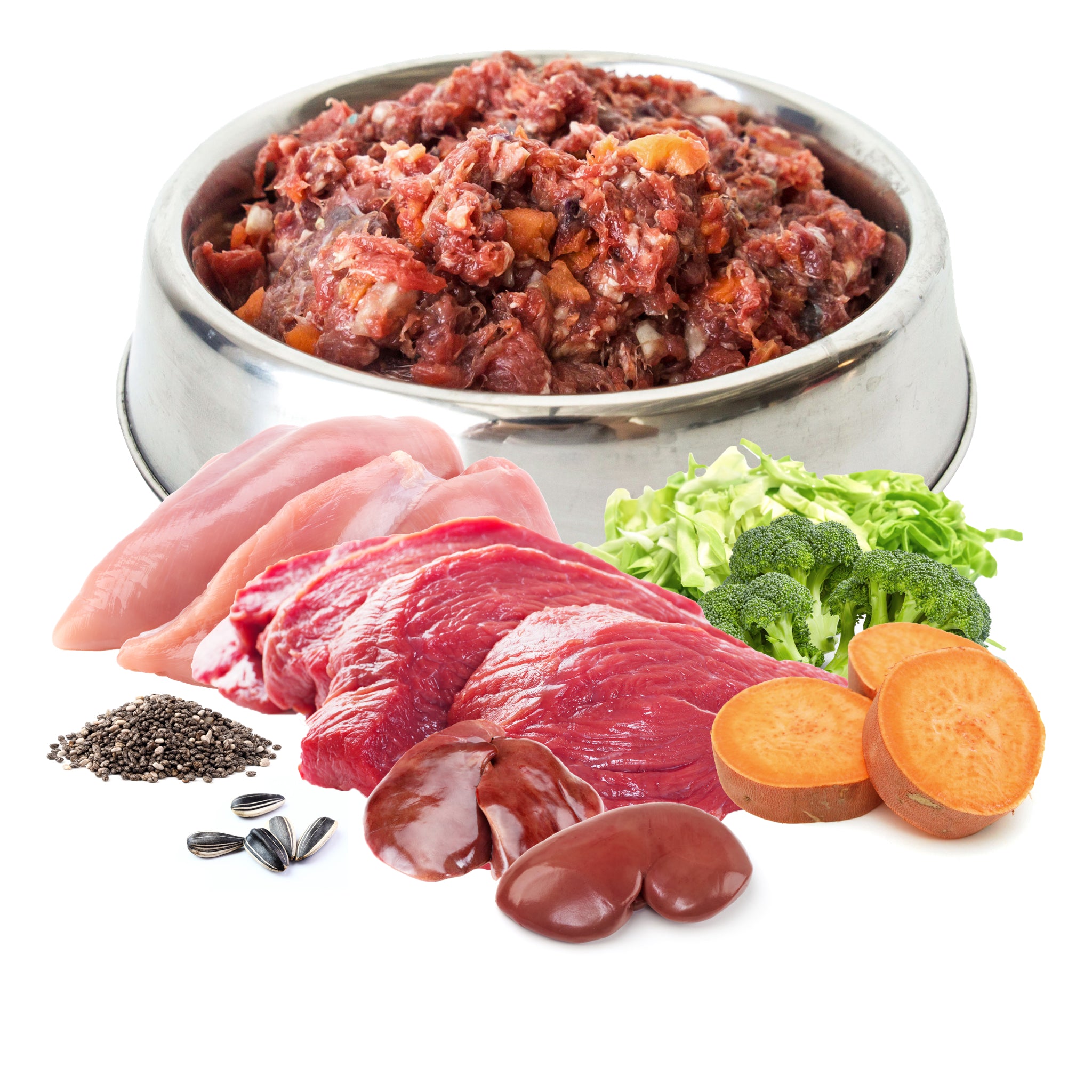
These parts may include:
- Liver
- Kidney
- Heart
- Spleen
- Lungs
- Stomach
- Intestines
- Blood
- Other clean organ tissues
The term does not include:
- Hair
- Horns
- Teeth
- Hooves
- Manure
- Contents of the digestive tract
- Other parts excluded by the ingredient definition
The exact ingredient name matters. “Beef by-products” identifies a mammal source. “Meat by-products” may use more than one mammal source without naming each one.
Meat by-products versus meat
In pet food labeling, meat usually means the clean flesh and skin of mammals. It can include skeletal muscle and some attached tissues.
Meat by-products are different because they mainly come from other clean animal parts. This does not make them inferior by definition. Many organs contain more vitamins and minerals than muscle meat.
For example:
- Liver can provide vitamin A, copper, and iron.
- Kidney provides protein and several minerals.
- Heart is a muscle organ and supplies protein, iron, and other nutrients.
- Blood can contribute protein and minerals.
A dog does not need a food to contain only skeletal muscle. Dogs can use nutrients from many safe animal tissues.
Meat by-products versus meat by-product meal
These terms describe different ingredients:
| Label term | Basic meaning | Processing |
|---|---|---|
| Meat by-products | Clean mammal parts other than meat | Not rendered |
| Meat by-product meal | Rendered mammal by-products | Cooked and dried |
| Poultry by-products | Clean parts of slaughtered poultry other than meat | Not rendered |
| Poultry by-product meal | Rendered poultry by-products | Cooked and dried |
Rendering uses heat to remove much of the water and fat. It creates a concentrated meal that is easier to store and use in dry dog food.
“Meal” does not automatically mean poor quality. It describes the form of the ingredient.
Are Meat By-Products Bad for Dogs?
No. Meat by-products are not automatically bad for dogs. Their value depends on the source, processing, recipe, nutrient balance, and quality controls.
A common mistake is to treat “by-product” as another word for “filler.” It is not. In pet food rules, by-products are animal-derived ingredients with a specific meaning.
Organ meats can be useful sources of nutrients. They may also help pet food makers use more of the animal instead of discarding edible parts. That can reduce waste and lower ingredient costs.
Still, the term does not answer every quality question. A label may tell you that a food contains “meat by-products,” but it may not identify the animal source. That lack of detail can matter if your dog has a food allergy or needs a limited-ingredient diet.
What the label does and does not tell you
The ingredient list can help you identify:
- The named animal source
- The order of ingredients by weight before processing
- Whether the product contains one or several animal sources
- Whether the food uses meals, fresh ingredients, or both
The ingredient list cannot tell you by itself:
- The exact percentage of each ingredient
- The digestibility of the finished food
- Whether the food is suitable for a specific medical condition
- Whether one food is more nutritious than another
- Whether the company has strong sourcing and quality-control systems
A complete and balanced statement is also important. In the U.S., this statement explains whether the food is intended to meet established nutrient profiles or pass feeding trials for a specific life stage.

What Is the Difference Between Meat By-Products and Poultry By-Products?
Meat by-products come from mammals, while poultry by-products come from poultry. Their AAFCO definitions are similar but not identical.
Poultry by-products may include:
- Heads
- Feet
- Gizzards
- Livers
- Hearts
- Intestines
- Other clean internal parts
The definition excludes feathers, except for small amounts that cannot be avoided during normal processing.
A label that says “chicken by-product” names the source. A label that says “poultry by-product” may include poultry from more than one species.
This distinction matters for dogs with suspected food allergies. If your veterinarian recommends avoiding chicken, a general “poultry” ingredient may not provide enough source detail.
What about animal by-products?
“Animal by-products” is a broader phrase. It may refer to ingredients from animals without naming a specific species.
This wording does not prove that the ingredient is unsafe. It does mean the label gives you less information about the source.
For a healthy dog, that may not matter. For a dog with a confirmed allergy, chronic itching, vomiting, diarrhea, or a prescribed elimination diet, source detail becomes more important.
What about fish by-products?
Fish by-products are parts of processed fish that are not the main fillet. They may include frames, skin, organs, and other clean tissues, depending on the ingredient definition and label.
Fish meals and fish by-products can supply protein and minerals. However, the product should still meet the dog’s nutrient needs and follow proper storage controls.

Why Do Dog Food Makers Use Meat By-Products?
Dog food makers use meat by-products for four main reasons: nutrition, function, efficiency, and cost.
1. They can supply useful nutrients
Organs often contain nutrients that support normal body function. They can add protein, fat, vitamins, and minerals to a recipe.
The nutrient value varies by:
- Animal species
- Specific body part
- Processing method
- Amount used
- Other ingredients in the recipe
A small amount of liver, for example, is not the same as a large amount of liver. Too much of some nutrients can also cause harm. A balanced commercial diet controls the final nutrient levels through its full formulation.
2. They work well in dry food
Rendered meals contain less water than fresh meat. This gives dry food a concentrated source of protein and other nutrients.
Fresh meat can appear high on an ingredient list because it contains a lot of water. Once cooked, much of that water leaves the product. A meal ingredient has already had much of its water removed.
This is why ingredient-list order alone cannot show the final amount of protein in a food.
3. They can improve taste
Animal-derived ingredients can add flavor and aroma. Some foods use rendered fats, broths, or animal digests to encourage dogs to eat.
A food may contain meat by-products without using them as its only source of flavor or nutrition.
4. They use more of the animal
Using clean organs and other edible parts can make animal agriculture more efficient. It can also reduce the amount of usable material sent to waste streams.
This environmental benefit depends on the full supply chain. The ingredient name alone does not prove a product has a lower environmental impact.

How Should You Read Meat By-Products on a Dog Food Label?
Start with the product’s nutritional adequacy statement, then review the ingredient list and guaranteed analysis.
Step 1: Check the life-stage statement
Look for wording such as:
- Complete and balanced for adult maintenance
- Complete and balanced for growth
- Complete and balanced for all life stages
- Intended for intermittent or supplemental feeding only
A food marked for intermittent or supplemental feeding should not replace a complete diet unless your veterinarian directs you to use it.
Puppies, pregnant dogs, nursing dogs, adults, and seniors can have different nutrient needs. Choose a food that matches your dog’s life stage.
Step 2: Identify the animal source
Compare these examples:
- Chicken by-products
- Poultry by-products
- Beef by-products
- Meat by-products
- Animal by-products
The first three provide more source detail than the last two. More detail can help when managing allergies or testing a limited diet.
Step 3: Review the first several ingredients
Ingredients appear in descending order by weight before processing. The first ingredient is not always the largest source of dry-matter nutrition because water changes ingredient weight.
Look for a recipe that provides:
- An appropriate animal or plant protein pattern
- Suitable fat levels
- Fiber that your dog tolerates
- Required vitamins and minerals
- A complete and balanced claim for the correct life stage
Step 4: Check the guaranteed analysis
The guaranteed analysis usually lists minimum crude protein and crude fat, plus maximum crude fiber and moisture.
These numbers are useful, but they are not a complete nutrition report. Two foods can have the same crude protein level but use different protein sources and have different digestibility.
If you compare wet and dry foods, account for moisture. A simple dry-matter calculation is:
Dry-matter protein = protein percentage ÷ (100 − moisture percentage) × 100
Hypothetical example:
A canned food lists 10% protein and 75% moisture.
10 ÷ (100 − 75) × 100 = 40% protein on a dry-matter basis.
This calculation helps compare foods with different water levels. It does not prove that one protein source is better for your dog.

Are Meat By-Products Safe?
Commercial meat by-products can be safe when they come from approved facilities, meet feed regulations, and are processed and stored correctly.
In the United States, the Food and Drug Administration regulates animal food, while state feed-control officials also play a role. Companies must follow rules for safety, labeling, and manufacturing.
Safety risks are more closely linked to contamination, spoilage, poor handling, recalls, and an unsuitable diet than to the word “by-product” itself.
Use extra care with these situations
Contact your veterinarian if your dog has:
- Repeated vomiting or diarrhea
- Weight loss
- Severe itching or ear infections
- A confirmed food allergy
- Kidney, liver, or pancreatic disease
- A need for a therapeutic diet
- A history of diet-related illness
Do not switch to a homemade diet or remove major ingredients without professional guidance. Unbalanced diets can cause nutrient deficiencies, especially in puppies.
By-products and food allergies
A dog can react to a protein source, but “by-product” is not itself an allergen. The concern is the animal source within the ingredient.
For example, a dog sensitive to chicken may need to avoid chicken meat, chicken fat, chicken meal, and chicken by-products. Your veterinarian may recommend a structured elimination diet or a veterinary therapeutic diet.
Do not use a casual ingredient swap as an allergy test. Cross-contact and hidden sources can make the result hard to interpret.

Meat By-Products, Animal Digest, and Meat Meal: What Is the Difference?
These terms describe different ingredients and processes.
Meat meal
Meat meal is a rendered product made from animal tissues. It is dried and concentrated. The name may identify the animal source, such as beef meal, or use a broader term, such as meat meal.
Meat by-product meal
Meat by-product meal is rendered from meat by-products. It may contain organs and other clean animal parts covered by the ingredient definition.
Animal digest
Animal digest is made by breaking down animal tissue through chemical or enzymatic action. It is often used as a flavor ingredient.
Animal digest is not the same as meat by-product meal. It also may provide less source detail if the label uses a broad term.
Animal fat
Animal fat supplies energy and flavor. It is separate from meat by-products. The label may name the source, such as chicken fat, or use a less specific term.
No single one of these terms tells you whether the whole food is good or bad. Consider the complete recipe, adequacy statement, manufacturer practices, and your dog’s response.
When Should You Avoid or Question Meat By-Products?
Most healthy dogs do not need to avoid meat by-products solely because they appear on the label.
You may need more information when:
- The animal source is unclear
- Your dog is on an elimination diet
- The food lacks a complete and balanced statement
- The package has a recall or storage problem
- Your dog has symptoms after eating the food
- The diet is for a medical condition
- The product is marketed as a sole diet but is labeled for supplemental feeding
Ask the manufacturer about the source, formulation, quality testing, and nutritional adequacy. A reputable company should be able to explain its ingredient and safety controls.
Be cautious with dramatic claims such as “contains no by-products, ever,” or “by-products are toxic.” Neither claim, by itself, proves nutritional superiority or danger.
Signs a food may not suit your dog
Watch for changes such as:
- Persistent loose stool
- Repeated vomiting
- Poor appetite
- Sudden weight change
- Excessive itching
- Ear or skin problems
- Low energy
These signs can have many causes. Do not assume the by-product ingredient is responsible. Contact a veterinarian if symptoms are severe, last more than a short time, or include blood, dehydration, pain, or marked weakness.
Key Takeaways
- Meat by-products are clean, non-muscle parts of slaughtered mammals.
- They may include organs such as liver, kidney, heart, and lungs.
- Meat by-products are not the same as waste or filler.
- Rendered meat by-product meal is a cooked and dried form of the ingredient.
- Poultry by-products come from poultry and follow a related but separate definition.
- The term alone does not prove good or poor quality.
- Check the life-stage statement, source details, full ingredient list, and guaranteed analysis.
- Dogs with allergies or medical conditions may need a diet selected with veterinary help.
FAQs
Are meat by-products safe for puppies?
They can be safe when included in a complete and balanced puppy food. Puppies have strict growth needs, so check that the label specifically supports growth or all life stages. Do not feed a supplemental product as the main diet.
Is chicken by-product meal the same as chicken?
No. Chicken by-product meal is a rendered ingredient made from clean chicken parts other than the main meat. It can still provide useful nutrients, but it is not the same ingredient as chicken muscle meat.
Do meat by-products cause allergies in dogs?
Meat by-products do not cause allergies simply because they are by-products. A dog may react to a specific animal protein, including chicken, beef, or another source. A veterinarian can guide a proper elimination diet.
Can dogs eat organ meat every day?
Dogs can eat organ meat as part of a balanced diet. Large amounts of some organs, especially liver, may provide excessive levels of certain nutrients. Avoid designing a daily organ-heavy diet without a veterinary nutrition plan.
Should I choose dog food without by-products?
Not necessarily. A food without by-products is not automatically more nutritious, safer, or easier to digest. Compare the complete and balanced statement, nutrient profile, ingredient sources, manufacturing information, and your dog’s health needs.
Conclusion
Meat by-products in dog food are regulated animal ingredients, not a synonym for trash. They can provide protein and important nutrients, especially when used as part of a properly formulated diet.
The best next step is to read the label as a whole. Confirm that the food is complete and balanced for your dog’s life stage, identify the animal sources when possible, and ask your veterinarian for help if your dog has allergies, illness, or ongoing digestive or skin problems.