Can Dogs Eat Cucumbers?
If you own a dog, you watch what goes into their bowl and what goes into their mouth. I do, too—so when my pup gives me that pleading look while I snack on cucumber, I pause and think: are cucumbers safe for dogs? The short answer: yes, most dogs can eat cucumbers. They are a low-calorie, hydrating snack that many dogs enjoy.
This article explains dogs and cucumbers in plain language. I’ll cover safety, nutrition, serving tips, risks, and practical ideas I’ve used with my own dog. I’ll also point out when to call your vet. My goal is to help you share this crunchy treat safely and confidently.
Read on to learn everything you need about feeding cucumbers to dogs—from benefits and serving sizes to warnings about pickles, seeds, and pesticide residue.
Are Cucumbers Safe For Dogs?
Cucumbers are generally safe for dogs. They are mostly water, low in calories, and contain no fat. Most dogs tolerate cucumbers well, and true allergic reactions are rare. I’ve given my dog small cucumber slices many times with no issue.
That said, here are simple safety steps to follow before you share cucumber with your dog:
- Always wash cucumbers thoroughly to remove dirt, wax, and pesticides.
- Offer plain cucumber only. No seasonings, dressings, or dips.
- Cut cucumbers into small, bite-sized pieces to avoid choking.
- Consider removing seeds for very small breeds or dogs with sensitive digestion.
When Cucumbers May Not Be Safe
A few situations call for caution:
- Puppies: Their stomachs are sensitive. Introduce new foods, including cucumber, slowly and in tiny amounts.
- Dogs with kidney disease: Cucumbers are hydrating, but check with your vet if your dog has kidney issues.
- Dogs with food allergies or sensitive digestion: While cucumber allergies are rare, watch for any reaction.
Nutritional Value Of Cucumbers For Dogs
Cucumbers are about 95% water, making them great for hydration. They also add a few vitamins and minerals without many calories.
| Nutrient | Amount per 100g | Benefit for Dogs |
|---|---|---|
| Water | 95g | Hydration |
| Calories | 15 kcal | Low-calorie treat |
| Fiber | 0.5g | Digestive health |
| Vitamin K | 16.4 mcg | Bone health |
| Vitamin C | 2.8 mg | Immune support |
| Potassium | 147 mg | Heart & muscle function |
| Magnesium | 13 mg | Metabolism |
Cucumbers aren’t a full food source. They lack meaningful protein and fat, which dogs need. Use them as an occasional snack or training reward, not a meal replacement.
Key Vitamins And Minerals
- Vitamin K: Supports blood clotting and bone health.
- Vitamin C: An antioxidant that supports immunity (dogs make some vitamin C on their own but get a boost from foods).
- Potassium: Helps with heart and muscle function.
- Magnesium: Aids metabolism and nerve function.
What Cucumbers Don’t Provide
Cucumbers lack significant protein and healthy fats. They are excellent for hydration and low-calorie snacking but cannot replace balanced dog food or vet-approved homemade diets.
Benefits Of Cucumbers For Dogs
Cucumbers make a healthy, crunchy treat when used correctly. Here are practical benefits I’ve seen and why vets often recommend them as an occasional snack.
1. Weight Management
Cucumbers are low in calories. I use thin slices as training rewards for my dog when we’re working on weight control. They let my dog earn treats without blowing the daily calorie budget.
2. Hydration
Because they’re mostly water, cucumber slices help dogs stay hydrated. I give chilled slices on hot days to increase water intake. This is handy for dogs who sip water slowly.
3. Fresh Breath
Cucumber’s crisp texture and mild smell can help freshen breath. The crunch may scrub some soft plaque, though it’s no substitute for brushing or dental chews.
4. Antioxidant Support
Cucumbers contain vitamin C and beta-carotene. These antioxidants support cell health and the immune system.
5. Digestive Health
A little fiber in cucumber can aid digestion and ease mild constipation. Don’t rely on them as a treatment, but they can help when used occasionally.
Non-obvious Insights
- The skin holds most fiber and micronutrients but can be tough. I peel cucumbers for small or older dogs with weak teeth.
- Cucumbers can act like a filler. Mixing small pieces into food helps some dogs feel full without adding many calories.
How To Serve Cucumbers To Dogs
Preparation matters. Proper serving keeps your dog safe and happy.
Wash Thoroughly
Even organic cucumbers can carry dirt, wax, pesticides, or bacteria. Wash under running water and scrub gently. If the cucumber is waxed, peeling removes the wax and most residues.
Cut Into Small Pieces
Large chunks are a choking risk. Slice thin rounds or small cubes, especially for small breeds and puppies.
Remove Seeds And Skin (if Needed)
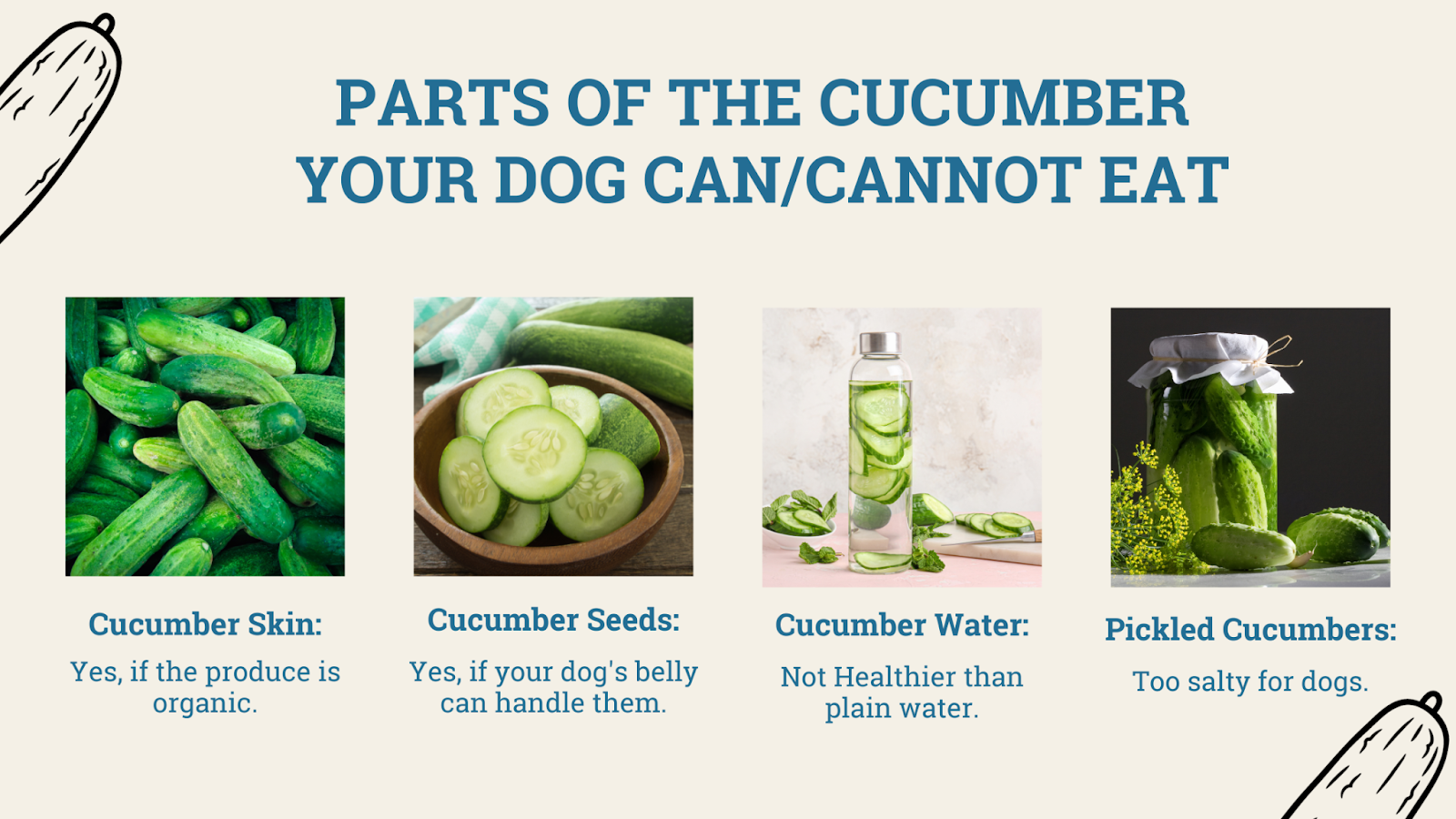
- Seeds: Not toxic, but some dogs digest them poorly. Remove for small dogs if you’re unsure.
- Skin: Nutritious but tough. Peel for small, elderly, or dental-challenged dogs.
Serve Raw Or Frozen
Raw cucumber is crisp and satisfying. For a cooling treat, freeze slices or make cucumber “pupsicles.” I find frozen slices keep my dog occupied longer and help slow overeating.
Avoid Seasonings
Never add salt, spices, vinegar, dressings, garlic, or onion. Many seasonings can be toxic to dogs or upset their digestion.
Serving Size Guidelines
Treats should be no more than 10% of a dog’s daily calories. Here are general portion suggestions:
| Dog Size | Safe Serving Size |
|---|---|
| Toy (under 10 lbs) | 1-2 thin slices |
| Small (10-25 lbs) | 2-4 slices |
| Medium (25-50 lbs) | 4-6 slices |
| Large (50+ lbs) | Up to half a small cucumber |
These are general guidelines. I always watch my dog for digestive signals after trying a new food.
Credit: www.volharddognutrition.com
Risks And Precautions
Cucumbers are safe for most dogs, but watch for a few risks. I always keep an eye on my dog after new treats.
1. Choking Hazard
Large pieces can lodge in the throat, especially in small breeds or dogs that gulp. Cut pieces small or grate cucumber to reduce risk.
2. Digestive Upset
Too much cucumber can cause diarrhea or vomiting. Start with a small portion and increase slowly if your dog tolerates it.
3. Allergic Reaction
Allergies are rare but possible. Watch for itching, swelling, hives, or trouble breathing. If you see these signs, stop feeding cucumber and call your vet.
4. Pesticides And Chemicals
Cucumbers often carry pesticide residue or a wax coating. Washing or peeling removes most residues. If you suspect heavy residue, peel the cucumber before serving.
5. Pickles And Cucumber-based Foods
Never give pickles, relish, or cucumber salads with dressing to dogs. Pickles are high in salt and may contain garlic or onion—ingredients that can be toxic to dogs.
Practical Insight
- If your dog swallows food whole, grate the cucumber or mix small pieces into their regular meal to slow eating and lower choking risk.
Cucurbitacin: Bitter Cucumbers and Plant Toxins
A less-known risk is cucurbitacin, a bitter compound found in some cucurbits (the plant family that includes cucumbers). Very bitter cucumbers can cause stomach upset and vomiting. If a cucumber tastes unusually bitter to you, don’t feed it to your dog.
Can All Breeds Eat Cucumbers?
Most breeds can enjoy cucumbers safely. Breeds prone to digestive issues—like Bulldogs or other brachycephalic (flat-faced) breeds—may need extra caution. Start with tiny pieces and observe. Puppies, senior dogs, and dogs with chronic illnesses should try new foods under vet guidance.
If your dog has known food sensitivities or a medical condition, ask your veterinarian before introducing cucumbers.
Comparing Cucumbers To Other Dog-friendly Vegetables
Here’s how cucumber measures up against other common veggies you might feed your dog.
| Vegetable | Calories per 100g | Main Benefit | Common Risk |
|---|---|---|---|
| Cucumber | 15 | Hydration, low-calorie snack | Choking, mild GI upset |
| Carrot | 41 | Dental health, vitamin A | Choking, high sugar |
| Green Bean | 31 | Fiber, vitamins | Flatulence |
| Celery | 16 | Fresh breath, fiber | Stringy texture, choking |
| Broccoli | 34 | Vitamin C, fiber | Gas, GI upset if too much |
Cucumbers are among the lowest-calorie veggie options and typically cause fewer digestive problems than some other vegetables.
Signs Your Dog Likes Or Dislikes Cucumbers
Dogs show clear preferences. Here’s how to tell what yours thinks:
- Likes cucumbers: Eagerly eats slices, wags tail, comes back for more.
- Dislikes cucumbers: Sniffs and walks away, spits pieces out, or ignores them.
If your dog initially refuses cucumber, try chilled slices or mix small bits into food. Don’t force it—there are many other healthy treats to offer.

Credit: www.akc.org
How To Introduce Cucumbers To Your Dog
Introduce new foods slowly. I always start small and watch for reactions.
- Offer a single small slice first and observe for 24 hours.
- Watch for stomach upset: Vomiting, diarrhea, or loss of appetite are warning signs.
- If your dog tolerates it, offer a few more pieces the next time.
- Avoid feeding cucumbers daily. Variety matters in a dog’s diet.
Gradual Introduction Tips
- Pair cucumber with a favorite treat to make it more appealing.
- Use cucumber slices as low-calorie rewards during training.
- Try chilling the cucumber for extra crunch if your dog is picky.
Fun And Healthy Ways To Serve Cucumbers To Dogs
Cucumbers can be interesting and helpful in your dog’s routine. Here are easy, dog-safe ideas I use at home:
- Frozen cucumber bites: Freeze small slices for a cooling, long-lasting snack.
- Cucumber and carrot mix: Combine with other dog-safe veggies for texture and flavor variety.
- Cucumber puree: Blend peeled cucumber and stir a spoonful into food for moisture and freshness.
- Cucumber “pupsicles”: Blend cucumber with plain, unsweetened yogurt and freeze in ice cube trays (only if your dog tolerates dairy).
- Training treats: Use thin slices as quick, low-calorie rewards.
If you make homemade dog treats, adding a little cucumber can boost hydration and crunch.
Common Mistakes When Feeding Dogs Cucumbers
Even safe foods can cause trouble if used incorrectly. Avoid these common errors:
- Overfeeding: Too much cucumber can cause diarrhea. Stick to recommended serving sizes.
- Serving with seasonings: Never add salt, spices, or dips. Keep it plain.
- Giving pickles: Pickles are unsafe due to high salt and possible garlic/onion content.
- Feeding large chunks: Cut into small pieces to prevent choking.
Two Insights Beginners Miss
- Some dogs develop soft stools quietly after trying cucumbers. Monitor stool quality for several days after new foods.
- Dogs with diabetes need careful portion control. Even low-calorie veggies can affect blood sugar if overfed.
Can Dogs Eat Cucumber Seeds And Skin?
Both seeds and skin are non-toxic to dogs, but consider these points:
- Seeds: A few seeds are fine. For small dogs or those with sensitive digestion, remove seeds.
- Skin: The skin contains most fiber and many nutrients. It can be tough, though—peel for small, dental-challenged, or older dogs.
If you notice chewing difficulty or find pieces of skin in stool, peel the cucumber next time.
What About Pickles, Relish, And Cucumber-based Human Foods?
Avoid most human cucumber products. Here’s why:
- Pickles: High in salt, vinegar, and often containing garlic or onion—avoid them.
- Relish: Often contains sugar, salt, and spices not suitable for dogs.
- Cucumber salads: Usually have dressings, onions, or garlic—skip these.
Share only raw, plain, unseasoned cucumber with your dog.
Medical Conditions And Cucumbers
Cucumbers are safe for most healthy dogs, but certain medical conditions require vet approval:
- Kidney disease: Cucumbers are low in phosphorus and sodium, but check with your vet first.
- Diabetes: Discuss treats with your vet. Even low-calorie snacks need portion control for diabetic dogs.
- Obesity: Cucumbers are a good low-calorie treat for overweight dogs, but do not replace balanced meals.
How Cucumbers Fit Into A Dog’s Diet
Cucumbers should be a small part of your dog’s diet. Dogs need animal-based protein and healthy fats. Use cucumber to add variety, hydration, and low-calorie rewards—not as a main food source.
A Balanced Approach
- Use cucumbers to add interest and texture to meals.
- Mix small cucumber pieces into food to slow fast eaters and help them feel fuller.
- Never replace important nutrients from commercial dog food with cucumbers.
How To Store Cucumbers Safely
Store cucumbers in the refrigerator in a sealed bag. Use within a week for freshness. If cucumbers become slimy or smell off, discard them. Frozen cucumber slices last longer but change texture—good for pupsicles and chilling treats.
When To Call The Vet
Most dogs handle cucumbers fine. Contact your veterinarian if you see:
- Vomiting or diarrhea that lasts more than 24 hours
- Signs of an allergic reaction: swelling, hives, or difficulty breathing
- Choking or difficulty swallowing
- Sudden changes in appetite or behavior after eating cucumber
When in doubt, call your vet. A quick phone message can prevent bigger problems.
Scientific Perspective: What Do Studies Say?
There’s limited direct research on dogs and cucumbers. However, leading pet-health resources list cucumbers as non-toxic. The ASPCA explicitly notes cucumbers are not toxic to dogs. Veterinarians generally agree that plain cucumber in moderation is safe and can be beneficial as a low-calorie, hydrating treat.
Frequently Asked Questions
Can Dogs Eat Cucumber Every Day?
I don’t recommend daily cucumber servings. Treats should be under 10% of daily calories. Once or twice a week is sensible for most dogs. If you want to give cucumber more often, check portions and watch for stool changes.
Are Cucumber Peels Safe For Dogs?
Yes, peels are safe and nutritious. They can be hard to chew, though. Peel cucumbers for small dogs, seniors, or dogs with dental problems.
Can Puppies Eat Cucumbers?
Puppies can have tiny pieces of cucumber. Start very small and watch for stomach upset. Always consult your veterinarian before adding new foods to a puppy’s diet.
Are Pickles Safe For Dogs?
No—don’t give pickles to dogs. They contain high salt, vinegar, and sometimes garlic or onion, which can be harmful.

Credit: dogchild.co
What Should I Do If My Dog Eats Too Much Cucumber?
If your dog eats a lot of cucumber, watch for mild stomach upset. Most cases clear within 24 hours. Offer water and rest. Contact your vet if your dog has repeated vomiting, severe diarrhea, lethargy, or breathing problems. If you’re ever unsure, call your vet or local animal poison control.
A healthy dog needs balanced food and controlled treats. Cucumbers are a fresh, low-calorie option when given correctly. Keep pieces small, avoid seasonings, and monitor your dog after new foods. With these steps, sharing the crisp, hydrating crunch of cucumber can be a safe, enjoyable treat for many dogs.