Can Dogs Eat Watermelon Rind?
I love sharing summer snacks with my dog, and watermelon often tops the list. It’s cool, sweet, and hydrating. But while most of us know the red flesh is okay in small amounts, the rind sparks questions. Can dogs eat watermelon rind, or could it harm them? If you’ve ever watched your pup sniff a discarded slice and wondered, you’re in the right place. I’ll share what I’ve learned from vets, my own experience, and reliable sources so you can keep your dog safe while enjoying summer treats together.
Understanding Watermelon Rind
First, let’s define the watermelon rind. It’s the firm outer layer beneath the tough green skin. The inner layer is pale white or light green and is much denser than the red flesh we eat. People sometimes cook or pickle rind for human recipes, but for dogs the rind is a different matter.
The rind’s texture is tougher and more fibrous than the juicy flesh. That difference matters for dogs because their mouths and digestive systems are built to handle certain textures better than others.
Nutritional Value Of Watermelon Rind
You might be surprised: the watermelon rind does have nutrients. It contains water, fiber, small amounts of vitamins, and even the amino acid citrulline. Below is a quick nutrition comparison to show how rind and flesh stack up.
| Nutrient | Watermelon Flesh (per 100g) | Watermelon Rind (per 100g) |
|---|---|---|
| Calories | 30 | 15 |
| Fiber | 0.4g | 0.5g |
| Vitamin C | 8.1mg | 5.7mg |
| Potassium | 112mg | 100mg |
| Water Content | 92% | 96% |
The rind is lower in sugar and higher in fiber than the flesh. That means it won’t spike blood sugar as much. But fiber that’s too rough can be hard for many dogs to break down. So while there are some nutrients, they don’t automatically make rind a good dog snack.
Is Watermelon Rind Safe For Dogs?
This is the heart of the question. The rind itself is not toxic. The main problems are physical: choking, gastrointestinal blockage, and digestive upset. Let’s look at each risk in plain terms.
Choking And Blockage Risks
The top danger is not poison. It’s that rind pieces are tough and fibrous. Dogs may chew poorly or gulp, which can lead to:
- Choking: Especially risky for small breeds and puppies. A firm chunk can block the airway.
- Gastrointestinal blockage: A piece can lodge in the stomach or intestines. This often needs emergency care or surgery.
In my own experience at a family picnic, a friend’s terrier grabbed a rind and started coughing. We were lucky and removed it quickly. But vets see many cases where food scraps like rinds cause real emergencies.
Digestive Upset
If rind passes into the gut, it often causes stomach trouble. Dogs cannot easily digest thick, fibrous plant material. Signs to watch for include:
- Vomiting
- Diarrhea
- Gas and bloating
- Abdominal pain or discomfort
Even one episode of eating rind can lead to loose stools or vomiting. Repeated feeding increases the chance of chronic issues like nutrient malabsorption or irritation of the gut lining.
Chemical Exposure
Another concern is surface chemicals. Unless the watermelon is organic and washed, pesticides or herbicides may linger on the skin and into the rind. Small exposures once might not harm a large dog, but repeated ingestion or exposure in small breeds could be harmful over time.
Can Any Dog Eat Watermelon Rind Safely?
Some dogs seem fine after nibbling rind. But “fine once” doesn’t mean safe always. Risk varies by dog size, age, dental health, and how they eat. Below are the main factors that change risk.
- Size and breed
- Age and dental health
- Eating habits (inhaling vs. slow chewer)
- Overall digestive sensitivity
Risk table for clarity:
| Dog Type | Risk Level | Reason |
|---|---|---|
| Toy/Small Breeds | High | Small throats and intestines; prone to blockage |
| Medium Breeds | Moderate | Can chew better but still at risk |
| Large Breeds | Lower | Larger digestive system, but risk remains |
| Puppies/Senior Dogs | High | Weaker digestion and teeth |
| Dogs with Dental Issues | Very High | Cannot chew rind properly |
Even for large dogs, if they eat enough rind or a large chunk, the risk of blockage is real.
What Happens If Your Dog Eats Watermelon Rind?
If your dog grabs a rind, stay calm. The right action depends on how much was eaten and your dog’s size. Below I break down typical scenarios and what to watch for.
Small Amounts
If your dog eats a tiny piece: they may only have mild stomach upset. Common signs are:
- Vomiting
- Soft stools or diarrhea
- Lethargy
Offer water and monitor for 24–48 hours. If symptoms are mild and short-lived, home care is often enough. Keep their diet bland (plain boiled chicken and rice) for a day if they have diarrhea, and slowly resume normal food.
Large Amounts Or Large Pieces
If a big chunk goes missing, act fast. Watch for these red flags:
- Repeated vomiting
- Unable to keep food or water down
- Signs of pain (whining, pacing, hunched posture)
- No bowel movements
- Swollen belly
These signs may indicate an intestinal blockage. Call your veterinarian or an emergency clinic immediately. Early diagnosis and treatment can prevent serious complications.
Long-term Exposure
Feeding rind repeatedly, even in small amounts, can create ongoing digestive trouble. Too much rough fiber can irritate the gut and interfere with nutrient absorption. If you want to add fiber to your dog’s diet, discuss safer options like cooked pumpkin with your vet.
When To Seek Emergency Care
If you see severe vomiting, inability to pass stool, collapse, or a distended abdomen, treat it as an emergency. Your vet may use x-rays or ultrasound to find a foreign body and decide if surgery or endoscopy is needed. Quick action can save your dog’s life.
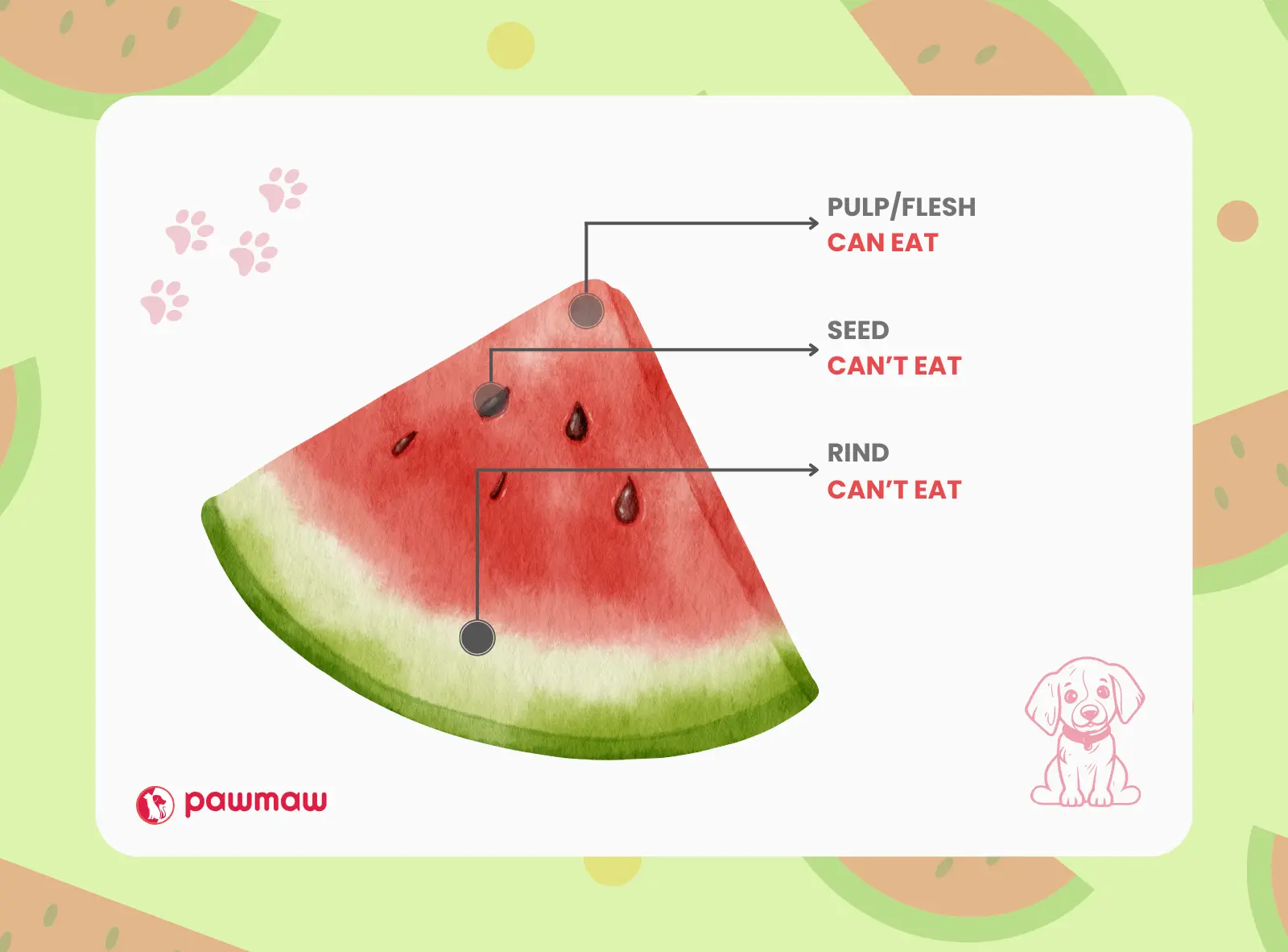
The Difference Between Flesh, Seeds, And Rind
People often lump watermelon parts together. Don’t. Here’s a simple breakdown to help you share safely.
- Flesh: Safe in small amounts; high water content and vitamins. Good for hydration on hot days.
- Seeds: Not recommended; small risk of choking or, rarely, intestinal blockage—especially for puppies.
- Rind: Not toxic, but risky due to choking and blockage potential.
So stick to seedless flesh only. That’s the safest way to let your dog enjoy watermelon.

Credit: www.pracyva.com
Safe Ways To Share Watermelon With Dogs
If you want your dog to taste watermelon, do it safely. Here are practical steps I follow and recommend:
- Wash the watermelon: Rinse the whole fruit to remove dirt and pesticides before cutting.
- Remove all seeds: Pick out black and white seeds; they can be a choking hazard.
- Cut away the rind: Only offer the red or pink flesh.
- Cut into bite-sized pieces: Size treats to your dog’s bite and chewing ability.
- Serve in moderation: Watermelon is mostly water and natural sugar; too much can cause diarrhea.
A good rule: treats, including fruit, should be under 10% of your dog’s daily calories. For most dogs that’s just a few small cubes a day.
Fun Serving Ideas
- Freeze small watermelon cubes for a cool summer snack.
- Mash a few pieces and mix with your dog’s regular food for variety.
- Make “pupsicles” with pureed watermelon and plain yogurt in a silicone mold. (Avoid added sugar or xylitol.)
Always introduce new things slowly and watch for any reaction.
What To Do If Your Dog Eats Watermelon Rind
Accidents happen. Here’s a quick action plan I keep in mind:
- Assess how much was eaten: Estimate size and amount if possible.
- Watch for symptoms: Vomiting, diarrhea, lack of appetite, or signs of pain.
- Encourage hydration: Fresh water helps move things through the gut.
- Contact your veterinarian: If symptoms appear or if a large amount was eaten, call your vet.
Don’t try to induce vomiting unless your vet tells you to. In some cases, vomiting can make a blockage worse or cause choking.
Common Myths About Dogs And Watermelon Rind
There’s lots of mixed advice online. Let’s clear up common myths and set the facts straight.
“watermelon Rind Is Healthy For Dogs Because It’s Healthy For People.”
Fact: Dogs digest food differently from people. While humans can cook or pickle rind safely, dogs often can’t break down the tough fibers. That raises the risk of choking and blockage.
“if My Dog Chews The Rind Well, It’s Safe.”
Fact: Even chewed pieces can be hard to digest. Dogs sometimes gulp food. You can’t rely on chewing alone to make rind safe.
“organic Watermelon Rind Is Safe.”
Fact: Organic reduces pesticides, but it does not remove the physical risks. Rind remains tough and can cause problems regardless of growing method.
“my Dog Ate Rind Before And Was Fine, So It’s Okay.”
Fact: One safe incident doesn’t guarantee others. A single large piece can cause sudden trouble. Risks add up with repeated exposure.
Alternatives To Watermelon Rind For Dogs
If your dog likes to chew, choose safer options. Here are go-to alternatives I recommend:
- Carrot sticks: Crunchy, low-calorie, and good for teeth.
- Cucumber slices: Hydrating and easy to digest.
- Apple slices (no seeds): Sweet, with fiber and vitamins.
- Commercial dental chews: Designed to be safe and digestible.
Introduce treats slowly and watch for allergies or stomach upset.
Real-life Examples And Case Studies
Case 1: The Curious Puppy
A 6-month-old beagle grabbed a chunk of watermelon rind at a picnic. Within hours he vomited and strained to defecate. An x-ray showed a partial blockage. With IV fluids and observation, he passed the rind after some time. The owner now keeps fruit scraps out of reach.
Case 2: Large Dog, Big Appetite
A Labrador ate several rinds left after a party. He seemed fine at first, but a day later he became lethargic, vomited repeatedly, and stopped eating. Surgery removed lodged pieces. The vet emphasized that even large dogs can need surgery if they eat enough rind.
Case 3: Small Dog, Small Bite
A miniature poodle nibbled a tiny piece of rind. She developed mild diarrhea but recovered quickly with supportive care. Her owner now limits her to soft fruit flesh.
These examples show risk varies, but it’s never zero. Prevention is always safer than treatment.
How Veterinarians View Watermelon Rind
Most veterinarians advise against feeding watermelon rind to dogs. Organizations like the American Kennel Club recommend giving only the flesh and avoiding rind and seeds. Vets commonly report gastrointestinal foreign bodies (including fruit rinds) as a frequent reason for emergency surgery.
If you’re unsure, your veterinarian can advise based on your dog’s size, age, and health history.
Credit: loneralj.com
How To Keep Your Dog Safe Around Watermelon
- Dispose of rinds properly: Use a sealed trash can or compost bin your dog can’t access.
- Supervise during gatherings: Dogs are opportunists, especially when guests are distracted.
- Teach “leave it” and “drop it” commands: These help prevent accidental ingestion.
- Educate family and friends: Make sure everyone knows not to feed dogs scraps.
- Use pet-safe treats for chewing: Offer alternatives when your dog wants something crunchy.
Being proactive prevents most emergencies. I always place rinds directly into a covered bin and keep an eye on dogs during outdoor meals.
Special Considerations For Puppies, Seniors, And Sick Dogs
Puppies have smaller digestive tracts and are more likely to choke or block. Their immune systems are also developing, so infections from dirty food are a higher risk.
Senior dogs often have weaker teeth and slower digestion. Tough foods like rind are harder for them to chew and pass.
Dogs with existing health issues—dental disease, GI conditions, or prior abdominal surgeries—are at greater risk. Even a small rind piece can cause serious complications.
If your dog fits any of these categories, avoid rind entirely and consult your vet before introducing new treats.
What About Homemade Watermelon Rind Treats?
People sometimes pickle or candy watermelon rind for humans. Even when cooked, these treats often contain high sugar, salt, or vinegar—ingredients that can upset a dog’s stomach or cause health issues. Avoid sharing such foods with your pets.
Be cautious of online “dog-friendly rind” recipes. Most lack safety testing and don’t remove the physical risks of tough fiber. If a recipe claims to make rind safe, check with your veterinarian first.
The Bottom Line: Should Dogs Eat Watermelon Rind?
In short: watermelon rind is not poisonous, but it’s not safe to feed your dog. The risk of choking, gastrointestinal blockage, and digestive upset outweighs the small nutritional benefit. Stick to the seedless flesh and offer it in small, bite-sized pieces.
When in doubt, talk with your veterinarian about safe treats and portion sizes. For more on foods to avoid, see the ASPCA’s official guidelines.

Credit: patch.com
Frequently Asked Questions
Can Dogs Eat Any Part Of The Watermelon Rind?
No. Avoid both the outer green skin and the inner white layer. Both are tough and hard to digest, increasing choking and blockage risks.
Is Watermelon Rind Toxic To Dogs?
No, the rind itself is not toxic. The danger is physical: choking and intestinal blockage—not poisoning.
What Should I Do If My Dog Ate Watermelon Rind?
Monitor closely for vomiting, diarrhea, abdominal pain, or changes in behavior. If your dog ate a large piece or shows concerning signs, contact your vet right away.
Are There Any Benefits To Feeding My Dog Watermelon Rind?
The rind has some fiber and nutrients, but the risks outweigh the benefits. Safer fiber sources include canned pumpkin (plain) or steamed vegetables approved by your vet.
What Fruits And Vegetables Can Dogs Eat Safely?
Dogs can enjoy small amounts of certain fruits and veggies like seedless watermelon flesh, apples (no seeds), carrots, cucumbers, and blueberries. Always introduce new foods slowly and check with your veterinarian if you’re unsure.
Sharing treats with your dog is one of the joys of pet parenthood. With a little care and these safety steps, you can enjoy summer snacks together—safely and happily.