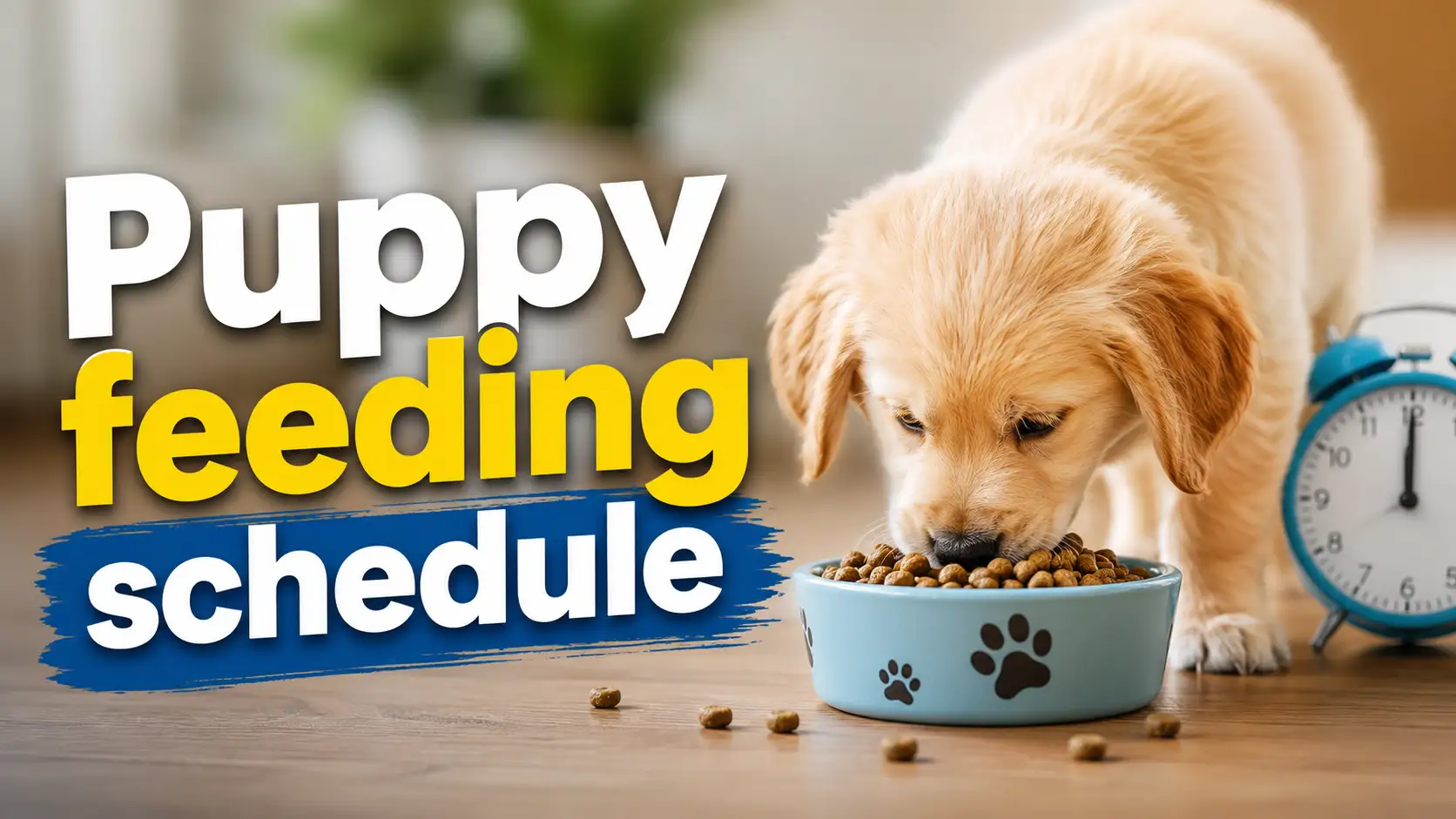
Hi, I am Zak Fahim! Welcome to PetFreakz. Bringing home a new puppy is one of the best feelings in the world. But it also brings a lot of questions. One of the biggest questions I hear from new pet parents is about food. You want your new best friend to grow up healthy and strong. But figuring out a puppy feeding schedule can feel like a puzzle.
Are you feeding them enough? Are you feeding them too much? When should they eat? I have been there. It is totally normal to feel a little stressed about your puppy’s meals.
Why does a strict feeding schedule matter? A good routine helps your puppy’s stomach settle. It gives them steady energy for playing and learning. Plus, it makes potty training so much easier! When food goes in on a schedule, it comes out on a schedule.
In this new puppy guide, I will show you exactly how to feed your growing dog. You will learn when to feed them, how much to give, and how to change their meals as they get older. We will look at differences for small and large breeds. I will also share my top tips for healthy eating habits. Let’s get started on setting up the perfect puppy meal schedule!
Quick Note: I am a passionate pet writer and dog lover, not a licensed veterinarian. This guide is for general education. Always talk to your vet to make the best medical and diet choices for your specific dog.
Quick Answer
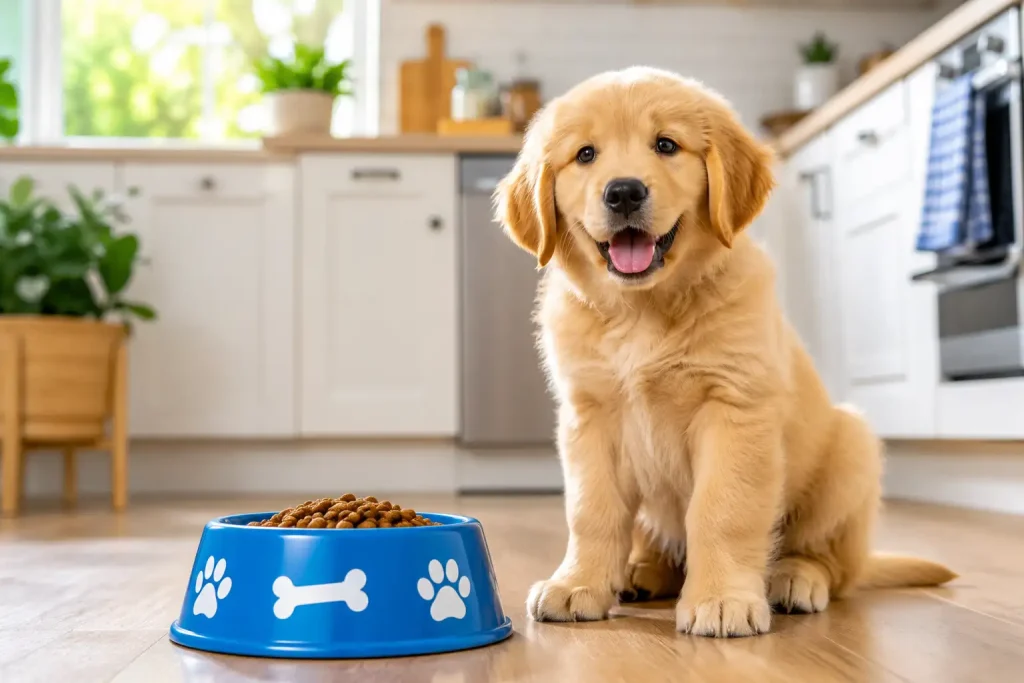
Most puppies need to eat three to four times a day when they are very young. Between three and six months old, you can feed them three times a day. After six months, you can usually drop down to two meals a day. Always feed your puppy at the same times every single day. This steady routine helps their digestion and makes potty training much easier for you.
Why Puppies Need a Feeding Schedule
You might wonder why you cannot just leave a bowl of food out all day. This is called free feeding. While it seems easy, it is usually a bad idea for puppies. Here is why a strict schedule is so much better:
- Healthy Growth: Puppies grow fast. Eating on a schedule ensures they get the exact calories they need without growing too fast. Growing too fast can hurt their bones.
- Better Digestion: Eating smaller, scheduled meals is easier on a puppy’s tiny stomach. It helps prevent upset tummies.
- Steady Energy: Puppies play hard and crash hard. Spacing out meals gives them steady fuel throughout the whole day.
- Easier Potty Training: This is the biggest benefit for you! If a puppy eats on a schedule, they will need to go to the bathroom on a schedule. This helps you predict when to take them outside.
- Good Behavior: Meal times are great for training. You can teach your puppy to sit and wait. It builds a strong bond of trust between you and your dog.
Puppy Feeding Schedule by Age
As your puppy grows, their body changes. Their puppy nutrition needs change, too. Here is a clear age-by-age breakdown. This includes a growth milestone timeline so you know what to expect.
Feeding Schedule by Age Table
| Puppy Age | What They Eat | Meals Per Day | Growth Milestone |
| Newborn to 2 Weeks | Mother’s milk only (or special puppy milk replacer if needed). | Every 2 hours | Eyes open, starting to crawl. |
| 2 to 4 Weeks | Mostly milk. Introduce a tiny bit of soft “mush” (kibble soaked in water or milk replacer). | 4 to 5 times | First baby teeth come in, learning to walk. |
| 4 to 8 Weeks | Weaning off milk. Eating more soft puppy food. Slowly making it less mushy. | 4 times | Fully running, playing with littermates. |
| 8 to 12 Weeks | Solid puppy kibble or wet puppy food. Completely weaned. | 3 to 4 times | Moving to a new home! Brain is growing fast. |
| 3 to 6 Months | Solid puppy food. Portions get bigger. | 3 times | Losing baby teeth. Adult teeth coming in. |
| 6 to 12 Months | Puppy food. Moving toward adult food by the end of this stage. | 2 times | Reaching full height. Filling out muscles. |
How Often Should Puppies Eat?
Let’s look closer at how many times a day you should fill that bowl. Figuring out feeding puppies by age is all about the number of meals.
4 Meals a Day: This is for very young puppies (under 3 months). Their stomachs are very small. They cannot eat a lot at once. Four small meals stop them from getting too full and throwing up.
3 Meals a Day: Around 3 months old, you can move to three meals. Breakfast, lunch, and dinner. This fits well with normal human schedules.
2 Meals a Day: By 6 months, most dogs do great on two meals. One in the morning and one in the evening.
My Feeding Decision Tree
Not sure where your puppy fits? Use this simple guide:
- Is your puppy still with their mother? Let the mother feed them on demand.
- Is your puppy under 12 weeks old? Feed them 4 times a day.
- Is your puppy between 3 and 6 months old? Feed them 3 times a day.
- Is your puppy older than 6 months? Feed them 2 times a day.
Free Feeding vs Scheduled Feeding: Never leave a giant bowl of food out all day. Free feeding leads to overweight dogs. It also makes potty training nearly impossible. Stick to the schedule!
Sample Daily Puppy Feeding Schedule
Here are some examples of what a daily schedule looks like in the real world. Notice how I place meals around daily activities.
8-Week-Old Puppy (4 Meals)
- 7:00 AM: Wake up and go potty. Breakfast time.
- 7:30 AM: Potty break again (right after eating).
- 11:00 AM: Lunch time. Followed by a potty break.
- 3:00 PM: Afternoon meal. Followed by a potty break.
- 7:00 PM: Dinner time. Followed by a potty break.
3-Month-Old Puppy (3 Meals)
- 7:00 AM: Morning potty, then Breakfast.
- 1:00 PM: Lunch time, then an afternoon potty break.
- 6:00 PM: Dinner time. Keep dinner early so they can digest before bed!
6-Month-Old Puppy (2 Meals)
- 7:30 AM: Breakfast and morning walk.
- 6:00 PM: Dinner and evening playtime.
Meal Timing Around Exercise: Never feed your puppy right before or right after heavy running or playing. This can cause a dangerous stomach twist called bloat. Wait at least 30 minutes to an hour after eating before you play hard.
How Much Should You Feed a Puppy?
This is the tricky part. Exactly how much should a puppy eat? There is no single answer because every puppy is different. But there is a clear process to figure it out.
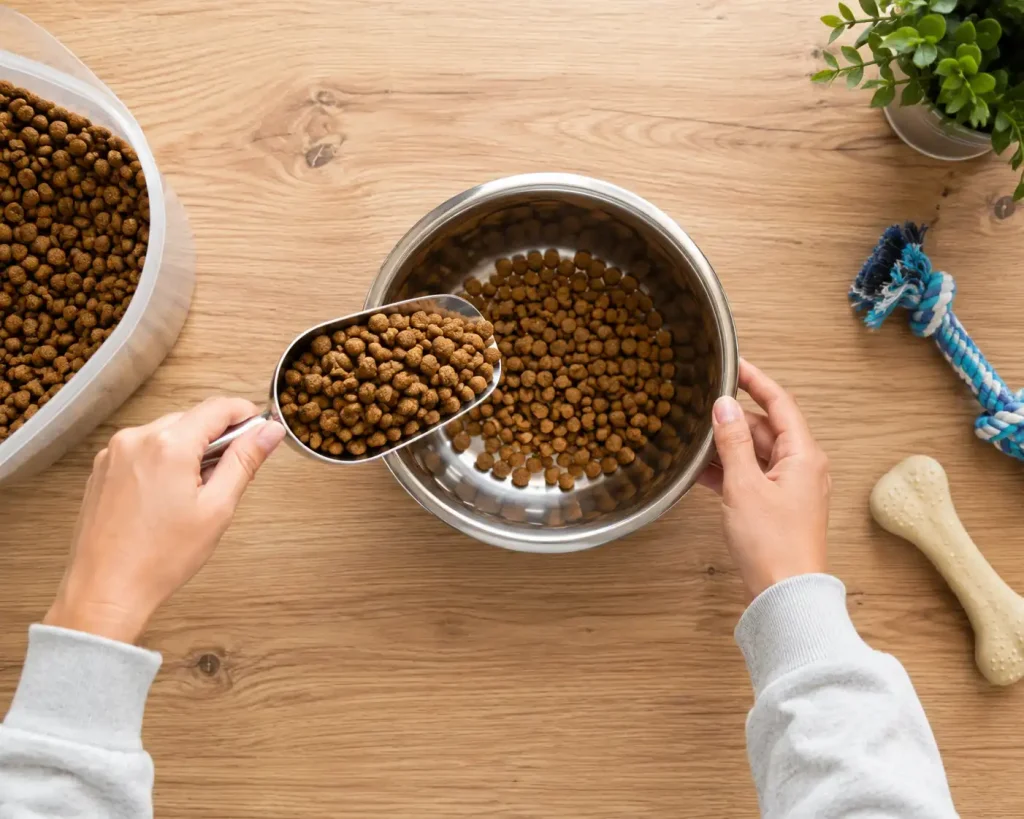
Read the Food Labels: Start with the bag of puppy food. Look at the back. There is a puppy feeding chart. It will tell you how many cups to feed based on your puppy’s age and expected adult weight.
Look at Calories: Not all cups of food are the same. One brand might have 300 calories per cup. Another might have 400. That is why you must read the bag carefully.
Portion Sizes: Remember, the amount on the bag is for the whole day. If the bag says to feed 1 cup a day, and your puppy eats 4 meals, you give them 1/4 cup at each meal. Do not give them 1 cup four times a day!
Measuring Food Correctly: Use a real measuring cup used for baking. Do not use a random plastic cup. Be exact.
Activity Level Adjustments
If your puppy runs around a lot, they might need a little extra food. If they sleep all day, they might need less. Watch their body to see if the amount is right.
The Body Condition Score Explanation
Vets use a “Body Condition Score” to check if a dog is too fat or too thin. You can do this at home. Gently feel your puppy’s ribs. You should be able to feel the ribs easily without pressing hard. But, you should not be able to see every rib from across the room. When you look at them from above, their waist should go inward right after their ribs.
Feeding Schedule by Breed Size
A tiny Chihuahua and a giant Great Dane do not eat the same way. Breed size changes everything.
- Toy and Small Breeds: They have tiny stomachs but fast metabolisms. They burn energy fast. They might need 4 meals a day longer than bigger dogs. This keeps their blood sugar from dropping too low.
- Medium Breeds: They usually follow the standard schedule perfectly. Three meals a day until six months old.
- Large and Giant Breeds: They need special large breed puppy food. Why? They grow very fast. If they grow too fast, their bones can get weak. Large breed food controls the calcium so their bones grow safely and slowly.
Breed Comparison Table
| Breed Size | Special Needs | When to switch to Adult Food |
| Toy/Small (e.g., Pug) | Needs small kibble bites. Watch out for low blood sugar. | 9 to 12 months |
| Medium (e.g., Beagle) | Standard puppy food. Very active. | 12 months |
| Large/Giant (e.g., Great Dane) | Needs controlled growth. Must use large breed formula. | 18 to 24 months |
Water Schedule for Puppies
Food is important, but water is magic. Puppies need fresh water to stay healthy.
Daily Water Needs: Keep a clean bowl of water out all day while your puppy is awake and playing. They need to drink often.
Nighttime Water: This is a big potty training secret! Pick up the water bowl about two hours before bedtime. If bedtime is 9:00 PM, take the water away at 7:00 PM. This stops them from having to pee in the middle of the night.
Signs of Dehydration: Check your puppy’s gums. They should feel wet and slippery. If they feel sticky or dry, your puppy needs water right away. If they act very tired, call your vet.
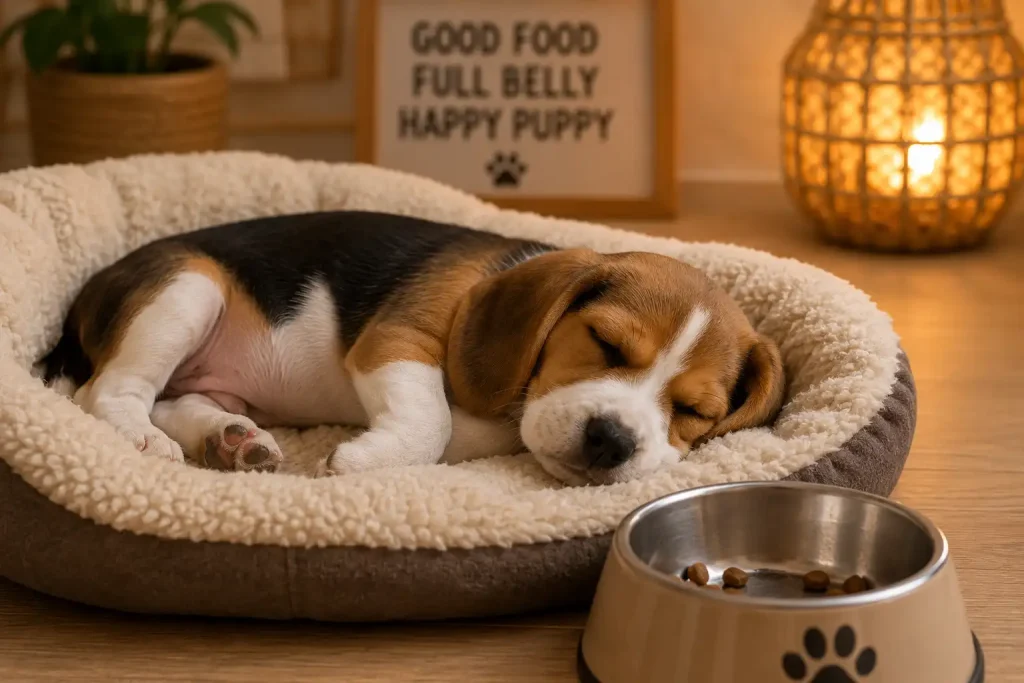
Healthy Treat Schedule
We all love giving our dogs treats! But treats have calories, too.
The 10% Calorie Rule: Treats should never be more than 10% of your puppy’s total daily calories. The other 90% must come from their balanced puppy food.
Training Treats: When teaching your puppy to sit or stay, use very tiny treats. The size of a pea is perfect. You can even use pieces of their regular kibble as treats.
Safe Treats: Small bits of plain, cooked chicken or dog-safe veggies like carrots are great.
Treat Mistakes: Do not feed them table scraps. Human food is often too salty, too fatty, or toxic (like onions and grapes).
Common Puppy Feeding Mistakes
I have seen a lot of pet parents struggle. Here are the most common owner mistakes to avoid:
- Eyeballing the food: Guessing the amount instead of using a measuring cup.
- Feeding human food from the table: This creates bad begging habits and upsets their stomach.
- Switching foods too fast: Changing brands suddenly will give your puppy diarrhea.
- Leaving food out all day: Makes potty training very hard.
- Exercising right after eating: This can cause stomach pain or dangerous bloat.
- Giving too many treats: This makes puppies chubby and causes them to ignore their healthy food.
Signs Your Puppy Is Eating the Right Amount
How do you know if you are doing a good job? Your puppy will tell you!
Weight: They gain weight steadily each week. They don’t look fat, but they don’t look bony.
Energy: They are playful and happy. They sleep well after playing.
Coat: Their fur is shiny, soft, and clean. No dry flakes.
Stool: Their poop is firm, brown, and easy to pick up. (Soft, messy poop usually means they ate too much or ate something bad).
Growth: They are hitting their growth milestones on time.
Healthy vs Unhealthy Habits Table
| Sign to Watch | Healthy Schedule Result | Requires Vet Care |
| Appetite | Eats meals eagerly in 10-15 minutes. | Refuses to eat for more than a day. |
| Stomach | Normal, settled digestion. | Vomiting after several meals. |
| Energy | Active during the day, rests nicely. | Lethargic, extremely weak, shaking. |
| Poop | Firm and normal color. | Liquid diarrhea or blood in stool. |
Signs You’re Feeding Too Much
If your puppy is eating too much, you might not notice right away. Look for a round, soft belly that never tucks upward. If you cannot feel their ribs at all, they are gaining too much fat. Another major sign of overfeeding is loose, smelly poop, especially late in the day.
Signs You’re Feeding Too Little
If your puppy is not getting enough food, you will easily see their hip bones and ribs sticking out sharply. They might lack the energy to play. They may also obsessively search for food in the trash or on the ground. Always talk to a licensed vet if you worry they are too skinny.
Puppy Feeding Myths
Let’s bust some common myths about puppy care!
- Myth: Meat is all a dog needs. False. Puppies need vitamins, minerals, and fiber, too. Good puppy food has all of this balanced out.
- Myth: Dogs get bored of eating the same thing. False. Dogs actually prefer routine. Eating the same healthy kibble keeps their stomach calm.
- Myth: A fat puppy is a healthy puppy. False. Extra weight puts terrible stress on young, growing joints.
- Myth: Garlic is good for fleas. False! Garlic and onions are highly toxic to dogs. Keep them away.
- Myth: Big bones are great chew toys. False. Real bones can splinter and hurt their mouth or stomach. Use safe, vet-approved chew toys instead.
Practical Tips from Zak
Through my years of writing about dogs, I have picked up a few tricks to make life easier. Here is my personal advice for you.
First, create a Printable Feeding Planner. Just grab a piece of paper. Draw a chart with the days of the week and meal times. Stick it on the fridge. Whenever you feed the puppy, check the box. If you have kids or a partner, this stops the puppy from tricking you into feeding them twice!
My Weekly Feeding Checklist
To stay on track during the first month, use this checklist:
- Week 1: Stick to the exact brand of food the breeder or shelter used. Do not change it yet.
- Week 2: Watch their bathroom habits. Make sure their poop is firm. Adjust potty breaks.
- Week 3: Start asking them to “sit” before you put the bowl down. This teaches good manners early.
- Week 4: Check their weight. If they look a little heavy, slightly reduce the portion. If they look skinny, slightly increase it.
Safe Transition Schedule
When you need to change your puppy’s food to a new brand, you must do it slowly. If you swap it all at once, you will be cleaning up a big mess on your rug! Use this 7-day plan:
- Days 1 and 2: 75% old food, 25% new food.
- Days 3 and 4: 50% old food, 50% new food.
- Days 5 and 6: 25% old food, 75% new food.
- Day 7: 100% new food.
Key Takeaways
Let’s review the most important points. A puppy feeding schedule builds a strong foundation for your dog’s life. Feed them three to four times a day when they are little. Measure the food carefully with a real cup. Watch their body condition to make sure they are not too heavy or too skinny. And remember, pick up that water bowl before bed to stop accidents!
Frequently Asked Questions
1. Should I wake my puppy up to eat?
No. Sleep is very important for a growing puppy. Let them sleep. When they wake up, take them potty, then feed them.
2. What if my puppy eats too fast?
If your puppy inhales their food, buy a “slow feeder bowl.” These bowls have ridges inside that make the puppy work for the food. It slows them down and prevents stomach aches.
3. Can I put warm water in my puppy’s dry food?
Yes! This is very helpful for puppies under 10 weeks old. Warm water softens the hard kibble, making it easier for their tiny baby teeth to chew.
4. Why is my puppy not eating in the morning?
Some puppies just are not morning eaters. Try taking them for a quick potty break and a short walk first to wake up their system. If they refuse to eat for a whole day, contact your vet.
5. When do I switch from puppy food to adult food?
For small dogs, switch around 9 to 12 months. For medium dogs, wait until 12 months. For large and giant breeds, they need puppy food for up to 18 or 24 months. Always ask your vet when it is the right time for your specific dog.
6. Is it okay if I miss a meal time by an hour?
Yes, an hour is fine! Life happens. Just try to get back on schedule for the next meal.
7. How long should I leave the food bowl down?
Give your puppy 15 to 20 minutes to eat. If they do not finish it, pick the bowl up. Offer it again at the next scheduled meal time. This teaches them not to be picky.
8. Can I change my puppy’s feeding schedule on the weekends?
Try not to. Your puppy’s stomach does not know what a weekend is. Keeping it the same every single day is the best way to prevent potty accidents.
Conclusion
Setting up a puppy feeding schedule takes a little effort at first. But I promise you, the routine will make your life so much easier! Your puppy will digest their food better, sleep better, and learn to go potty outside much faster.
Remember to closely monitor your puppy’s growth. Watch their weight and their energy levels. Most importantly, if you ever notice your puppy refuses to eat, seems extremely tired, or has ongoing diarrhea, do not guess. Always consult a licensed veterinarian. They are your best partner in keeping your furry friend happy and healthy. Good luck with your new puppy!