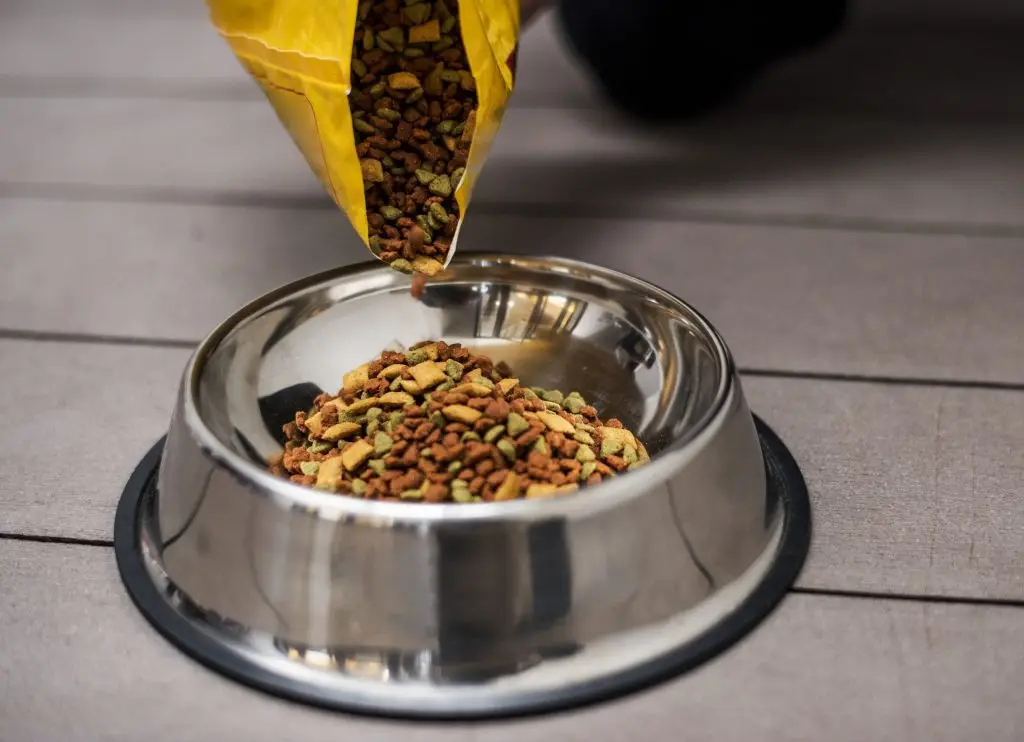
Yes — adult dogs can eat puppy food occasionally, but it’s not ideal long term.
I’m a canine nutrition writer with years of experience helping dog owners choose the right diet. This article answers the question can adult dogs eat puppy food by explaining key nutrition differences, short-term and long-term risks, when it’s safe, how to transition properly, and practical feeding tips you can trust. Read on for clear guidance, real-life examples, and action steps to keep your adult dog healthy.

Why puppy food differs from adult food
Puppy food is made to support fast growth. It has more calories, higher protein, and increased fat than adult formulas. Puppies also get extra vitamins and minerals to build bone, brain, and muscle.
Adult maintenance food has fewer calories and a nutrient balance for steady energy and weight control. Feeding adult dogs puppy food often means extra calories and nutrients they do not need.
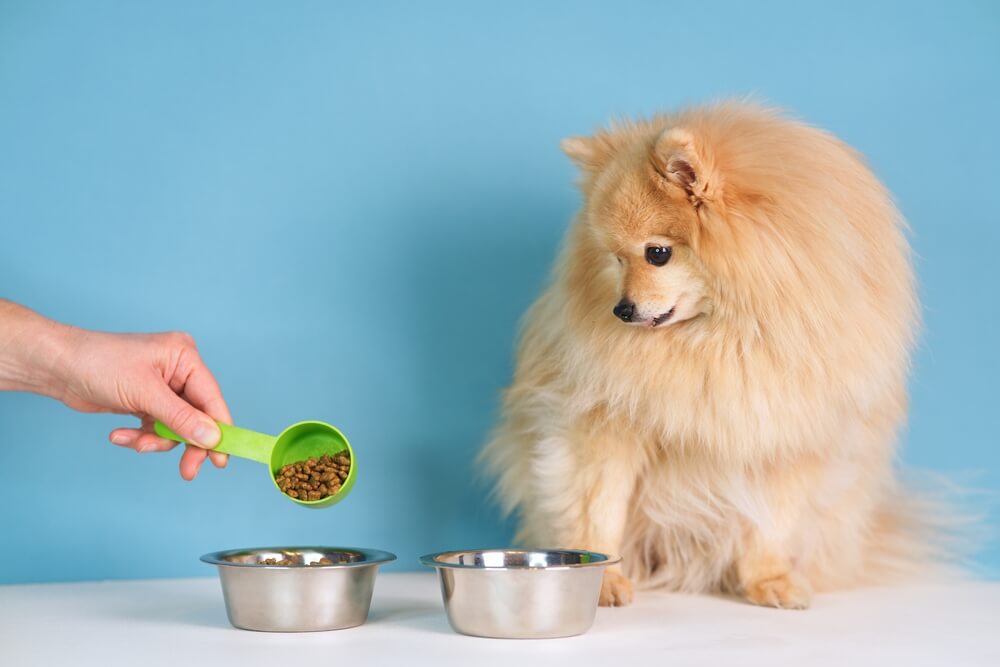
Is it safe for adult dogs to eat puppy food?
Feeding an adult dog puppy food once in a while is safe. The bigger issue is long-term feeding of puppy kibble to adults, which can lead to weight gain and nutrient imbalances.
If you ask can adult dogs eat puppy food and expect short-term safety, yes. If you mean feeding it as a regular diet, no—unless a vet gives a specific reason and monitors the dog closely.

When feeding puppy food to an adult dog may be appropriate
There are a few valid reasons to feed adult dogs puppy food temporarily:
- Recovering from illness or surgery — higher calories can help rebuild weight.
- Very active working dogs — short bursts of extra energy needs.
- Underweight adult dogs — vet-directed calorie boost for safe weight gain.
Always consult your veterinarian before making this change. If a vet prescribes puppy food for an adult, they will set a timeline and monitoring plan.
Risks of long-term feeding of puppy food to adult dogs
Feeding puppy food as a long-term diet has realistic downsides:
- Excess weight gain from higher calories and fats.
- Potential joint stress in adult large breeds because calorie surplus adds body weight.
- Nutrient mismatch — some adult dogs can get too much calcium or other nutrients not ideal for mature metabolism.
- Digestive upset in sensitive adults used to a different kibble formulation.
These risks answer the question can adult dogs eat puppy food safely over time: it’s risky without vet oversight.
How to transition between puppy and adult food
A slow, consistent switch is kinder to your dog’s stomach. Follow these steps:
- Week 1: Mix 25% new food with 75% old food.
- Week 2: Mix 50% new and 50% old.
- Week 3: Mix 75% new and 25% old.
- Week 4: Feed 100% new food, monitoring stool and energy.
Track weight and stool quality. If stool softens or the dog loses appetite, slow the transition and check with your vet.

Portion size and calorie guidance
Puppy food calories are higher. If your adult dog eats puppy food, reduce portion size to avoid overfeeding.
Use these simple steps:
- Calculate daily calorie needs for the dog’s weight and activity.
- Compare calories per cup on the puppy food label to adult food.
- Feed less volume if calories per cup are higher, and reweigh weekly to track changes.
Keep treats and extras in mind. A dog fed puppy food often needs fewer treats and smaller amounts at meals.

Special cases: large breeds, small breeds, and seniors
Large-breed adult dogs
- Large breeds are prone to joint issues. Excess calories or calcium from long-term puppy diets can worsen joint health.
- Use vet guidance if a large adult needs a higher-calorie diet temporarily.
Small-breed adult dogs
- Small adults burn more calories per pound, so brief puppy food use may be fine, but monitor weight.
Senior dogs
- Aging dogs often need fewer calories and different nutrient balance. Puppy food can cause weight gain and should be avoided unless a vet prescribes it.
These examples show that can adult dogs eat puppy food depends on age, size, and health, not just a one-size-fits-all rule.
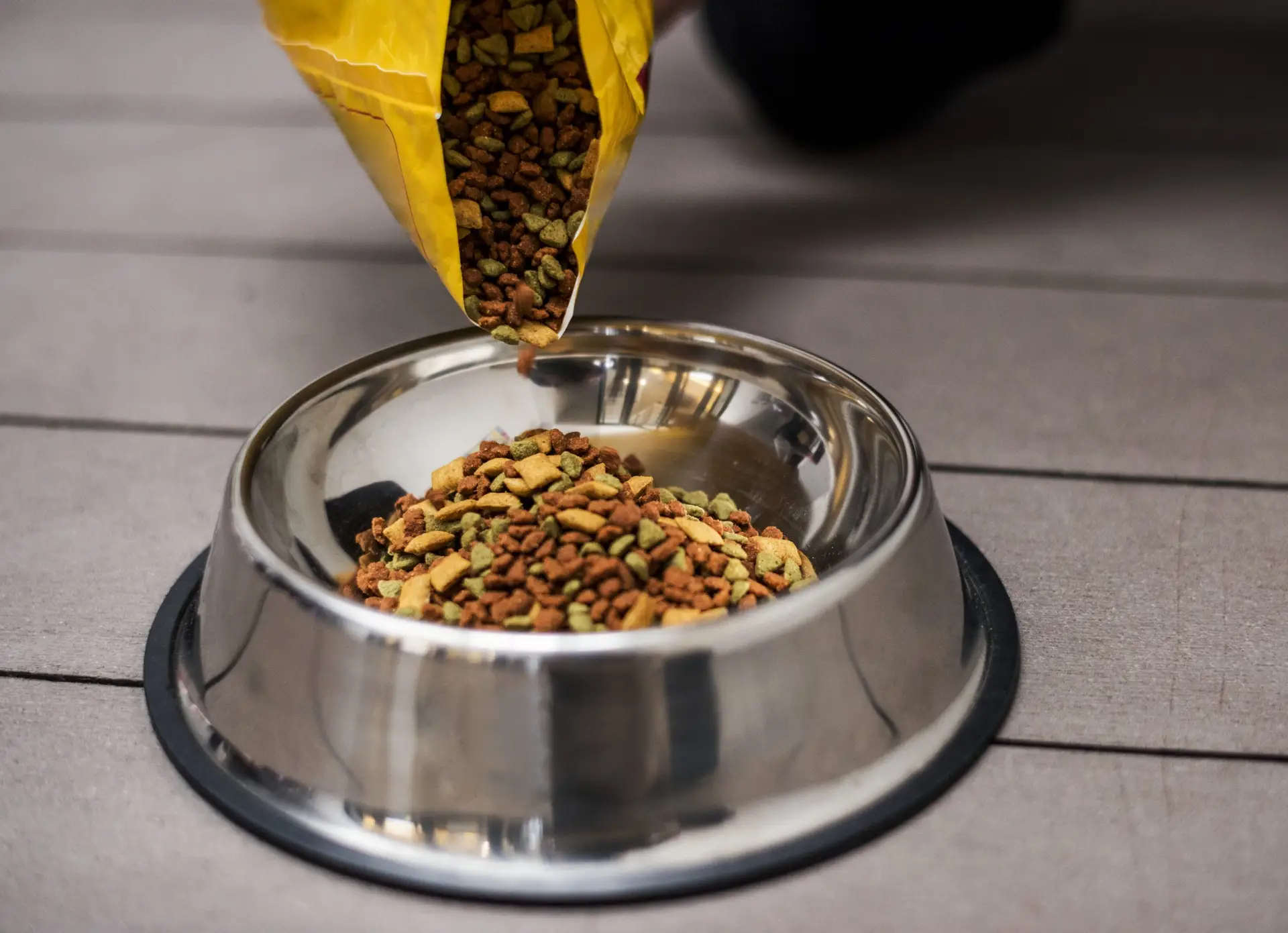
Personal experience and practical tips
I’ve helped multiple clients manage adult dogs that accidentally ate puppy food or needed short-term calorie boosts. My lessons learned:
- Mistake: letting a dog free-feed puppy kibble can cause unnoticed weight gain. Solution: portion control and scheduled feedings.
- Tip: If you must use puppy food briefly, reduce portions by about 20–30% and monitor weight weekly.
- Real-life: An underweight adult rescue gained healthy weight on short-term puppy food under vet care, then transitioned to a senior maintenance diet with improved coat and energy.
These hands-on examples reflect realistic ways to handle the question can adult dogs eat puppy food in everyday life.
PAA-style questions (common user search questions)
Can adult dogs eat puppy food daily?
Daily feeding of puppy food to adult dogs is not recommended. It can cause weight gain and nutrient excess unless directed by a veterinarian.
Will puppy food make my adult dog gain weight?
Yes, puppy food often has more calories and can cause weight gain in adult dogs if portions aren’t reduced.
How long can an adult dog eat puppy food safely?
Short periods of a few days to a few weeks can be safe for recovery, but long-term feeding should be avoided without veterinary oversight.
Frequently Asked Questions of can adult dogs eat puppy food
How often can adult dogs eat puppy food?
Occasional meals are fine, but regular feeding is not recommended. Monitor weight and consult your vet if you plan more than a few days.
Can puppy food harm adult dogs with health issues?
Yes. Dogs with pancreatitis, obesity, or kidney disease can worsen on high-fat or high-protein puppy diets, so check with your vet first.
Is puppy food better for active adult dogs?
Active adult dogs may need more calories, but adult performance or high-energy formulas are preferable over puppy food for balanced long-term nutrition.
What if my adult dog ate an entire bag of puppy food?
Monitor for vomiting, diarrhea, or bloating. Call your veterinarian if symptoms appear or if the dog is large enough to have overeaten.
Can I mix puppy food with adult food long term?
Mixing occasionally is okay, but doing so long term still risks excess calories and nutrient mismatch. Use vet guidance for blends.
Conclusion
Feeding puppy food to adult dogs can be safe in short bursts but is not ideal as a regular diet. Puppy food’s higher calories and nutrient profile are designed for growth, not adult maintenance, and long-term use can cause weight and health issues. Takeaway: if you’re asking can adult dogs eat puppy food, treat it as a temporary tool, not a permanent solution. Talk with your veterinarian before making diet changes, monitor weight and stool, and use careful portion control.
Try a small, vet-supervised trial if your adult dog needs extra calories, then switch to the right adult formula for long-term health. Leave a comment below with your experience or subscribe for more practical dog nutrition tips.