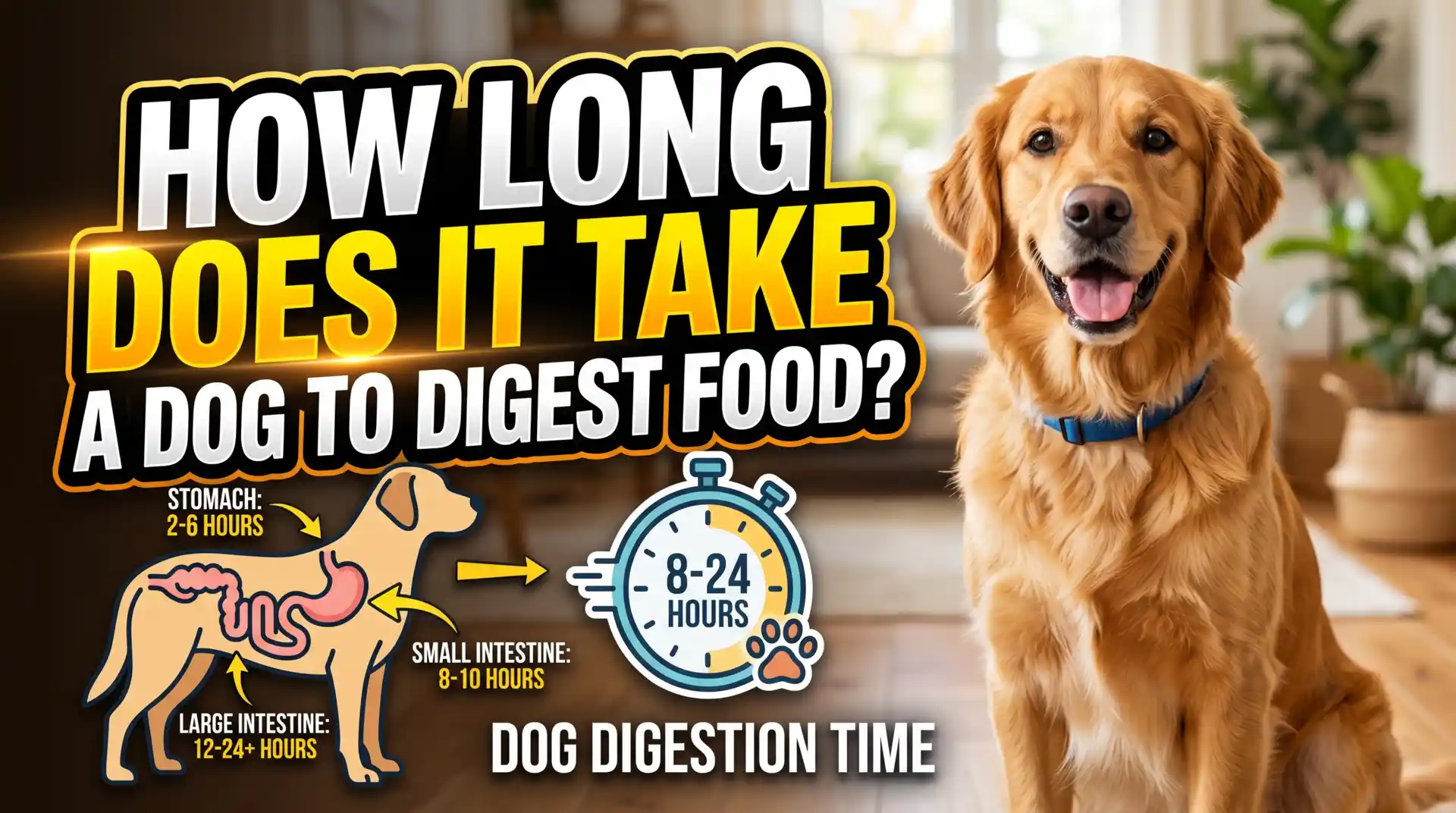
Most dogs digest a meal in 8–12 hours, but some take 4–24 hours.
If you’ve ever wondered how long does it take a dog to digest food, you’re not alone. I’ve helped hundreds of dog parents fine-tune feeding and timing, and the answer is more than a number. In this guide, I break down what happens from bowl to bathroom, why it varies, and how to help your dog’s gut run like clockwork. Expect clear steps, real cases, and science you can use today.
How a dog’s digestive system works
A dog’s digestion is a relay race. The mouth breaks food down, the stomach bathes it in acid, and the small intestine absorbs most nutrients. The large intestine pulls water and forms stool.
Dogs have a short gut compared to people. This design suits a meat-first diet and faster transit. It also means fat, fiber, and meal size can swing the time a lot.
Knowing this path helps answer how long does it take a dog to digest food. It also explains why the type of food and your dog’s size change the clock.
The typical timeline: from bowl to bathroom
Most healthy dogs move a meal through in about 8–12 hours. Some small dogs are done near the low end. Giant breeds can sit near the high end or longer.
Here is the common flow:
- Stomach: 2–8 hours. Liquids and canned food leave fast. Kibble and fatty meals sit longer.
- Small intestine: 1–4 hours. This is where most vitamins, protein, and fat get absorbed.
- Large intestine: 6–24 hours. Water is pulled out. Fiber can speed or slow this part.
Real-world ranges matter. If you ask how long does it take a dog to digest food after dry kibble, many dogs land at 10–16 hours. After canned or fresh food, it is often closer to 6–12 hours.
Quick Q&A inside the timeline:
- Q: Do puppies digest faster? A: Often yes. Puppies have high energy needs and smaller meals, so transit can be shorter.
- Q: Does exercise speed things up? A: Light movement helps motility. Hard workouts right after meals can raise bloat risk in big breeds.
- Q: Is one poop after dinner “full digestion”? A: Not always. That stool may be from an earlier meal. Full digestion spans the whole tract.
What changes the clock
Many factors affect how long does it take a dog to digest food. The big ones are below.
- Dog size and breed: Giant breeds often digest slower and face higher bloat risk. Toy breeds move small meals faster.
- Age: Puppies and young dogs tend to process food faster. Seniors may slow down due to motility or health issues.
- Food type and form: Kibble, canned, raw, and home-cooked each move at different speeds. Grind size, fat, and fiber matter too.
- Meal size and frequency: Large single meals slow the stomach. Smaller, frequent meals speed transit for many dogs.
- Hydration: Water helps move fiber and stool. Dehydration slows everything down.
- Activity: Gentle walks aid gut motion. Intense play right after eating can be risky for deep-chested dogs.
- Stress: Travel, loud noise, and change in routine can stall or speed bowels.
- Health and meds: GI disease, pain, antibiotics, or antacids can change timing and stool form.
When pet parents ask how long does it take a dog to digest food, I always look at these levers first. One small change here can shift hours there.

Food types and expected digestion times
Your dog’s menu shapes the timeline more than any single factor. Here is what I see most often, backed by veterinary nutrition data.
- Dry kibble: 10–16 hours. Carbs and fat slow stomach emptying. Big, dense meals take longer.
- Canned food: 6–12 hours. Higher moisture speeds stomach emptying and small bowel flow.
- Fresh cooked diets: 6–12 hours. Finely chopped or ground food tends to move faster.
- Raw diets (balanced, ground): 6–12 hours. High moisture and protein digest well for many dogs.
- High-fat meals or treats: Add several hours. Fat lingers in the stomach.
- High-fiber diets: Can speed or slow. Soluble fiber often smooths transit; too much insoluble fiber can bulk and slow.
- Bones and chews: Very slow and risky. Hard bones can sit in the stomach, cause blockage, or injure the gut.
If you switch diets and wonder how long does it take a dog to digest food now, give the new plan 1–2 weeks. Watch stool, gas, and energy before judging.
Signs your dog is digesting well
You do not need a lab to spot good digestion. The body leaves clues every day.
- Normal appetite and steady weight
- 1–2 formed stools per day, easy to pass
- Little gas or burping, no foul breath
- Good coat, bright eyes, and steady energy
Red flags to watch:
- Loose stool, mucus, or blood
- Straining, constipation, or odd color
- Vomit, gagging, or drool after meals
- Big belly, restlessness, or pain to the touch
- A sudden change in how long does it take a dog to digest food, without a clear cause
How to help your dog digest better
You can guide the gut with small, smart steps. These tips work for most dogs I coach.
- Pick a diet that fits size, age, and activity. Keep the protein source steady.
- Feed smaller, more frequent meals if stools are loose or if your dog gulps food.
- Add moisture. Use fresh water, broths with no onion, or wet food toppers.
- Use measured portions. Overfeeding slows the gut and adds stress.
- Try gentle fiber. A teaspoon of canned pumpkin or a vet-approved fiber blend can help.
- Keep a calm routine. Stress can change transit time fast.
- Walk after meals. A 10–15 minute stroll helps motility.
- Use slow-feeder bowls for gulpers to reduce air intake and bloat risk.
- Ask your vet about probiotics. The right strain can aid stool quality and timing.
These steps often tighten the window for how long does it take a dog to digest food. Track changes in a simple journal for two weeks.
Field notes from the clinic and home
Here are snapshots from cases that taught me a lot.
I fostered a 12-pound terrier who ate fast and had loose stools. We moved from high-fat kibble to a moist, lower-fat diet and split meals into three. His transit shifted from 18 hours to about 10, and his stools firmed in days.
A Great Dane client had late-night bloat scares. We cut meal size, raised the bowl to a safe height, and skipped hard play for one hour after eating. We also changed to a moderate-fat kibble with a canned topper. His average for how long does it take a dog to digest food landed near 14 hours, and the distress stopped.
A senior Lab on pain meds grew gassy and slow. With the vet, we added a probiotic, more water, and a soluble fiber blend. We saw gentler stools and a steady 12-hour timeline.
When to call the vet
Some signs need quick care. Trust your gut if something feels off.
- Painful belly, hard abdomen, or dry heaves
- Vomit more than once, or vomit with blood
- Black, tar-like stool or bright red streaks
- No stool for more than 48 hours with clear strain
- A sudden change in how long does it take a dog to digest food after a diet change, trash raid, or new meds
Bring notes on meals, treats, water, meds, and timing of signs. This helps your vet find the cause fast.
Frequently Asked Questions: how long does it take a dog to digest food
How long does it take a dog to digest food after kibble?
Most dogs take about 10–16 hours with dry kibble. Size, fat level, and meal size can push it longer.
How long does it take a dog to digest food when eating canned or fresh food?
Canned or fresh cooked meals often move in 6–12 hours. Higher moisture speeds stomach emptying.
Does breed change how long does it take a dog to digest food?
Yes. Giant breeds tend to digest slower and face higher bloat risk. Toy breeds often process small meals faster.
Can stress or travel change digestion time?
It can. Stress hormones affect motility, so stool timing and form may shift for a few days.
How can I tell if digestion is too slow?
Watch for big, firm stools, less appetite, gas, or strain. Call your vet if pain, vomiting, or black stool appears.
Do probiotics change how long does it take a dog to digest food?
They can help normalize motility and stool form in many dogs. Use a vet-recommended product and give it time to work.
Conclusion
Dogs digest at different speeds, but most finish a meal in 8–12 hours. Food form, fat, fiber, size, stress, and health all shape the answer to how long does it take a dog to digest food. With smart diet choices and a steady routine, you can keep your dog’s gut calm and your schedule simple.
Try one change this week. Add moisture, split meals, and take a short walk after dinner. If you need more help, talk with your vet and track what you see. Want more guides like this? Subscribe, share your dog’s routine in the comments, and tell me what you want covered next.