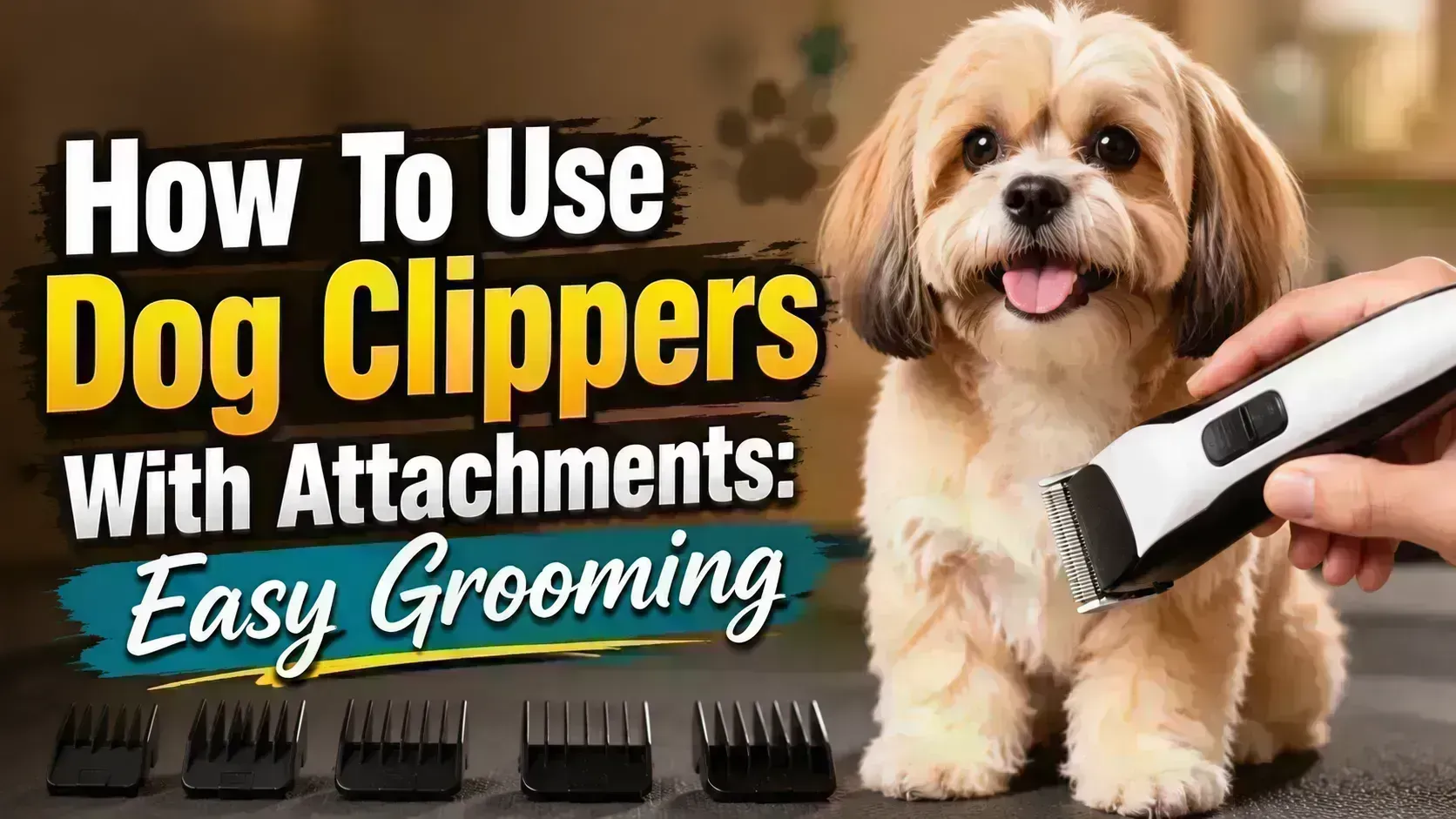
Use the right clipper guard, start with the longest attachment, and groom slowly in the hair’s growth direction.
If you want a clean, even trim without stressing your dog, learning how to use dog clippers with attachments for grooming is the smartest place to start. I’ve used this method on everything from fluffy doodles to short-coated rescues, and the same rule always holds true: the attachment comb does most of the work, but your hand, patience, and prep make the difference between a smooth groom and a choppy mess.

Why dog clipper attachments matter
Dog clipper attachments, often called guard combs or comb guides, control how much hair the blade cuts off. They act like a buffer between the blade and your dog’s coat, which helps you keep a more even length and lowers the chance of cutting too short.
That matters because many dogs do not tolerate a bare blade well, especially on sensitive areas or on coats that tangle easily. In real grooming, attachments are often the difference between a rushed shave and a tidy, safer trim that still looks natural.
Using dog clippers with attachments for grooming also gives you more control over the final look. You can keep a Teddy Bear style longer, trim a summer cut shorter, or simply clean up a messy coat without taking away too much length.
What you need before you start
Before you use dog clippers with attachments for grooming, make sure you have the right setup. A good prep session saves time, reduces pulling, and keeps your dog calmer.
Here’s the basic toolkit:
- Dog clippers with compatible attachment combs
- Sharp blade in good condition
- Detangling comb or slicker brush
- Dog shampoo and towel
- Blower or high-velocity dryer if your dog has a thick coat
- Treats for positive reinforcement
- Grooming table or a safe, non-slip surface
I learned early on that dull blades and dirty coats are the fastest way to create tugging. Even the best clipper attachment can’t do a clean job if the coat is full of knots or moisture.

How to use dog clippers with attachments for grooming step by step
Using dog clippers with attachments for grooming is easier when you break it into small steps. Think of it like mowing a lawn: if the grass is tangled, wet, or uneven, the result will never look neat.
1. Brush the coat first
Always start by brushing out tangles, mats, and loose undercoat. Clippers glide through clean, dry hair much better than through knots.
If you skip this step, the attachment comb can catch on mats and pull the skin. That can make the grooming painful and may cause clipper burn or uneven spots.
2. Bathe and dry the dog fully
A clean coat is easier to trim. Wash your dog if needed, then dry the coat completely before clipping.
Wet or damp hair can clog the clipper blade and make the attachment leave lines. In my experience, this is one of the biggest mistakes beginners make, especially with thick or curly coats.
3. Choose the right attachment length
Start with the longest guard comb if you are unsure. You can always trim shorter later, but you cannot put hair back once it is gone.
Common attachment combs usually range from very short to fairly long, and the exact sizing can vary by brand. A longer guard is safer for first-time grooming because it gives you room to adjust.
4. Test the clippers on a small area
Before trimming the whole body, test the clippers on a small section, like the back or side. This helps you check for heat, pulling, and proper cutting speed.
If the blade feels hot, stop and let it cool. Dogs notice discomfort fast, and one bad experience can make future grooming much harder.
5. Clip in the direction of coat growth
Move the clippers slowly and evenly in the direction the hair grows unless the coat type needs a different approach. Gentle, overlapping strokes help you avoid patchy areas.
Pressing hard does not improve the cut. In fact, it can flatten the coat and make the attachment comb less effective.
6. Work in small sections
Divide the body into manageable areas, such as the back, sides, chest, legs, and tail base. Small sections help you stay organized and make it easier to spot uneven spots.
I usually groom one side, then the other, then move to the legs and finishing details. That rhythm keeps the dog calmer and helps you stay consistent.
7. Check often for heat and buildup
Stop every few minutes to clear hair from the blade and check the temperature. Hair buildup makes clippers work harder and can lead to poor cutting results.
If the blade gets warm, use a clipper spray, clean it, or switch to a cool spare blade. A cool blade is better for comfort and better for coat quality.
8. Finish with detail work
Attachments are great for the main body, but you may still need smaller tools for paw pads, ears, face, and sanitary areas. Those spots require extra care and a steady hand.
Use a smaller blade or trimming scissors only if you are confident and your dog is calm. Sensitive areas are where slow grooming pays off the most.
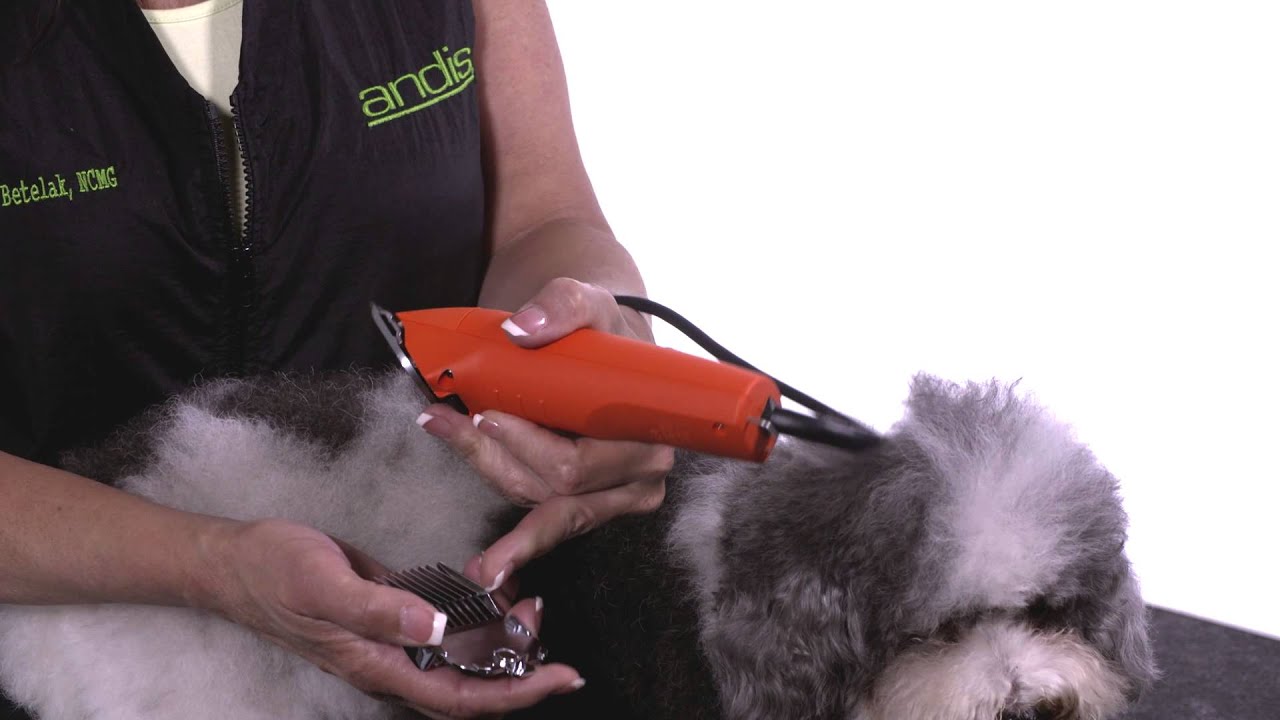
Choosing the right attachment for your dog’s coat
Not every coat behaves the same way. That is why using dog clippers with attachments for grooming works best when you match the comb to the coat type.
For short coats
Short-coated dogs often need only light tidying. A shorter attachment can help smooth the coat and remove stray hairs without creating a dramatic change.
For curly or doodle-type coats
Curly coats usually need more frequent brushing and a longer guard. These coats can hide knots under the surface, so it helps to check the whole coat before clipping.
For double-coated breeds
Double coats are tricky. Clipping too short can damage the coat’s natural function, which helps with temperature control and skin protection.
If you are grooming a double-coated dog, avoid going overly short unless a professional has advised it for a specific reason. The coat should usually be neatened, not stripped too close.
For fine or silky coats
Fine coats can look choppy if you rush. Use a gentle touch, keep the coat brushed out, and choose an attachment that preserves natural flow.
Common mistakes to avoid
When people first learn how to use dog clippers with attachments for grooming, the mistakes are usually simple but important. I have made a few myself, and they almost always come down to rushing.
Watch out for these:
- Clipping a dirty coat, which causes tugging and dulls blades faster
- Using the wrong guard size, which can leave the coat too short or uneven
- Skipping brushing, which makes mats worse and hurts the dog
- Moving too fast, which creates lines and missed areas
- Pressing too hard, which reduces guard performance
- Ignoring blade heat, which can irritate the skin
- Clipping over mats, which may pull the skin and cause pain
A good groom should feel calm and controlled. If the dog starts shifting, licking, or pulling away, pause and reassess instead of forcing the cut.
Safety tips for a better grooming session
Safety is a big part of using dog clippers with attachments for grooming. A secure, relaxed setup protects both you and your dog.
Keep these tips in mind:
- Use a non-slip surface so your dog does not slide
- Hold the skin gently taut in loose areas, especially near folds
- Keep fingers away from the blade path
- Never clip over sores, cuts, or irritated skin
- Stop if the dog shows fear or pain
- Work in a quiet area with few distractions
Many reputable grooming and veterinary sources recommend regular coat maintenance and careful handling to prevent skin irritation and mat-related pain. That matches what I have seen in practice: calm setup and good prep often matter more than speed.

Grooming different areas with attachments
The body is one thing, but each area needs a slightly different approach when you use dog clippers with attachments for grooming.
Back and sides
These are the easiest areas to clip. Use long, smooth passes and overlap each stroke a little for an even finish.
Chest and belly
Go slower here because the skin can be softer and more sensitive. Lift the hair gently and avoid pressing the guard too firmly against the body.
Legs
Legs can be uneven, especially on fluffy breeds. Comb the hair out straight before clipping so the attachment comb can trim more evenly.
Neck and shoulders
These areas often transition from thick to thinner hair, so blend carefully. Short, controlled strokes help avoid a shelf-like look.
Face, ears, paws, and sanitary areas
These spots need extra caution. For many owners, it is better to use a smaller tool or ask a professional groomer for help if the dog is nervous or the area is very sensitive.
How to keep the clippers working well
Clippers perform better when you care for them properly. Good maintenance also protects your dog’s skin and makes every grooming session easier.
A simple routine helps a lot:
- Brush and clean the blades after each session
- Oil the blade as recommended by the maker
- Store the clipper in a dry place
- Replace dull blades or damaged combs
- Check the attachment comb for cracks or bent teeth
When blades are neglected, they snag, heat up faster, and leave an uneven finish. That is one of those small problems that turns into a big one if ignored.
Benefits of using attachments instead of clipping bare
Using dog clippers with attachments for grooming has several clear advantages. The biggest one is control.
Here are the main benefits:
- More even coat length
- Less risk of shaving too close
- Better control for beginners
- Easier blending on longer coats
- A more natural-looking finish
- Reduced chance of accidental nicks in some areas
For most home groomers, attachments are the safest bridge between simple coat maintenance and a polished trim. They give you flexibility without demanding professional-level skill.
When to call a professional groomer
Sometimes the best answer is not doing it all yourself. If a dog has severe mats, skin issues, heavy fear, or a coat type that is hard to manage, a professional groomer can save time and stress.
You should also consider professional help if:
- The coat is tightly matted to the skin
- Your dog has pain, sores, or hot spots
- The dog bites, snaps, or panics during grooming
- You are unsure about the right guard length
- The breed has special coat needs
That is not a failure. It is just good judgment. Grooming should be safe first and beautiful second.
Frequently Asked Questions about How to use dog clippers with attachments for grooming
What is the best attachment length for beginner dog grooming?
A longer attachment is usually best for beginners because it gives you more room for error. You can always go shorter later if needed, but starting long reduces the chance of cutting too close.
Can I use dog clippers with attachments on a wet coat?
It is better not to. Wet hair can clog the blades, pull the coat, and create an uneven finish, so the coat should be fully dry before clipping.
How do I stop clipper blades from getting hot?
Clean the blade often, use clipper oil, and take breaks during the groom. If the blade feels warm on your hand, it can feel even hotter on your dog’s skin.
Do attachment combs work on matted hair?
Not well. Mats should be brushed out when possible, but if they are tight or close to the skin, a groomer may need to remove them carefully with the right tools.
How often should I groom my dog with clippers and attachments?
That depends on coat type and lifestyle, but many dogs benefit from grooming every 4 to 8 weeks. Dogs with fast-growing or curly coats often need more frequent upkeep to stay comfortable.
Can I use human clippers with dog attachments?
It is not a good idea in most cases. Dog clippers are built for thicker coats and are usually better at handling the texture, density, and skin sensitivity of canine grooming.

Conclusion
Using dog clippers with attachments for grooming is one of the easiest ways to keep your dog neat, comfortable, and well cared for at home. When you start with a clean coat, choose the right guard, clip slowly, and watch blade heat, the whole process becomes much smoother.
The biggest lesson I have learned is simple: patience beats pressure every time. A calm, careful groom almost always looks better and feels better for the dog, and that is what really matters.
If you are ready to improve your home grooming routine, start with one small trim and build your confidence from there. Keep practicing, stay gentle, and feel free to explore more grooming tips or leave a comment with your biggest question.