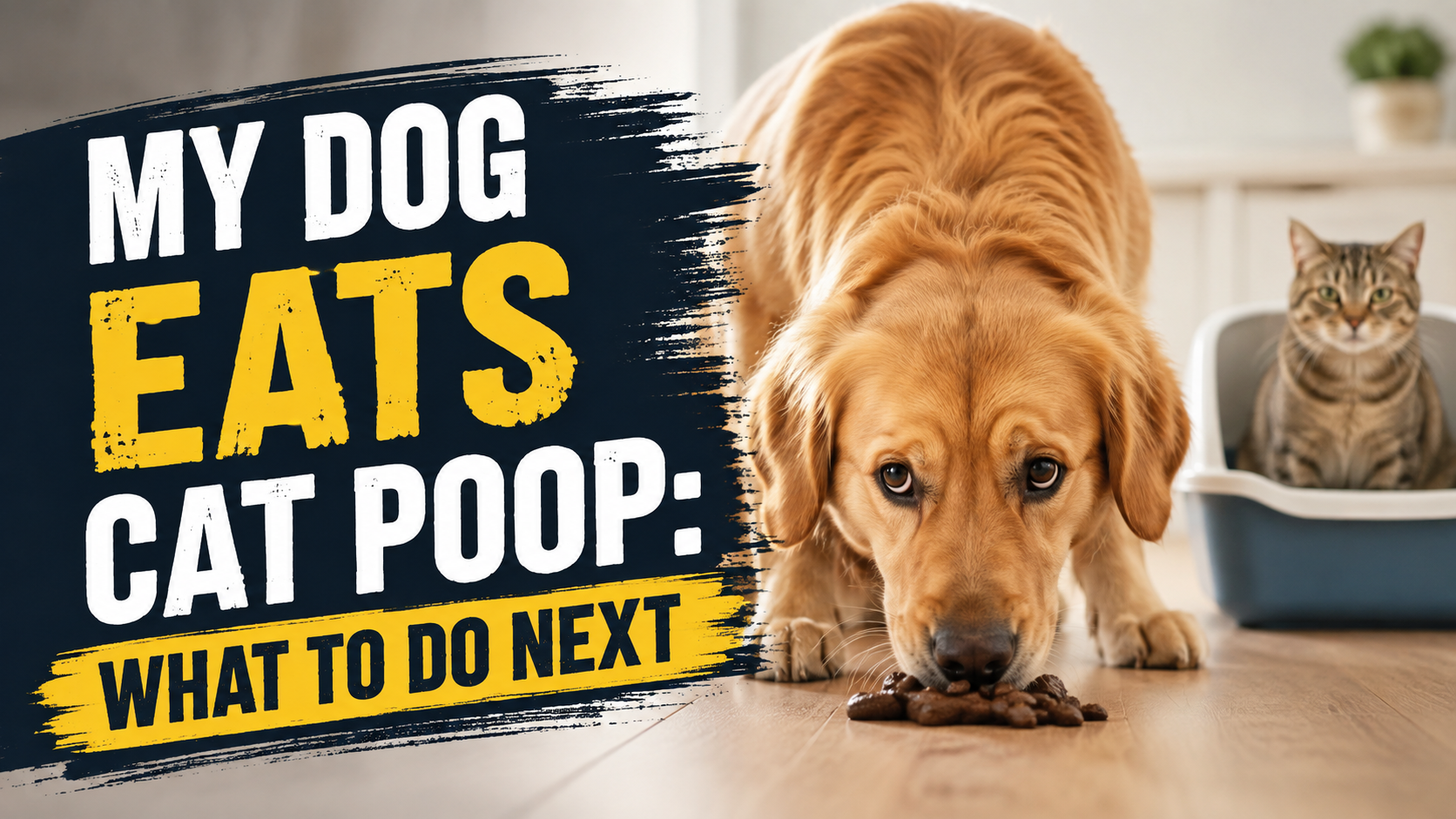
If your dog eats cat poop, stay calm, remove access, and watch for vomiting, diarrhea, or lethargy.
This is a common problem, and it usually starts with simple curiosity, boredom, or a very strong nose. I’ve seen many dogs treat cat litter boxes like snack bars, so I know how gross and stressful it feels in the moment. The good news is that most dogs are fine, but what you do next matters, and this guide will walk you through the smart, safe steps for what to do if my dog eats cat poop.

Why dogs eat cat poop
Dogs are opportunistic eaters. If something smells strong, they may want to taste it. Cat poop is especially tempting because cat food is rich, so the stool often carries a scent and flavor dogs find appealing.
There are a few common reasons this happens:
- Curiosity: Puppies and young dogs explore with their mouths.
- Hunger or food hunting behavior: Some dogs never ignore a chance for a “bonus snack.”
- Boredom: A bored dog may dig through the litter box for entertainment.
- Easy access: If the litter box is out in the open, the habit can become routine.
- Medical issues: In some cases, hunger changes, nutrient problems, or digestive issues can increase scavenging.
One thing I’ve learned over time is that the dog usually is not being “bad.” They are just following instinct. That does not make the habit safe, but it does help you focus on prevention instead of punishment.
What to do right away
If your dog eats cat poop, the first step is to stay calm. Panicking usually helps no one, and most dogs do not need emergency care after a single incident.
Do this first:
- Remove the litter box or block access right away.
- Check whether the poop came from a healthy indoor cat or a cat with known illness.
- Watch your dog for the next 24 to 48 hours.
- Offer fresh water.
- Keep feeding your dog their normal diet unless your vet says otherwise.
Do not make your dog vomit unless a veterinarian specifically tells you to. Cat poop is not usually a toxin, and forcing vomiting can make things worse.
If you can, note these details:
- How much your dog ate
- Whether the cat has any parasites or recent illness
- Whether the stool looked unusual
- Any symptoms your dog already has
That information can help your vet decide if follow-up care is needed.

Is cat poop dangerous for dogs?
Most of the time, cat poop causes mild stomach upset or no symptoms at all. Still, it can sometimes carry germs or parasites, and that is why the behavior should not be ignored.
Possible risks include:
- Bacterial infection: Stool can contain harmful bacteria.
- Parasites: Roundworms, hookworms, and other parasites can spread through feces.
- Gastrointestinal upset: Some dogs get vomiting, diarrhea, or gas.
- Coprophagia habit: Once a dog learns this behavior, it can become harder to stop.
The risk is higher if the cat is sick, the litter box is dirty, or the dog eats a large amount. Puppies, senior dogs, and dogs with weak immune systems may need closer monitoring.
From a practical standpoint, the biggest concern I see is not one bite of poop. It is repeated access. If a dog keeps getting into the litter box, the habit becomes stronger, and the health risk goes up too.
When you should call the vet
Call your vet if your dog eats cat poop and develops symptoms or if there is a known health risk in the cat. A quick phone call is often enough to decide whether you need an exam.
Contact your vet sooner if:
- Your dog vomits more than once
- Your dog has diarrhea that lasts more than a day
- Your dog seems weak, tired, or off
- Your dog refuses food or water
- You see blood in stool or vomit
- The cat has parasites, diarrhea, or an infection
- Your dog is a puppy, elderly, or immunocompromised
If the cat has been diagnosed with parasites, your vet may recommend stool testing or deworming. That is especially important if your dog keeps sneaking into the litter box.
What symptoms to watch for
Most dogs will not show signs after eating cat poop, but you should still monitor them closely. Think of it like keeping an eye on a small spill before it turns into a bigger mess.
Watch for:
- Vomiting
- Loose stool or diarrhea
- Excessive drooling
- Bad breath that seems worse than usual
- Bloating or discomfort
- Loss of appetite
- Lethargy
- Scooting or signs of anal irritation
If any of these symptoms appear and last longer than a day, call your veterinarian. If the signs are severe, such as repeated vomiting or obvious pain, seek care right away.
How to clean up and prevent it from happening again
The best way to handle this problem is to make the litter box less available. Dogs are fast learners when there is a reward involved, so prevention works better than scolding after the fact.
Try these steps:
- Move the litter box to a dog-free room if possible.
- Use a baby gate with a cat-sized opening.
- Try a covered litter box or top-entry box.
- Clean the litter box more often so it is less appealing.
- Feed your dog on a regular schedule to reduce scavenging.
- Give your dog enough exercise and mental play.
- Train a strong leave it cue.
In my experience, environmental fixes work better than willpower alone. If the litter box is easy to reach, many dogs will keep trying. If you change the setup, the problem often improves much faster.
Training tips to stop coprophagia
If your dog keeps eating cat poop, training can help, but it takes consistency. The goal is to make the litter box boring and off-limits.
Useful training steps include:
- Teach leave it with treats and short practice sessions.
- Reward your dog for ignoring the litter box.
- Keep your dog on leash indoors during retraining if needed.
- Use a cue like “leave it” before your dog reaches the box.
- Praise calm behavior near the cat area.
Do not use harsh punishment. It often makes dogs sneakier, not better. Positive reinforcement is usually more effective and easier to keep up.
Feeding and health checks that may help
Sometimes a dog that seeks cat poop is not just being nosy. They may be underfed, bored, or dealing with a health issue that should be checked.
Things worth discussing with your vet include:
- Whether your dog’s food is complete and balanced
- If the feeding schedule fits your dog’s age and activity level
- Whether your dog needs a parasite test
- Whether digestive problems could be increasing scavenging
- If weight loss or hunger seems unusual
A dog with a healthy diet and routine is often less likely to hunt for strange snacks. This does not fix every case, but it can reduce the urge.
What not to do
When people search for what to do if my dog eats cat poop, they often want a fast fix. But a few common mistakes can make things worse.
Avoid these:
- Do not punish your dog after the fact.
- Do not make your dog vomit unless a vet tells you to.
- Do not assume one incident means nothing if symptoms appear later.
- Do not ignore recurring behavior.
- Do not keep the litter box where your dog can reach it easily.
The mistake I see most often is treating the behavior as funny instead of a habit to stop. It may be silly in the moment, but it can become a repeat issue fast.
Frequently Asked Questions of What to do if My dog eats cat poop
Is it normal for dogs to eat cat poop?
Yes, it is fairly common. Dogs are drawn to strong smells, and cat poop can seem appealing to them because of what the cat eats.
Should I make my dog throw up after eating cat poop?
No, not unless a veterinarian tells you to. Cat poop is usually not a poisoning emergency, and forcing vomiting can cause more harm than good.
Can my dog get worms from eating cat poop?
Yes, that is possible. If the cat has parasites, the dog may be exposed too, which is why stool checks and deworming may be needed.
What if my dog only ate a small amount?
A small amount often causes no serious problem. Still, watch for vomiting, diarrhea, or unusual behavior over the next day or two.
How do I stop my dog from getting into the litter box?
Move the litter box out of reach, use a gate or covered box, and teach a strong leave it cue. Regular cleaning and supervision also help a lot.
Conclusion
If your dog eats cat poop, the main steps are simple: stay calm, remove access, watch for symptoms, and call your vet if something seems off. Most dogs are fine after one incident, but repeated access can lead to illness and a stubborn habit.
The best long-term fix is prevention. Make the litter box harder to reach, keep up with training, and check your dog’s health if the behavior keeps happening. If this article helped, take a minute to inspect your litter box setup today, and leave a comment or explore more dog health tips to stay one step ahead.