
As a pet parent, it is natural to want to share your favorite meals with your furry best friend. When you are enjoying a flavorful taco, a bowl of chili, or some leftover curry, those big puppy-dog eyes can be incredibly hard to resist. But before you offer a bite from your plate, you must ask: can dogs eat spicy or hot food?
Understanding how your dog’s digestive system reacts to intense flavors and temperatures is essential for their daily care and safety. Sharing the wrong human foods can lead to severe stomach upset, costly veterinary bills, and unnecessary pain for your pet. In this guide, we will explore whether dogs can safely consume spicy ingredients, how they experience flavors, and what to do if your dog accidentally sneaks a spicy snack.
Quick Answer
No, dogs should not eat spicy food. Spicy ingredients contain compounds like capsaicin that cause painful stomach irritation, vomiting, and diarrhea in dogs. If you are wondering about temperature, dogs can safely eat warm food, but boiling hot food can severely burn their mouth and throat. Always serve your dog’s food plain and at room temperature or slightly warm.
Do Dogs Taste Spicy Foods?
When you eat a jalapeño, your taste buds immediately register the heat. But do dogs taste spicy foods the same way humans do?
Dogs actually have a very different sense of taste compared to us. While humans have around 9,000 taste buds, dogs only have about 1,700. This means their overall sense of taste is much less refined. However, they can still taste bitter, sour, sweet, and salty flavors.
When it comes to spice, dogs do not taste it as a complex flavor profile. Instead, they feel it as a physical sensation. Spices like chili powder and jalapeños contain capsaicin, a chemical that triggers pain receptors in the mouth. So, can dogs feel spicy food? Absolutely. To a dog, spicy food simply translates to a burning sensation on their tongue, in their throat, and throughout their digestive tract.
What Happens If a Dog Eats Spicy Food?
If your dog manages to swipe a spicy chicken wing off the table, their body will quickly react to the foreign ingredients. Because a dog’s digestive system is not built to handle intense spices, is spicy food bad for dogs? Yes, it is heavily irritating to their gastrointestinal lining.
Here are the most common physical reactions what happens if dogs eat spicy food:
- Excessive Thirst and Drooling: Your dog will likely begin panting and drinking massive amounts of water to cool their mouth.
- Vomiting: Their stomach will try to expel the irritating food almost immediately.
- Diarrhea and Gas: As the spice moves through the intestines, it causes inflammation, leading to painful gas and loose stools.
- Abdominal Pain: Your dog may whine, pace, or adopt a hunched posture due to stomach cramping.
Furthermore, spicy dishes are rarely just spicy. They often contain massive amounts of salt, butter, and highly toxic aromatic vegetables. According to the ASPCA Animal Poison Control Center, ingredients like onions and garlic, which frequently accompany spicy dishes, are highly toxic to dogs and can cause severe damage to their red blood cells.
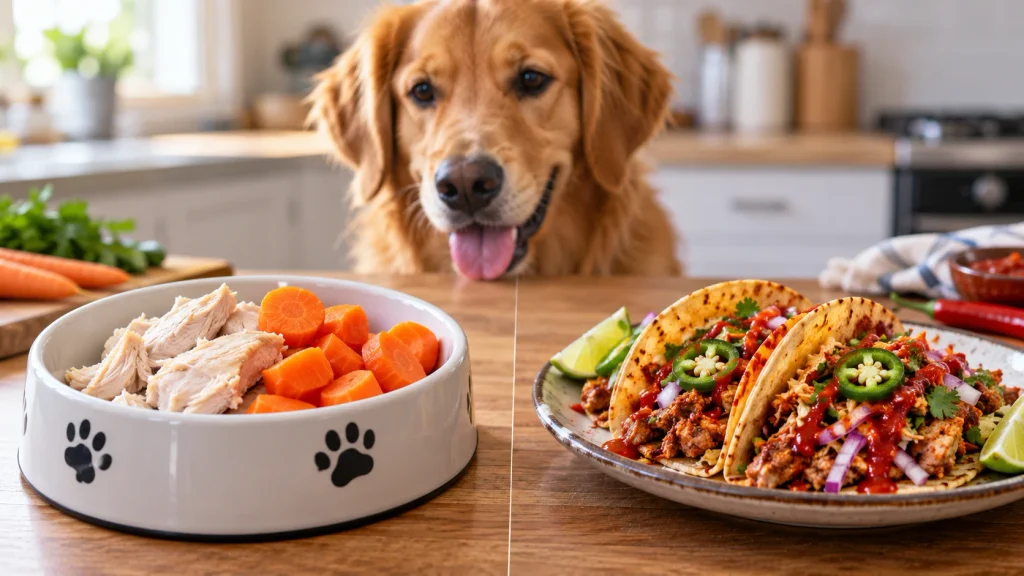
Can Dogs Eat Hot Food Temperature?
When pet owners ask “can dogs eat hot food,” they are often asking about the actual physical temperature of the meal. Can dog eat warm food, or should their meals always be served cold?
The Benefits of Warm Food
Do dogs prefer warm food? Often, yes! Heating up your dog’s food slightly can actually be a great trick for picky eaters or senior dogs with a diminished sense of smell. Warming wet food or pouring a little warm bone broth over dry kibble enhances the aroma, making the meal much more appetizing.
If you are wondering, can dogs have warm food, the answer is yes, as long as it is only slightly heated. It should feel lukewarm to the touch, similar to a baby’s bottle.
The Dangers of Boiling Hot Food
Conversely, is hot food bad for dogs if it is straight out of the microwave or off the stove? Yes. Dogs do not test their food’s temperature with small bites like humans do; they tend to gulp. Serving food that is too hot can cause severe thermal burns to their tongue, gums, esophagus, and stomach.
When preparing warm meals or storing leftovers, always test the temperature with your finger before serving. Additionally, following proper FDA safe handling tips for pet food ensures that warmed leftovers are stored safely in the refrigerator to prevent bacterial growth.
Why Does My Dog Like Spicy Food?
If spicy food causes pain, why does my dog like spicy food when they accidentally find some?
Dogs are driven primarily by their incredibly powerful sense of smell. A spicy dish often contains rich fats, meats, and oils that smell absolutely irresistible to a canine. Do dogs like spicy food for the heat? No. They are simply attracted to the savory meat and fat cooking alongside the spices. Once they start eating, their instinct to gulp down high-value food overrides the initial burning sensation in their mouth.
Helpful Table: Safe vs. Unsafe Food Additions
To help you safely enhance your dog’s meals without causing them distress, use this quick reference guide.
| Food Addition | Safe for Dogs? | Temperature/Prep Rules | Why It Is Used |
| Warm Bone Broth | Yes (Must be onion/garlic free) | Lukewarm | Hydration and flavor for picky eaters. |
| Chili Powder / Cayenne | No | Never serve | Causes stomach pain and diarrhea. |
| Plain Cooked Chicken | Yes | Room temperature or slightly warm | Great source of lean protein. |
| Jalapeños / Hot Peppers | No | Never serve | Triggers pain receptors; gastrointestinal distress. |
| Steaming Hot Wet Food | No | Cool to lukewarm before serving | Can burn the mouth, throat, and esophagus. |
Expert Tip:
If you want to make your dog’s dinner more exciting without using dangerous spices, try mixing in a spoonful of plain canned pumpkin (not pie filling) or a splash of unsalted, dog-safe chicken broth. It adds excellent flavor and aids in healthy digestion!
Common Mistakes Pet Owners Should Avoid
Even well-meaning pet parents can make dietary mistakes. To keep your dog’s stomach happy, avoid these common habits:
- Scraping your plate into the dog bowl: Human meals are heavily seasoned with salt, garlic, butter, and spices that destroy a dog’s gut health.
- Microwaving dog food in plastic: If you choose to warm up wet food, transfer it to a microwave-safe ceramic bowl and stir it thoroughly to eliminate dangerous hot spots.
- Assuming large breeds can handle spice: Just because a dog is large does not mean their stomach lining is immune to capsaicin. Can dogs handle spicy food better if they are bigger? No, the irritation is the same.
- Offering “just a little taste”: Even a small lick of a highly concentrated spicy sauce can cause painful acid reflux and diarrhea.

When to Call a Veterinarian or Pet Professional
While a mild stomach ache from a dropped piece of spicy food might resolve on its own with fasting and a bland diet, certain situations require immediate professional help.
Call your licensed veterinarian immediately if your dog experiences:
- Repeated, forceful vomiting that lasts for more than a few hours.
- Lethargy, weakness, or an inability to stand up.
- Blood in their vomit or severe, bloody diarrhea.
- A swollen, hard, or distended abdomen (which can be a sign of a life-threatening emergency).
- Known consumption of spicy foods that also contained heavy amounts of toxic onions, garlic, xylitol, or macadamia nuts.
Do not attempt to induce vomiting at home without direct instruction from a veterinary professional or a poison control hotline, as the burning spices can cause further damage on the way back up.
FAQs
Can dogs taste spicy food?
Yes, but they do not experience it as a complex flavor. Instead, they feel the spice as a burning, painful sensation on their tongue and throughout their digestive tract.
Can dogs eat hot food?
If “hot” means temperature, dogs can safely eat warm, lukewarm food. However, they should never eat boiling hot food, as it can cause severe thermal burns in their mouth and throat.
What happens if a dog eats spicy food?
Your dog will likely experience gastrointestinal distress. Symptoms include excessive drooling, intense thirst, vomiting, abdominal cramping, and diarrhea.
Can dogs die from spicy food?
Spicy food itself (like chili powder) is rarely fatal on its own, but it causes severe dehydration and pain. However, if the spicy food contains toxic ingredients like garlic or onion powder, those secondary ingredients can be life-threatening.
Is spicy food good for dogs in small amounts?
No. There are zero health benefits to giving a dog spicy food. It only causes unnecessary irritation to their stomach lining and intestines.
Can dog eat warm food every day?
Yes, you can gently warm your dog’s wet food or add warm water to their kibble daily. This is entirely safe and often helps senior dogs or picky eaters enjoy their meals more.
Can dogs handle spicy food better than cats?
Neither dogs nor cats are built to digest spicy foods. Both species will suffer from vomiting and stomach pain if exposed to capsaicin or heavily seasoned human dishes.
Conclusion
So, can dogs eat spicy or hot food? The safest and most responsible answer is a firm no. Spicy ingredients provide absolutely no nutritional value to your dog and only serve to cause painful stomach aches, vomiting, and diarrhea. While it is perfectly fine—and sometimes beneficial—to serve your dog’s meals pleasantly warm, you should never offer them heavily seasoned, spicy, or boiling hot table scraps.
Protecting your pet’s digestive health is a core part of responsible pet ownership. Stick to high-quality, canine-formulated nutrition and dog-safe plain treats to keep their tails wagging. If you suspect your dog has eaten a dangerous, spicy human meal containing toxic ingredients like garlic or onions, reach out to your local veterinarian right away to ensure they stay happy, healthy, and safe!