Introduction
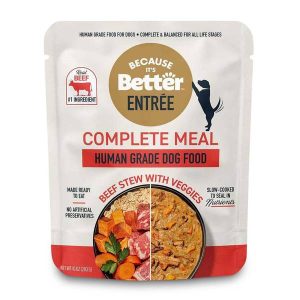
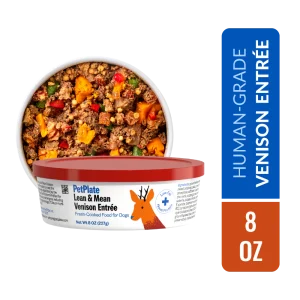
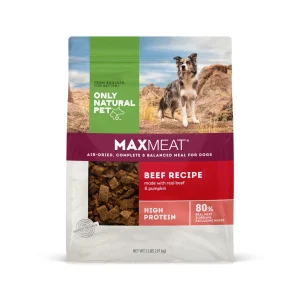
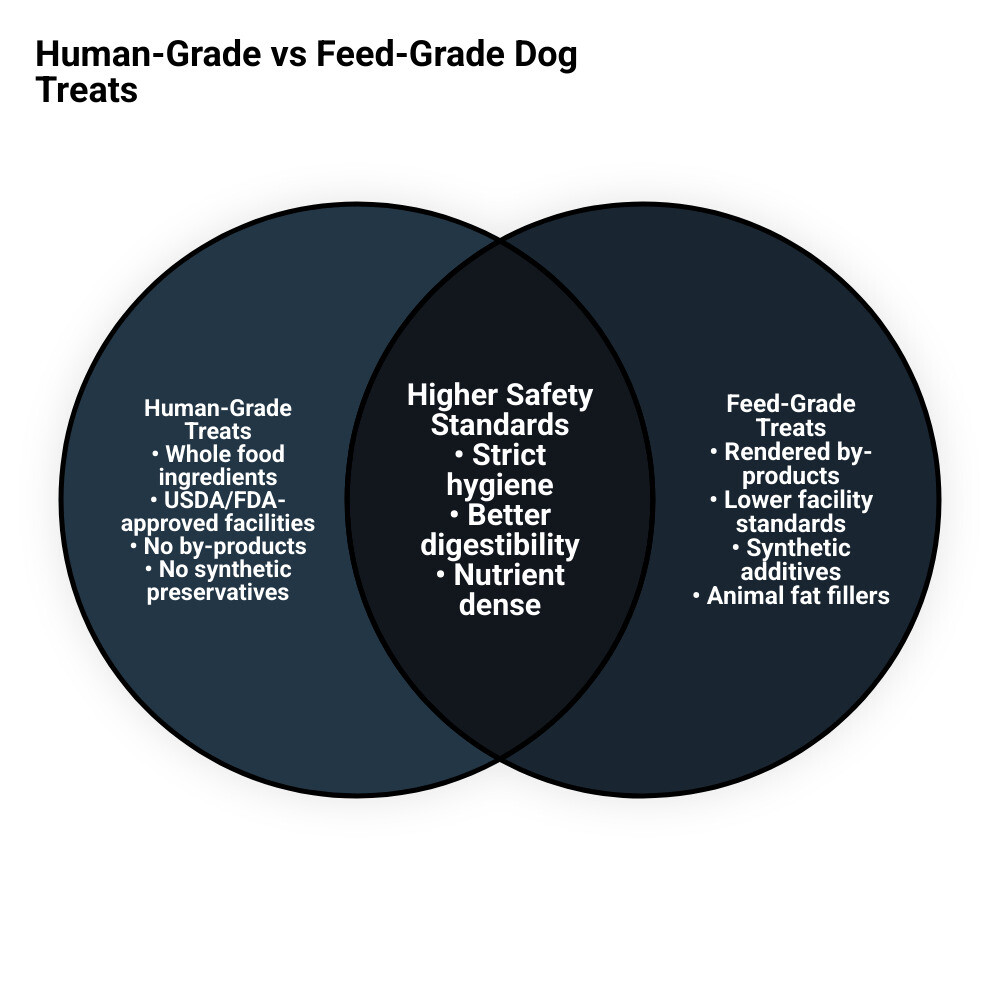
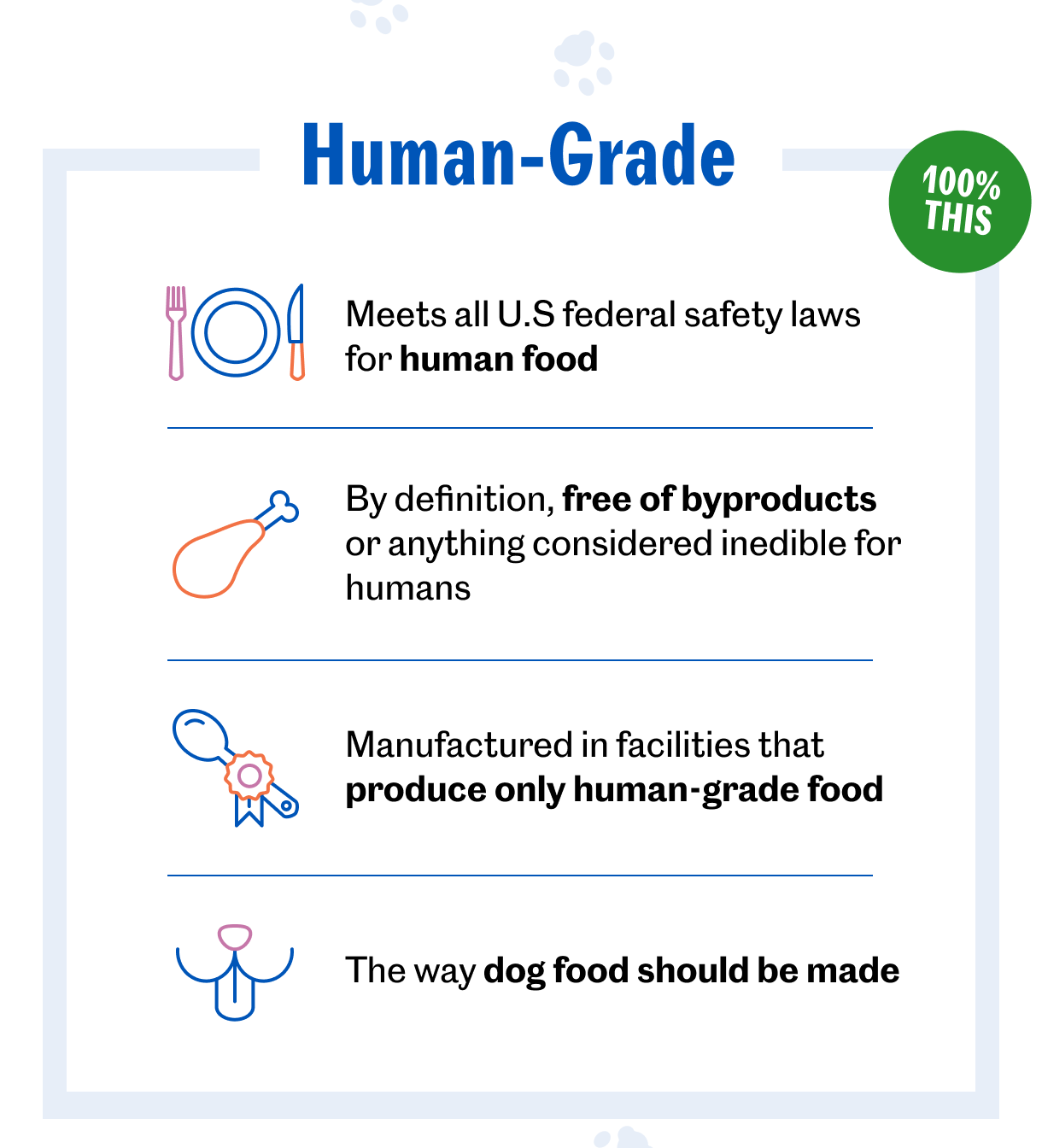
Human-grade dog food is made from ingredients and in a facility that meet standards for human food handling. Under the Association of American Feed Control Officials (AAFCO) definition, the finished dog food must be stored, handled, processed, and transported in ways that follow human-food rules. It must also be legally fit for people to eat.
That does not mean the food is better for every dog. It does not mean the food is complete, balanced, safer than all other dog food, or suitable as a human meal. The term describes how the food is made and handled. You still need to check the nutrition statement, ingredients, company practices, and your dog’s health needs.
This guide explains what “human-grade” means on dog food labels in the United States, how it differs from similar claims, and how to decide if it is worth the cost.

What Does “Human-Grade” Mean on a Dog Food Label?
“Human-grade” means the finished dog food meets the conditions required for human-edible food. This is more than saying that some ingredients began as food sold for people.
AAFCO’s definition focuses on four key areas:
- The ingredients must be fit for human consumption.
- The finished product must be made in a facility that follows suitable human-food rules.
- The food must be stored and handled under those rules.
- The product must be legally permitted to be sold as human food.
The word finished matters. A company cannot make a strong human-grade claim simply because it uses chicken, rice, carrots, or beef that people also eat. The complete product and its manufacturing process must support the claim.
In the United States, the U.S. Food and Drug Administration (FDA) regulates animal food. State feed programs also play a role. Many states use AAFCO model rules when they review pet food labels. AAFCO itself is not a federal regulator, but its definitions guide much of the U.S. pet food industry.
Human-grade is a process and handling claim
Think of “human-grade” as a chain of custody:
- The ingredients are accepted as human-edible.
- The recipe is made in a suitable food facility.
- The food is handled and stored under the right controls.
- The final product remains fit for human consumption.
If one part of that chain fails, the claim may not accurately describe the finished food.
Human-grade is not the same as “made with human-grade ingredients”
These phrases are not equal:
| Label wording | What it may tell you | What it does not prove |
|---|---|---|
| Human-grade dog food | The finished food is claimed to meet human-food handling and legal standards | That it is nutritionally superior |
| Made with human-grade ingredients | Some ingredients may be fit for people to eat | That the finished food is human-grade |
| Natural | A separate claim with its own limits | That the food is human-grade or complete |
| Organic | Some ingredients may meet organic rules | That the food is human-grade |
| Premium | Usually a marketing term | A specific quality or nutrition standard |
| Restaurant-quality or kitchen-made | A descriptive phrase | Regulatory compliance or nutritional adequacy |
Read the whole label. A front-of-package phrase can sound broad while the legal statement on the package is much narrower.
Does human-grade mean humans can eat the dog food?
Not always. A product may be legally described as human-grade, but that does not make it a suitable meal for people.
Dog food is made for dogs. It may have a smell, texture, nutrient balance, or flavor that people do not want. It may also contain a vitamin and mineral blend designed for canine needs. “Human-grade” means the product meets certain standards for ingredients and handling. It does not turn dog food into food made for human nutrition.
Is Human-Grade Dog Food Better or Safer?
Human-grade dog food may offer better ingredient transparency or stricter handling. But the claim alone does not prove that it is safer, healthier, or more digestible than a well-made conventional dog food.
Food safety depends on more than ingredient quality. It also depends on:
- Cooking or other processing controls
- Protection from contamination
- Proper storage
- Packaging
- Transport
- Recall systems
- The dog’s health and immune status
- Safe handling in your home
A conventional dry dog food can be made under controlled conditions and support good health. A human-grade product can also have problems if it is poorly formulated, mishandled, or stored badly.
Human-grade food may be cooked in different ways
Human-grade dog food can come in several forms:
- Refrigerated cooked food
- Frozen cooked food
- Shelf-stable gently cooked food
- Canned food
- Dehydrated food
- Freeze-dried food
- Dry food
The form affects storage and risk. Refrigerated food can spoil if it stays warm too long. Freeze-dried food is low in moisture, but it may still need water added before feeding. Dry food is convenient, but it can lose freshness after the bag is opened.
Follow the package directions. Keep cold food cold, seal dry food well, wash bowls, and discard food that smells spoiled or has changed in color or texture.
Human-grade does not remove raw-food risks
Raw dog food can contain harmful germs, including Salmonella, Listeria monocytogenes, and certain strains of E. coli. Freezing does not reliably kill every pathogen. A human-grade claim also does not make raw food risk-free.
The FDA warns that raw pet food can expose pets and people to harmful bacteria. This matters most in homes with:
- Young children
- Older adults
- Pregnant people
- People with weakened immune systems
- Dogs with health problems
If you choose raw food, ask your veterinarian about the risks and use strict handling steps. Do not assume that “human-grade” means “pathogen-free.”
The nutrition statement matters more than the front label
A dog food should provide an AAFCO nutritional adequacy statement if it is meant to serve as a complete diet. Look for wording such as:
“Animal feeding tests using AAFCO procedures substantiate that [product] provides complete and balanced nutrition…”
or:
“[Product] is formulated to meet the nutritional levels established by the AAFCO Dog Food Nutrient Profiles…”
The statement should also name the life stage, such as:
- Growth
- Maintenance
- All life stages
- Gestation and lactation
Some foods are labeled for intermittent or supplemental feeding only. These foods may be useful as toppers or treats, but they should not replace a complete diet unless your veterinarian gives you a specific plan.
Human-grade and complete-and-balanced are separate claims. A food can have one without the other.
How Can You Tell If a Human-Grade Claim Is Meaningful?
Use the label, company information, and nutrition statement together. No single word on the front of a package gives the full answer.
1. Check the exact wording
Look for “human-grade dog food” or a clear statement about the finished product. Be cautious when the label only says:
- Human-grade ingredients
- Made with ingredients for people
- Restaurant-quality ingredients
- Kitchen-made
- Food-grade ingredients
These phrases may describe ingredients or marketing style, not the finished food.
2. Find the nutritional adequacy statement
The food should state whether it is complete and balanced. Check that the life stage matches your dog.
For example, a puppy needs a diet formulated for growth. A food made only for adult maintenance may not meet a puppy’s needs. Large-breed puppies also have special mineral and calorie concerns.
3. Ask how the food is made
A trustworthy company should be able to explain:
- Where it makes the food
- Whether the facility makes human food or animal food
- Who formulates the recipe
- How it checks ingredients
- What safety tests it performs
- How it controls harmful bacteria
- How it handles recalls
- How it sets feeding amounts
The person who creates the recipe should have suitable training in animal nutrition. A company may use a veterinary nutritionist, an animal nutritionist, or another qualified professional. Ask for the person’s credentials rather than relying on vague phrases such as “created by experts.”
4. Review the guaranteed analysis
The guaranteed analysis usually lists minimum crude protein and crude fat, plus maximum crude fiber and moisture. These numbers help you compare foods, but they can mislead when moisture differs.
To compare a wet food with a dry food, use a dry-matter calculation.
Hypothetical example:
- Food A lists 10% protein and 75% moisture.
- Food B lists 25% protein and 10% moisture.
For Food A:
10 ÷ (100 − 75) × 100 = 40% protein on a dry-matter basis
For Food B:
25 ÷ (100 − 10) × 100 ≈ 27.8% protein on a dry-matter basis
The wet food appears to have less protein on the label, but its dry-matter protein is higher in this example. This is a comparison tool, not a statement about which food is right for your dog.
Calorie content also matters. A food with rich ingredients may contain more calories per cup or package. Feeding too much can lead to weight gain even when the ingredients look wholesome.
5. Ask about quality control
A good company should have a clear plan for testing and traceability. Useful questions include:
- Does it test incoming ingredients?
- Does it test finished batches?
- Does it test for pathogens?
- Can it trace a batch by lot number?
- Does it retain samples?
- Does it publish recall information?
- Does it use a qualified laboratory?
- Does it monitor nutrient levels?
These questions do not guarantee a perfect product. They help you judge whether the company understands its responsibilities.
6. Check storage instructions and expiration dates
Human-grade food may have a shorter shelf life than some dry foods. Follow the package directions for:
- Refrigeration
- Freezing
- Thawing
- Use after opening
- Serving temperature
- Disposal
Do not leave wet or refrigerated food in the bowl all day. Wash the bowl after meals, especially when feeding moist food.
What Are the Benefits and Drawbacks of Human-Grade Dog Food?
The main benefit is often greater detail about ingredients and production. The main drawback is cost, storage needs, and the risk of confusing a marketing claim with a complete nutrition plan.
Possible benefits
Human-grade dog food may be useful when you value:
- A clear ingredient supply chain
- Cooked ingredients with familiar names
- More information about where food is made
- Refrigerated or fresh texture
- A diet plan developed for a specific dog
- Better acceptance from a picky dog
Some dogs may eat a moist food more readily than dry kibble. That can help a dog with poor appetite, dental discomfort, or a preference for soft food. However, a change in appetite can signal illness. Do not use a new food to mask a health problem.
Possible drawbacks
Human-grade food may also bring limits:
- It often costs more.
- It may need refrigeration or freezer space.
- It may spoil faster after opening.
- Feeding instructions can be harder to measure.
- Some foods are high in calories.
- Some products are not complete and balanced.
- Delivery delays can affect cold food.
- Switching diets too fast can cause loose stools.
- The human-grade claim may not reflect meaningful nutrition benefits.
A dog does not need an expensive diet simply because the label sounds premium. The best choice is a food that is complete and balanced for the dog’s life stage, safe to handle, suitable for the dog’s health, and practical for the household.

How Should You Switch to Human-Grade Dog Food?
Switch diets slowly unless a veterinarian tells you to change at once. A gradual change can reduce stomach upset.
A common seven-day plan is:
| Days | Old food | New food |
|---|---|---|
| 1–2 | 75% | 25% |
| 3–4 | 50% | 50% |
| 5–6 | 25% | 75% |
| 7 | 0% | 100% |
This is a general example, not a rule for every dog. Some dogs need a slower change. Use the new food’s calorie guide, not the old food’s cup amount. Different foods can have very different calorie densities.
Watch for:
- Repeated vomiting
- Diarrhea
- Blood in the stool
- Severe gas
- Refusal to eat
- Low energy
- Itching or facial swelling
- Rapid weight gain or loss
Stop and call a veterinarian if symptoms are severe, persistent, or linked with weakness, dehydration, pain, or blood. Facial swelling or trouble breathing requires urgent veterinary care.
For dogs with kidney disease, pancreatitis, diabetes, food allergies, intestinal disease, or other medical conditions, ask your veterinarian before changing food. A fresh or human-grade recipe is not automatically suitable for a therapeutic diet.
Human-Grade Dog Food vs. Homemade Dog Food
Human-grade dog food is made commercially under food-handling standards. Homemade dog food is prepared at home. The two terms do not mean the same thing.
A homemade diet can contain healthy foods and still lack key nutrients. Common problems include too little calcium, an incorrect calcium-to-phosphorus balance, low zinc, low iodine, or inadequate vitamins.
Do not build a long-term homemade diet from a random online recipe. Ask a board-certified veterinary nutritionist to create or review the plan. Follow the recipe exactly, including supplements. Small changes can alter the nutrient balance.
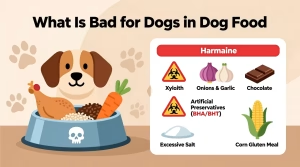
Plain cooked meat, rice, eggs, or vegetables can be safe treats for many dogs, but they are not automatically a complete diet. Avoid toxic foods such as onions, garlic, grapes, raisins, chocolate, xylitol, and alcohol.
A Simple Decision Guide
Use this checklist before buying human-grade dog food:
- Is the finished product clearly described as human-grade?
- Does it have an AAFCO complete-and-balanced statement?
- Is it made for your dog’s life stage?
- Does the company explain its facility and safety controls?
- Can you store and serve it safely?
- Does the calorie amount fit your dog’s weight and activity?
- Can you afford it for the long term?
- Has your veterinarian approved the change if your dog has a health condition?
If the answer to the second question is no, treat the food as a topper, treat, or supplemental product unless a veterinarian provides a complete feeding plan.
What should you prioritize?
For most dogs, use this order:
- Complete and balanced nutrition
- Safety and quality control
- Fit for age, size, activity, and health
- Calorie control
- Cost and convenience
- Human-grade status
This order keeps the most important need first. A human-grade claim can be a useful quality signal, but it should not replace the nutritional adequacy statement.
Common Mistakes to Avoid
Mistake 1: Assuming human-grade means superior
The claim does not prove that a food has better nutrient absorption, longer life expectancy, or improved health. Those claims require separate evidence.
Mistake 2: Confusing human-grade ingredients with human-grade food
A product may contain ingredients that people eat while the finished food does not meet the same standard. Check the full claim.
Mistake 3: Ignoring calories
Fresh food can be rich and tasty. Feed by calories and monitor body condition, not by package volume alone.
Mistake 4: Treating a topper as a full diet
Many toppers are not complete and balanced. Keep supplemental products within the feeding directions unless a professional creates a different plan.
Mistake 5: Changing food too fast
A sudden change can cause vomiting or diarrhea. Use a gradual transition when possible.
Mistake 6: Believing “natural” means safe for every dog
Natural foods can still cause allergies, choking, excess calories, or toxicity. Dogs also have different medical needs.
Mistake 7: Skipping veterinary advice for a sick dog
A human-grade diet cannot replace diagnosis or treatment. A dog with ongoing vomiting, weight loss, diarrhea, or poor appetite needs veterinary care.
Frequently Asked Questions
Is human-grade dog food regulated in the United States?
Pet food is regulated by the FDA and state authorities. AAFCO provides model definitions and rules that many states use. “Human-grade” has a specific AAFCO meaning, but AAFCO is not itself a federal enforcement agency.
Does human-grade dog food have to be organic?
No. Human-grade and organic are different claims. A food can be human-grade without being organic, and an organic claim does not automatically mean the finished food is human-grade.
Is human-grade dog food good for puppies?
It can be, but only if the label says it is complete and balanced for growth or all life stages. Puppy nutrition is not the same as adult maintenance nutrition.
Can I feed human-grade dog food to a dog with allergies?
Maybe, but the label alone is not enough. Check every ingredient, watch for cross-contact, and ask your veterinarian about a proper elimination diet if food allergy is suspected.
Is fresh dog food the same as human-grade dog food?
No. “Fresh” usually describes the food’s form or storage. “Human-grade” describes ingredient status and handling standards. A fresh food may not be human-grade, and human-grade food may be dry, canned, frozen, or freeze-dried.
Conclusion
Human-grade dog food means the finished product is made, handled, stored, and transported under standards that support human-edible status. It does not automatically mean the food is complete, balanced, safer, or better for every dog.
Before buying, check the exact label wording, AAFCO nutritional adequacy statement, life-stage rating, calorie content, storage rules, and company quality controls. If your dog has a medical condition or needs a homemade-style diet, involve your veterinarian or a board-certified veterinary nutritionist.
The practical next step is simple: take a food’s package and find the nutritional adequacy statement first. Then decide whether its human-grade status adds useful value for your dog and your household.