Can Dogs Eat Bananas?
Most dog owners love sharing snacks with their furry friends. But when it comes to fruits like bananas, you might wonder: Is it safe? Are there any health benefits, or could bananas cause problems for your dog? It’s important to get clear answers, not just for your pet’s safety, but also for their happiness.
Many people think all fruits are good for dogs, but that’s not always true. Some can be dangerous, while others, like bananas, are often seen as safe. Still, there’s more to this story than a simple yes or no. Knowing what’s best for your dog isn’t just about avoiding harm—it’s about making smart choices for their health.
Let’s look at the facts about dogs and bananas. This guide will cover nutrition, benefits, risks, how much to give, ways to feed bananas, and common questions. Whether you’re a new dog owner or have years of experience, you’ll find practical advice and important insights to help you decide if bananas belong in your dog’s bowl.
Are Bananas Safe For Dogs?
The short answer: bananas are generally safe for dogs. Most healthy dogs can eat bananas in small amounts. Bananas are not toxic, and many dogs enjoy their sweet taste and soft texture.
But “safe” doesn’t mean “give as much as you want. ” Like any treat, moderation is key. Too much banana can lead to stomach upset or other issues. Some dogs have special health needs, so it’s important to check with your vet before adding new foods.
Bananas are safe to eat plain, but avoid giving your dog banana bread or foods with added sugar, chocolate, raisins, or xylitol. These ingredients can be harmful or even deadly for dogs.
Nutritional Value Of Bananas
Bananas are a popular fruit for humans because they’re full of nutrients. But how do these nutrients help dogs? Here’s a closer look at what’s inside a banana.
| Nutrient | Per 100g Banana | Benefit for Dogs |
|---|---|---|
| Calories | 89 kcal | Quick energy |
| Fiber | 2.6 g | Supports digestion |
| Potassium | 358 mg | Heart and muscle health |
| Vitamin C | 8.7 mg | Immune support |
| Vitamin B6 | 0.4 mg | Brain function |
| Magnesium | 27 mg | Bone health |
| Sugar | 12 g | Natural sweetener (limit for dogs) |
Bananas contain fiber, potassium, magnesium, and vitamins that can support your dog’s body. However, the sugar content is higher than many other fruits, so large amounts are not ideal.

Credit: www.dogster.com
Health Benefits Of Bananas For Dogs
Bananas are more than just a tasty snack. When given in small portions, they can add value to your dog’s diet. Here’s how:
1. Digestive Support
Bananas have dietary fiber, which helps with digestion and bowel movements. If your dog has mild constipation, a small piece of banana may help get things moving. But too much fiber can cause diarrhea, so portion control is important.
2. Heart And Muscle Health
The high potassium level in bananas supports heart function, nerves, and muscle movement. Potassium can help maintain a healthy blood pressure and prevent muscle cramps, especially in active dogs.
3. Immune System Boost
Vitamin C and other antioxidants in bananas help boost your dog’s immune system. Although dogs produce some vitamin C on their own, extra support from fruits can be helpful, especially during stress or illness.
4. Healthy Skin And Coat
Bananas contain vitamin B6 and other nutrients that support healthy skin and a shiny coat. Regular, small banana treats may help reduce dry skin and shedding.
5. Low-fat Alternative
Many commercial dog treats are high in fat or additives. Bananas are naturally low in fat and cholesterol, making them a good choice for dogs who need to watch their weight or have sensitive stomachs.
6. Fun And Enrichment
Dogs love the sweet taste and fun texture of bananas. Using bananas as a treat or reward can add variety to your dog’s routine and keep training interesting.
Non-obvious Insights
- Giving a small slice of frozen banana during hot weather can help cool your dog down and soothe gums, especially for teething puppies.
- Mixing a little mashed banana with your dog’s medication can help them take pills more easily, since the flavor hides the medicine taste.
Risks And Precautions
Even healthy snacks can have risks. Here’s what every dog owner should know before sharing bananas.
1. Sugar Content
Bananas are high in natural sugar. Too much sugar can cause weight gain, dental issues, or even raise blood sugar in dogs with diabetes. Bananas should be a treat, not a daily food.
2. Digestive Problems
Large amounts of banana can lead to stomach upset. Signs include diarrhea, gas, or bloating. Start with small pieces and see how your dog reacts.
3. Allergic Reactions
While rare, some dogs can have allergies to bananas. Watch for signs like itching, swelling, or vomiting. If you see these, stop feeding bananas and contact your vet.
4. Choking Hazard
Banana slices are usually soft, but large chunks or whole bananas can be a choking risk, especially for small dogs or puppies. Always cut bananas into small, bite-size pieces.
5. Bananas And Medication
If your dog takes certain heart or kidney medicines, extra potassium can be risky. Check with your vet if your dog is on medication, as too much potassium can affect their health.
Non-obvious Insights
- Some dogs have sensitive stomachs and do better with very ripe bananas because they are softer and easier to digest.
- Feeding banana peels is a bad idea. Banana peels are not toxic, but they are tough and hard to digest, which can cause blockages.
How Much Banana Can Dogs Eat?
There’s no single answer for every dog, but some basic guidelines can help you decide.
Portion Size By Dog’s Weight
| Dog Size | Weight | Safe Banana Portion |
|---|---|---|
| Small | 5-20 lbs | 1-2 small slices (1/4 banana) |
| Medium | 21-50 lbs | 2-3 slices (1/3 banana) |
| Large | 51+ lbs | 3-4 slices (1/2 banana) |
A good rule is to keep treats (including bananas) to no more than 10% of your dog’s daily calories. For most dogs, a few small pieces, a few times per week, is plenty.
How Often Can Dogs Have Bananas?
Dogs don’t need bananas every day. A few times a week, or as an occasional reward, is enough for most pets. Some dogs with special diets (such as diabetic dogs) may need to avoid bananas completely.
Signs You’re Giving Too Much
Watch for these signs that you might be overdoing it:
- Loose stools or diarrhea
- Weight gain
- Excess gas or stomach noises
- Less interest in regular dog food
If you see these, cut back or skip bananas for a while.
How To Feed Bananas To Your Dog
Bananas are easy to prepare and serve. Here are some safe and fun ways to include bananas in your dog’s diet.
1. Fresh Banana Slices
The simplest way: peel the banana, cut it into small slices, and offer them as a treat. This works well for training rewards or snack time.
2. Mashed Banana
Mash a small amount and mix it into your dog’s regular food. This can be helpful for dogs with dental issues or picky eaters.
3. Frozen Banana Bites
Cut banana into small pieces and freeze them. These make a cool, chewy treat during hot weather or for teething puppies.
4. Banana And Peanut Butter Kong
Stuff a Kong toy with mashed banana and a small amount of plain peanut butter (no xylitol). Freeze for a longer-lasting, fun treat.
5. Homemade Banana Dog Treats
You can bake simple treats using mashed banana, oats, and a little plain yogurt. Always avoid sugar, chocolate, raisins, or artificial sweeteners in recipes.
6. Banana With Other Safe Fruits
Mix banana with small pieces of blueberry or apple (no seeds). This adds variety and extra nutrition.
What To Avoid
- Never feed banana peels.
- Avoid banana chips with added sugar or preservatives.
- Skip processed banana desserts.

Credit: www.loonawell.com
Special Cases: Puppies, Seniors, And Health Conditions
Not all dogs have the same needs. Here’s how bananas fit in special situations.
Puppies
Puppies can try banana after weaning (about 8 weeks old). Start with tiny pieces. Because their stomachs are sensitive, offer banana rarely and watch for any digestive problems.
Senior Dogs
Older dogs may enjoy bananas, especially if they have dental issues. The soft texture is easy to chew and digest. But watch portion size, as seniors may gain weight more easily.
Overweight Dogs
Because bananas are higher in sugar and calories than many other fruits, overweight dogs should have bananas only rarely, if at all.
Dogs With Diabetes
Bananas are not a good choice for dogs with diabetes. The high sugar content can spike blood sugar. Ask your vet for safer fruit options.
Dogs With Kidney Disease
If your dog has kidney problems, extra potassium can be dangerous. Bananas should only be given with your vet’s approval.
Dogs With Food Allergies
Banana is not a common allergen, but introduce it slowly the first time. If you see any itching, swelling, or stomach upset, stop right away.
Comparing Bananas To Other Fruits For Dogs
Bananas are just one of many fruits dogs can try. Here’s a quick look at how bananas stack up against other common fruits.
| Fruit | Safe for Dogs? | Key Benefits | Risks |
|---|---|---|---|
| Banana | Yes | Potassium, fiber, low fat | High sugar, choking if not sliced |
| Apple (no seeds) | Yes | Vitamin C, fiber | Seeds are toxic |
| Blueberry | Yes | Antioxidants, low calorie | Rare allergies |
| Grape | No | — | Highly toxic |
| Orange | Yes (limit) | Vitamin C | Acidic, can upset stomach |
| Watermelon (no seeds/rind) | Yes | Hydration, vitamins | Choking on seeds/rind |
Bananas offer a sweet, soft treat, but always compare them with your dog’s needs and any health issues.
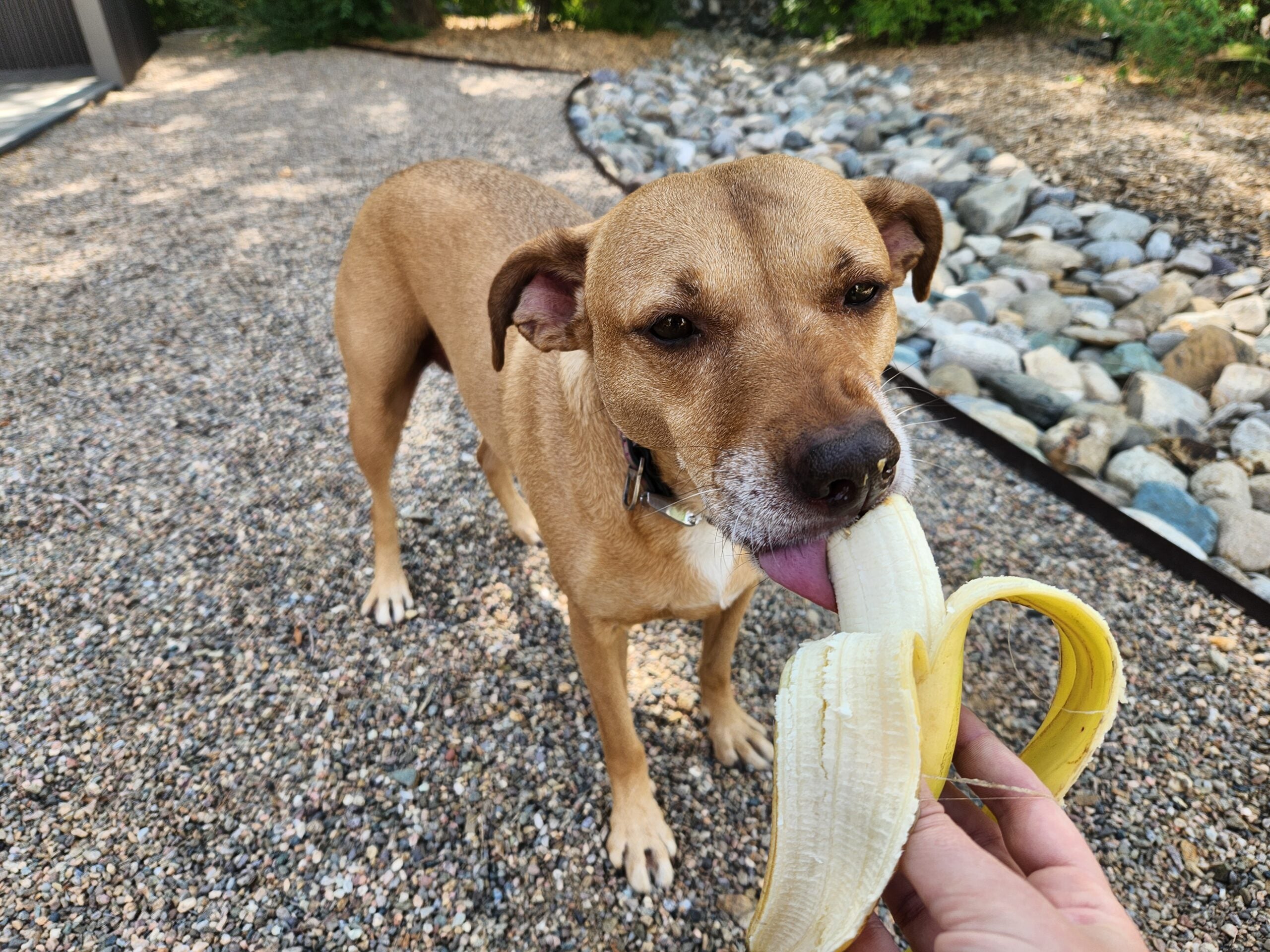
Credit: www.outsideonline.com
Common Mistakes When Feeding Bananas
Dog owners mean well, but mistakes can happen. Here’s what to avoid:
- Giving too much banana at once—leading to upset stomach or weight gain.
- Feeding banana peels—they’re not toxic but hard to digest.
- Offering whole bananas or large pieces—can cause choking.
- Assuming all dogs can eat bananas—some have allergies or medical issues.
- Ignoring extra calories—treats should only be a small part of your dog’s diet.
- Using bananas to hide medicine without vet approval—medication can interact with potassium.
- Not watching for signs of trouble—always monitor your dog after new foods.
- Sharing banana desserts—cakes, breads, and chips can be dangerous due to sugar, chocolate, or xylitol.
Signs Your Dog Shouldn’t Eat Bananas
Most dogs do fine with a little banana, but watch for these warning signs:
- Vomiting or diarrhea after eating banana
- New skin problems or itching
- Bloating or discomfort
- Changes in energy or appetite
If you see these, stop feeding bananas and talk to your veterinarian. Every dog is unique, and what works for one may not work for another.
What If Your Dog Eats Too Much Banana?
If your dog sneaks a big bunch of bananas, don’t panic. Most healthy dogs will just have a mild upset stomach. Watch for signs like:
- Loose stools
- Gas
- Mild vomiting
Give your dog plenty of water and skip bananas for a while. If your dog eats banana peels or shows signs of blockage (no poop, vomiting, pain), call your vet right away.
Dogs with health problems (like diabetes or kidney disease) need extra care. If you’re worried, always get advice from a professional.
Fun Ways To Use Bananas With Dogs
Bananas can do more than just fill a food bowl. Try these creative ideas:
- Banana popsicles: Blend banana with plain yogurt, freeze in small molds, and offer as a summer snack.
- Training treats: Use tiny banana bits for quick rewards.
- Stuffed toys: Spread mashed banana inside a Kong or hollow bone for a longer-lasting chew.
- Birthday cakes: Make a simple “cake” with mashed banana, a little oat flour, and peanut butter for your dog’s special day.
Remember, always use plain, dog-safe ingredients.
Scientific Opinions And Studies
Veterinarians and pet nutritionists mostly agree: bananas are safe in moderation. The American Kennel Club and other trusted sources say bananas are a better treat than salty or fatty table scraps. Still, they remind owners that dogs are not built to eat a lot of fruit, and too much can harm their health.
Scientific research shows that the nutrients in bananas—like potassium, fiber, and vitamins—can help dogs, but only in small amounts. No study suggests that bananas are essential, but they can be a healthy part of a balanced diet.
If you want to read more about fruits and dog health, you can visit the American Kennel Club for expert advice.
Frequently Asked Questions
Can Dogs Eat Banana Peels?
No, dogs should not eat banana peels. While they are not toxic, banana peels are very tough and hard to digest. Eating peels can cause choking or blockages, especially in small dogs. Always remove the peel before feeding.
Is Banana Good For Dogs With Diarrhea?
A small amount of banana can sometimes help mild diarrhea due to its fiber. But too much can make diarrhea worse. If your dog has ongoing diarrhea, see your vet. Bananas are not a cure for stomach illness.
Can Puppies Eat Bananas?
Yes, puppies can have tiny pieces of banana after they are weaned (about 8 weeks old). Start with a very small amount and watch for any stomach upset. Bananas are a good soft treat but should not be a daily food for puppies.
How Do I Know If My Dog Is Allergic To Bananas?
Signs of a banana allergy in dogs include itching, swelling, vomiting, or diarrhea after eating banana. Allergies are rare but possible. If you see these signs, stop feeding bananas and contact your vet.
Can Diabetic Dogs Eat Bananas?
No, diabetic dogs should not eat bananas. The high sugar content can raise their blood sugar levels quickly, which is dangerous. Talk to your vet for safer snack options if your dog has diabetes.
Bananas can be a fun, healthy snack for most dogs when given in small amounts. They offer nutrients and variety, but they’re not a must-have food. Always check with your vet if your dog has special health needs or you’re unsure about new treats.
With the right balance and careful portions, bananas can be a safe and happy part of your dog’s life.