For most dogs in the United States, canned food is not automatically better than dry food. Both can support good health when the label says the food is “complete and balanced” for the dog’s life stage and the portion fits the dog’s calorie needs.
Canned food may be the better fit for dogs that need more water, have poor teeth, or are picky eaters. Dry food may be easier to store, measure, and use on a budget. The best choice depends on your dog’s age, health, appetite, teeth, activity, and your ability to store and serve the food safely.
In the U.S., the Food and Drug Administration (FDA) regulates pet food, while state feed regulators often use standards from the Association of American Feed Control Officials (AAFCO). These agencies provide the framework behind terms such as “complete and balanced.”
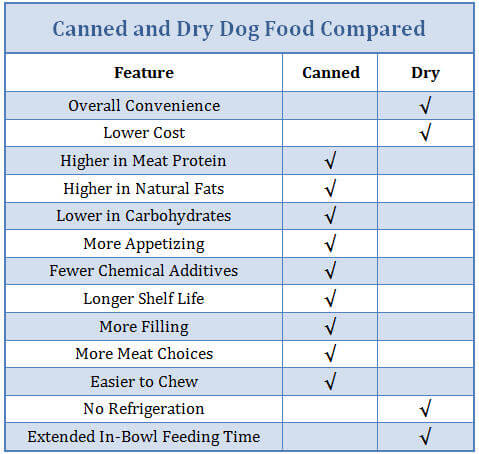
Canned food vs. dry food: What is the real difference?
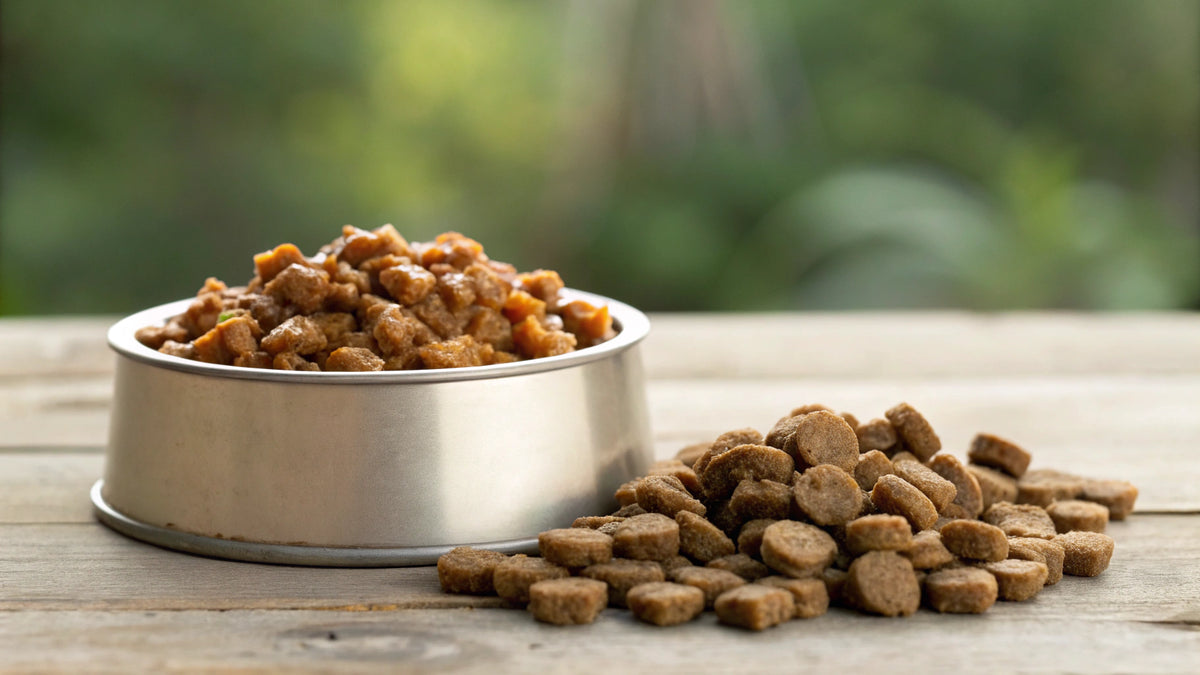
The main difference is water content. Dry dog food usually contains about 10% moisture, while canned food often contains about 75% to 80% moisture. This changes the food’s calorie density, texture, storage needs, and effect on water intake.
| Feature | Canned dog food | Dry dog food |
|---|---|---|
| Moisture | Usually much higher | Usually much lower |
| Calories by weight | Less calorie-dense | More calorie-dense |
| Texture | Soft and easy to chew | Firm and crunchy |
| Storage before opening | Often shelf-stable | Usually shelf-stable |
| Storage after opening | Must be refrigerated | Can stay sealed at room temperature |
| Cost per calorie | Often higher | Often lower |
| Water intake | Adds water to meals | Adds little water |
| Portion size | Larger for the same calories | Smaller for the same calories |
A label’s ingredient list does not tell the whole story. A food can have appealing ingredients and still fail to meet a dog’s nutrient needs. Look first for a nutritional adequacy statement, such as:
“Animal feeding tests using AAFCO procedures substantiate that this product provides complete and balanced nutrition…”
or:
“Formulated to meet the nutritional levels established by the AAFCO Dog Food Nutrient Profiles…”
The statement should match your dog’s life stage. A puppy, adult dog, pregnant dog, and senior dog may not need the same nutrient balance.
Is canned dog food more nutritious?
Not by default. Canned and dry foods can both provide complete nutrition. The nutrient profile depends on the recipe, not only on whether the food comes in a can or bag.
Canned foods may contain more animal-based ingredients or fewer starchy ingredients in some formulas, but this is not true of every product. Dry foods can also provide high-quality nutrition. Compare the guaranteed analysis, calorie statement, life-stage claim, and feeding directions instead of judging the food by texture or marketing words.
Does canned food contain more calories?
Usually, no. Canned food has more water, so it often contains fewer calories per gram or cup. This means a dog may need a larger visible portion of canned food to receive the same energy found in a smaller amount of kibble.
The calorie statement matters more than the cup measurement. In the United States, look for “Calorie Content” on the label. It may list calories as kilocalories per can, cup, kilogram, or another unit.

Benefits of canned food for dogs
Canned food can be especially useful when moisture, softness, or appetite is a concern. It is not a universal upgrade, but it solves certain feeding problems well.
More moisture
The high water content can help increase total daily water intake. This may be useful for dogs that drink little, although canned food should not replace veterinary treatment for dehydration or urinary disease.
Dogs with kidney disease, bladder problems, or other medical conditions may need a specific diet. In those cases, ask your veterinarian whether a prescription or therapeutic food is appropriate. A regular canned food is not automatically a medical diet.
Easier to eat
Soft food may be easier for dogs with:
- Missing teeth
- Dental pain
- Oral surgery
- Jaw problems
- Trouble chewing
- Reduced appetite
A dog that refuses dry food because chewing hurts needs a dental exam, not just a new food. Dogs often hide pain. Bad breath, dropping food, pawing at the mouth, chewing on one side, or weight loss can signal a problem.
Better appeal for some picky eaters
Many dogs prefer the smell and texture of canned food. This can help during illness, recovery, stress, or a temporary drop in appetite.
However, a sudden loss of appetite can be a health warning. Call your veterinarian if your dog refuses food, vomits, has diarrhea, seems weak, or shows other signs of illness. Do not use highly palatable food to delay care.
Useful for weight control in some dogs
Because canned food contains more water, it can provide a larger portion with fewer calories. A larger meal may help some dogs feel satisfied during weight loss.
Still, not every canned food is low in calories. Some recipes are rich and energy-dense. Use the calorie statement and your veterinarian’s target weight plan rather than guessing from the size of the can.
Possible limits of canned food
Canned food also has drawbacks:
- It often costs more per calorie.
- Open cans need prompt refrigeration.
- Food can spoil if left in the bowl for too long.
- It may be less convenient for travel.
- Some dogs develop loose stools after a sudden change.
- Soft food does not clean teeth by itself.
Opened canned food should be handled according to the label and common food-safety practice. Refrigerate unused portions in a covered container, wash bowls, and discard food that looks or smells spoiled.

Benefits of dry food for dogs
Dry food is often the most practical choice for healthy dogs that can chew comfortably and drink enough water.
Easy portion control
Kibble is simple to measure with a kitchen scale or a standard measuring cup. Weighing food gives more consistent portions than filling a bowl by eye.
This matters because small daily extras can add up. Treats, table scraps, dental chews, toppers, and supplements all contribute calories. The calorie needs printed on a package are starting points, not exact rules for every dog.
Lower cost and easier storage
Dry food usually costs less per calorie and creates less mess. An unopened bag is easy to store in a cool, dry place. After opening, keep it sealed in its original bag or place the bag inside an airtight container.
Keeping the original bag helps preserve the lot number and expiration information. Those details may matter if you need to contact the manufacturer or respond to a product recall.
Convenient for food puzzles
Kibble works well in food puzzles, slow feeders, training sessions, and automatic feeders. You can also use part of the daily meal as training rewards.
Do not add puzzle or training calories on top of the normal daily amount. Set aside the food first, then use it throughout the day.
Does dry food clean dogs’ teeth?
Ordinary kibble should not be treated as dental care. Its crunch may reduce some soft residue for some dogs, but it does not remove plaque from all tooth surfaces, especially below the gumline.
Daily tooth brushing with dog-safe toothpaste is the most reliable home method. Never use human toothpaste, which may contain ingredients that are unsafe for dogs. Veterinary dental exams and professional cleanings may also be needed.
Some dental diets have specific designs and evidence behind them. If dental health is the goal, ask your veterinarian about products accepted by the Veterinary Oral Health Council (VOHC) and about a complete dental-care plan.
Which is better for puppies, seniors, and dogs with health problems?
The right food depends more on the dog’s condition than on the food’s form.
Puppies
Puppies need food made for growth. Large-breed puppies may need a diet designed for controlled growth and appropriate calcium and phosphorus levels. A regular adult food may not meet a growing puppy’s needs.
Canned or dry puppy food can work if it is complete and balanced for growth. Follow the feeding guide, monitor body condition, and ask your veterinarian when to change to adult food.
Senior dogs
There is no single diet that all senior dogs need. Some older dogs do well on their current adult food. Others need changes because of reduced activity, dental disease, weight gain, kidney disease, or another condition.
Soft canned food can help a senior dog that struggles to chew. A lower-calorie food may help a less active dog. But a senior label alone does not prove that a food is right for a particular medical problem.
Dogs with dental disease
Canned food is easier to chew, but it does not treat dental disease. Dry food is not a substitute for brushing or veterinary dental care.
If chewing seems painful, choose a soft food only as a temporary comfort measure unless your veterinarian recommends it as part of a longer plan.
Dogs with kidney disease or urinary concerns
Extra moisture may help some dogs, but the diet must also match the medical condition. Kidney and urinary diets often control several nutrients at once, such as phosphorus, protein, sodium, or minerals linked to urine composition.
Do not switch to a random canned food and assume it will provide the needed balance. Your veterinarian can recommend a therapeutic diet and explain whether canned, dry, or mixed feeding is suitable.
Dogs with food allergies
Changing from dry to canned does not automatically remove an allergen. The same protein may appear in both forms. Cross-contact during manufacturing can also matter.
For suspected food allergy, a veterinarian may recommend a structured elimination diet. Do not add treats, flavored medicines, or toppers during the trial unless the veterinary plan allows them.

How to choose the best food for your dog
Use this simple process before choosing canned, dry, or a combination.
1. Check the nutritional adequacy statement
Choose a food that is complete and balanced for the correct life stage. Treats, toppers, and foods labeled for “intermittent or supplemental feeding only” should not replace the main diet.
2. Check calories, not just serving size
Find the calorie statement on the package. Compare foods using the same unit, such as kilocalories per can or per cup.
For a mixed diet, calculate the calories from each part.
Hypothetical example:
- Daily target: 600 kilocalories
- One can: 350 kilocalories
- Dry food: 350 kilocalories per cup
- Amount of dry food: 250 kilocalories ÷ 350 = about 0.7 cup
This is only an example. Your dog’s target may be higher or lower. A veterinarian can help set a calorie goal based on body condition, age, activity, and health.
3. Match texture to the dog’s mouth
Use softer food when chewing is difficult. Use dry food when the dog can chew well and the convenience of kibble helps you manage portions.
You can also mix the two. Mixed feeding is acceptable when the total diet remains nutritionally balanced and the portions are adjusted.
4. Consider water intake
If your dog rarely drinks, canned food may add useful moisture. Provide fresh water at all times. A sudden increase or decrease in drinking can indicate illness and deserves veterinary attention.
5. Transition slowly
Change foods over about seven days unless a veterinarian gives different instructions:
- Days 1–2: 25% new food, 75% old food
- Days 3–4: 50% new food, 50% old food
- Days 5–6: 75% new food, 25% old food
- Day 7: 100% new food
Slow down if your dog develops soft stool, gas, vomiting, or refuses the food. Contact a veterinarian if symptoms are severe, persistent, or joined by weakness or dehydration.
6. Watch body condition
Look at your dog’s waist, ribs, and overall shape. You should be able to feel the ribs under a light layer of fat, but the ribs should not be sharply visible in most dogs.
Weigh your dog regularly when possible. A food change that causes steady weight gain or loss needs a portion adjustment or professional review.

Can dogs eat both canned and dry food?
Yes. Many dogs can eat a combination of canned and dry food. The key is to reduce the amount of each food so the total calories stay appropriate.
A common mistake is adding a full can on top of the usual kibble. This can cause weight gain, loose stool, or both. Use the calorie values on both labels and replace calories rather than simply adding them.
Mixed feeding may offer a practical balance:
- Canned food adds moisture and smell.
- Dry food is easy to measure and use for training.
- Each food can provide a different texture.
- The dog may accept meals more readily.
Do not change several things at once. If you introduce a new food, topper, treat, and supplement together, it becomes hard to identify the cause of stomach upset.
Common mistakes to avoid
Avoid these feeding errors when comparing canned and dry food:
- Choosing food based only on the ingredient list
- Assuming expensive food is always better
- Treating “natural” or “premium” as proof of nutritional adequacy
- Using ordinary kibble as a dental-care plan
- Ignoring calories because the portion looks small
- Switching foods suddenly
- Leaving opened canned food out for long periods
- Storing kibble in heat, moisture, or direct sun
- Feeding a medical diet without veterinary guidance
- Adding toppers without reducing the main meal
- Assuming a dog that refuses food is simply “picky”
The word “by-product” also deserves context. By-products can include nutritious organ tissues. The term alone does not prove that a food is poor quality. The complete formula, manufacturing controls, adequacy statement, and your dog’s response matter more.

Key takeaways
- Canned food is not automatically better than dry food.
- Canned food offers more moisture and a softer texture.
- Dry food is often cheaper, easier to store, and simple to measure.
- Both types can be healthy when complete and balanced for the correct life stage.
- Ordinary dry food does not replace brushing or veterinary dental care.
- Use calorie information when mixing foods or changing portions.
- Choose a veterinary diet when a dog has kidney, urinary, allergy, digestive, or other medical needs.
- A slow transition can reduce digestive upset.
FAQs
Is canned food healthier than kibble for dogs?
Neither is always healthier. A complete and balanced canned or dry food can support health. Canned food may be better for added moisture and soft texture, while dry food may be better for convenience and cost.
Should I feed my dog wet food every day?
You can feed canned food every day if it is complete and balanced for your dog’s life stage and the portions meet calorie needs. Refrigerate unused food and keep fresh water available.
Can canned food cause diarrhea in dogs?
It can if the change is sudden, the food does not agree with the dog, or the portion is too large. Transition gradually. Contact your veterinarian for repeated diarrhea, blood, vomiting, weakness, or signs of dehydration.
Is dry food better for a dog’s teeth?
Ordinary dry food is not enough to prevent dental disease. Brushing with dog-safe toothpaste, veterinary dental checks, and suitable dental products provide better support.
What should I feed a dog that will not eat kibble?
First, look for a medical cause, especially if the appetite change is sudden. A veterinarian may suggest canned food, softened kibble, a therapeutic diet, or another plan based on the dog’s teeth and health.
Is it okay to mix wet and dry dog food?
Yes, if both foods are suitable and you adjust the portions. Count calories from both foods so the total daily amount does not become excessive.
Conclusion
For most U.S. dogs, the better choice is the food that is nutritionally complete, fits the dog’s health needs, provides the right calories, and works safely in your home.
Choose canned food when moisture, softness, or appetite is the main need. Choose dry food when storage, cost, portion control, or food puzzles matter most. If your dog has a medical condition, painful chewing, repeated digestive problems, or a sudden appetite change, ask your veterinarian before making the diet the only solution.
Sources and evidence
- U.S. Food and Drug Administration: “Pet Food”
- FDA: “Selecting the Right Pet Food”
- AAFCO: Official Publication and Pet Food Information
- WSAVA Global Nutrition Guidelines
- Veterinary Oral Health Council