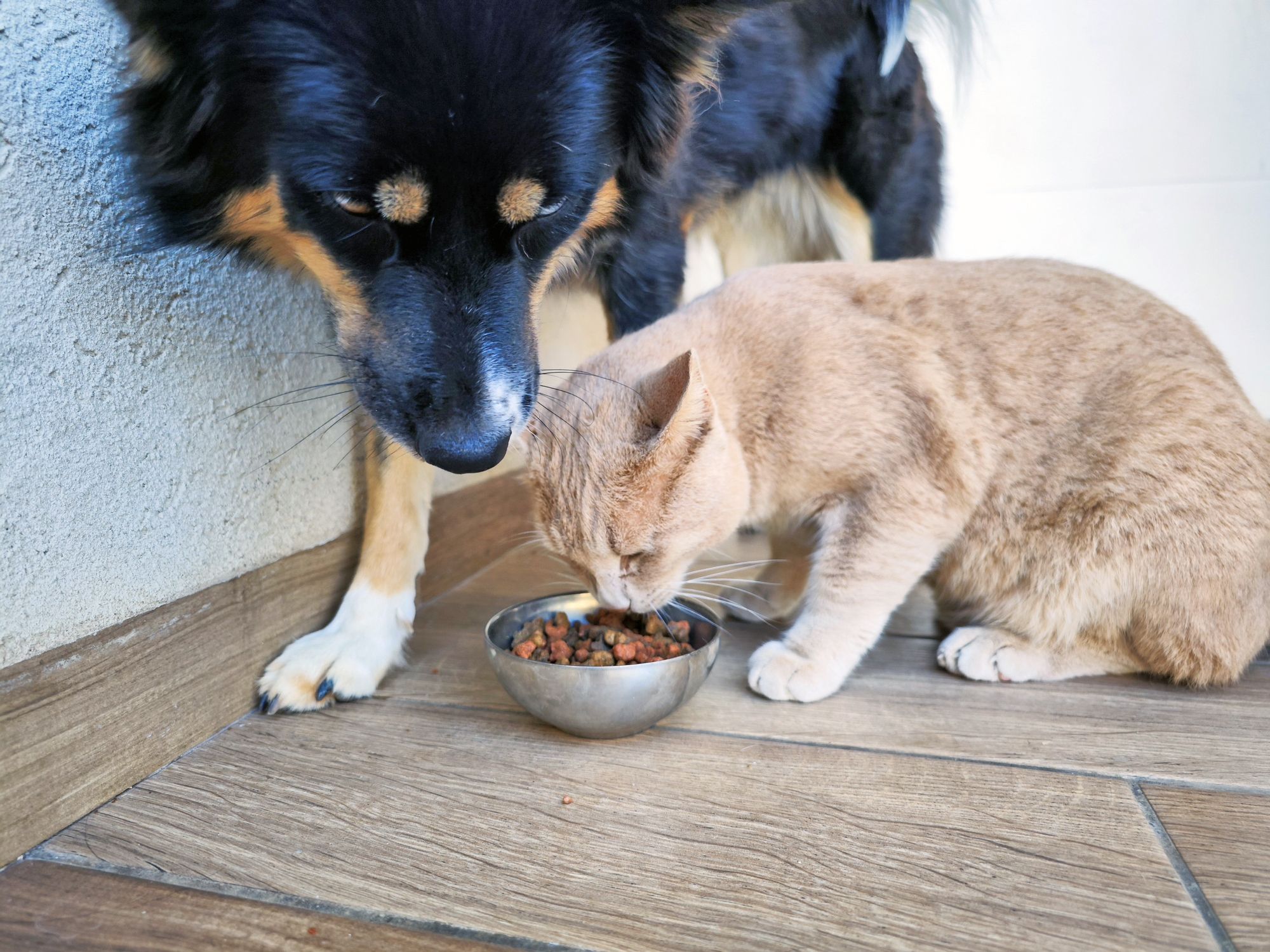
A bite is usually fine; routine feeding raises health risks for many dogs.
If you have ever wondered is cat food bad for dogs, you are not alone. As a pet nutrition writer who works with vets and real pet families, I have seen the full range—from curious sniff-and-nibbles to full-on pantry raids. This guide explains when cat food is a problem, what signs to watch for, and smarter ways to feed and train so your dog stays safe and happy.
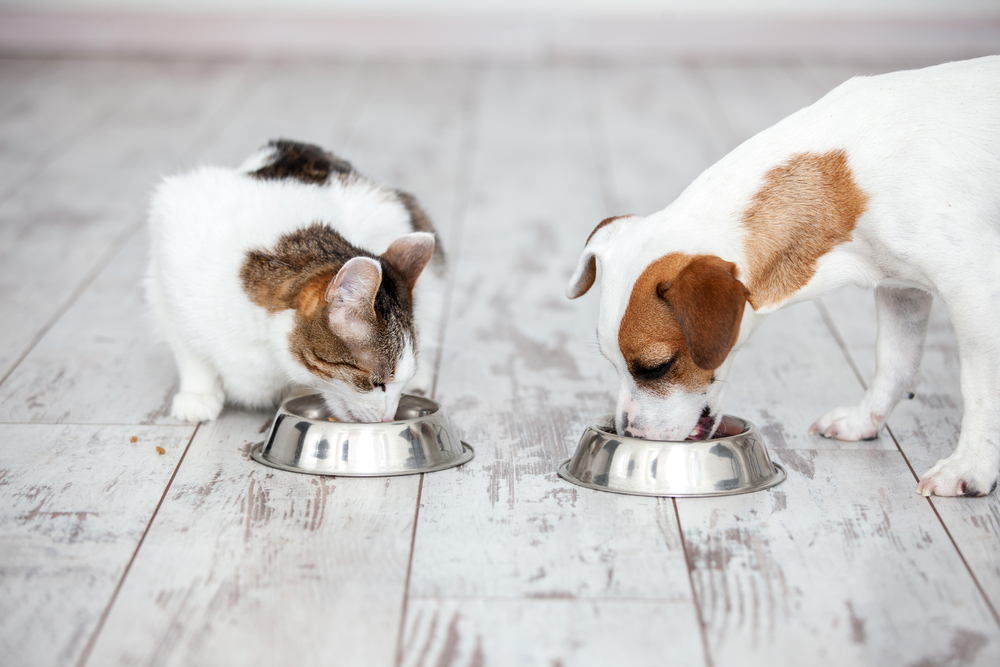
Is cat food bad for dogs? The key differences
If you ask is cat food bad for dogs, start by looking at how the two foods are built. Cat food is designed for obligate carnivores, so it is richer and often smells stronger. Dog food is made for omnivores and aims for balance over time.
Key differences most owners miss:
- Protein and fat: Cat food is often higher in both. This makes it extra tasty to dogs, but it can upset the gut.
- Amino acids: Cats need taurine added; dogs make their own. The rest of the mix is not tuned for dogs.
- Minerals and vitamins: The ratios match cat needs, not dog needs. Over time, this can cause gaps or excess.
- Calorie density: Many cat foods pack more calories per cup. Dogs can gain weight fast if they “share.”
Veterinary nutrition guidelines and AAFCO profiles set different targets for each species. That is why the long-term answer to is cat food bad for dogs leans toward yes for daily feeding, even if rare bites are fine.

When cat food causes problems
Is cat food bad for dogs all the time? Not always. But some dogs are more at risk than others.
Dogs at higher risk:
- Dogs with a history of pancreatitis or a sensitive gut
- Overweight dogs, or dogs who gain weight fast
- Puppies, especially large-breed pups with strict calcium needs
- Senior dogs or those with kidney or liver disease
- Dogs with fish or chicken allergies, which are common in cat foods
Why problems show up:
- High fat loads can inflame the pancreas.
- Calorie-dense meals lead to weight gain.
- Mineral ratios can clash with growth needs in puppies.
- Strong flavors can drive overeating and food stealing.
Short-term effects you may see
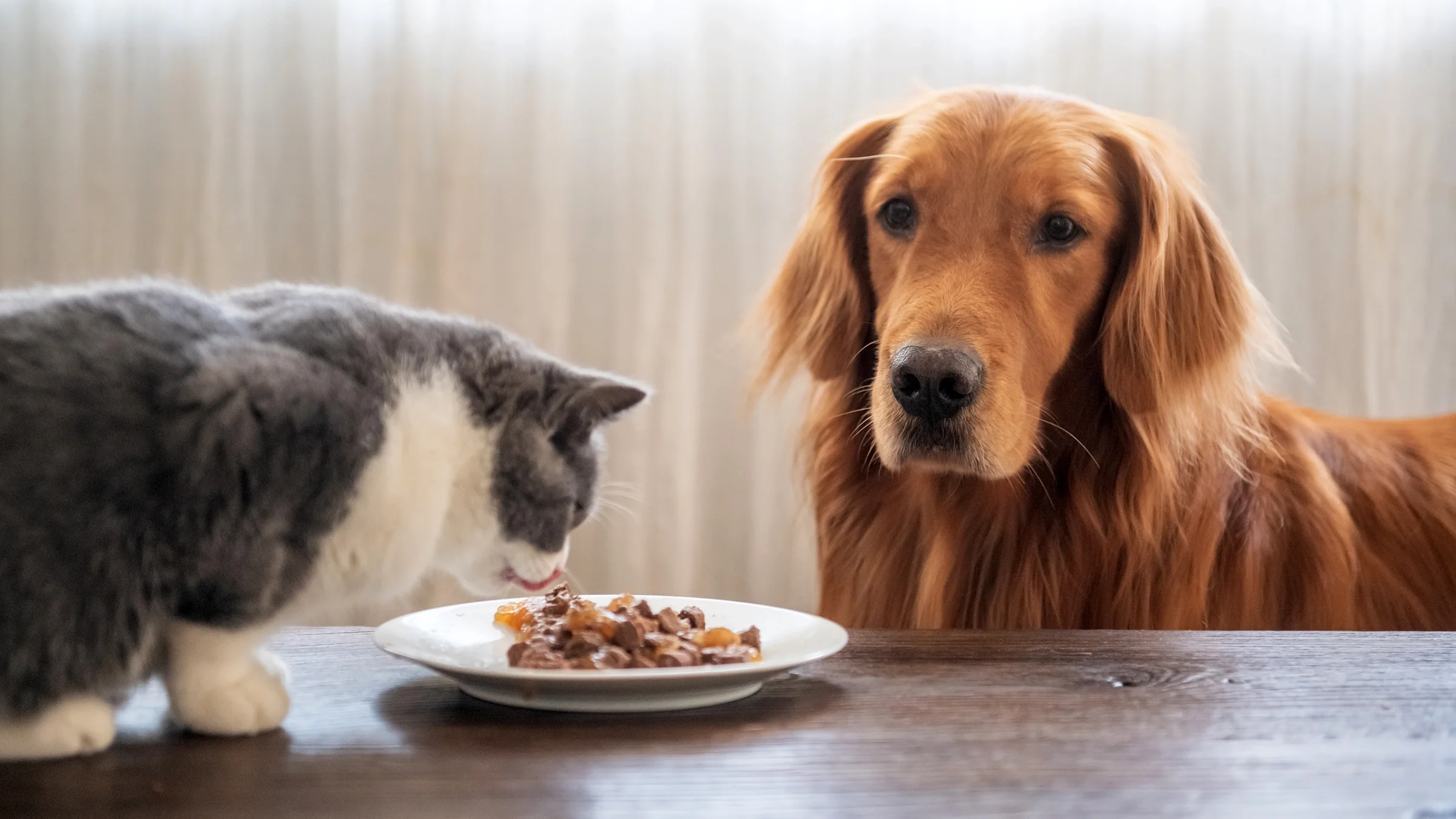
If a dog raids the cat bowl once, you may see short-term signs. Most pass in 24 to 48 hours.
Common signs after a cat food snack:
- Vomiting, soft stool, or diarrhea
- Gas, belly noise, or a droopy mood
- Extra thirst or restlessness from rich food
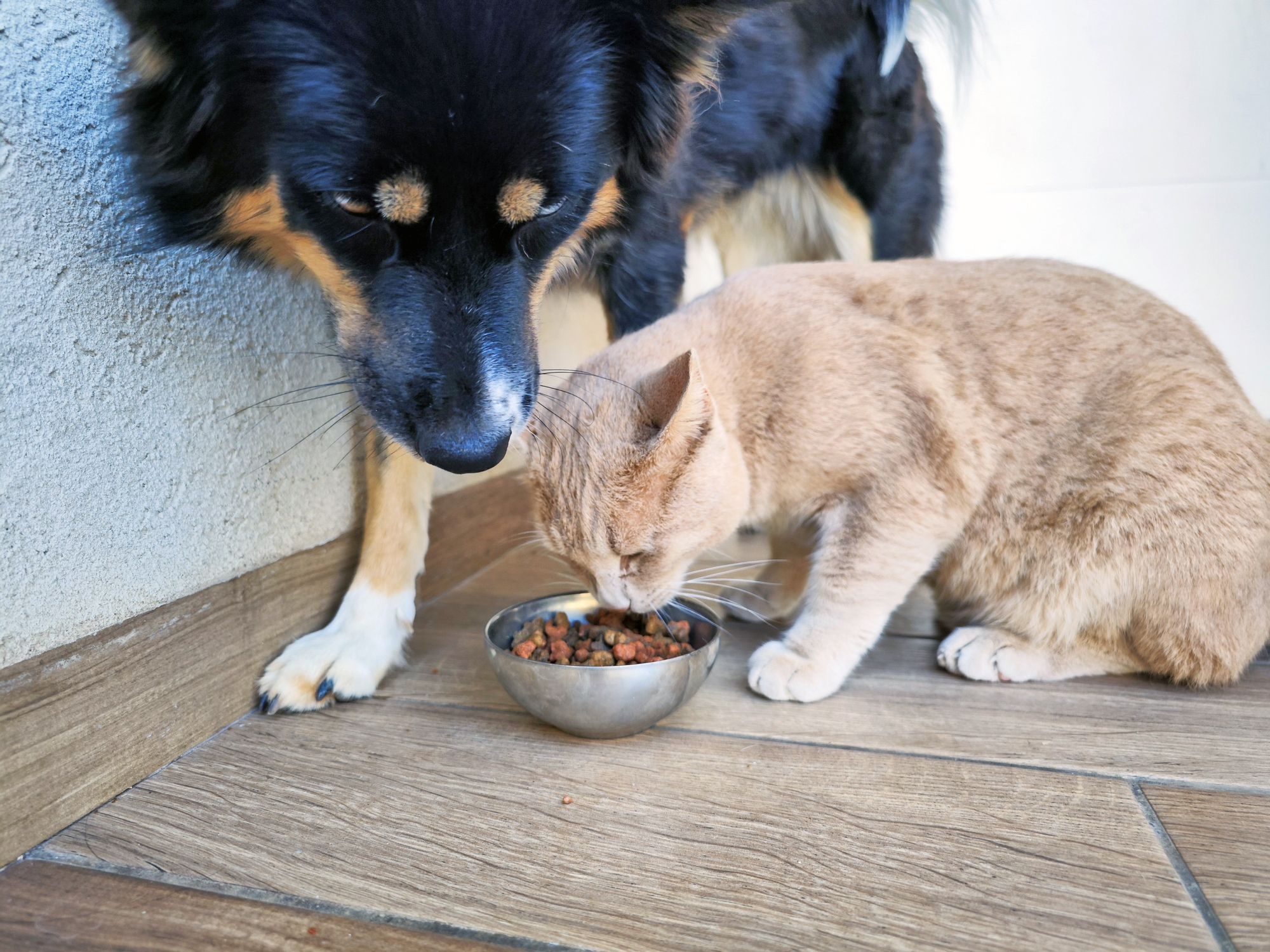
In my work with pet families, mild stomach upset is the most common. I get more calls on weekend mornings after a midnight snack raid than any other time. Is cat food bad for dogs in a one-time case? It is usually more annoying than dangerous, as long as your dog stays bright and hydrated.

Long-term risks to watch for
Is cat food bad for dogs in the long run? Yes, when it replaces a complete and balanced dog diet. The risk grows with time.
Long-term concerns:
- Obesity: Extra calories add up fast and strain joints.
- Pancreatitis: High fat meals can trigger painful flares.
- Nutrient mismatch: Calcium and phosphorus balance can drift. Skin, coat, and bone health can suffer.
- Kidney strain in dogs with kidney disease: Rich protein is not the cause in healthy dogs, but it can be hard on dogs with existing issues.
- Dental issues: Many soft or rich foods stick and feed plaque.
These risks show up slowly, which is why many owners do not link them to the wrong bowl. When you ask is cat food bad for dogs, remember that the danger is a slow climb, not a single step.
Special cases and edge scenarios
There are short windows when a vet may allow a little cat food. Very picky dogs in recovery may need a strong smell to tempt them. I have seen this help a few days after dental surgery. Still, it is a short plan, with a return to dog food as soon as the dog eats well.
Real-life note: Early in my career, a Beagle named Buddy learned to open the laundry door and snack from the cat dish. He was fine the first time. After a week, he came in with vomiting and belly pain. His vet linked it to fatty cat kibble and set strict feeding rules. Buddy did great once the cat bowl moved behind a baby gate.
Is cat food bad for dogs who train hard? As a training treat, a pea-sized dab of wet cat food can work in a pinch. Keep it rare and tiny. There are better dog-safe high-value options listed below.

What to do if your dog eats cat food
If you are still asking, is cat food bad for dogs after a raid, use this simple plan.
Step-by-step response:
- Check how much and what type. Wet and high-fat foods pose more risk.
- Offer water. Skip heavy meals for the next 8–12 hours if your dog is queasy.
- Watch for vomiting, diarrhea, belly pain, or listlessness.
- Use a bland meal if needed: small amounts of boiled chicken and plain rice.
- Call your vet if there is repeated vomiting, blood in stool, strong pain, or if your dog has past pancreatitis, is a puppy, or is a toy breed.
Most healthy dogs bounce back fast. Keep notes, since your vet will ask about amounts and timing.
:max_bytes(150000):strip_icc()/dog-eating-cat-food-523971155-2000-1d3192e7f0be4149bbf2f4e5e7c8fe94.jpg)
Smarter replacements and transition tips
If your dog loves that cat-food smell, you can still win. Use dog-safe tricks that give high value without the risk.
Better high-value rewards:
- Tiny bits of cooked chicken breast or turkey
- Freeze-dried meat dog treats with single ingredients
- A spoon of wet dog food as a topper
- Sardines in water (no salt), once or twice a week, in small amounts
Household setup tips:
- Feed the cat on a counter, shelf, or behind a baby gate.
- Use a microchip cat feeder that only opens for the cat.
- Pick up bowls after meals. Free-feeding invites raids.
Transition tips if your dog got used to cat food:
- Shift to dog food over 7–10 days. Start with 25% new, then 50%, then 75%.
- Add warm water to release aroma. Stir and let it sit for two minutes.
- Use food puzzles to boost interest and slow eating.
Is cat food bad for dogs compared to these choices? Yes. These swaps keep the flavor fun while staying safe.
How to read pet food labels like a pro
Good choices start with labels. Clear labels beat clever ads every time.
What to look for:
- AAFCO statement that the food is complete and balanced for your dog’s life stage
- Calories per cup or can, so you can measure accurately
- Protein and fat on a dry matter basis, which tells you the true levels
- Named animal proteins as the first ingredients
Quick math tips:
- The 90/10 rule: At least 90% of daily calories from complete dog food; less than 10% from treats.
- For pancreatitis-prone dogs, aim for under 10% fat on a dry matter basis unless your vet says otherwise.
- Use your dog’s weight and body score to fine-tune portions every 2–4 weeks.
Is cat food bad for dogs when the label looks “healthy”? Marketing can fool anyone. Trust the AAFCO statement and your vet’s advice, not the front of the bag.
A simple, vet-guided feeding plan
A solid plan beats guesswork and stops the “snack swap” war at home.
Daily rhythm:
- Feed measured meals twice a day for adults; three to four times for puppies.
- Keep treats under 10% of daily calories.
- Log your dog’s weight and body condition monthly.
Sample starting points by size:
- Small (10–20 lb): 250–400 kcal per day
- Medium (30–50 lb): 700–1,100 kcal per day
- Large (60–90 lb): 1,200–1,800 kcal per day
Adjust up or down based on energy and body condition. Ask your vet for a target calorie range, especially if you wonder is cat food bad for dogs as part of a multi-pet plan. A written plan makes it easy for the whole family to stay on track.
Frequently Asked Questions of is cat food bad for dogs
Is cat food bad for dogs if they eat it once?
A one-time snack is usually not dangerous for a healthy dog. You may see mild stomach upset, which often passes within a day.
Why do dogs love cat food so much?
Cat food is higher in fat and has a strong smell, which dogs find exciting. The taste and texture also feel like a jackpot reward.
Can puppies eat cat food?
No. Puppies need precise calcium and phosphorus ratios and balanced energy. Cat food does not match those needs and can harm growth.
What happens if my dog keeps eating the cat’s food?
Weight gain, pancreatitis risk, and nutrient mismatches can build over time. You might also see stomach issues and coat changes.
Is wet cat food worse than dry cat food for dogs?
Wet cat food is often richer and may trigger stomach upset faster. Either type is a poor daily choice for dogs.
How can I stop my dog from stealing cat food?
Feed the cat out of reach, use a microchip feeder, and remove bowls after meals. Teach a solid “leave it” and reward with dog-safe treats.
Conclusion
A nibble here and there is rarely a crisis, but using cat food as a dog’s regular diet is a slow path to trouble. Extra fat, dense calories, and mismatched nutrients add up, even when your dog seems fine today. The safer path is clear: choose complete and balanced dog food, use smarter high-value rewards, and set up your home so each pet eats from the right bowl.
If you share a home with both pets, take action this week. Raise the cat bowl, measure your dog’s meals, and pick two dog-safe treats your pup loves. Have questions or a tricky case? Drop a comment, subscribe for more pet nutrition guides, and talk with your vet to build a plan that fits your dog’s life.