The best dog food for German Shepherds is a complete, balanced diet matched to age, size, activity, and health needs.
Choosing what dog food is best for German Shepherds takes more than picking a large-breed label. This active, intelligent breed can face food allergies, hip and elbow problems, sensitive digestion, and a dangerous risk of bloat. This guide explains how to read the label, choose safe ingredients, set portions, and adjust meals as your dog grows.
What dog food is best for German Shepherds?
The best dog food for German Shepherds meets the nutritional standards set by the Association of American Feed Control Officials, or AAFCO. It should also suit your dog’s life stage, body condition, activity level, and medical history.
For most healthy German Shepherds, a high-quality large-breed formula is a good starting point. Look for food with:
- Animal-based protein, such as chicken, turkey, beef, fish, or lamb
- Moderate fat for steady energy
- Omega-3 fatty acids for skin, coat, and joint support
- Controlled calcium and phosphorus, especially for puppies
- Digestible carbohydrates, such as rice, oats, barley, or sweet potato
- Added fiber and prebiotics for healthy digestion
- A clear statement that the food is complete and balanced
The best dog food for German Shepherds is not always the most expensive food. It is the food your dog digests well, enjoys, maintains a healthy weight on, and can eat safely over time.
A shiny bag or “premium” label does not prove quality. Instead, check the nutrition statement, feeding guide, company quality controls, and your dog’s response.

German Shepherd nutritional needs by life stage
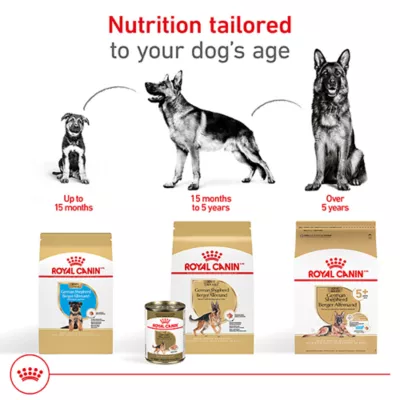
A German Shepherd’s diet should change as the dog grows. Puppies, adults, and seniors need different levels of calories and nutrients.
German Shepherd puppies
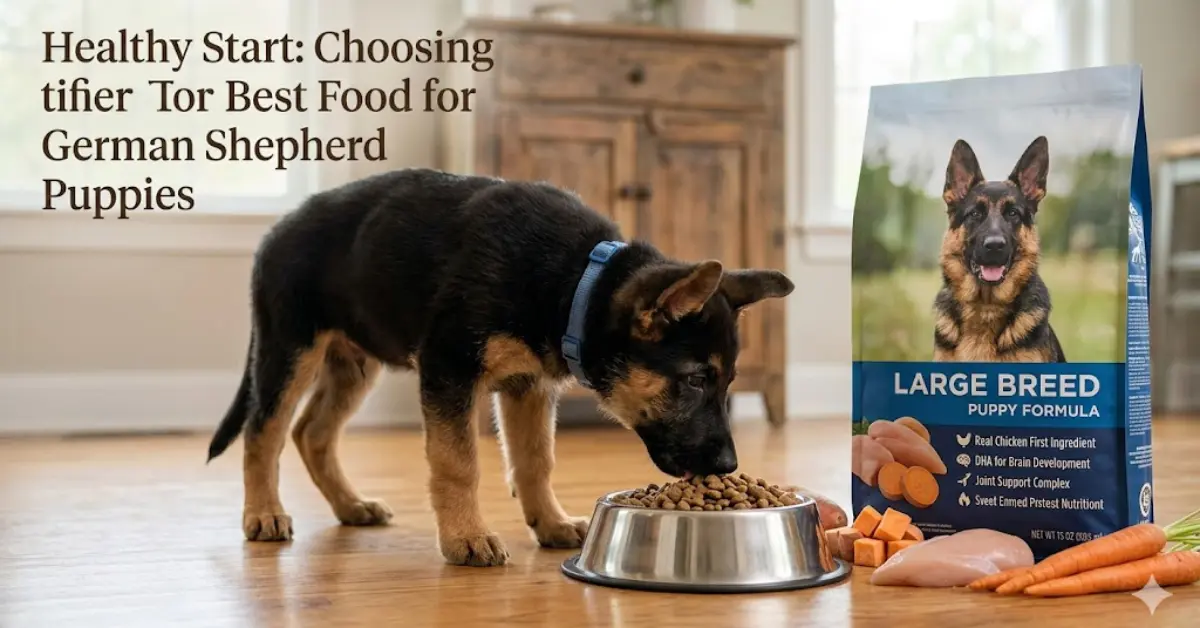
German Shepherd puppies grow fast. Their bones and joints need steady growth, not rapid growth. Too many calories or too much calcium may increase the risk of skeletal problems in large-breed puppies.
Choose a food labeled for:
- Large-breed puppy growth
- Growth of large-size dogs
- Complete and balanced puppy nutrition
Avoid giving a German Shepherd puppy a regular adult formula unless your veterinarian recommends it. Puppy food usually contains nutrient levels designed for growth.
Feed young puppies three meals per day. Around six months, many puppies can move to two meals per day. Your veterinarian can help you adjust food based on weight gain and body condition.
Adult German Shepherds
Adult German Shepherds need enough protein to support muscle. They also need controlled calories to avoid excess weight. Extra weight places more strain on the hips, elbows, knees, and spine.
A complete large-breed adult formula often works well. Choose a recipe that supports lean muscle without providing more calories than your dog needs.
Working dogs, sport dogs, and highly active dogs may need more calories. A calm house dog may need less. The feeding chart is only a starting point.
Senior German Shepherds
Older German Shepherds may lose muscle while gaining fat. Senior food can help by offering moderate calories, quality protein, and nutrients that support joint health.
Some senior recipes contain glucosamine, chondroitin, or fish oil. These may help some dogs, but they are not a cure for arthritis. A senior dog with stiffness or pain should receive a veterinary exam.
Pregnant and nursing German Shepherds
Pregnant and nursing dogs have special needs. They may need a growth or all-life-stages formula during late pregnancy and nursing. Do not add calcium supplements unless your veterinarian gives specific instructions.
Too much calcium can harm growing puppies and may create problems for the mother. Veterinary guidance is especially important during this stage.
Key ingredients to look for in German Shepherd food
Ingredients matter, but the whole nutrient profile matters more. A food can contain good ingredients and still be unbalanced.
Protein for muscle and repair
Protein supplies amino acids. These support muscles, skin, hair, enzymes, and the immune system.
Good protein sources include:
- Chicken
- Turkey
- Beef
- Lamb
- Fish
- Eggs
- Poultry or meat meals
Meat meals are not automatically poor ingredients. A named meal, such as chicken meal, is a concentrated source of protein because much of the water has been removed.
The first ingredient is useful to note, but it does not tell the whole story. Ingredient lists are arranged by weight before cooking. A food with several meat ingredients may still provide a strong protein profile.
Healthy fats and omega-3 fatty acids
Fat gives dogs energy and helps the body absorb vitamins. Fish oil provides EPA and DHA, two omega-3 fats that may support the skin, coat, brain, and joints.
Look for named fish oil or marine oil when possible. Flaxseed contains omega-3 fat too, but dogs do not convert it to EPA and DHA as efficiently as they use marine sources.
Fiber and digestive support
German Shepherds can have sensitive stomachs. Fiber may help regulate stool and support normal gut movement.
Useful ingredients may include:
- Beet pulp
- Pumpkin
- Chicory root
- Dried yeast products
- Oats
- Brown rice
- Barley
No single fiber works for every dog. A diet that helps one German Shepherd may cause gas in another.
Vitamins and minerals
Calcium and phosphorus help build bones. Zinc supports the skin and coat. Vitamin E supports normal immune function.
Do not add vitamin or mineral supplements to a complete food without veterinary advice. More is not always better. Some nutrients can become harmful at high levels.
Dry food, wet food, fresh food, or raw food?
There is no single format that is best for every German Shepherd. The right choice depends on nutrition, safety, cost, storage, and your dog’s response.
Dry dog food
Dry food is popular because it is easy to measure and store. It can also help some owners control calories.
Choose a dry food that is complete and balanced for your dog’s life stage. The best dog food for German Shepherds may be dry food if your dog has firm stools, good energy, and a healthy body condition.
Wet dog food
Wet food has more moisture. It may help dogs that drink little water or have dental pain. It is also useful for picky eaters.
Wet food can cost more per calorie. Once opened, it must be refrigerated and used within the time listed on the package.
Fresh or gently cooked food
Fresh food can be a sound choice when it is formulated by a qualified veterinary nutrition professional. Check that the food is complete and balanced, not just made from meat and vegetables.
Some homemade diets lack calcium, zinc, iodine, or other key nutrients. A bowl of chicken, rice, and vegetables may look healthy but may not meet a German Shepherd’s long-term needs.
Raw diets
Raw diets carry risks. Uncooked meat may contain bacteria such as Salmonella, Campylobacter, or E. coli. Bones can cause broken teeth, choking, constipation, or intestinal injury.
Raw diets can also be unbalanced. This is risky for puppies, pregnant dogs, older dogs, and people with weak immune systems. If you are considering raw feeding, discuss it with your veterinarian first.

How to choose food for common German Shepherd problems
The best dog food for German Shepherds may change when health problems appear. Food should support medical care, not replace it.
Sensitive stomach and loose stools
If your dog has occasional loose stools, avoid sudden food changes. Switch foods over seven to ten days.
A simple transition may look like this:
- Feed 75% old food and 25% new food for two to three days.
- Feed 50% old food and 50% new food for two to three days.
- Feed 25% old food and 75% new food for two to three days.
- Feed only the new food if stools remain normal.
Repeated diarrhea, vomiting, blood in the stool, weight loss, or poor appetite needs veterinary attention. These signs may come from parasites, inflammation, infection, or another medical issue.
Food allergies
Food allergies are less common than many owners think. Dogs can be allergic to proteins such as beef, chicken, or dairy.
Signs may include:
- Itchy skin
- Repeated ear infections
- Paw licking
- Skin redness
- Vomiting or diarrhea
A proper elimination diet is the most reliable way to investigate a food allergy. It usually involves feeding a veterinary hydrolyzed or novel-protein diet for several weeks. Treats, flavored medicine, and table scraps can ruin the trial.
Joint health
German Shepherds benefit from staying lean. Body weight is one of the most important factors in joint care.
A food with fish oil may support joint comfort, but it cannot correct hip dysplasia or severe arthritis. Ask your veterinarian about exercise, weight control, pain care, and supplements when needed.
Skin and coat problems
Dry skin may relate to diet, allergies, parasites, infection, or environmental factors. Fish oil can help some dogs, but it will not solve every skin problem.
Avoid changing food again and again without a plan. A careful veterinary exam can prevent months of guesswork.
Feeding amounts and meal routines
The correct amount of food depends on calories, not just cups. Different foods have different calorie levels.
Start with the feeding guide on the package. Then watch your dog’s body condition. You should be able to feel the ribs with light pressure, but the ribs should not sharply show in a healthy adult dog.
Adjust the portion if your dog:
- Gains weight
- Loses weight
- Has low energy
- Remains hungry after normal meals
- Produces very large stools
- Has poor muscle tone
German Shepherds often do best with two measured meals per day. Avoid one large daily meal, especially in dogs that eat quickly.
To lower the risk of bloat:
- Feed two or more smaller meals.
- Slow down fast eating with a puzzle feeder.
- Avoid heavy exercise right before and after meals.
- Do not raise the food bowl unless your veterinarian advises it.
- Keep meal times calm.
- Ask your veterinarian about preventive gastropexy for high-risk dogs.
Bloat, also called gastric dilatation-volvulus, is an emergency. Warning signs include a swollen belly, repeated unproductive retching, restlessness, drooling, weakness, and collapse. Seek emergency care at once if these signs appear.
Mistakes to avoid when feeding a German Shepherd
Many feeding problems come from small habits that seem harmless.
Changing food too quickly
A sudden change can cause gas, vomiting, or diarrhea. Use a gradual transition unless a veterinarian tells you to change food immediately.
Trusting marketing claims
Words such as “natural,” “holistic,” and “premium” have limited value by themselves. Focus on nutritional adequacy, quality control, calories, and your dog’s health.
Giving too many treats
Treats should usually provide no more than 10% of daily calories. Use small treats, pieces of the regular diet, or low-calorie vegetables approved for dogs.
Avoid chocolate, grapes, raisins, onions, garlic, macadamia nuts, xylitol, alcohol, and cooked bones. Keep these foods away from your dog.
Adding too many supplements
Supplements can interact with medicines or create nutrient excess. Fish oil, joint products, probiotics, and vitamins should be chosen with professional advice.
Feeding for size instead of body condition
A large German Shepherd is not automatically a healthy German Shepherd. A lean, muscular body is a better goal than a heavy frame.
How to compare dog food labels
Learning to read a dog food label makes shopping much easier.
Check these points:
- The nutritional adequacy statement: Confirm that the food is complete and balanced.
- The life stage: Choose puppy, adult maintenance, senior, or all-life-stages food as needed.
- Calorie content: Compare calories per cup or can.
- Guaranteed analysis: Review protein, fat, fiber, and moisture.
- Feeding directions: Use them as a starting point, not a fixed rule.
- Manufacturer details: Look for clear contact information and quality assurance.
- Batch information: Keep the lot number in case of a product recall.
A named protein is helpful, but it does not automatically make one food superior. Grain-free food is not automatically healthier either. Most dogs digest safe grains well, and grain allergies are uncommon.
Some grain-free diets have been investigated because of a possible link between certain diets and canine dilated cardiomyopathy. The cause is not fully clear. Speak with your veterinarian before choosing a grain-free diet without a medical reason.
A practical feeding plan for German Shepherd owners
Use this simple process when selecting the best dog food for German Shepherds:
- Identify your dog’s life stage.
- Record your dog’s current weight and body condition.
- Choose a complete and balanced large-breed formula.
- Compare calorie levels between brands.
- Check whether your dog has allergies or medical needs.
- Change foods slowly over seven to ten days.
- Measure every meal with a standard cup or kitchen scale.
- Recheck weight and stool quality after two to four weeks.
- Adjust portions with veterinary guidance.
- Keep treats and table scraps limited.
Keep a short food diary. Record the brand, portion, treats, stool quality, itching, energy, and weight. This can reveal patterns that are hard to notice day by day.
One lesson worth remembering is that the “best” food often becomes clear through observation. A German Shepherd with steady energy, firm stools, a healthy coat, and a lean body is giving you useful feedback.
Frequently asked questions about what dog food is best for German Shepherds
Is grain-free food best for German Shepherds?
No. Grain-free food is not automatically better, and most dogs can digest grains such as rice, oats, and barley. Choose a complete diet based on your dog’s needs, and ask your veterinarian before using a grain-free formula.
Should German Shepherds eat high-protein food?
German Shepherds need quality protein for muscle and body repair, but extremely high protein is not always needed. Choose a complete food with a well-balanced nutrient profile and adjust calories to maintain a lean body.
What is the best food for a German Shepherd puppy?
The best food for a German Shepherd puppy is a complete and balanced large-breed puppy formula. It should support controlled growth with appropriate calcium, phosphorus, protein, and calories.
How often should I feed my German Shepherd?
Most adult German Shepherds do well with two measured meals each day. Puppies may need three meals, while dogs with medical needs may require a different schedule from a veterinarian.
Can German Shepherds eat chicken and rice every day?
Chicken and rice may be used for a short period under veterinary guidance, but it is not a complete long-term diet. It lacks several nutrients that German Shepherds need for lasting health.
Are raw diets safe for German Shepherds?
Raw diets can expose dogs and people to harmful bacteria and may cause bone injuries or nutrient imbalances. If you are considering raw food, discuss the risks and nutritional plan with a veterinarian.
How much should a German Shepherd eat?
The right amount depends on body weight, age, activity, metabolism, and the food’s calorie level. Begin with the package guide, measure portions, and adjust based on body condition and veterinary advice.
What foods should German Shepherds avoid?
Avoid chocolate, grapes, raisins, onions, garlic, xylitol, alcohol, macadamia nuts, and cooked bones. Contact a veterinarian or pet poison service quickly if your dog eats a toxic food.
Conclusion
The best dog food for German Shepherds is a complete, balanced formula that matches your dog’s age, activity, body condition, and health needs. Large-breed puppy food supports controlled growth, adult food supports lean muscle, and senior formulas may help manage changing calorie and joint needs.
Focus on steady weight, healthy stools, good energy, and a strong coat. Measure meals, limit treats, change foods slowly, and ask your veterinarian about allergies, supplements, joint care, or ongoing digestive problems. Use these steps to make a confident choice, and share your German Shepherd’s feeding experience or questions with your veterinary team.