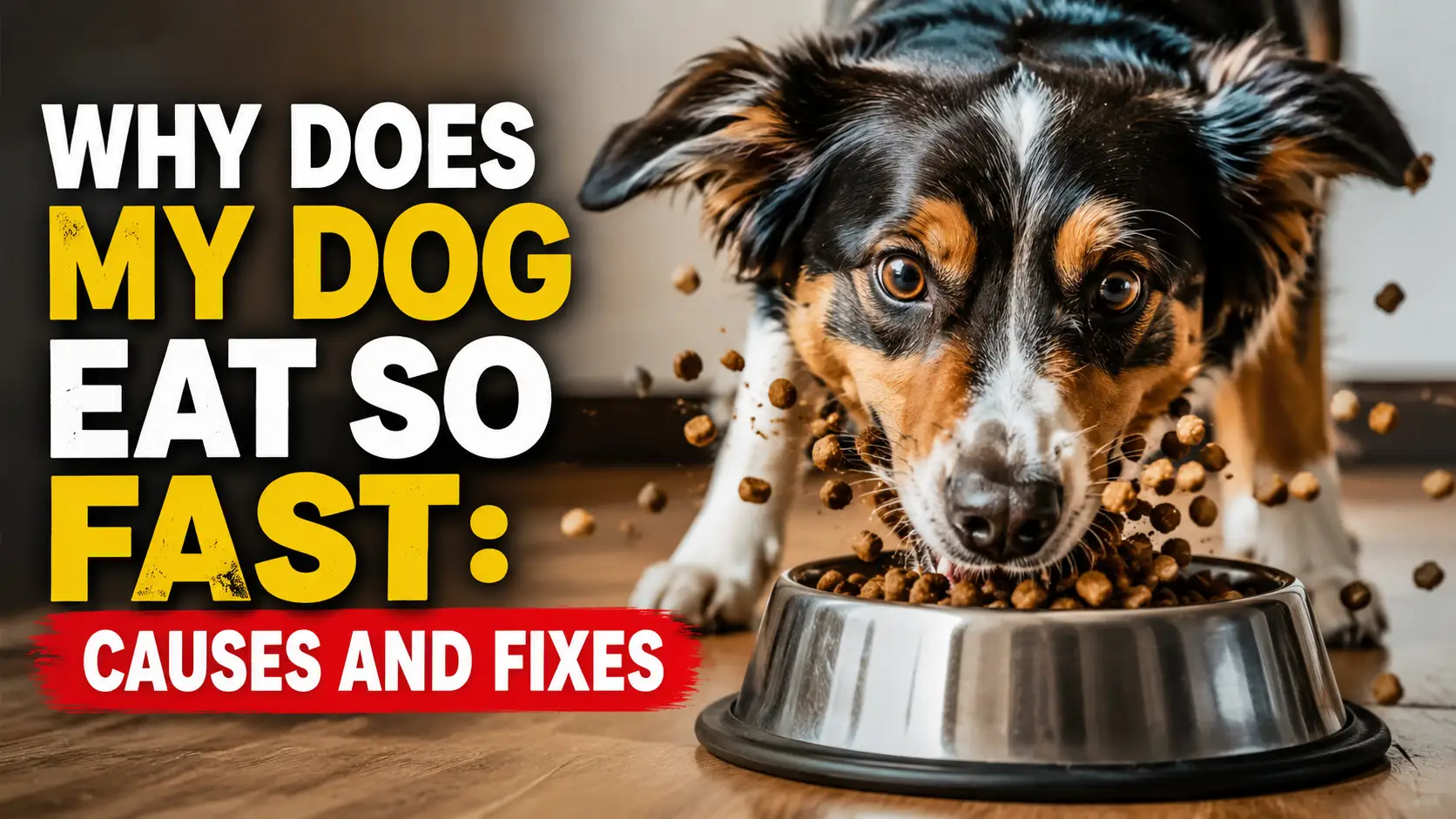
Fast eating in dogs usually comes from instinct, competition, anxiety, or learned mealtime habits.
If you’ve ever watched your dog inhale dinner like it’s a race, you’re not alone. I’ve seen this many times over the years, and “why does my dog eat so fast?” is one of those pet questions that looks simple on the surface but has a few real causes underneath. In many cases, the speed is harmless, but sometimes it points to stress, hunger patterns, or even a health issue worth checking.
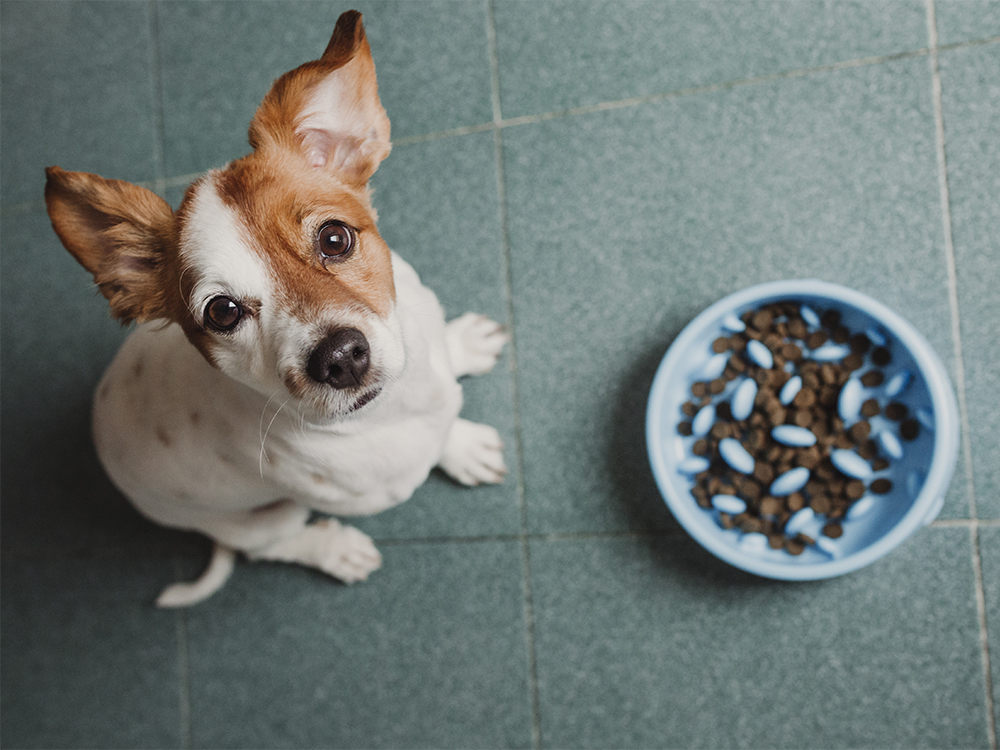
Why Does My Dog Eat So Fast?
Dogs are natural scavengers, so many of them act like food may disappear at any moment. That instinct can show up as fast eating, especially if your dog has ever had to compete for food, lived in a busy home, or learned that speed gets them more of what they want. In plain terms, why does my dog eat so fast? Often because their body and brain are telling them to grab food first and think later.
A few dogs also eat quickly because they are simply excited. Meal time can feel like the best part of the day, and some dogs never learned how to slow down. I’ve noticed that dogs with big personalities or a history of food guarding tend to gulp their meals like they are on a mission.
Fast eating can be a habit, but it can also be a clue. If your dog suddenly starts eating faster than usual, that change matters. It may be tied to increased hunger, stress, or an underlying medical problem.
Common Reasons Dogs Eat Too Fast
Instinct from their wild ancestry
Dogs descended from animals that had to eat quickly to survive. In the wild, food was not served in a bowl at a fixed time every day. Animals that ate slowly often lost their share to others.
That old survival wiring still shows up in modern dogs. Even a well-fed dog may act like mealtime is a one-shot chance. This is one major reason why does my dog eat so fast is such a common question.
Competition with other pets
If your dog lives with another dog or even a cat, they may feel pressure to finish first. Some dogs eat fast because they worry another pet will take their food. This is especially common in multi-pet homes where bowls are close together.
I’ve seen dogs who slowed down only after their bowls were separated into different rooms. It is a small change, but it can lower stress right away.
Learned behavior
Dogs are smart, and they learn patterns fast. If your dog once ate quickly and then got seconds, scraps, or extra treats, they may have learned that speed pays off. Over time, that becomes a habit.
This is why owners sometimes accidentally reinforce the problem. A dog finishes in 20 seconds, looks at you, and gets more food or attention. The message becomes clear: eat fast, and good things happen.
Anxiety or stress
Stress can make a dog eat like they are trying to beat the clock. Changes in the home, loud noises, new pets, or a tense feeding setup can all affect mealtime behavior. Some anxious dogs swallow without chewing because they are too keyed up to relax.
This is one of the more important reasons to watch closely. If your dog also pants, paces, hides, or seems restless, the fast eating may be part of a bigger stress pattern.
Hunger from feeding routine or diet
Sometimes the answer is simple: your dog may truly be hungry. If meals are too small, too far apart, or not balanced well, your dog may rush because they feel they need every bite. High activity levels can also make some dogs finish fast.
Food quality matters too. Some diets are more filling than others, and some dogs do better with measured portions that match age, size, and activity level. A vet can help if you are not sure the current food and amount are right.
Medical causes
A sudden increase in appetite and fast eating can point to medical issues. Conditions such as diabetes, parasites, thyroid problems, and certain digestive disorders can make dogs act unusually hungry. Some medications can also increase appetite.
This does not mean something serious is always happening. But if your dog’s eating speed changes along with weight loss, vomiting, thirst, or low energy, call your vet. That kind of pattern needs attention.
Is Fast Eating Bad for Dogs?
Fast eating is not always dangerous, but it can cause problems. The biggest concern is that dogs who gulp food may swallow too much air. That can lead to bloating, vomiting, gas, or discomfort.
For some dogs, fast eating can also increase the risk of choking. Smaller dogs can gag easily, while larger dogs may not chew well enough to break food into safe pieces. If your dog routinely eats like a vacuum, it is worth slowing them down.
In deep-chested breeds, fast eating may raise concern for gastric dilatation-volvulus, often called bloat. Bloat is a medical emergency, and dogs with a history of gulping food may be at higher risk. Not every fast eater will develop bloat, but the connection is serious enough to take prevention seriously.
Signs Your Dog May Be Eating Too Fast
A lot of people think fast eating only matters if the bowl is empty in seconds. But there are a few signs that tell you the habit may be causing trouble.
Look for:
- Choking or gagging during meals
- Coughing after eating
- Vomiting right after food
- Swallowing without chewing
- Excessive burping or gas
- Belly swelling after meals
- Acting uncomfortable or restless after eating
- Protecting the bowl or snapping when approached
If you see several of these signs, the question is not just why does my dog eat so fast. It is also how to make mealtime safer and calmer.
How to Slow Down a Dog Who Eats Too Fast
Use a slow feeder bowl
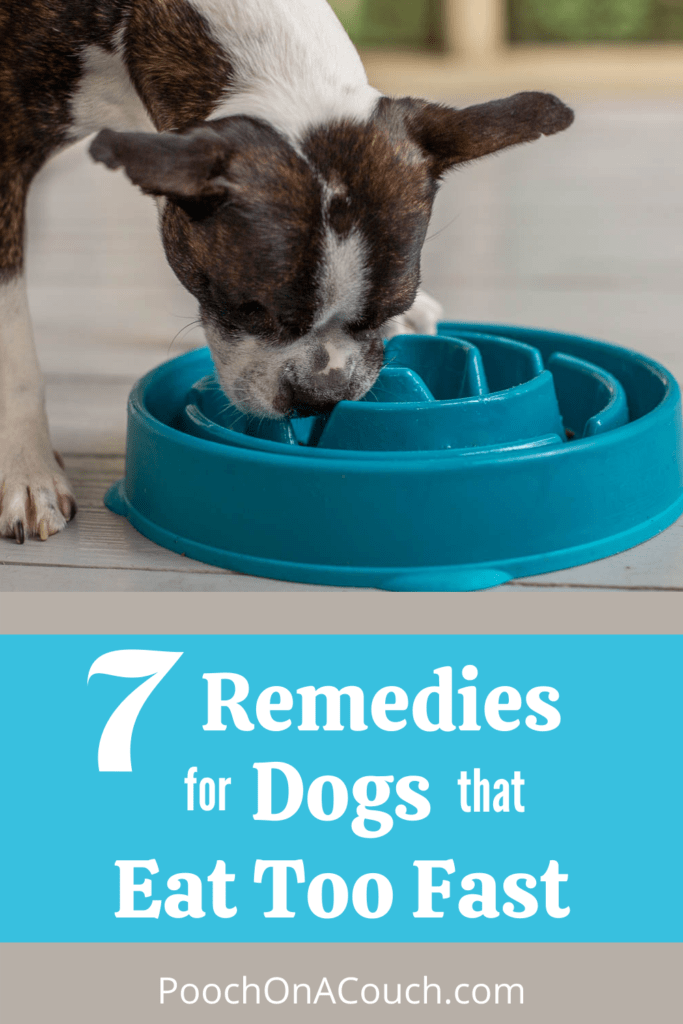
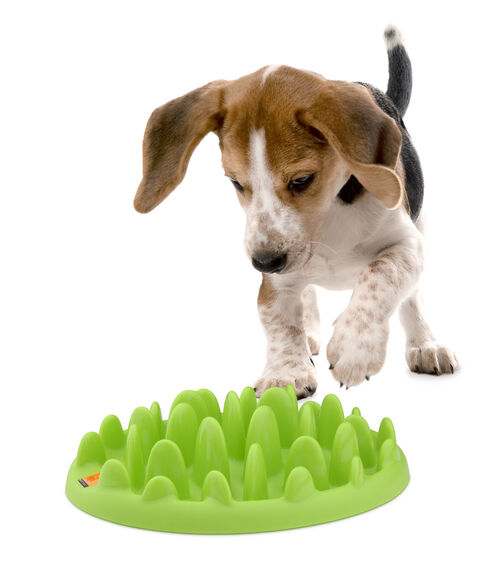
Slow feeder bowls are one of the easiest tools to try. Their raised shapes and ridges make dogs work a little harder for each bite. That small delay can slow eating a lot.
I’ve used these with dogs who finished meals in under a minute. In many cases, the difference was obvious right away. They were calmer, less gassy, and more satisfied after eating.
Spread food out
You do not always need fancy gear. You can spread kibble over a wide baking sheet or use a snuffle mat to turn dinner into a little puzzle. This slows the dog down naturally and gives their brain something to do.
This works especially well for dogs that are highly food motivated. Eating becomes a task, not a sprint.
Feed smaller meals more often
Instead of one or two large meals, try smaller meals across the day. This can reduce the urge to bolt food from intense hunger. It can also be easier on the stomach.
A regular routine helps too. Dogs like predictability, and steady meal times can lower food stress.
Separate pets during feeding
If you have multiple animals, feed them in different spots. Give each pet enough space so they do not feel watched or rushed. Even calm dogs can speed up if they think another pet is nearby.
This is one of the simplest fixes I’ve seen work in real homes. Peace and privacy matter more than people realize.
Add mealtime enrichment
You can make eating more engaging by turning it into a sniffing or searching game. Hide kibble in safe places, use puzzle feeders, or scatter part of the meal in a clean area for your dog to find. This slows the pace and makes mealtime feel less frantic.
It also helps satisfy your dog’s natural foraging instincts. That is often more rewarding than a bowl of food dumped in one spot.
Talk to your vet if the change is sudden
If your dog suddenly starts eating fast, do not assume it is just a new habit. A vet can help rule out parasites, pain, digestive trouble, or hormone issues. This is especially important if your dog is also losing weight or acting differently.
As a general rule, sudden behavior changes deserve a closer look. It is better to check early than guess later.

When Fast Eating Becomes a Bigger Concern
You should take fast eating more seriously if your dog also has other symptoms. The pattern matters as much as the speed. One fast meal is not the same as a long-term change in appetite.
Call your vet if you notice:
- Repeated vomiting
- Diarrhea
- Sudden weight loss
- Increased thirst
- Increased urination
- Swollen belly
- Coughing, choking, or trouble swallowing
- Major behavior changes
If your dog has signs of bloat, such as a tight swollen abdomen, unproductive retching, or sudden distress, seek emergency care right away. That is not a wait-and-see situation.
Can Breed or Age Affect How Fast Dogs Eat?
Yes, both can play a role. Some breeds are naturally more food-driven and more likely to eat with speed. Working breeds, retrievers, and many high-energy dogs often show stronger food motivation.
Age matters too. Puppies may eat quickly because they are excited, still learning manners, or competing with littermates. Older dogs can also develop a faster appetite if they are dealing with medical changes or if their routine shifts.
That is why why does my dog eat so fast is not a one-size-fits-all question. The answer depends on your dog’s age, breed, home life, and health.
What Not to Do
When your dog eats too fast, it is easy to overreact or try the wrong fix. I have seen people make the issue worse without meaning to.
Try to avoid:
- Feeding huge meals after long gaps
- Letting dogs compete for food
- Punishing your dog during meals
- Switching foods too often without a plan
- Ignoring sudden changes in appetite
- Giving extra food every time your dog begs quickly
The goal is not to “win” against your dog. The goal is to make eating safer, calmer, and more balanced.
Frequently Asked Questions of Why Does My Dog Eat So Fast?
Why does my dog eat so fast all of a sudden?
A sudden change often means something has changed in your dog’s body or routine. It could be stress, hunger, a new feeding schedule, or a medical issue like parasites or diabetes. If the behavior is new, it is smart to check with your vet.
Is it normal for puppies to eat very fast?
Yes, puppies often eat fast because they are excited and still learning mealtime manners. Some also come from litter settings where competition for food was normal. A slow feeder or smaller meals can help them build better habits.
Can fast eating cause vomiting in dogs?
Yes, it can. Dogs that gulp food may swallow too much air or eat past their comfort level, which can lead to vomiting, burping, or stomach upset. If it happens often, slow the eating down and talk to your vet.
Should I feed my dog more if they eat too fast?
Not automatically. Fast eating does not always mean hunger, and giving more food can make the habit worse. First, check portion size, feeding schedule, and possible health issues before increasing food.
Do slow feeder bowls really work?
Yes, for many dogs they do. They make the dog work around ridges or patterns, which slows the meal and reduces gulping. They are not a cure for every problem, but they are a helpful and low-risk first step.
When should I worry about my dog’s fast eating?
Worry more if the behavior is sudden, extreme, or paired with vomiting, weight loss, bloating, or low energy. Those signs can point to a health issue that needs vet attention. If your dog seems distressed after eating, do not wait.
Conclusion
So, why does my dog eat so fast? In most cases, it comes down to instinct, excitement, competition, stress, or a learned habit. In some cases, though, it can signal hunger problems or a health issue that deserves a closer look.
The good news is that you can often help with simple changes like a slow feeder bowl, smaller meals, separate feeding spaces, and a steadier routine. If the behavior is new or comes with other symptoms, trust your gut and call your vet. Start with one small change this week, and if you’ve noticed a pattern at mealtime, leave a comment or explore more practical dog care tips to help your pet eat safely and happily.