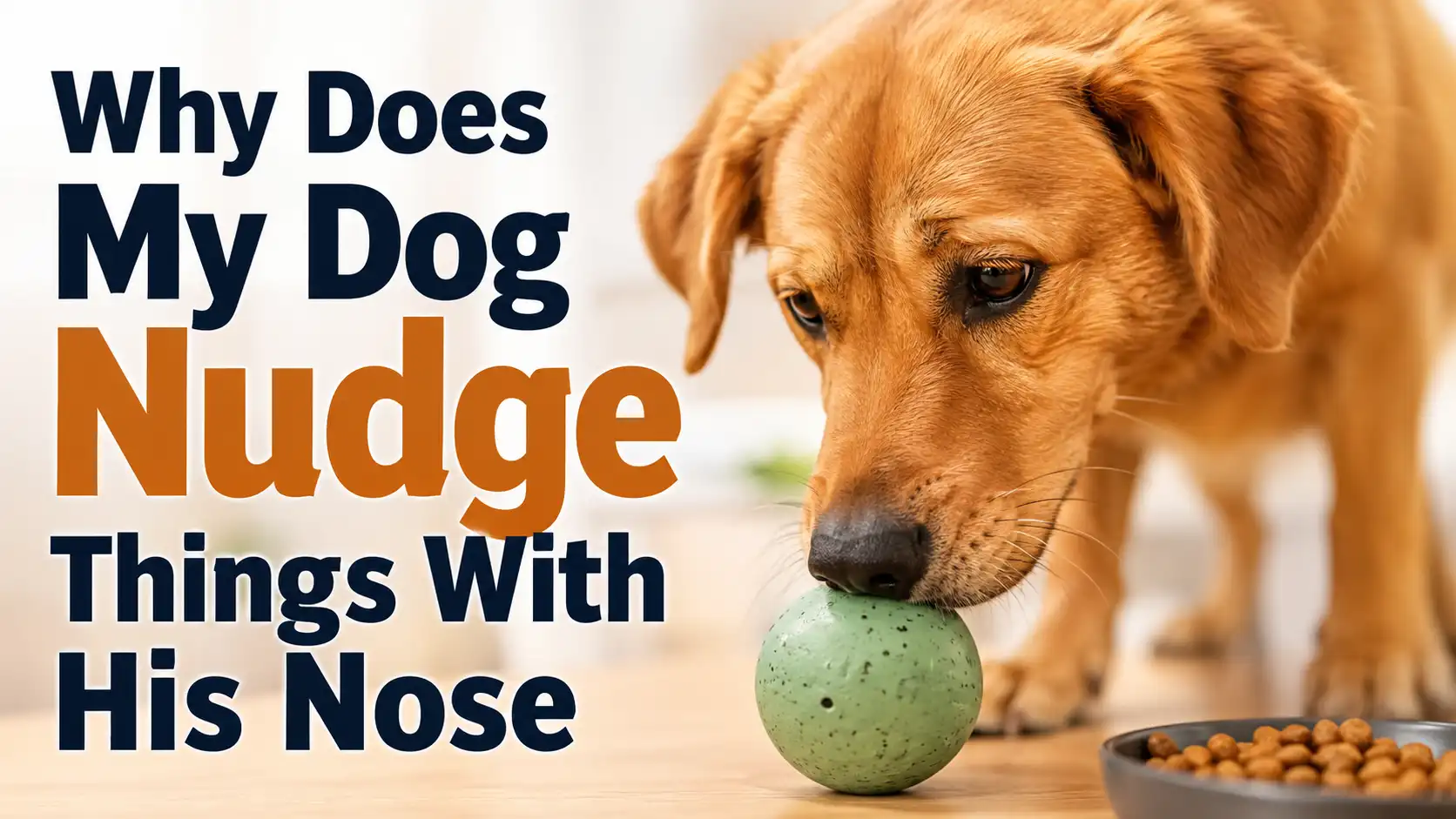
Dogs nudge with their noses to investigate, communicate, seek attention, and sometimes self-soothe.
A dog’s nose is one of the most expressive tools in the whole canine toolkit, and understanding why your dog nudges things with his nose can tell you a lot about his mood, habits, and needs. From gentle pushes on your hand to persistent taps on a toy, this behavior is usually normal, but it can also reveal boredom, anxiety, curiosity, or a learned request for interaction.

Why Dogs Nudge Things With Their Nose
Nose nudging is a very natural dog behavior. In my experience, it often starts as simple curiosity. A dog notices something new, moves in close, and gives it a soft push to gather more information.
Dogs do not explore the world mostly with their hands like we do. They use their noses the way people use touch and sight combined. That is why your dog may nudge a toy, your leg, a bowl, a blanket, or even furniture. The behavior can mean different things depending on the setting, but the common thread is that your dog is trying to interact with the world.
Many pet parents first notice this when their dog nudges a hand for attention or nudges a toy under the couch. I have seen the same behavior in calm, happy dogs and in dogs that were clearly trying to tell their owners, “Hey, pay attention to me.” The context matters more than the nudge itself.
Common Reasons Your Dog Nudges Things With His Nose
Curiosity and exploration
A dog’s nose is a powerful sensor. When your dog nudges an object, he may be checking its texture, smell, or movement. This is especially common with new items in the home.
Dogs often use nose nudging to:
• Investigate a new smell
• Test whether an object moves
• Figure out if something is food
• Explore a new person or pet
This is one of the most harmless reasons behind why does my dog nudge things with his nose. It is basically your dog’s version of “let me take a closer look.”
Attention seeking
One of the most common reasons dogs nudge people or objects is to get attention. If your dog nudges your hand, your knee, or even a toy you are holding, he may want petting, play, or food.
I have seen dogs learn this fast. If a nudge gets a laugh, a scratch, or a treat, the behavior gets stronger. That is classic reward learning. Even a small reaction can teach your dog that nose nudging works.
Requesting food or treats
Some dogs nudge bowls, cabinets, or your arm when they want food. This is often a learned habit, especially if nudging has led to a meal in the past. Dogs are very good at making connections between actions and outcomes.
If your dog nudges around mealtime, the answer to why does my dog nudge things with his nose may simply be hunger or anticipation. This can be normal, but it is worth watching if it turns into pushy behavior.
Play behavior
Nose nudging can be part of play. Puppies and social dogs often use gentle nudges to start interaction. They may bump a toy, another dog, or your hand to say, “Let’s play.”
This is especially common with:
• Puppies learning social skills
• Herding breeds with strong drive to move things
• Dogs that are excited and energetic
A playful nudge is usually light, loose, and paired with an upbeat body posture.
Herding or moving behavior
Some breeds are more likely to nudge because of natural herding instincts. Border Collies, Australian Shepherds, Corgis, and similar breeds may use their nose to move objects or direct motion.
This behavior can look like:
• Nudging feet
• Pushing toys into a corner
• Moving other pets
• Guiding people toward a room or door
If you have a herding breed, why does my dog nudge things with his nose may be tied to instinct rather than just attention seeking.
Comfort and self-soothing
Dogs sometimes nudge blankets, pillows, beds, or toys when settling down. This can help them create a comfortable space. It is a little like a person fluffing a pillow before sleep.
This behavior may be:
• A nesting habit
• A way to calm themselves
• A routine before resting
If the nudging looks relaxed and your dog settles afterward, it is usually nothing to worry about.

What Your Dog May Be Trying to Communicate
Dogs are constant communicators, even when they do not bark. Nose nudging is part of that language. It can mean a request, a question, or a feeling.
Here is what different nudges may suggest:
• Soft nudge with relaxed body: affection, curiosity, or a request for attention
• Repeated nudges near food: hunger or learned mealtime behavior
• Nudging and pawing together: stronger demand for play or access
• Nudging with whining: anxiety, frustration, or urgency
• Nudging objects alone: exploration or problem solving
Reading body language helps a lot. Look at the ears, tail, eyes, posture, and energy level. A calm nudge is very different from a stiff, insistent push.
When Nose Nudging Is Normal
Most nose nudging is normal dog behavior. It is often part of everyday exploration, bonding, and communication. In fact, it can be a healthy sign that your dog is engaged with the environment.
Normal nose nudging usually has these qualities:
• It is light, not forceful
• It happens in clear situations, like play or mealtime
• Your dog still acts calm and responsive
• It does not seem obsessive or stressful
If the question is why does my dog nudge things with his nose and the behavior is occasional, relaxed, and context based, that is usually a good sign.
When Nose Nudging May Point to a Problem
Sometimes the behavior is not just cute or harmless. If your dog is nudging things constantly, intensely, or in a way that seems out of character, it may point to stress or a medical issue.
Watch for these red flags:
• Repetitive nudging with no clear reason
• Nudging plus pacing, panting, or restlessness
• Head pressing against walls or furniture
• Loss of appetite or behavior changes
• Signs of pain, nausea, or confusion
A persistent change in behavior can mean discomfort. In my own work with dogs, I have learned that sudden, repeated nose behavior is one of those small signs people often dismiss too early. It is always worth paying attention to the whole picture.
Health Issues That Can Cause Nose Nudging
Sometimes the answer to why does my dog nudge things with his nose is medical, not behavioral. A dog may nudge things if he is trying to relieve discomfort or respond to a change in sensation.
Possible causes include:
• Dental pain or gum irritation
• Nasal irritation or infection
• Eye problems that affect how he sees objects
• Neurologic issues
• Cognitive decline in older dogs
If your dog suddenly starts nudging more than usual, or nudges at his face, furniture, or walls, talk to a vet. This is especially important if the behavior comes with drooling, shaking the head, pawing at the face, or lethargy.
How to Respond to Nose Nudging
Your response should match the reason behind the behavior. A happy nudge does not need the same reaction as a stressed or obsessive one.
Try this approach:
Observe the trigger
Notice when the nudging happens and what comes before it.Check your dog’s body language
Look for calm, playful, tense, or anxious signs.Reward what you want
If you like the behavior, offer attention or play at the right time.Redirect if needed
If the nudging is pushy or annoying, guide your dog to a toy, mat, or command.Call your vet if the behavior is sudden or extreme
Rule out pain or illness when something changes quickly.
One mistake I see often is reacting too strongly. If you push your dog away every time, he may nudge harder. If you want the behavior to stop, calm redirection works better than frustration.
How to Train or Manage Excessive Nose Nudging
If your dog nudges too much, training can help. The goal is not to punish a natural behavior. The goal is to teach when it is appropriate.
Helpful training tips:
• Teach an alternative behavior like sit or place
• Ignore attention nudging when safe to do so
• Reward calm behavior before the nudge starts
• Use structured play and feeding times
• Give mental enrichment with puzzle toys and sniffing games
Dogs often nudge more when they are bored. A tired mind is like a full backpack: it does not need to keep asking for things. Sniff walks, food puzzles, and short training sessions can reduce unwanted nudging.
Breed, Age, and Personality Differences
Not all dogs nudge the same way. Breed, age, and personality all matter.
You may see more nose nudging in:
• Herding breeds that like to move things
• Curious puppies that explore everything
• Social dogs that seek contact
• Older dogs with routine-based habits
A young dog may nudge because he is learning. An older dog may nudge because of routine or confusion. A high-energy dog may nudge because he needs more mental work. This is why context is so important when asking why does my dog nudge things with his nose.
Frequently Asked Questions
Why does my dog nudge me with his nose?
Your dog may be asking for attention, affection, food, or play. A nose nudge is often a gentle way to start interaction without barking.
Why does my dog nudge his food bowl?
He may be hungry, excited, or trying to move the bowl into a more comfortable spot. Some dogs also nudge bowls as a learned feeding routine.
Why does my dog nudge things before lying down?
This is often nesting behavior. Dogs may push blankets or bedding to make a spot feel safer and more comfortable.
Should I worry if my dog suddenly starts nudging more?
A sudden change can be worth checking out, especially if it comes with other symptoms. Pain, stress, or a medical issue could be involved, so a vet visit is smart if the behavior seems new or intense.
How do I stop my dog from nudging constantly?
Teach an alternative behavior, reward calm moments, and avoid reinforcing attention-seeking nudges. If the behavior seems compulsive or linked to discomfort, rule out medical causes first.
Conclusion
Nose nudging is one of those small dog behaviors that can mean a lot. Most of the time, why does my dog nudge things with his nose comes down to curiosity, attention, play, comfort, or instinct. Sometimes it is simply a normal habit, but other times it can be a clue that your dog is bored, stressed, or not feeling well.
The best way to understand your dog is to watch the full pattern, not just the nudge itself. Notice when it happens, what your dog is doing before and after, and whether anything else seems off. If you stay observant and respond with patience, you will understand your dog better and build a stronger bond along the way.
If this behavior is happening often, start tracking the triggers today and talk with your vet if anything seems unusual.