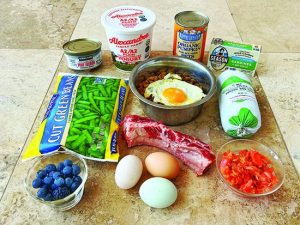
Yes, dogs can eat raw egg sometimes, but it comes with real safety risks.
If you have ever stood in the kitchen and wondered, “Can i put raw egg in my dogs food?” you are not alone. As a pet writer who has spent years studying canine nutrition and talking with vets, I can tell you this topic is more nuanced than a simple yes or no. Raw egg can be nutritious, but it is not always the safest choice for every dog, and the way you serve it matters a lot.
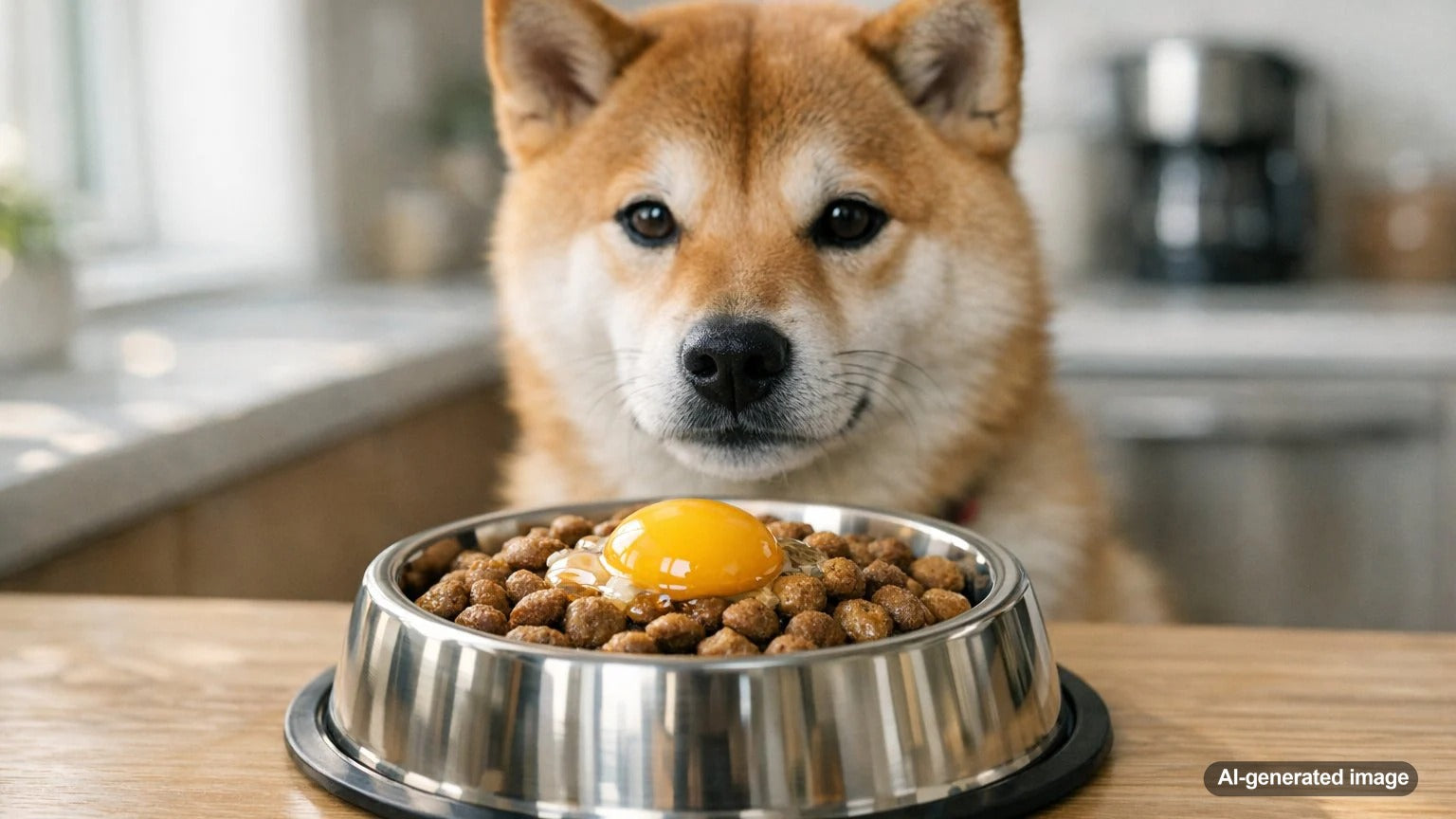
Can i put raw egg in my dogs food?
Yes, you can put raw egg in your dog’s food in some cases, but it is not the best option for every dog. Raw eggs may add protein, fatty acids, vitamins, and minerals, but they also carry risks like bacterial contamination and digestion issues.
I have seen many dog owners treat raw egg like a harmless little boost, almost like adding a spoon of yogurt or a bit of pumpkin. But eggs are not that simple. The shell, the yolk, and the white all behave differently in a dog’s body, and raw feeding brings more risk than most people expect.
What raw egg can do for dogs
Raw egg does contain nutrients that can support your dog’s diet. A whole egg has high-quality protein, healthy fats, vitamin A, vitamin B12, riboflavin, selenium, and small amounts of other helpful nutrients. For active dogs, the protein can sound appealing, especially when mixed into regular food.
That said, a nutrient being “good” does not automatically mean raw is better. Dogs usually digest cooked egg more safely and still get the same general nutrition. In most homes, cooked egg is the smarter version of the same idea.
Possible benefits of raw egg
Some owners add raw egg for reasons like these:
• Extra protein for dogs that need more calories
• Support for coat shine and skin health
• A soft food topper for picky eaters
• Added moisture and taste in dry food
Those benefits are real, but they should be weighed against the risks. In my experience, the dogs that did best with egg were usually given lightly cooked egg, not raw egg.
The main risks of feeding raw egg
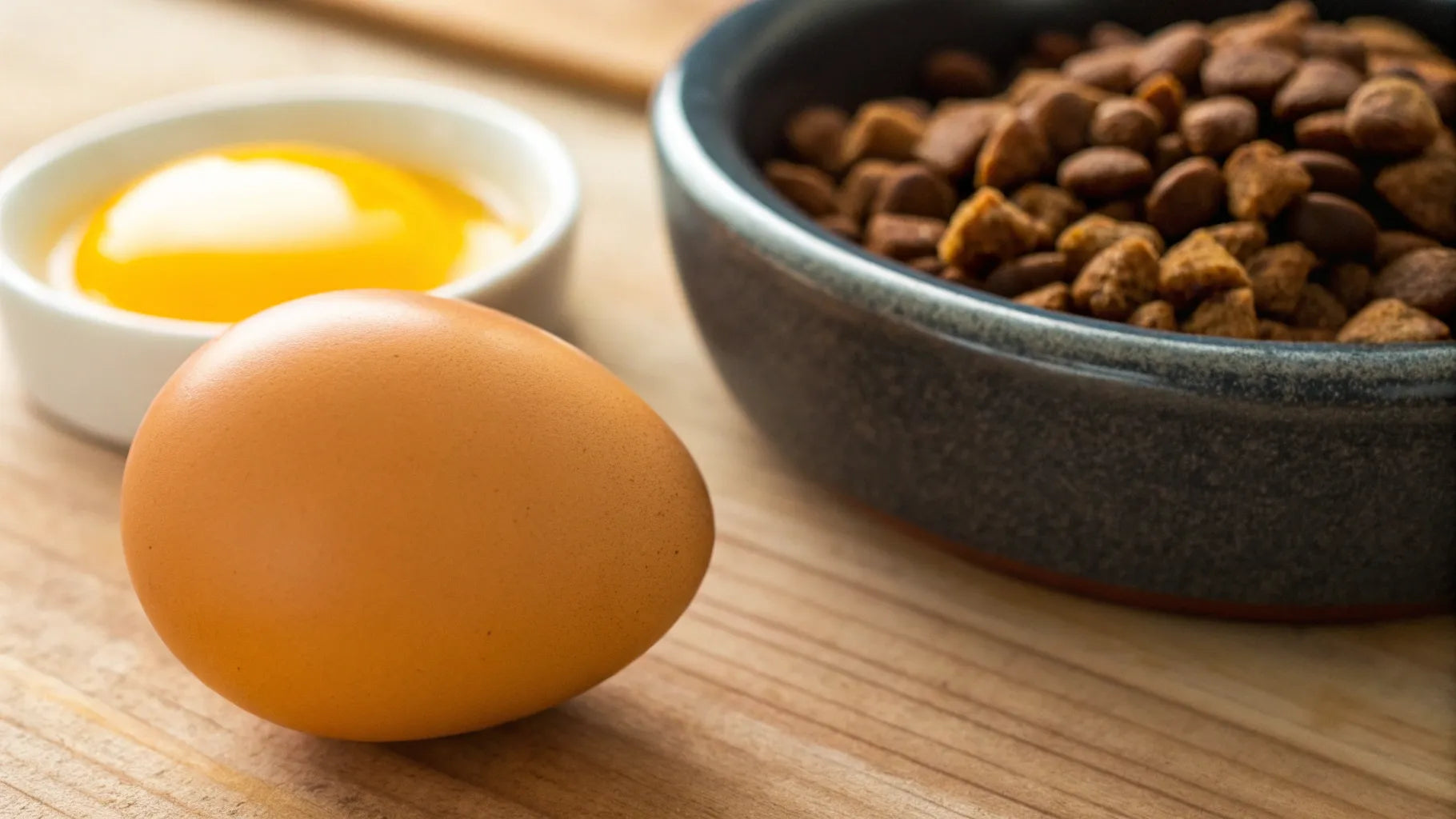
The biggest concern with raw egg is food safety. Raw eggs can carry bacteria such as Salmonella or Campylobacter. Dogs can get sick from these germs, and people in the home can also be exposed through handling food bowls, saliva, or contaminated surfaces.
Another concern is digestion. Some dogs handle raw egg fine. Others get vomiting, soft stool, or a messy stomach after just a small amount. Puppies, senior dogs, and dogs with weak immune systems are more vulnerable.
Raw egg white and biotin concerns
Raw egg whites contain avidin, a protein that can bind biotin. Biotin is a B vitamin that supports skin, coat, and metabolism. If a dog eats large amounts of raw egg whites often over time, it can reduce biotin absorption.
This is one reason many veterinarians prefer cooked eggs. Cooking lowers this issue and makes the egg much safer overall. One egg here and there is different from a long-term habit of pouring raw whites over food.
Can i put raw egg in my dogs food every day?
I would not recommend making raw egg a daily habit. Even if your dog seems fine at first, repeated exposure raises the chance of bacterial problems and long-term nutrition imbalance. Daily raw egg also makes it easier to overfeed calories without noticing.
If you want to feed egg often, cooked egg is the safer path. Think of it like this: raw egg is a wild card, while cooked egg is the same card with the rough edges smoothed off.
What kind of egg is safest for dogs?
If you want to add egg to your dog’s bowl, cooked is best. Scrambled, boiled, or poached egg without butter, salt, onion, garlic, or seasoning is a simple and safe choice. This gives your dog the nutritional value of egg with much less risk.
Here is the practical rule I usually share:
- Cook the egg plainly
- Let it cool
- Serve a small amount first
- Watch for stomach upset
- Adjust based on your dog’s size and health
Small dogs need much less than large dogs, and dogs with allergies or sensitive stomachs may need even less.
How much egg can dogs eat?
Egg should be a treat or topper, not the main meal. A small dog may only need a few bites, while a larger dog may handle one egg now and then. The right amount depends on your dog’s total calories, body size, age, and activity level.
A simple guide many owners use:
• Small dogs: a small portion of egg, not a full one every day
• Medium dogs: up to one egg occasionally
• Large dogs: one egg occasionally, depending on diet and weight goals
If your dog is overweight, egg calories still count. Even healthy foods can become a problem when they add up too fast.
When raw egg should be avoided
Raw egg is not a good idea for every dog. Some dogs should avoid it completely unless a vet gives specific advice.
Avoid raw egg if your dog is:
• A puppy
• Elderly
• Pregnant or nursing
• Immunocompromised
• Recovering from illness
• Prone to pancreatitis
• Sensitive to rich foods
In these cases, the margin for error is smaller. A cooked egg is usually the safer choice, and sometimes another topper is better altogether.
Signs your dog may not tolerate raw egg well
If you try raw egg and your dog reacts badly, stop right away. Common warning signs include vomiting, diarrhea, gas, reduced appetite, stomach pain, or unusual tiredness. If symptoms are severe or last more than a day, call your vet.
I once heard from a dog owner who thought the egg was “just a little protein boost,” but the dog had loose stools for two days. That kind of reaction is not rare, and it is a good reminder that even simple foods can hit the stomach like a rock in a pond.
Better alternatives to raw egg
If your goal is better nutrition, there are safer options than raw egg. Many of these give similar benefits with less risk.
Try these instead:
• Cooked egg, plain
• Plain cooked chicken
• Plain canned pumpkin
• Dog-safe yogurt in small amounts
• Vet-approved toppers
• A complete and balanced dog food with good protein quality
If your dog is on a homemade diet, talk to a veterinarian or board-certified veterinary nutritionist. Homemade diets often need careful balancing so they do not miss key nutrients.
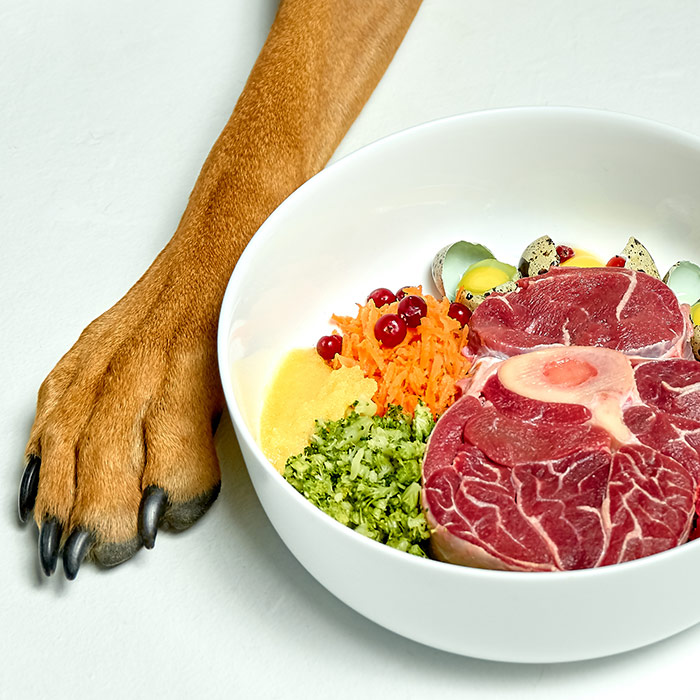
What veterinarians generally say
Most veterinary professionals do not recommend raw eggs as a regular dog food add-on. Their main concern is foodborne illness and consistency. They usually prefer cooked eggs because the nutrition is still there, but the safety risk drops a lot.
That does not mean every raw egg will make a dog sick. It means the risk is not worth it for most families when a safer version exists. Good pet care is often about choosing the option that works well and causes fewer surprises.
My practical advice from real-world use
When people ask me, “Can i put raw egg in my dogs food?” I usually say this: you can, but I would not make it your first choice. In practice, cooked egg is easier, safer, and just as useful for most dogs.
The best lesson I have learned is that the simplest food choice is often the best one. If you want to add egg, keep it plain, start small, and watch your dog closely. That small habit can save you from a lot of stomach trouble later.
Frequently Asked Questions of Can i put raw egg in my dogs food
Is raw egg safe for dogs?
Raw egg can be given sometimes, but it carries a risk of bacteria and stomach upset. Most dogs do better with cooked egg because it is safer and still nutritious.
Can puppies eat raw egg?
Puppies should not have raw egg routinely. Their immune systems are still developing, so cooked egg is the safer option if you want to feed egg at all.
Can dogs eat egg yolk raw but not the white?
Some owners prefer raw yolk because the white contains avidin, which can affect biotin over time. Even so, the raw yolk still carries bacterial risk, so cooked egg is the better choice overall.
How often can I give my dog egg?
Egg should be an occasional treat or topper, not a daily staple. The right frequency depends on your dog’s size, calories, and health, so moderation matters.
What is the best way to serve egg to a dog?
Plain cooked egg is usually the best way to serve it. Avoid salt, oil, butter, onion, garlic, and other seasonings that can upset your dog’s stomach.
Can raw egg help my dog’s coat?
Egg can support coat health because it contains protein and nutrients, but raw is not required for that benefit. A balanced diet and cooked egg, if used, are usually enough.
Conclusion
So, can i put raw egg in my dogs food? Yes, but it is usually not the safest or most practical choice. The nutrition in egg is useful, but the raw version brings risks that many dog owners do not want to deal with when cooked egg offers the same core benefits.
If you want to improve your dog’s bowl, think simple and safe first. Start with plain cooked egg, keep portions small, and watch how your dog responds. If you want, leave a comment with your dog’s size and diet, and I can help you figure out the most sensible way to add egg.