For most healthy dogs in the United States, dry food can be a safe and complete diet when it is made for the dog’s life stage and fed in the right amount. Look for a food with a clear “complete and balanced” statement that follows AAFCO nutrient profiles, or one that has passed an AAFCO feeding trial.
Dry food is not automatically better than wet food, raw food, or a home-cooked diet. The best choice depends on your dog’s age, health, weight, activity, chewing ability, and water intake. A good diet must meet nutrition needs without causing weight gain or stomach problems.
What makes dry dog food a good choice?
Dry dog food can work well because it is convenient, easy to measure, and often less costly per serving than canned food. It also stores well after opening and can make daily feeding simple for busy U.S. households.
The key question is not whether the food is dry. The key question is whether it provides the right nutrients in the right amounts.
A suitable dry food should:
- Be complete and balanced for your dog’s life stage
- Provide enough protein, fat, vitamins, and minerals
- Match your dog’s calorie needs
- Be made by a company with strong quality controls
- Suit any medical needs your dog has
- Be fed in measured portions
The FDA explains that pet food labels provide important information about ingredients, nutritional adequacy, feeding directions, and the product’s intended use. The AAFCO statement is especially useful because it tells you whether the food is designed to meet established nutrient standards.
Benefits of dry food
Dry food may offer these practical benefits:
- Easy portion control: You can weigh or measure each meal.
- Lower cost: Kibble often costs less per calorie than canned food.
- Less mess: It is simple to store and serve.
- Longer use after opening: A sealed bag can last longer than an opened can, though you should follow the package storage guidance.
- Useful for food puzzles: Many dry diets fit treat toys and slow feeders.
- High calorie density: A smaller volume can provide many calories, which may help dogs that need energy in a compact meal.
Dry food also makes it easier to compare calorie content. Some labels list calories per cup, can, or kilogram. If a label lists calories per cup, you can use that number to estimate daily intake.
Limits of dry food
Dry food has less water than canned food. Most kibble contains roughly 8% to 12% moisture, while canned food often contains much more. This difference matters for dogs that drink little, have certain urinary problems, or need more water in the diet.
Dry food can also be easy to overfeed. A cup of one formula may contain far more calories than a cup of another. Feeding by sight, leaving food out all day, or giving many treats can lead to weight gain.
The label can also be hard to judge. Ingredient lists show what goes into the food, but they do not tell you the full quality of the manufacturing process. The first ingredient alone does not prove that a food is better than another.
How to tell whether a dry dog food is nutritionally complete
Start with the nutritional adequacy statement, not the marketing words on the front of the bag. Words such as “premium,” “natural,” “holistic,” or “ancestral” do not replace a complete-and-balanced statement.
Look for wording such as:
“Animal feeding tests using AAFCO procedures substantiate that [product] provides complete and balanced nutrition…”
Or:
“[Product] is formulated to meet the nutritional levels established by the AAFCO Dog Food Nutrient Profiles…”
These statements are not identical. A feeding trial provides one type of evidence. A formulation statement means the recipe was designed to meet nutrient profiles. Neither statement proves that every dog will thrive on the food, but both are more useful than vague front-label claims.
Choose the correct life stage
A puppy has different needs from an adult dog. Large-breed puppies also need careful mineral and calorie control because rapid growth can harm developing bones and joints.
Choose a food labeled for the correct category:
- Growth or puppy
- Adult maintenance
- All life stages
- Gestation and lactation, when relevant
For a large-breed puppy, choose a food that specifically says it supports growth of large-size dogs. Ask your veterinarian for feeding guidance because overfeeding can be a greater risk than a small difference between brands.
Senior dogs do not always need a “senior” formula. Some older dogs need fewer calories, while others need more protein or support for a health condition. A senior label is not a medical diagnosis.
Check the company, not just the ingredient list
A reliable manufacturer should be willing to explain:
- Who formulates the food
- Where the food is made
- What quality tests are used
- How ingredients are checked
- Whether finished products are tested
- How the company handles recalls and complaints
The World Small Animal Veterinary Association recommends looking beyond ingredient marketing and considering the manufacturer’s nutrition expertise, quality control, research, and calorie information.
This approach helps because a pet food recipe is more than a list of ingredients. Safety depends on sourcing, processing, storage, formulation, and testing.
Grain-free food deserves extra care
Grain-free does not mean healthier. Dogs can digest properly cooked grains, and grains can provide nutrients and energy.
The FDA investigated reports of canine dilated cardiomyopathy, or DCM, in dogs eating some diets that contained high amounts of peas, lentils, other pulses, or potatoes. The investigation did not show that every grain-free food causes heart disease. It did show enough concern to make diet history important when a dog develops heart problems.
Do not change a dog’s diet because of an online claim alone. If your dog eats a grain-free diet and has weakness, coughing, fainting, breathing trouble, or reduced exercise ability, contact a veterinarian promptly.
Is dry food good for puppies, senior dogs, and dogs with health problems?
Dry food may be suitable for many dogs, but special needs can change the answer. A food that works for a healthy adult may not be right for a puppy, a thin dog, or a dog with kidney disease.
Puppies
Puppies need enough calories and nutrients for growth. Feed a puppy formula in measured meals rather than allowing unlimited access unless your veterinarian gives different advice.
Watch for steady growth, normal stools, good energy, and a healthy body shape. You should be able to feel the ribs under a thin layer of fat, but the ribs should not be sharply visible in most breeds.
Senior dogs
Older dogs may benefit from fewer calories if they are less active. They may also need a diet that supports dental comfort, muscle health, or a diagnosed condition.
Age alone does not tell you which food to choose. A veterinary check can reveal weight loss, dental pain, kidney disease, diabetes, or arthritis that may change the diet plan.
Dogs with dental disease
Dry kibble does not clean most dogs’ teeth well enough to replace brushing. Many dogs swallow kibble with little chewing, and ordinary pieces do not reach all tooth surfaces.
The Veterinary Oral Health Council reviews products that meet its standards for plaque or tartar control. Even approved dental diets are not a substitute for veterinary dental care when disease is already present.
Daily tooth brushing with pet-safe toothpaste is the most useful home habit for many dogs. Never use human toothpaste, because some products contain ingredients that can harm dogs.
Dogs with kidney, urinary, digestive, or other diseases
A standard over-the-counter dry food may not meet the needs of a dog with a medical condition. Prescription diets can change protein, phosphorus, sodium, fiber, fat, urine concentration, or other features.
Use a therapeutic diet only with veterinary guidance. Do not add supplements or switch foods during treatment without asking the veterinary team. Even a “natural” supplement can affect a medical condition or medicine.
Dry food versus wet food: which is better?
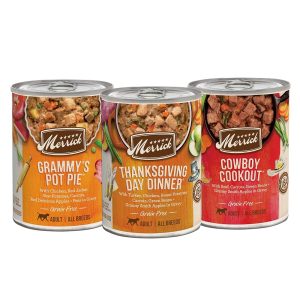
Neither type is best for every dog. Dry food is often easier to measure and store, while wet food provides more water and may be easier for dogs with poor teeth or low appetite.
| Factor | Dry food | Wet food |
|---|---|---|
| Water content | Low | High |
| Portion control | Usually simple | Simple, but calories vary by can size |
| Storage | Easy before opening | Easy before opening; refrigerate after opening |
| Cost per calorie | Often lower | Often higher |
| Appetite | Some dogs prefer it | Often attractive to picky eaters |
| Dental effect | Ordinary kibble gives limited benefit | Does not clean teeth |
| Helpful for low water intake | Less helpful | More helpful |
A mixed diet can work if the total daily calories remain appropriate. For example, adding canned food while still giving the same full amount of kibble can cause weight gain.
Use the calorie information on both labels. If your dog needs 600 calories per day and the wet food supplies 300 calories, the remaining 300 calories must come from the dry food. This is only a sample calculation; your dog’s real calorie need may be different.
How much dry food should you feed?
Begin with the package feeding guide, then adjust based on body condition, weight, activity, and veterinary advice. Package guides are starting points, not exact prescriptions.
A simple calorie calculation is:
Daily cups = daily calorie need ÷ calories per cup
For example, if a dog needs 700 calories each day and the food contains 350 calories per cup:
700 ÷ 350 = 2 cups per day
Split that amount into meals if your dog does better with a routine. Many adult dogs do well with two meals, but age, health, breed, and household needs can change the schedule.
Count all calories, including:
- Treats
- Table food
- Dental chews
- Training rewards
- Food used with medicine
- Toppers and supplements
Treats should not replace a balanced diet. The AAHA nutrition and weight guidance supports keeping extras modest and monitoring body condition.
Use body condition, not hunger alone
A dog may beg even after eating enough. Use these signs to assess body condition:
- Ribs are easy to feel but not heavily covered
- A waist is visible from above
- The abdomen rises slightly behind the ribs when viewed from the side
- Weight stays stable over time
Weigh your dog regularly when possible. If your dog gains weight, reduce calories gradually and review treats. If your dog loses weight without a planned diet change, schedule a veterinary exam.
When is dry food not the best choice?
Dry food may not be the best option when a dog cannot chew comfortably, refuses it, needs more water, or requires a specific therapeutic diet.
Contact a veterinarian if your dog:
- Stops eating for more than a short period
- Vomits repeatedly
- Has ongoing diarrhea
- Loses weight without explanation
- Drinks or urinates much more than usual
- Has trouble chewing or drops food
- Shows weakness, fainting, coughing, or breathing difficulty
- Has a known kidney, liver, urinary, intestinal, or heart condition
Sudden food changes can cause loose stools. Unless a veterinarian tells you to switch at once, change foods over about seven days. Start with a small amount of the new food and slowly increase it while reducing the old food.
If digestive signs continue, stop treating the problem as a simple food transition. Persistent symptoms may come from parasites, infection, pancreatitis, allergies, foreign objects, or another medical issue.
Common mistakes to avoid
The most common feeding errors are simple: too much food, too many extras, and too much trust in label marketing.
Avoid these mistakes:
- Choosing food only by the first ingredient. The whole recipe and adequacy statement matter more.
- Assuming grain-free means higher quality. It does not.
- Free-feeding a dog that gains weight. Measured meals are safer for many dogs.
- Treating ordinary kibble as dental care. Brush teeth and arrange dental checks.
- Changing food often without a reason. Frequent changes can upset digestion.
- Ignoring calorie density. A cup is not a universal unit of energy.
- Adding supplements without advice. More nutrients are not always better.
- Feeding a puppy an adult-maintenance diet. Growth requires different nutrient levels.
- Using a prescription diet without veterinary direction. Medical diets are designed for specific needs.
- Keeping stale or spoiled food. Store kibble in a cool, dry place and follow the package guidance.
Frequently asked questions
Is dry food healthier than wet food for dogs?
Not by default. A complete-and-balanced dry food can be healthy, and a complete-and-balanced wet food can also be healthy. Dry food offers convenience and easy measuring; wet food offers more water and may help dogs with poor appetite or chewing pain.
Can dogs eat dry food every day?
Yes, many dogs can eat a complete-and-balanced dry food every day. The food must match the dog’s life stage and health needs, and the portion must provide the right number of calories.
Does dry dog food cause kidney problems?
Ordinary dry food does not automatically cause kidney disease. Its low water content can be a concern for some dogs, especially those with existing health problems or poor water intake. A veterinarian should guide diet choices for dogs with kidney disease.
Should I add water to dry dog food?
You can add water if your dog likes it, needs softer food, or would benefit from extra moisture. Serve moistened food promptly and discard leftovers rather than leaving them out for long periods.
Is expensive dry dog food better?
Price alone does not prove quality. Compare the adequacy statement, calorie content, life-stage fit, manufacturer standards, and your dog’s response. A costly food can still be a poor match, while a reasonably priced food can meet a healthy dog’s needs.
How do I know if my dog’s dry food is working?
Stable weight, good energy, normal stools, healthy skin and coat, and a strong appetite are useful signs. They do not rule out hidden disease, so routine veterinary exams still matter.
Conclusion
Dry food can be good for dogs when it is complete and balanced, suited to the dog’s life stage, made with reliable quality controls, and fed in measured portions. It is not automatically the healthiest option, and ordinary kibble does not replace dental care or veterinary treatment.
For a practical choice, check the AAFCO adequacy statement, compare calories, choose the right life-stage formula, monitor body condition, and keep fresh water available. If your dog has a medical condition, poor appetite, dental pain, or unexplained weight change, ask a veterinarian before changing the diet.