Introduction
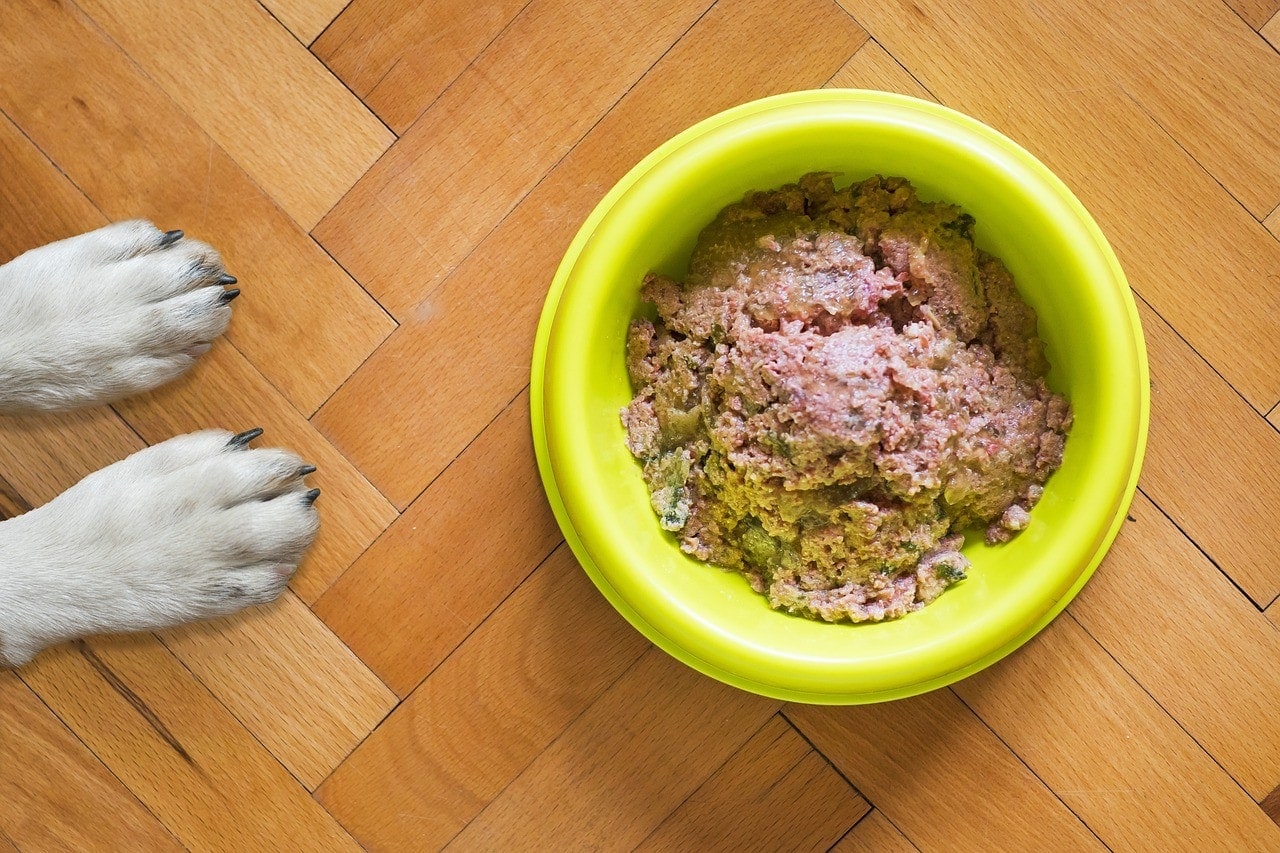
For dog owners in the United States, wet food is not automatically bad for dogs. A canned or pouched food can be a healthy daily diet when it is labeled “complete and balanced” for your dog’s life stage and served in the right amount.
Wet food may help dogs that need more water, have poor teeth, or dislike dry kibble. It also has drawbacks, including higher cost, faster spoilage, and a possible lack of chewing benefit. The best choice depends on your dog’s age, health, teeth, appetite, and total calorie needs.

Is Wet Food Healthy for Dogs?
Wet food can be healthy for dogs when it provides complete nutrition. In the United States, look for a nutritional adequacy statement showing that the food meets AAFCO Dog Food Nutrient Profiles or passed an AAFCO feeding trial for the correct life stage.
A complete diet should provide the nutrients your dog needs, including:
- Protein and amino acids
- Fat and essential fatty acids
- Vitamins
- Minerals
- Enough energy for daily needs
- Nutrients suited to growth, adulthood, pregnancy, or senior years
The word “complete” matters. A food marked only for “intermittent or supplemental feeding” is not meant to replace your dog’s full diet.
The U.S. Food and Drug Administration explains that pet food labels should identify whether a food is complete and balanced. The FDA’s pet food guidance is a useful starting point for American dog owners.
What “complete and balanced” means
“Complete and balanced” does not mean every food suits every dog. It means the food is designed to provide the required nutrients when fed as directed.
Check the label for:
- Life stage: puppy, adult maintenance, gestation, lactation, or all life stages.
- Feeding directions: a starting guide, not a perfect prescription.
- Calorie content: usually listed as kilocalories per can, tray, pouch, or serving.
- Manufacturer details: a clear company name and contact information.
- Special diet claims: such as weight management or urinary support.
A healthy adult dog may do well on wet food alone. Another dog may need a veterinary diet for kidney disease, diabetes, food allergy, or another condition. Those diets should be chosen with a veterinarian.

Benefits of Wet Food for Dogs
Wet food offers several practical benefits. Its higher water content, soft texture, and strong smell can make meals easier for some dogs to eat.
It adds water to the diet
Most wet dog foods contain much more water than dry kibble. This can help increase total daily fluid intake, although wet food does not replace access to fresh drinking water.
Extra dietary water may be useful for dogs that:
- Drink very little
- Have a history of dehydration
- Need a soft diet after dental work
- Are older and have reduced appetite
- Have certain urinary or kidney concerns
However, water needs vary. A dog with kidney disease or urinary disease may need a specific food and fluid plan from a veterinarian. Do not assume that any wet food is suitable for a medical condition.
It may help picky eaters
Wet food often has a stronger smell and softer texture than kibble. That can help dogs with a low appetite or dogs that struggle to chew hard food.
A reduced appetite can also signal illness. If your dog suddenly stops eating, vomits, has diarrhea, loses weight, or seems tired, changing food may not solve the real problem. Contact a veterinarian, especially if the dog refuses food for a full day or shows other warning signs.
It is easier to chew
Soft food may be easier for dogs with:
- Missing teeth
- Sore gums
- Oral pain
- Dental surgery
- Jaw problems
- Weakness or poor coordination
Still, soft food does not treat dental disease. Dogs with bad breath, bleeding gums, loose teeth, or pain while eating need a veterinary oral exam.
It can support weight control
Wet food is not automatically lower in calories, but its water content can create a larger portion for fewer calories per gram. This may help some dogs feel that they are eating more.
Compare foods by calories, not by the number of cans or cups. A small can of one food may contain more calories than a larger can of another.

Possible Drawbacks of Wet Dog Food
Wet food is safe for many dogs, but it has real trade-offs. Most problems come from poor portion control, unsafe storage, an incomplete diet, or a medical issue that needs a different food.
It spoils faster after opening
Once opened, wet food can spoil if left at room temperature. Put unused food in a clean, covered container and refrigerate it promptly. Follow the product label for how long it may be kept.
Discard food if it has:
- A sour or rotten smell
- Mold
- A swollen container
- A changed color or texture
- Long exposure to heat
- Contact with a dirty bowl or surface
Do not leave wet food in a bowl all day, especially in a warm room. Bacteria can grow as food sits out.
Wash food and water bowls often. The FDA also recommends safe handling practices for pet food, including hand washing and proper storage.
It may contain more calories than expected
Wet food contains water, so the serving size can look large. But some recipes are rich in fat and calories.
Use this simple calculation:
Daily food amount = daily calorie need ÷ calories per can
For example, if a dog needs 600 calories per day and one can contains 300 calories, the starting amount is two cans per day. This is only a sample calculation. Your dog’s actual need depends on body size, age, activity, neuter status, health, and body condition.
Treats also count. If you add wet food to kibble without reducing the kibble, weight gain can follow.
It may cost more
Wet food often costs more per calorie than dry food. It may also create more packaging waste and require refrigerator space.
A mixed diet can reduce cost while adding moisture and flavor. Measure both foods carefully so the combined calories match your dog’s needs.
It does not provide reliable dental cleaning
A common myth is that dry kibble always cleans a dog’s teeth. Ordinary kibble often breaks apart with little tooth scraping. Wet food does not cause dental disease by itself, but it also does not clean plaque from the teeth.
The American Veterinary Medical Association recommends regular dental care and veterinary examinations. Brushing with a dog-safe toothpaste is usually more useful than relying on food texture alone.
Some veterinary dental diets have specific designs and evidence. They are not the same as ordinary dry kibble.
Some dogs may develop digestive upset
A sudden switch can cause loose stool, gas, or vomiting. The problem may be the abrupt change, a rich recipe, a new protein, or an unrelated illness.
Change foods over several days:
- Days 1–2: about 75% old food and 25% new food
- Days 3–4: about 50% old food and 50% new food
- Days 5–6: about 25% old food and 75% new food
- Day 7: all new food, if stools remain normal
Some dogs need a slower change. Stop and contact a veterinarian if vomiting continues, diarrhea is severe, blood appears, or your dog becomes weak.
Wet Food vs. Dry Food for Dogs
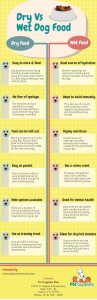
Neither wet food nor dry food is always best. Both can support health when they are complete, balanced, properly stored, and fed in suitable portions.
| Factor | Wet food | Dry food |
|---|---|---|
| Water content | Usually high | Usually low |
| Texture | Soft and easy to chew | Firm and crunchy |
| Storage after opening | Needs prompt refrigeration | Easier to store |
| Calorie measurement | Often listed per can or tray | Often listed per cup or gram |
| Cost per calorie | Often higher | Often lower |
| Appetite appeal | Often strong | Varies by recipe |
| Dental effect | Does not clean teeth | Ordinary kibble is not a substitute for dental care |
| Feeding flexibility | Useful for soft meals | Easy to measure and use in food toys |
The practical choice may be:
- Wet food only for a dog that cannot chew well or needs more moisture.
- Dry food only for a dog that does well on it and has no need for soft food.
- A measured mix for owners who want both moisture and convenience.
- A veterinary diet when a diagnosed condition requires specific nutrients.
The key is not the form of the food. It is the food’s nutrient profile, calorie content, safety, and fit for the individual dog.

How to Choose a Safe Wet Food
Start with the label, then consider your dog’s needs. A high price or appealing ingredient list does not prove that a food is better.
1. Check the nutritional adequacy statement
Choose a food that is complete and balanced for your dog’s life stage. Puppies need food designed for growth. Adult dogs need adult maintenance food. Pregnant or nursing dogs have different needs.
Be careful with products labeled:
- Topper
- Mixer
- Treat
- Supplemental
- Intermittent feeding only
These products may be useful, but they should not replace a complete diet unless a veterinarian gives specific instructions.
2. Check calories per can or serving
Use the calorie statement to set portions. Do not rely only on the feeding chart.
Monitor your dog’s body condition. You should be able to feel the ribs under a thin layer of fat, see a waist from above, and see an abdominal tuck from the side. A veterinarian can help assess body condition if you are unsure.
3. Match the texture to the dog
Common textures include:
- Loaf or pâté
- Chunks in gravy
- Minced food
- Stew
- Mousse
Texture is mainly a comfort and feeding issue. It does not prove nutritional quality.
4. Consider known health needs
Ask your veterinarian before choosing food for a dog with:
- Kidney disease
- Bladder stones
- Diabetes
- Pancreatitis
- Heart disease
- Food allergies
- Severe obesity
- Liver disease
- Chronic digestive symptoms
A food that helps one condition may be wrong for another. For example, a high-moisture food is not automatically a kidney diet or urinary diet.
5. Use reputable handling and storage
Buy intact containers. Avoid cans that are swollen, leaking, badly dented along the seam, or rusted.
Store unopened food in a cool, dry place. Refrigerate leftovers in a covered container. Wash the bowl after meals, and avoid leaving wet food out for long periods.

How Much Wet Food Should a Dog Eat?
The right amount depends on calories, not simply on the dog’s weight or the number of cans.
A useful starting process is:
- Find the food’s calories per can or serving.
- Estimate the daily amount from the label or your veterinarian.
- Divide the daily calories into meals.
- Include treats and toppers in the daily total.
- Check body weight and body condition every few weeks.
- Adjust with veterinary guidance if weight changes.
A small, calm, neutered adult dog may need far fewer calories than a large, active dog. Two dogs of the same weight can also need different amounts.
Do not make major food changes for a growing puppy, pregnant dog, or dog with a medical condition without professional guidance.

When Wet Food May Not Be the Best Choice
Wet food may be a poor fit when it creates a specific problem.
Consider another approach if:
- Your dog gains weight despite measured portions.
- The food causes repeated vomiting or diarrhea.
- You cannot refrigerate leftovers safely.
- Your dog eats food that is not complete and balanced.
- The cost makes consistent feeding difficult.
- Your dog needs a prescription diet.
- The dog has severe dental disease and needs treatment, not only soft meals.
A soft diet can make eating easier, but it can also hide chewing pain. If a dog drops food, chews on one side, paws at the mouth, or avoids meals, arrange a veterinary exam.
Seek prompt veterinary care for repeated vomiting, bloody diarrhea, severe weakness, trouble breathing, a swollen abdomen, or signs of dehydration.
Common Myths About Wet Dog Food
“Wet food makes dogs fat.”
Wet food does not cause weight gain by itself. Excess calories cause weight gain, whether those calories come from wet food, kibble, treats, or table scraps.
“Wet food causes dental disease.”
Wet food is not a direct cause of dental disease. It also does not remove plaque well. Dental health depends on oral care, genetics, chewing habits, and veterinary treatment.
“Dogs need dry food to stay healthy.”
Dogs can stay healthy on wet food when it is complete and balanced and fed in the right amount. Dry food is convenient, but it is not a universal requirement.
“More meat means better food.”
A meat-heavy label does not tell the whole story. The complete nutrient profile, calorie level, safety controls, life-stage fit, and feeding results matter more than one ingredient list feature.
“Grain-free wet food is healthier.”
Grain-free is not automatically healthier. Dogs can digest many cooked grains, and removing grains does not prove better nutrition. Use a veterinarian’s advice when a food allergy or diet-related concern is suspected.

Frequently Asked Questions
Can dogs eat wet food every day?
Yes. A dog can eat wet food every day if it is complete and balanced for the dog’s life stage and the portions meet the dog’s calorie needs.
Is wet food better for senior dogs?
It can be helpful for senior dogs with poor teeth, reduced appetite, or a need for more dietary moisture. Age alone does not require wet food. Senior dogs with medical problems may need a specific veterinary diet.
Can wet food cause diarrhea in dogs?
It can cause diarrhea when introduced too quickly, contains a rich recipe, does not agree with the dog, or has spoiled. Persistent or severe diarrhea needs veterinary attention.
Can I mix wet food with kibble?
Yes, if both foods are suitable and you reduce the amount of each so total calories stay appropriate. Introduce the mixture gradually.
How long can wet dog food sit out?
There is no single safe time for every room and food. Warm conditions increase risk. Serve small portions, refrigerate unused food promptly, and follow the package directions. Discard food that has been left out too long or looks or smells spoiled.
Is homemade wet food safe for dogs?
Homemade food can be unsafe if it lacks key nutrients or contains harmful ingredients. A veterinary nutritionist should formulate a homemade diet, especially for puppies, pregnant dogs, and dogs with health conditions.
Key Takeaways
- Wet food is not inherently bad for dogs.
- Choose a food labeled complete and balanced for the correct life stage.
- Measure portions by calories, not by can size alone.
- Wet food can add water and help dogs that have trouble chewing.
- It spoils faster than dry food after opening.
- Ordinary wet food and ordinary kibble are not substitutes for dental care.
- Change diets slowly and watch for digestive upset.
- Ask a veterinarian before choosing food for a dog with a diagnosed health condition.
Conclusion
Wet food can be a safe and nutritious choice for many dogs in the United States. Its main benefits are moisture, soft texture, and strong appeal. Its main limits are storage, cost, calorie density, and the lack of reliable dental cleaning.
Choose a complete and balanced food, serve a measured amount, refrigerate leftovers, and watch your dog’s weight, stool, appetite, and comfort. If your dog has dental pain, ongoing digestive signs, or a medical diagnosis, use wet food as part of a veterinary plan rather than as a stand-alone fix.