A dog’s wet food amount depends on body weight, age, activity, health, and the calories in the food. There is no safe single number for every dog. As a rough starting point, many adult dogs need about 20 to 30 calories per pound of body weight each day, but your dog may need more or less.
To convert that calorie need into ounces, check the food label. Then use this formula:
Daily ounces = daily calorie need ÷ calories per ounce of wet food
For example, if a dog needs 600 calories per day and the food provides 28 calories per ounce:
600 ÷ 28 = about 21.5 ounces per day
That is about 1.7 cans if each can holds 12.5 ounces.
This guide applies to dogs in the United States and uses U.S. pet food label terms, including AAFCO nutritional adequacy statements and calorie information.
How many ounces of wet food does a dog need?
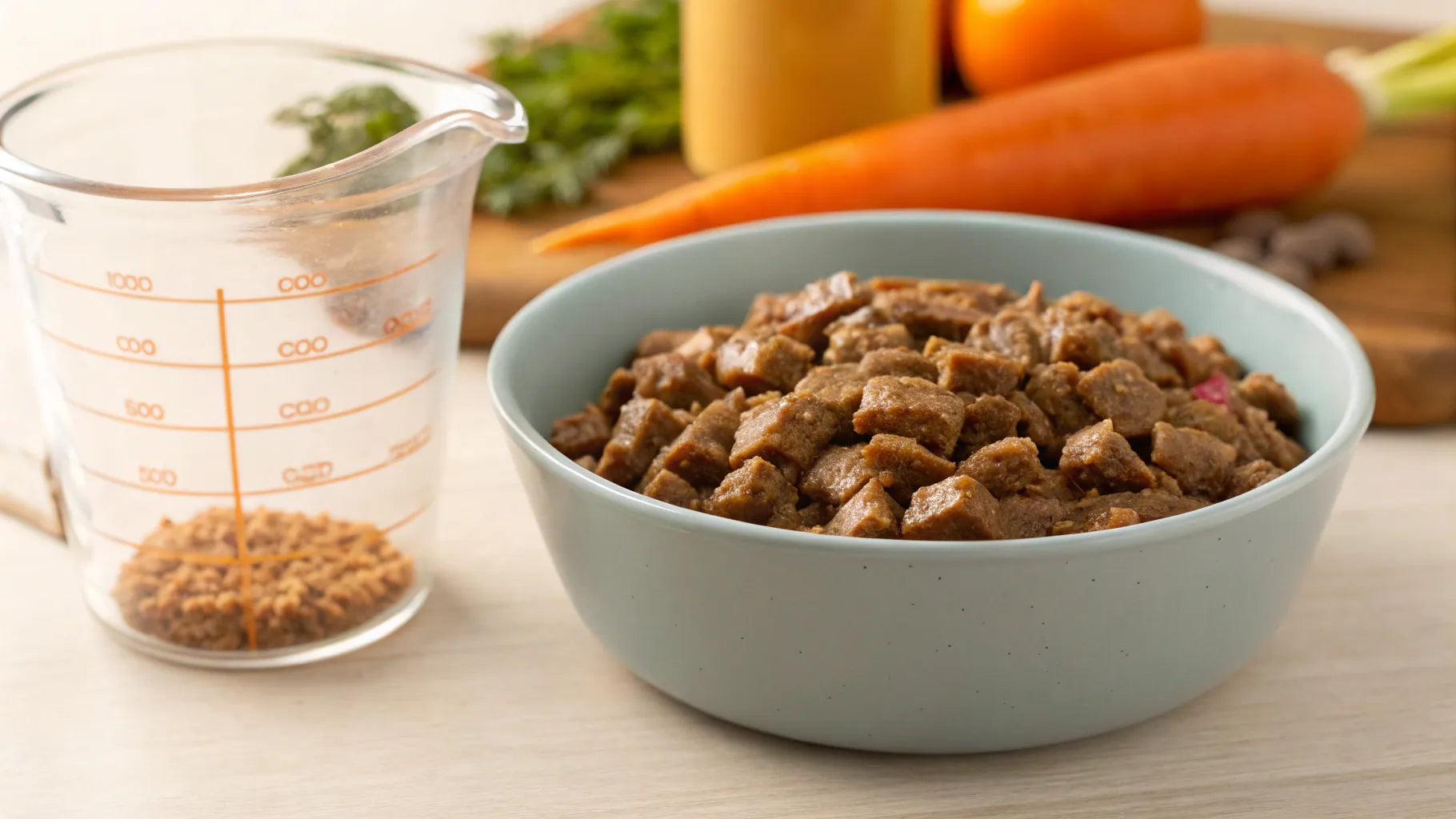
The amount can range from a few ounces to several dozen ounces per day. The key factor is not the food’s weight alone. It is the number of calories in each ounce.
A small dog may need 5 to 10 ounces per day. A medium dog may need 15 to 25 ounces. A large dog may need 30 ounces or more. These are broad examples, not fixed feeding rules.
Wet foods differ widely in calorie density. A 12.5-ounce can may contain 250 calories, while another can of the same size may contain 500 calories. Feeding the same number of cans without checking the label can lead to weight gain or weight loss.
A simple starting table
| Dog size | Approximate daily wet food amount* |
|---|---|
| 10-pound dog | 5–9 ounces |
| 20-pound dog | 9–16 ounces |
| 40-pound dog | 16–28 ounces |
| 60-pound dog | 23–38 ounces |
| 80-pound dog | 30–48 ounces |
*These ranges assume a complete wet food with roughly 30 to 40 calories per ounce and an average adult dog. The actual amount may be quite different.
Use your dog’s body condition and weight trend to adjust the starting amount. A feeding chart on the can or pouch is useful, but it is still only a starting point.
How to calculate the right amount of wet food
The most accurate home method is to work from calories, not cans.
Step 1: Find the food’s calorie information
Look for a statement such as:
- “350 kcal per 12.5 oz can”
- “1,100 kcal/kg”
- “28 kcal/oz”
The calorie statement may appear near the guaranteed analysis or feeding directions. In the United States, pet food calories are usually listed as kilocalories, written as kcal. For feeding purposes, one kcal is commonly treated as one food calorie.
If the label gives calories per can, calculate calories per ounce:
Calories per ounce = calories per can ÷ can weight in ounces
Example:
- Can size: 12.5 ounces
- Calories per can: 350
350 ÷ 12.5 = 28 calories per ounce
Step 2: Estimate your dog’s daily calorie need
For a healthy adult dog, a basic estimate starts with resting energy requirement, or RER:
RER = 70 × body weight in kilograms^0.75
Convert pounds to kilograms first:
Body weight in kilograms = body weight in pounds ÷ 2.2
Veterinary nutrition plans then adjust the RER for age, activity, reproductive status, and health. This is why calorie needs vary even between dogs of the same weight.
For a simple home estimate, many adult dogs fall near 20 to 30 calories per pound per day. Less active, older, or neutered dogs may need less. Growing puppies, highly active dogs, and pregnant or nursing dogs may need more.
Step 3: Divide calories by calories per ounce
Use:
Daily ounces = daily calories needed ÷ calories per ounce
Hypothetical example:
- Dog weight: 20 pounds
- Estimated need: 600 calories per day
- Food: 350 calories per 12.5-ounce can
- Food density: 28 calories per ounce
600 ÷ 28 = 21.4 ounces per day
That equals:
600 ÷ 350 = 1.7 cans per day
You could divide that into two meals of about 10.7 ounces each.
Step 4: Adjust by watching body condition
Keep the first amount for about two to three weeks unless your dog gains weight quickly, loses weight, or shows signs of illness. Weigh your dog when possible.
A healthy body condition usually means:
- You can feel the ribs under a thin layer of fat.
- The waist is visible from above.
- The belly rises slightly behind the ribs when viewed from the side.
- Your dog has normal energy for their age and breed.
If your dog gains excess fat, reduce food gradually. If your dog loses weight despite eating well, contact a veterinarian before simply adding more food.

Wet food amounts by can size
Can size helps with portion planning, but it does not tell you how many calories your dog needs.
The same dog may need:
- 2 cans of a high-calorie food
- 3 cans of a lower-calorie food
- A mix of wet and dry food
- A different amount during weight loss or recovery
Example conversion table
The table below assumes a food with 350 calories per 12.5-ounce can.
| Daily calorie target | Daily food amount | Approximate 12.5-ounce cans |
|---|---|---|
| 300 calories | 10.7 ounces | 0.9 can |
| 500 calories | 17.9 ounces | 1.4 cans |
| 700 calories | 25 ounces | 2 cans |
| 900 calories | 32.1 ounces | 2.6 cans |
| 1,200 calories | 42.9 ounces | 3.4 cans |
These figures are hypothetical. Replace 350 with the calorie value printed on your dog’s food.
How to measure partial cans
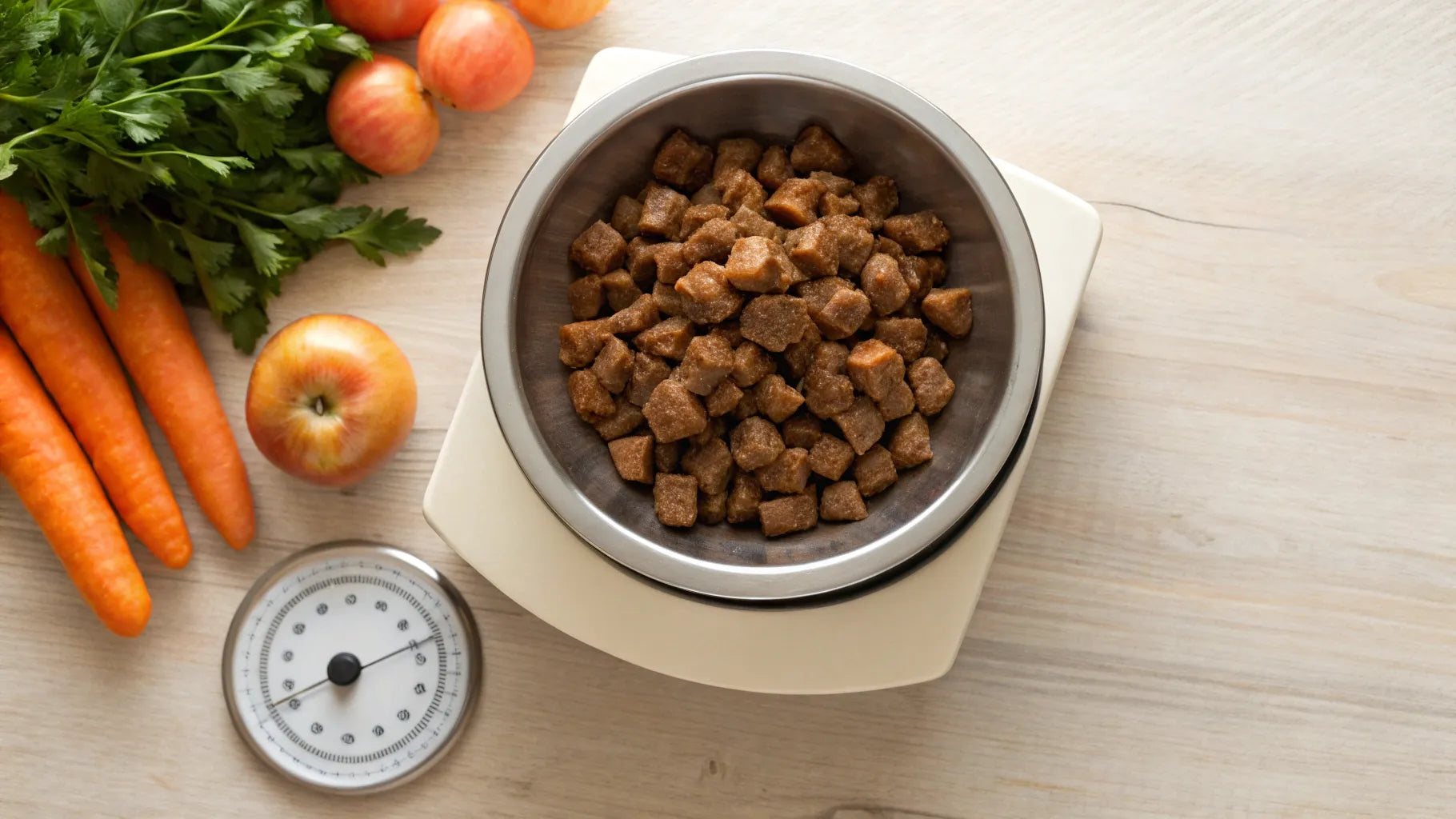
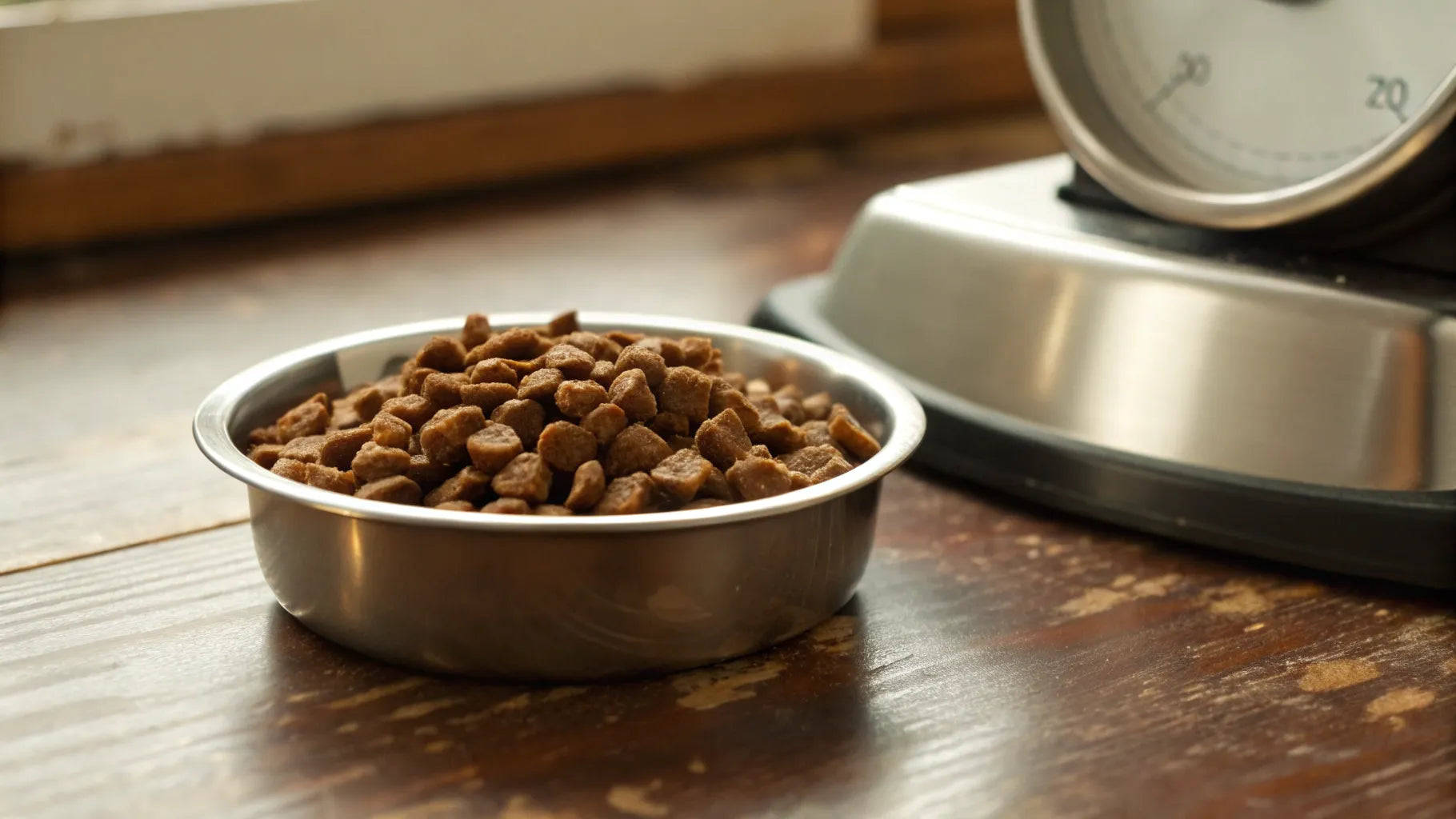
A kitchen scale gives the best portion control. Weigh the food in ounces after opening the can, or divide the can into equal portions.
For example, if your dog needs 17.9 ounces per day:
- Feed about 9 ounces in the morning.
- Feed about 9 ounces in the evening.
- Store the unused food in a covered container in the refrigerator.
Do not leave opened wet food at room temperature for long periods. Follow the food maker’s storage directions.
What changes how much wet food a dog should eat?
Weight is only one part of the answer. These factors can change a dog’s calorie needs.
Age
Puppies need food for growth, but their needs are not the same at every stage. A young puppy may need several meals each day. Large-breed puppies also need careful control of calories and minerals.
Senior dogs may become less active. Some need fewer calories, while others lose weight because of dental disease, kidney disease, cancer, or another health problem.
Activity
A working, sporting, or highly active dog may need more food than a calm pet dog of the same weight. Increase food only when activity and body condition support the change.
Spay or neuter status
Some dogs need fewer calories after spaying or neutering. Weight gain after the procedure is not automatic, but food portions may need review as activity and metabolism change.
Health
Diabetes, kidney disease, liver disease, digestive disease, allergies, and other conditions can affect the right diet. A prescription diet may also have a different calorie density from standard wet food.
Treats and toppers
Treats, table scraps, broth, and meal toppers add calories. The American College of Veterinary Nutrition and other veterinary nutrition guidance commonly supports keeping treats to about 10% or less of daily calories.
If your dog needs 600 calories per day, treats should provide no more than about 60 calories. The main diet should supply the rest.
Mixed feeding
If you feed wet and dry food together, count calories from both.
Example:
- Daily target: 600 calories
- Wet food: 300 calories
- Dry food: 300 calories
Do not feed the full wet-food amount and the full dry-food amount listed on both packages. Each chart assumes that food is the dog’s main diet.
Is wet food complete and balanced?
Choose a food labeled “complete and balanced” for your dog’s life stage when wet food supplies most or all of the diet.
In the United States, the label should include an AAFCO nutritional adequacy statement. It may say the food is complete and balanced for:
- Growth
- Maintenance
- All life stages
A food meant only for “intermittent or supplemental feeding” is not designed to be the sole diet. It may be useful as a topper, treat, or short-term supplement, but it should not replace a complete diet without veterinary guidance.
Check that the life stage matches your dog. A puppy, adult dog, pregnant dog, or nursing dog may have different nutritional needs.
Common mistakes when feeding wet food
Counting cans instead of calories
Two cans do not always provide the same nutrition. Always check calories per can or calories per ounce.
Using the food’s water content as a calorie guide
Wet food contains a great deal of water. A larger portion by weight does not necessarily contain more calories than a smaller portion of dry food.
Following the label without checking body condition
Feeding guides are general estimates. Dogs with low activity may need less than the chart says. Active dogs may need more.
Forgetting treats
Chews, dental treats, training rewards, and human food can add a large number of calories.
Changing food too fast
A sudden diet change may cause loose stools or vomiting. Unless your veterinarian gives different instructions, change foods over several days by mixing increasing amounts of the new food with the old food.
Leaving food out all day
Wet food can spoil when left at room temperature. Offer set meals and refrigerate unused food according to the label’s directions.
Assuming begging means hunger
Dogs may beg because they enjoy food, expect a routine, or have learned that begging works. Use weight, body condition, energy, and veterinary advice to guide portions.
When should you ask a veterinarian?
Talk with a veterinarian before setting a calorie target for a dog that:
- Is under 1 year old
- Is pregnant or nursing
- Is very underweight or overweight
- Has diabetes, kidney disease, liver disease, or digestive disease
- Takes medicine that affects appetite or weight
- Has sudden weight loss or weight gain
- Vomits often or has ongoing diarrhea
- Refuses food for more than a short period
- Seems unusually tired, thirsty, or hungry
A veterinarian can assess body condition, muscle loss, dental health, and disease risk. They can also calculate a more suitable calorie target and decide whether a therapeutic diet is needed.
Seek prompt veterinary care if your dog has repeated vomiting, severe diarrhea, weakness, trouble breathing, a swollen abdomen, collapse, or possible toxin exposure.
How to adjust your dog’s wet food safely
Start with the label’s calorie information and a reasonable daily target. Feed measured portions at consistent times. Then review your dog’s weight and body shape every few weeks.
If your dog is gaining too much fat, reduce the daily amount slightly and reassess. If your dog is losing weight, seems unwell, or does not improve after a food adjustment, contact a veterinarian.
Make changes in small steps. A sudden large increase may cause stomach upset, while a sudden large decrease can leave some dogs hungry and may be unsafe for dogs with medical needs.
Frequently asked questions
How many ounces of wet food should a 10-pound dog eat?
A 10-pound adult dog may need roughly 5 to 9 ounces per day if the food contains about 30 to 40 calories per ounce. The exact amount depends on the dog’s age, activity, body condition, and the food’s calories.
How many ounces of wet food should a 20-pound dog eat?
A 20-pound adult dog may need about 9 to 16 ounces per day when the food contains about 30 to 40 calories per ounce. Calculate from calories rather than using this range as a fixed rule.
How many cans should I feed my dog?
Divide your dog’s daily calorie need by the calories in one can. If your dog needs 600 calories and one can contains 350 calories, the daily amount is about 1.7 cans.
Can a dog eat only wet food?
Yes, if the wet food is complete and balanced for the dog’s life stage and provides enough calories. Foods labeled for supplemental or intermittent feeding should not be the only diet.
Should wet food replace dry food ounce for ounce?
No. Wet and dry foods have different calorie densities. Replace food by calories, not by weight or volume.
Key takeaways
- There is no single correct number of ounces for every dog.
- Use calories per ounce or calories per can to calculate portions.
- A rough adult starting range is 20 to 30 calories per pound per day.
- Adjust portions based on body condition and weight trends.
- Count treats and other foods.
- Use a complete and balanced food for the correct life stage.
- Ask a veterinarian about puppies, pregnancy, illness, major weight changes, or unusual appetite.
Conclusion
The right amount of wet food depends on your dog’s calorie needs and the food’s calorie density. Find the calories per can, convert them to calories per ounce, and divide your dog’s daily calorie target by that number.
Start with the label and a measured portion. Then watch your dog’s weight, waist, ribs, and energy. If the amount does not produce a healthy body condition, adjust it carefully or ask your veterinarian for a personalized plan.