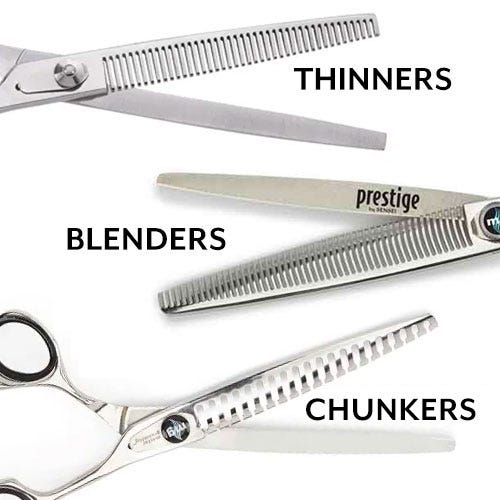
Thinning shears help remove bulk, blend coat lines, and soften a dog’s haircut.
If you have ever looked at a freshly groomed dog and wondered why the coat looks neat but still natural, thinning shears are often the reason. They are one of the most useful grooming tools for shaping fur without leaving harsh clipper marks. In this guide, I’ll walk you through exactly what thinning shears are used for dogs, how they work, when to use them, and the mistakes that can turn a good groom into a choppy one.
What Are Thinning Shears Used for Dogs?
Thinning shears are grooming scissors with one straight blade and one toothed blade. They are used to reduce coat thickness, blend uneven areas, and create a softer finish.
Unlike regular scissors, thinning shears do not cut every hair in a section. They remove only part of the hair, which makes them great for natural-looking shaping. Groomers use them on many breeds, especially dogs with thick, fluffy, or double coats.

How Thinning Shears Work
Thinning shears work by trimming some hairs while leaving others in place. The toothed blade catches a portion of the coat, and the smooth blade cuts only that part.
This gives the coat a lighter, blended look instead of a sharp line. I’ve found them especially helpful when a dog has a visible scissor line around the legs, chest, or head. One or two careful passes can make the coat look much more even.
What Thinning Shears Are Used for Dogs in Grooming
Thinning shears are used for several common grooming jobs. They are not meant to do every grooming task, but they shine when you want control and a soft finish.
Blending harsh lines
After clipping or scissoring, you may notice a clear line where one section ends. Thinning shears help blur that line so the coat looks smoother.
Removing bulk
Some dogs have coats that look too full in certain areas, like the thighs, ears, or neck. Thinning shears take out weight without creating a short or choppy cut.
Softening a face trim
Many groomers use thinning shears around the eyes, muzzle, and cheeks to create a rounded, gentle look. This is common in breeds like Poodles, Doodles, and Shih Tzus.
Fixing uneven spots
If one area sticks out more than the rest, thinning shears can help level it out. I’ve used them many times to rescue a trim that looked fine from a distance but uneven up close.
Creating a natural look
Some owners want their dog groomed, but not obviously “scissored.” Thinning shears are ideal for that soft, lived-in look that still feels polished.
Benefits of Using Thinning Shears on Dogs
Thinning shears offer a few clear benefits for both groomers and pet owners.
• They help coats look smooth and blended
• They reduce bulk without making the coat too short
• They work well on thick, fluffy, or wavy hair
• They can make grooming results look more natural
• They are useful for touch-ups between full grooms
In my experience, the biggest benefit is control. You can take off a little at a time, which helps avoid mistakes that are hard to fix.
When You Should Use Thinning Shears
Thinning shears are useful in specific situations, not on every part of every dog.
They are a good choice when:
• The coat looks heavy but still needs some length
• You want to soften scissor marks
• The face or feet need shaping
• The dog has thick hair that puffs out too much
• You are blending two coat lengths together
They are less useful when you need a very clean, sharp cut. For that, straight grooming shears or clippers are usually better.
When Not to Use Thinning Shears
Thinning shears are helpful, but they are not the right tool in every case. Using them in the wrong spot can make the coat look patchy.
Avoid them when:
• The coat is very tangled or matted
• You need to remove a lot of length quickly
• The hair is too fine and may look wispy
• You are working too close to the skin without control
• The dog has a style that needs crisp lines
A mistake I see often is over-thinning. Once too much hair is removed, the coat can look thin in a way that is hard to hide.
Types of Thinning Shears for Dogs
Not all thinning shears are the same. The right pair depends on the dog’s coat and the effect you want.
40-tooth thinning shears
These remove less hair at a time. They are good for subtle blending and soft finishing.
Chunkers
Chunkers have wider teeth and remove more hair in one pass. Groomers often use them for heavier coats and stronger texture control.
Curved thinning shears
These are shaped to follow round areas like the head, legs, or paws. They help create a more balanced look on curved parts of the body.
Straight thinning shears
These are the most common type. They are versatile and work well for general blending and coat softening.
Which Dogs Benefit Most from Thinning Shears?
Thinning shears are especially useful for dogs with coats that grow long, fluffy, or dense.
Common examples include:
• Poodles
• Doodles and Poodle mixes
• Bichon Frises
• Shih Tzus
• Cocker Spaniels
• Schnauzers
• Shelties and other double-coated breeds with trim needs
That said, every dog is different. Coat texture, style, and grooming goals matter just as much as breed.
How Professional Groomers Use Thinning Shears
A skilled groomer uses thinning shears with a light hand. The goal is to improve the shape, not erase the coat.
A typical grooming flow may include:
- Brushing and dematting the coat first
- Clipping longer areas if needed
- Scissoring the outline
- Using thinning shears to blend visible edges
- Checking the coat from different angles for balance
That last step matters more than people think. Hair can look even from the side and still appear uneven from above.
Tips for Using Thinning Shears at Home
If you groom your dog at home, thinning shears can be helpful, but they need care and patience.
• Start with small snips instead of big cuts
• Work on dry, clean, brushed hair
• Use them in bright light so you can see the coat clearly
• Trim a little, then stop and check the result
• Avoid cutting near eyes, ears, or skin folds unless you are confident
I always tell pet owners this: less is more. You can always take off more hair, but you cannot put it back.
Common Mistakes to Avoid
Thinning shears are easy to overuse if you are new to dog grooming.
Some common mistakes include:
• Using them on matted fur
• Cutting the same spot too many times
• Trying to “fix” a bad cut all at once
• Thinning too close to the skin
• Using dull shears that pull the hair instead of cutting cleanly
A dull tool can make grooming stressful for the dog. Clean, sharp shears usually give better results and feel gentler.
Thinning Shears vs. Regular Scissors vs. Clippers
Each tool has a different job.
• Thinning shears remove some hair and blend the coat
• Regular scissors cut all the hair they touch and create cleaner edges
• Clippers shorten large areas quickly and evenly
If I were explaining it simply, I’d say thinning shears are the soft paintbrush, scissors are the fine pen, and clippers are the fast mower. Each one has a place.
Safety and Coat Health Considerations
Thinning shears are generally safe when used correctly, but the dog’s comfort matters most.
Keep these points in mind:
• Never use them to cut out severe mats near the skin
• Watch for skin folds, ears, and sensitive areas
• Stop if the dog moves a lot or seems anxious
• Use calm handling and short grooming sessions
• Check the coat condition before trimming
The American Kennel Club and many grooming professionals emphasize that regular brushing and coat maintenance are key to safer trimming. That’s because a healthy coat is easier to shape and less likely to need major correction.
Frequently Asked Questions
What are thinning shears used for dogs?
Thinning shears are used to blend, soften, and reduce bulk in a dog’s coat. They help create a more natural look without leaving sharp scissor lines.
Are thinning shears safe for dogs?
Yes, they are safe when used carefully on clean, brushed coat. The main risks come from using them on mats, near sensitive areas, or with too much pressure.
Can I use thinning shears on my dog at home?
Yes, if you are careful and start slowly. They work best for small touch-ups, blending rough edges, and softening fluffy areas.
Do thinning shears cut all the hair?
No, they only cut some of the hair in a section. That is why the coat looks lighter but still full and natural.
What is the difference between thinning shears and chunkers?
Thinning shears usually remove less hair and create a softer blend. Chunkers remove more hair and are better for heavier coats or stronger shaping.
Conclusion
Thinning shears are one of the most useful tools in dog grooming because they help shape the coat without making it look harsh or uneven. They are great for blending lines, removing bulk, and softening tricky areas like the face, legs, and ears. Used with care, thinning shears can make a groom look polished while still keeping your dog’s coat natural and comfortable.
If you groom your dog at home, start small, stay patient, and focus on gentle touch instead of big changes. The more you understand how thinning shears work, the easier it becomes to create a clean finish your dog can wear well. If this guide helped, take a moment to explore more grooming tips or leave a comment with your own experience.