Most dogs do not need canned food, but wet food can support hydration, appetite, and certain health needs.
Do dogs need canned food? As a veterinary-informed guide, I’ll explain when wet food helps, when dry food works just as well, and how to choose a safe diet. The best choice depends on your dog’s age, health, teeth, budget, and personal taste.
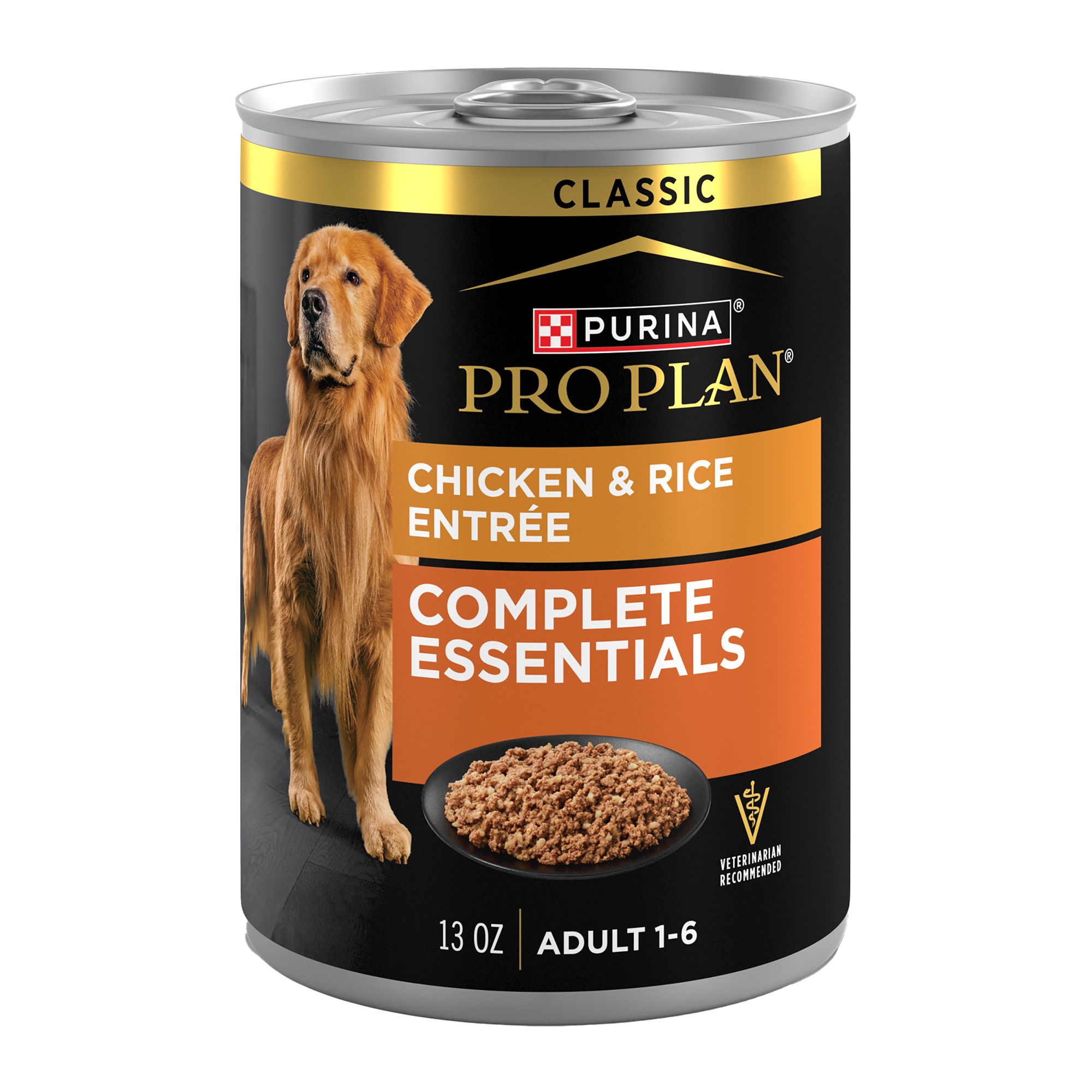
Do dogs need canned food?
Do dogs need canned food to stay healthy? Usually, no. A complete and balanced dry, wet, or mixed diet can meet a dog’s nutrition needs when it is made for the right life stage and fed in suitable amounts.
Canned food is not automatically better than kibble. It often contains more water and may be easier to eat, but it can also cost more and spoil faster after opening.
The key phrase is “complete and balanced.” This means the food meets nutrient standards set for dogs. Look for a nutritional adequacy statement on the label. It should say the food is complete and balanced for growth, adult maintenance, or all life stages.
Do dogs need canned food if they already eat healthy kibble? Not necessarily. A dog that eats a balanced diet, drinks enough water, maintains a healthy weight, and has good energy may do very well on dry food alone.
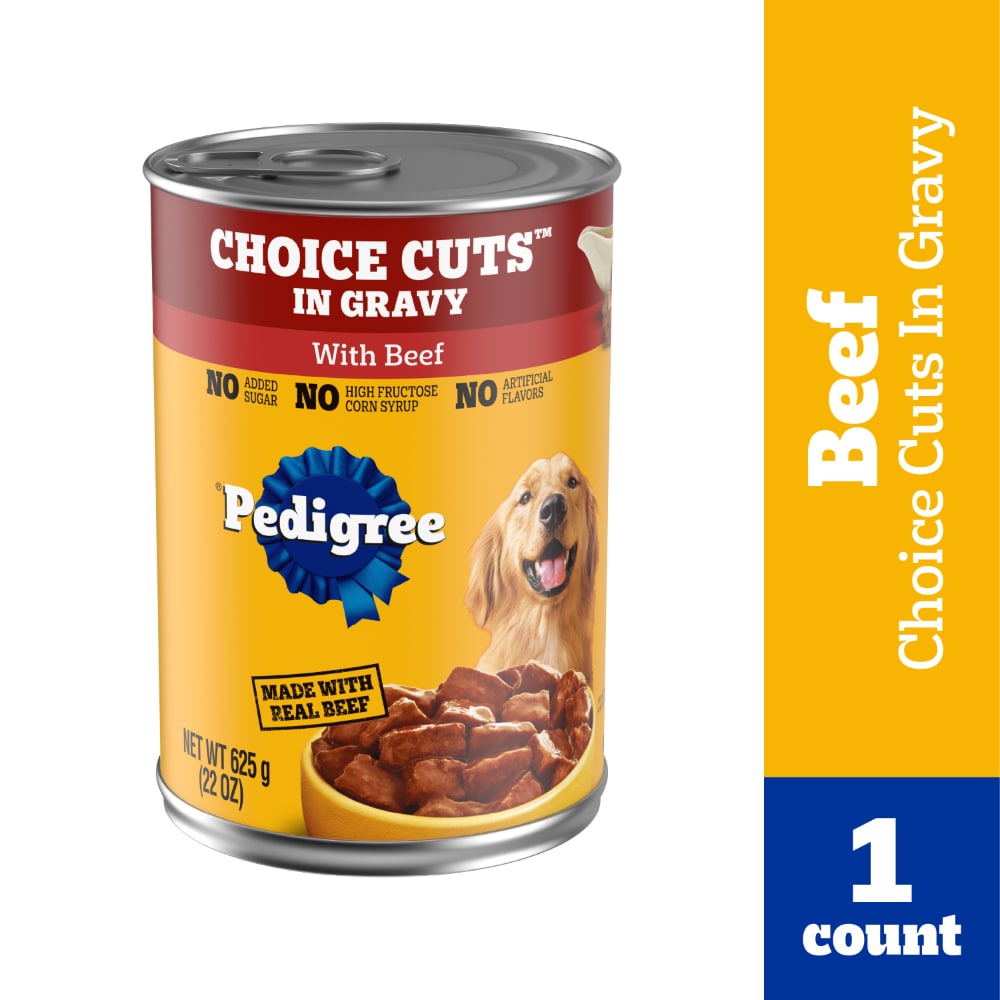
What is canned dog food?
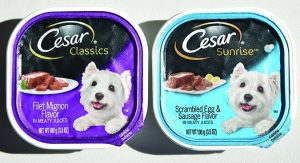
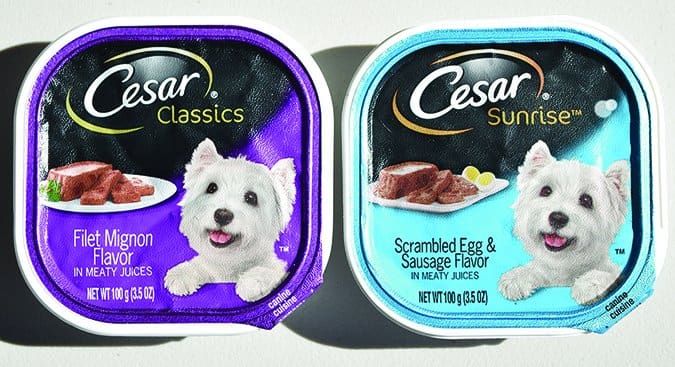
Canned dog food is wet pet food sealed in a can, tray, or pouch. It contains much more moisture than dry kibble. Many wet foods contain about 70% to 85% water, while dry food often contains about 8% to 12%.
This high water content makes wet food soft and moist. It can have a strong smell, which may appeal to dogs with picky appetites.
Canned food may contain:
• Meat, poultry, fish, or plant-based protein
• Added vitamins and minerals
• Grains, vegetables, or other carbohydrates
• Water, broth, or cooking liquid
• Fat sources for energy and flavor
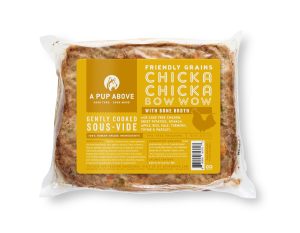
Some canned foods are complete meals. Others are toppers, treats, or supplements. A food labeled for “intermittent or supplemental feeding only” should not replace your dog’s main diet.
Do dogs need canned food with meat as the first ingredient? Not always. Ingredient lists matter, but the full nutrient profile matters more. A food can have a named meat first and still be unbalanced if it lacks key vitamins and minerals.
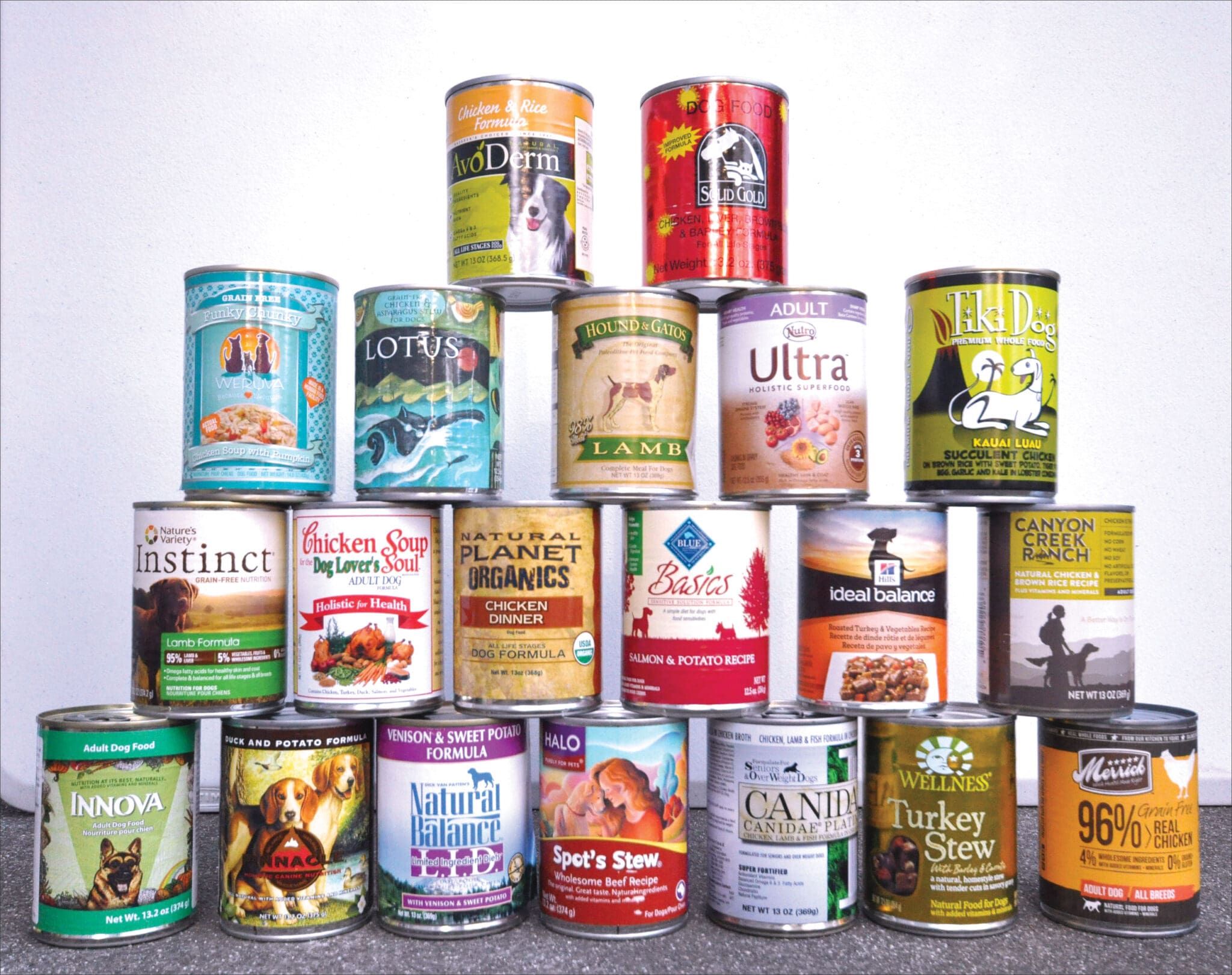
Benefits of canned food for dogs
Wet food can be a useful tool in many homes. It is not a cure-all, but it may solve practical feeding problems.
Canned food adds moisture
Water is the biggest benefit of wet food. Extra moisture may help dogs that do not drink much from a bowl. It can also support dogs with certain urinary or kidney concerns, although a veterinarian should guide diet changes for these conditions.
A dog’s total water needs vary with body size, activity, weather, diet, and health. Dogs that eat wet food still need fresh drinking water every day.
It may help picky eaters
Canned food often smells stronger than dry food. That smell can encourage a dog to eat when illness, stress, age, or medication has reduced appetite.
Still, a poor appetite can signal a health problem. If your dog refuses food for a day, vomits, seems weak, or shows other symptoms, contact your veterinarian rather than simply adding tastier food.
It is softer and easier to chew
Soft food may help dogs with missing teeth, painful gums, jaw problems, or mouth disease. It can also help puppies during some stages of teething and older dogs that struggle with hard kibble.
However, soft food does not replace dental care. Canned diets may leave more residue on teeth than some crunchy foods, and no ordinary food should be treated as a complete dental cleaning plan.
It can help control calories
Many wet foods contain fewer calories per gram because of their water content. This may allow a dog to enjoy a larger portion by volume.
The label still matters. Some canned foods are rich in fat and calories. Compare calories per can or per ounce, and measure portions instead of feeding by sight.

Canned food compared with dry food
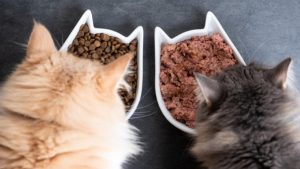
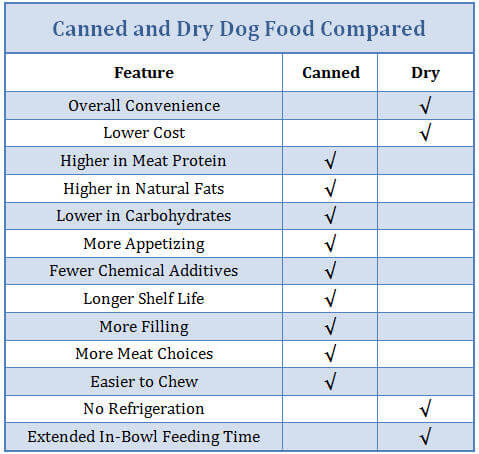
Do dogs need canned food instead of dry food? Neither type is best for every dog. Each has strengths and limits.
| Feature | Canned food | Dry food |
|---|---|---|
| Water content | High | Low |
| Storage | Must be refrigerated after opening | Easy to store |
| Cost | Often higher | Often lower |
| Texture | Soft and moist | Firm and crunchy |
| Calorie density | Often lower by volume | Often higher by volume |
| Feeding convenience | Less convenient after opening | Very convenient |
| Dental effect | Does not clean teeth by itself | Crunch does not replace dental care |
Dry food is easy to measure and store. It also works well in food puzzles and automatic feeders. For many healthy dogs, a complete and balanced kibble is a practical choice.
Canned food can be useful as a meal, a topper, or part of a mixed feeding plan. The best option is the one your dog eats well, tolerates, and receives in the correct amount.
Do dogs need canned food for dental health? No. Crunchy kibble does not reliably remove plaque from all tooth surfaces. Regular brushing, veterinary dental checks, and approved dental products are more dependable.
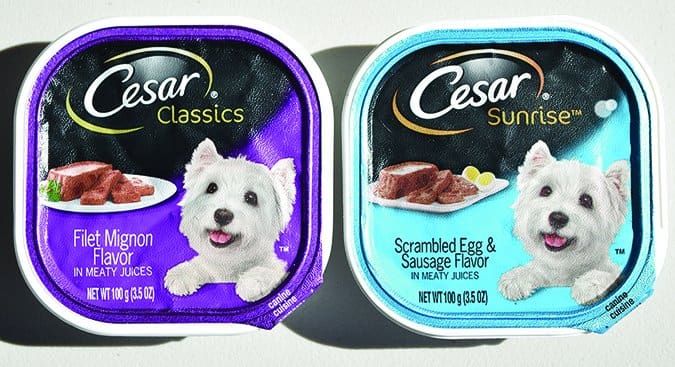
When canned food may be a good choice
Do dogs need canned food in some situations? Yes, certain dogs may benefit from it. The decision should match the dog’s needs, not just a marketing claim.
Canned food may help when:
• A dog has painful teeth or a sore mouth
• A senior dog struggles to chew
• A dog has a low appetite
• Extra water intake is useful
• A veterinarian recommends a therapeutic wet diet
• A dog needs a softer texture after dental treatment
• A puppy needs a food texture that is easy to manage
• A dog needs more meal volume while controlling calories
Dogs with kidney disease, urinary disease, diabetes, food allergies, pancreatitis, or other medical problems need extra care. A regular store-bought canned food may not provide the right nutrient balance for that condition.
For example, a dog with kidney disease may need controlled phosphorus and carefully managed protein. A dog with pancreatitis may need a lower-fat plan. Ask your veterinarian before using food as a treatment.
When canned food may not be the best option
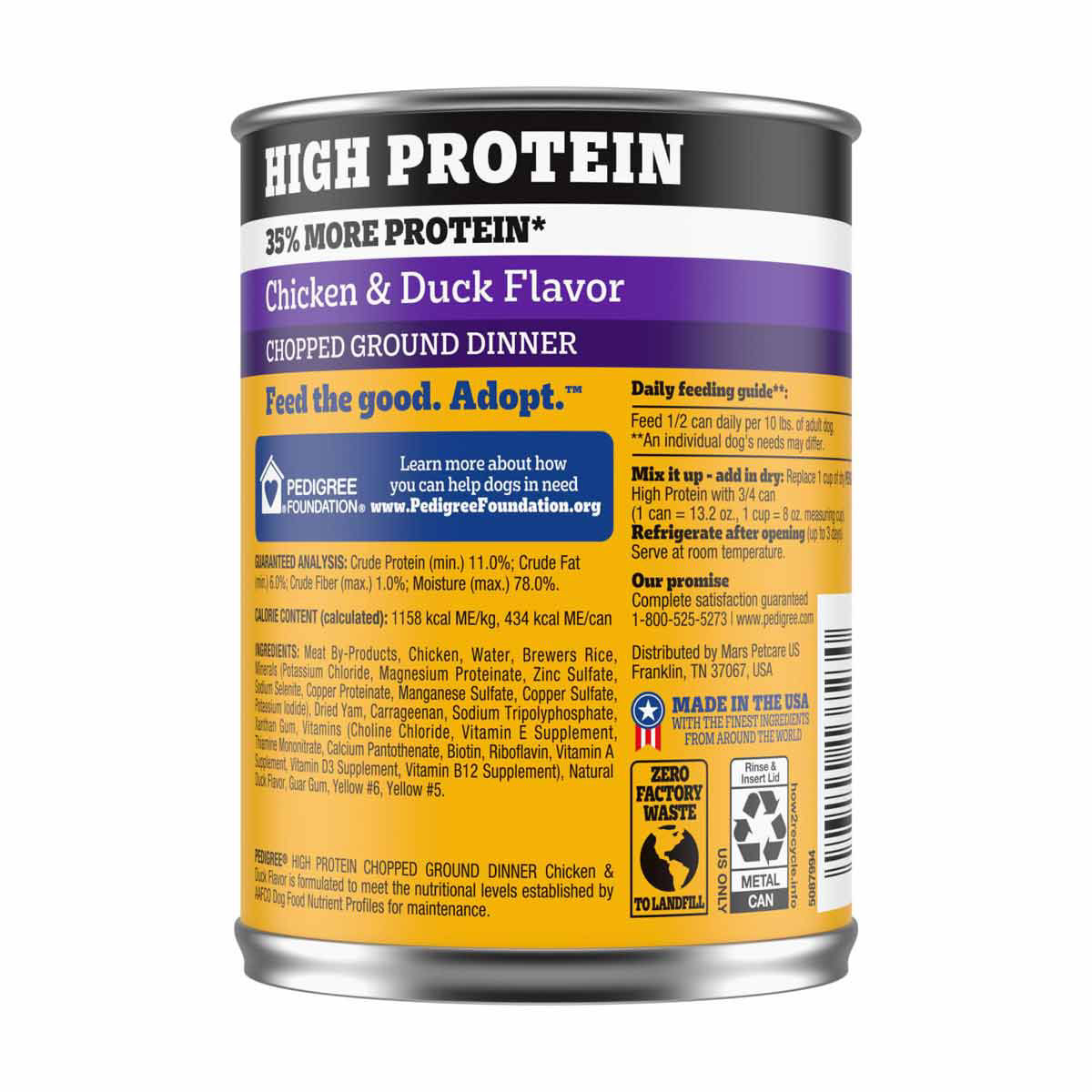
Canned food is not ideal for every household or dog. Some dogs gain weight quickly when owners add wet food on top of their usual meals without reducing kibble.
Other drawbacks include:
• Higher cost over time
• Short shelf life after opening
• Strong odor
• Messier bowls
• Greater risk of spoilage if left out
• Difficulty using it in some feeders or puzzle toys
Once opened, canned food should be covered and refrigerated. Follow the label’s storage advice, and discard food that has been left at room temperature for too long. A safe habit is to wash the bowl after each wet meal.
Do dogs need canned food if they have loose stools after eating it? No. Sudden diet changes can cause digestive upset. Introduce wet food slowly over several days, unless your veterinarian gives different advice.
How to choose a healthy canned dog food
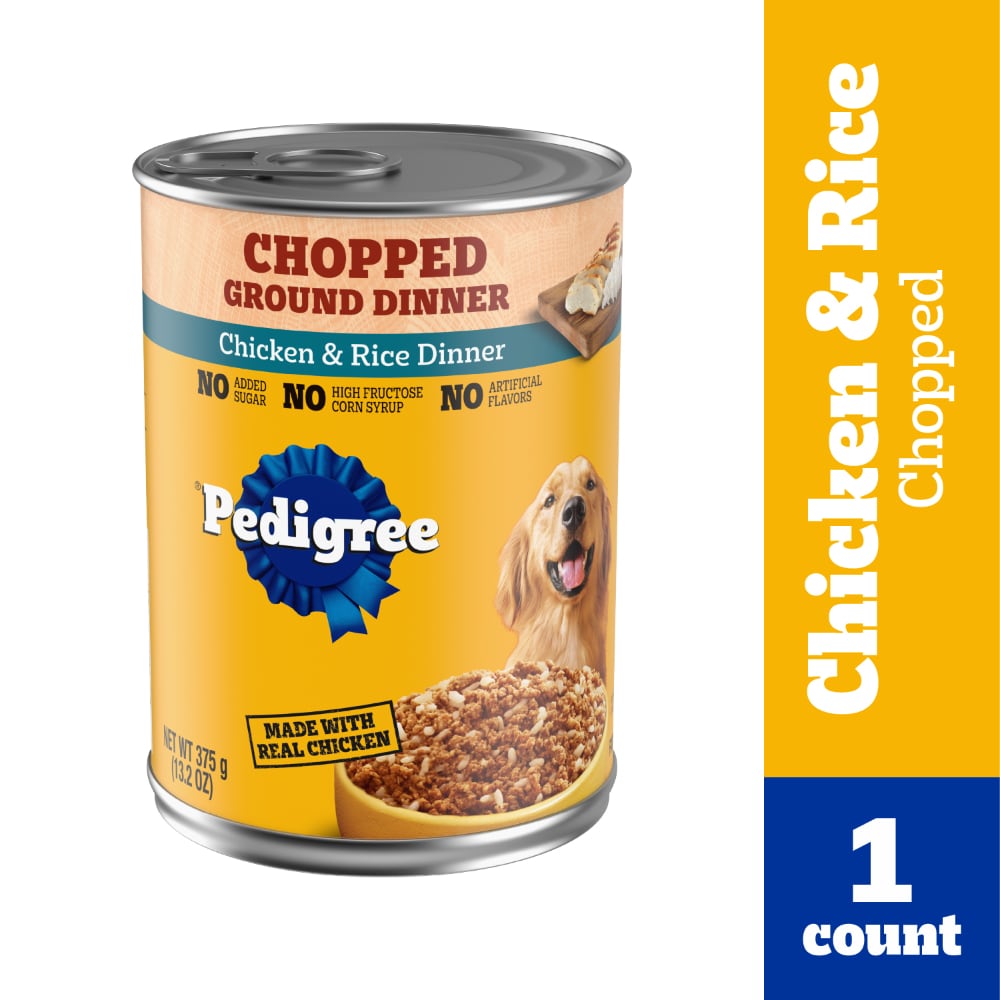
Choosing wet food can feel like reading a tiny science textbook. Focus on a few important details instead of getting distracted by front-label claims.
Check the nutrition statement
Choose a product labeled complete and balanced for your dog’s life stage. Puppies, adult dogs, pregnant dogs, and senior dogs may have different nutrition needs.
A food labeled for all life stages can be suitable, but it may not be the best match for every individual dog. Your veterinarian can help if your dog has a health condition or unusual needs.
Review calories
Wet food can look low in calories because water adds volume. Check the calories per can, tray, or ounce. Then adjust the total daily amount based on your dog’s weight and activity.
Treats, toppers, table scraps, and supplements all count. Ideally, extras should make up no more than about 10% of daily calories unless a veterinary professional gives other advice.
Look for quality control details
Choose food from a company that provides clear contact information and can explain its ingredient sourcing, testing, and quality controls. Transparent companies should be able to answer basic questions about formulation and safety.
Marketing words such as “natural,” “premium,” or “holistic” do not prove that a food is nutritionally superior. The nutritional adequacy statement and calorie information are more useful.
Match the texture to your dog
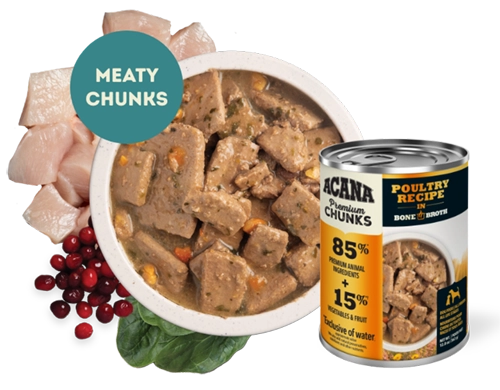
Some dogs prefer pâté. Others like chunks in gravy or minced food. If your dog has dental pain, a smooth pâté may be easier than chunky pieces.
If your dog has allergies, read the full ingredient list. A “limited ingredient” label does not guarantee that the food is safe for every allergic dog.
How to add canned food to your dog’s diet
A slow change is usually easier on the stomach. Use this simple plan:
Start with a small amount of canned food mixed into the current meal.
Keep the total daily calories about the same.
Increase the wet portion gradually over several days.
Watch stool quality, appetite, energy, and body weight.
Stop and call your veterinarian if your dog develops repeated vomiting, severe diarrhea, swelling, or weakness.
Do dogs need canned food mixed with kibble? No, but mixed feeding can be a useful middle ground. It gives a dog some extra moisture and flavor while keeping the convenience of dry food.
A common mistake is adding a full can as a “treat” while continuing the same amount of kibble. This can lead to weight gain. Replace part of the dry food instead, using the calorie information on both labels.
How much canned food should a dog eat?
There is no single correct amount for every dog. Feeding needs depend on body weight, age, activity, metabolism, reproductive status, and health.
Start with the feeding guide on the label, then adjust based on your dog’s body condition. You should be able to feel the ribs under a thin layer of fat, see a waist from above, and notice an abdominal tuck from the side.
Your veterinarian can score your dog’s body condition and help set a daily calorie target. This is more accurate than relying only on a general can-per-day chart.
For mixed feeding, calculate calories rather than matching cup sizes. One cup of kibble may contain far more calories than a similar volume of wet food.
Common mistakes to avoid
Do dogs need canned food because it seems more like a homemade meal? Not always. The appearance of food does not tell you whether it is complete, balanced, or appropriate for your dog.
Avoid these common mistakes:
• Choosing food based only on attractive packaging
• Feeding a topper without reducing the main meal
• Switching foods suddenly
• Leaving wet food out for many hours
• Ignoring repeated vomiting or poor appetite
• Assuming grain-free food is healthier without a medical reason
• Using supplements without veterinary advice
• Feeding a therapeutic diet without professional guidance
One practical lesson many dog owners learn is that consistency matters. A simple food plan that your dog tolerates is often better than changing diets every week in search of a “perfect” meal.
Frequently Asked Questions: Do dogs need canned food?
Do dogs need canned food every day?
No. Healthy dogs can meet their nutritional needs with complete and balanced dry food, wet food, or a combination of both. Canned food is an option, not a daily requirement.
Is canned food better than dry food for dogs?
Neither is automatically better. Canned food provides more moisture and a softer texture, while dry food is often easier to store, measure, and afford.
Can dogs eat only canned food?
Yes, if the canned food is complete and balanced for the dog’s life stage. Feed the correct calorie amount and monitor dental health, weight, stool, and appetite.
Does canned food help dogs drink more water?
It can increase water intake because wet food contains much more moisture than kibble. However, every dog should still have clean, fresh water available.
Can canned food cause diarrhea in dogs?
It can if the change is sudden, the food does not agree with the dog, or the food is spoiled. Introduce it slowly and contact a veterinarian if diarrhea is severe, persistent, or accompanied by other symptoms.
Is canned food good for senior dogs?
It may be helpful for seniors with poor teeth, low appetite, or trouble chewing. A senior dog with kidney, heart, or other disease may need a specific diet chosen with veterinary guidance.
How long can opened canned dog food sit out?
Follow the product label, but wet food should not sit out for long periods. Refrigerate leftovers in a covered container and discard food that smells spoiled or has been left out too long.
Conclusion
Do dogs need canned food? Most do not, as long as they eat a complete and balanced diet that fits their needs. Still, wet food can be valuable for extra moisture, better appetite, softer texture, or a veterinarian-guided treatment plan.
Choose food by nutrition, calories, quality control, and your dog’s health rather than by packaging alone. Make changes slowly, watch your dog’s weight and digestion, and ask your veterinarian for help when illness or special dietary needs are involved. Share your dog’s feeding experience or explore more evidence-based pet nutrition resources to make your next food choice with confidence.