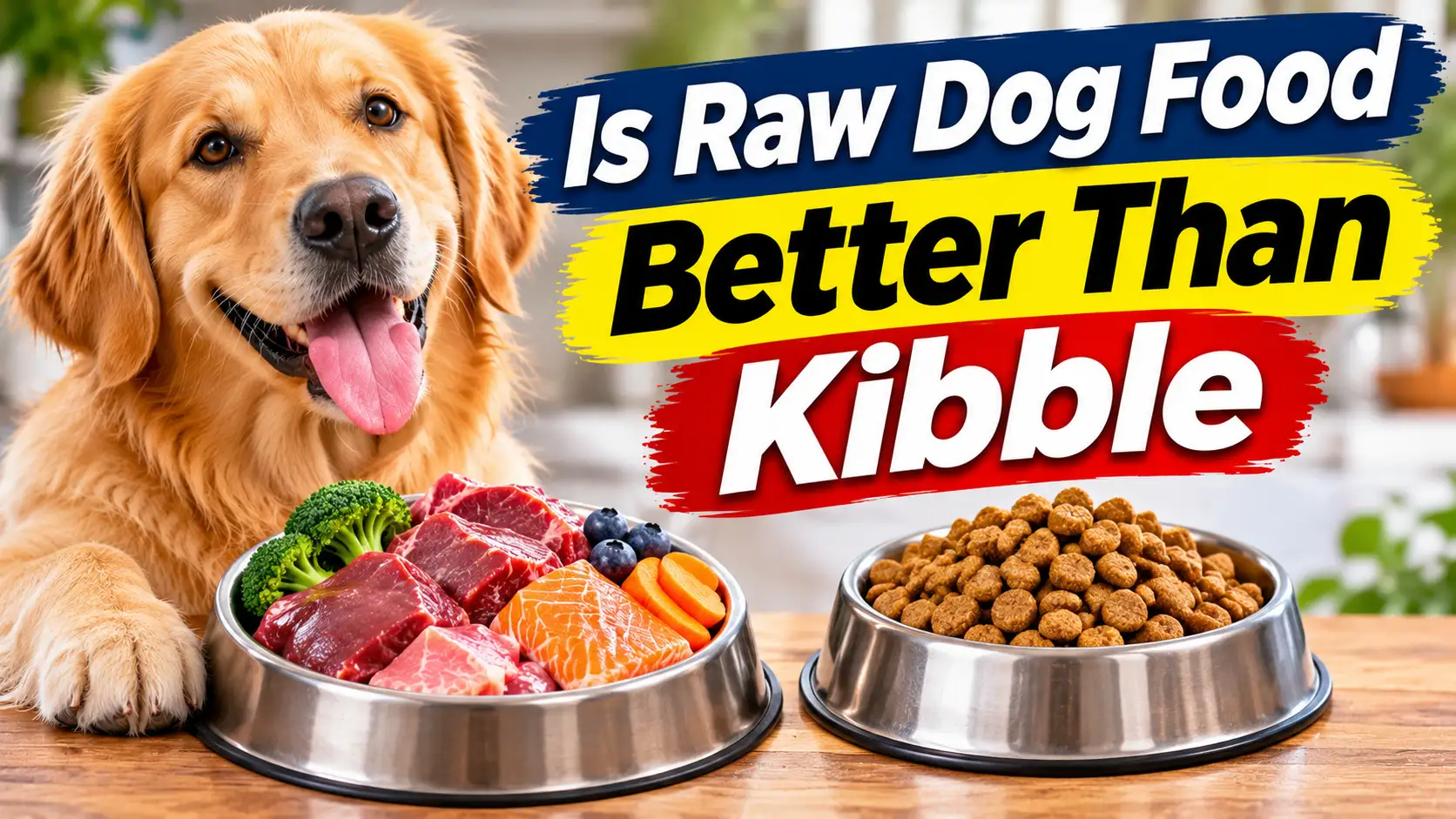
For most dogs in the United States, raw dog food is not proven to be better than a complete and balanced kibble. Raw diets may offer fresh ingredients and high moisture, but they also bring greater risks from harmful germs, bone injuries, and nutrient imbalance.
Kibble is usually safer, easier to store, and simpler to feed correctly. The best choice depends on your dog’s age, health, diet needs, and your ability to handle food safely. If you want to feed raw food, speak with a veterinarian or a board-certified veterinary nutritionist first.
Raw dog food and kibble: What is the difference?
Raw dog food contains uncooked meat, organs, bones, eggs, or other animal products. Some diets also include vegetables, fruit, supplements, or grains. Commercial raw food may be sold frozen, refrigerated, freeze-dried, or dehydrated.
Kibble is a dry, cooked dog food. Manufacturers mix ingredients, heat the food, shape it into pieces, and often add vitamins and minerals. Heat helps reduce many germs and makes the food stable on a shelf.
The main difference is not simply “natural” versus “processed.” It is a trade-off between:
- Moisture
- Food safety
- Nutrient balance
- Convenience
- Cost
- Digestibility
- Storage needs
- Your dog’s health
A raw food label may sound simple, but a simple ingredient list does not prove that the diet is complete. Dogs need the right amounts and ratios of protein, fat, vitamins, minerals, and calories. A diet made mostly from muscle meat, for example, can lack key nutrients.
What does “complete and balanced” mean?
In the United States, a dog food that says it is “complete and balanced” should meet a nutritional profile set by the Association of American Feed Control Officials, or AAFCO. The label should also state whether the food is meant for growth, maintenance, all life stages, or another use.
Look for:
- An AAFCO nutritional adequacy statement
- The correct life stage for your dog
- Feeding directions
- Calorie information
- Manufacturer contact details
- Clear storage instructions
An AAFCO statement does not mean that every food is ideal for every dog. It means the food is intended to meet a defined nutrient standard or has passed a feeding trial. Dogs with kidney disease, food allergies, pancreatitis, or other conditions may need a special plan.
Is raw dog food healthier than kibble?
Current evidence does not show that raw dog food is generally healthier than a properly made, complete, and balanced kibble.
Some raw diets have more moisture and may contain less starch than some dry foods. Those features can matter for certain dogs. Yet they do not prove that raw food improves lifespan, prevents disease, or provides better overall nutrition.
A review published in the Journal of the American Veterinary Medical Association found that claims about the health benefits of raw diets were not supported by strong clinical evidence. The authors also described concerns about bacterial contamination and nutrient problems.
The American Veterinary Medical Association advises caution with raw or undercooked animal-source foods. The U.S. Food and Drug Administration and the Centers for Disease Control and Prevention also warn that raw pet food can carry germs that may affect pets and people.
What raw food may offer
raw food can provide:
- More water than dry kibble
- A texture some dogs enjoy
- A useful option for dogs that refuse certain cooked foods
- Controlled ingredients when a veterinary nutritionist creates the recipe
- Less processing than extruded kibble
These points can be meaningful in a specific case. They are not proof that raw feeding is best for most dogs.
What kibble may offer
A good kibble can provide:
- Reliable nutrient levels
- Lower risk from live bacteria than raw food
- Easy portion control
- Long shelf life
- Lower cost per meal in many cases
- Simple feeding for pet sitters, kennels, and busy homes
- Diets designed for puppies, seniors, large breeds, or medical needs
Some dogs do better on wet food, a mix of wet and dry food, or a prescription diet. “Kibble” is not one single quality level. Ingredient quality, nutrient balance, manufacturing controls, calorie density, and your dog’s response all matter.
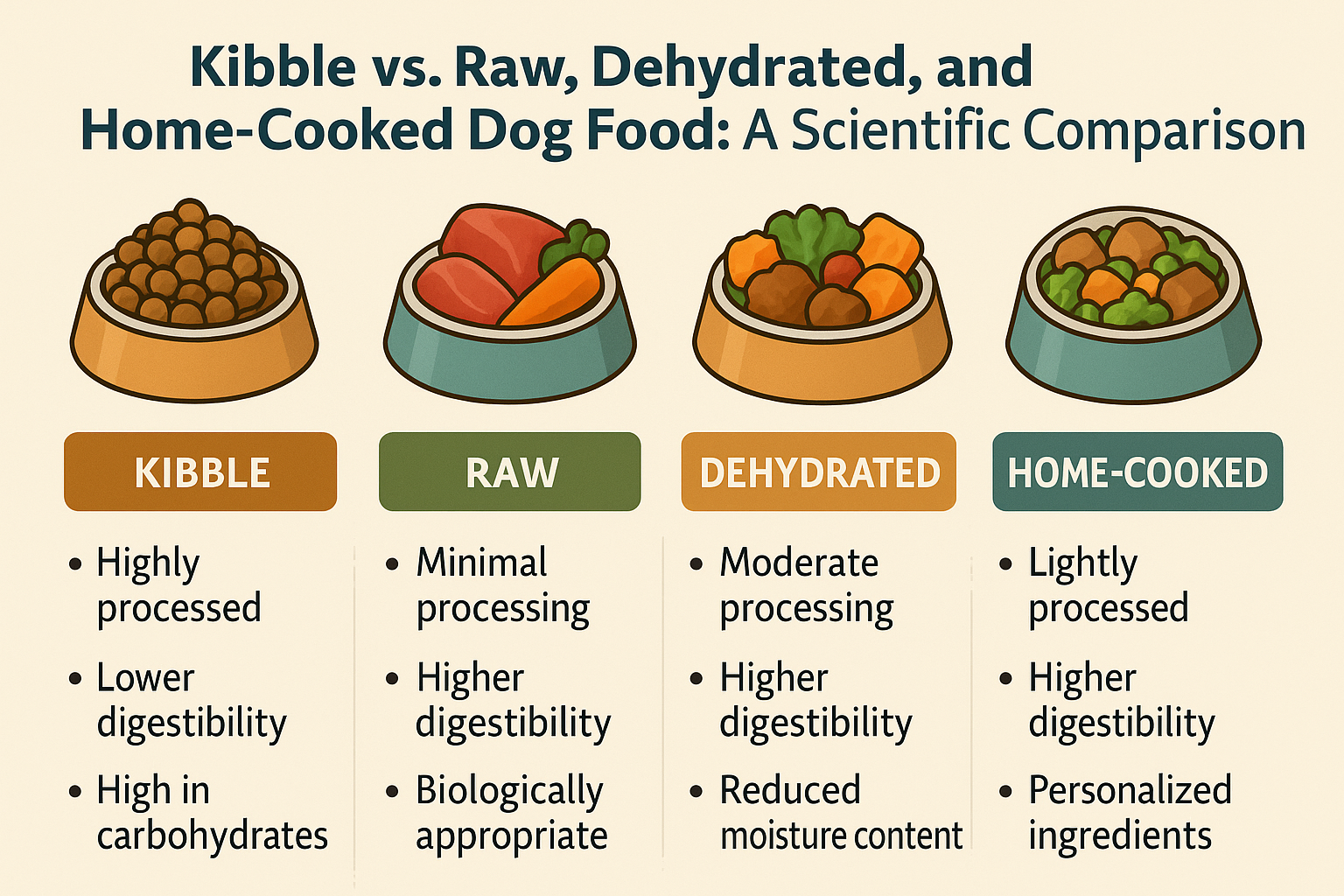
Raw dog food vs. kibble: A practical comparison
The table below compares common features. It describes typical differences, not a guarantee for every brand.
| Factor | Raw dog food | Kibble |
|---|---|---|
| Cooking | Uncooked or lightly processed | Cooked with heat |
| Moisture | Usually high | Usually low |
| Germ risk | Higher if contaminated | Lower after cooking, though not zero |
| Nutrient balance | Depends heavily on recipe and brand | Often easier to verify from the label |
| Storage | Freezer or refrigerator may be needed | Usually shelf-stable before opening |
| Handling | Requires careful hygiene | Easier to handle |
| Bones | May contain raw bones | Does not usually contain whole bones |
| Cost | Often higher | Ranges from low to high |
| Portion control | Can be harder | Usually simple |
| Medical diets | Must be planned carefully | Many veterinary options exist |
Is raw food easier to digest?
Raw food is not automatically easier to digest. Digestibility depends on the ingredients, fat level, fiber, cooking method, and the individual dog.
Cooking can make some nutrients easier to use. It can also improve the digestibility of starch. On the other hand, some dogs may tolerate a particular raw recipe better than a particular kibble. That response is individual and does not prove that raw food is better for dogs as a group.
Loose stool, vomiting, gas, or weight loss means the diet may not suit your dog. It may also point to parasites, infection, pancreatitis, inflammatory bowel disease, or another health problem.
Does raw food clean a dog’s teeth?
Raw bones are not a safe or proven replacement for dental care. Bones can fracture teeth, cause choking, injure the mouth, or create a blockage in the digestive tract.
The American Veterinary Dental College recommends regular dental care and veterinary dental checks. Brushing with pet-safe toothpaste is one of the most useful home steps. Some dental diets and chews also have evidence or veterinary acceptance for helping reduce plaque and tartar.
Do not use cooked bones. They can splinter more easily. Raw bones can also carry bacteria and still cause physical injuries.
What are the risks of feeding raw dog food?
The largest concern is foodborne illness. Raw meat can contain organisms such as Salmonella, Listeria monocytogenes, E. coli, and Campylobacter. A dog may show no signs while shedding germs in its stool or saliva.
The risk affects the whole household, not only the dog. People may come into contact with germs through:
- The food itself
- Bowls and utensils
- Counters and sinks
- Floors
- Feces
- Licking
- Hands that were not washed well
The FDA has also reported that some tested raw pet foods contained pathogenic bacteria. Freezing, freeze-drying, or dehydrating may reduce some organisms, but these methods should not be treated as a guarantee of safety.
Which households should avoid raw diets?
Raw feeding deserves extra caution when a home includes:
- Children under age 5
- Adults age 65 or older
- Pregnant people
- Anyone with a weakened immune system
- People receiving chemotherapy or other immune-suppressing treatment
- A dog with a serious illness
- Multiple pets that share bowls or living spaces
The CDC says people in these groups face a higher risk of serious illness from germs found in raw pet food. A veterinarian can help you weigh the risk, but household safety may favor a cooked diet.
Can raw food cause nutrient deficiencies?
Yes. Homemade raw diets can be too high or too low in nutrients. Common problems may involve calcium, phosphorus, vitamin D, vitamin A, iodine, copper, zinc, and essential fatty acids.
A diet with too much liver, for example, may provide excessive vitamin A. A diet with too much bone may cause constipation or an unhealthy mineral balance. A diet without enough calcium can be especially harmful to growing puppies.
Research in veterinary journals has found that many homemade dog food recipes do not meet all nutrient needs. A recipe from a social media post, pet store handout, or general website is not a substitute for a plan made by a qualified veterinary nutritionist.
Can raw food cause stomach or bone problems?
It can. High-fat raw diets may trigger digestive upset or pancreatitis in some dogs. Bone pieces may cause:
- Broken teeth
- Cuts in the mouth
- Choking
- Constipation
- Rectal injury
- Intestinal blockage
- Perforation of the digestive tract
Dogs with a history of pancreatitis, gastrointestinal disease, swallowing problems, or dental disease may face added risk.

Is commercial raw dog food safer than homemade raw food?
Commercial raw food may be more consistent than a homemade recipe, but it is not risk-free. A commercial product can still contain bacteria, have a calorie density that is easy to misjudge, or fail to meet the needs of a particular dog.
Before buying a commercial raw diet, check:
- The AAFCO statement. Confirm that the product is complete and balanced for your dog’s life stage.
- The feeding directions. Use the food’s calorie information, not only a cup estimate.
- The company’s quality controls. Ask how it tests ingredients and finished products.
- The recall history. Check FDA pet food recall notices and the company’s own updates.
- The storage rules. Confirm how long the product can stay frozen or refrigerated.
- The handling guidance. The label should explain safe thawing and cleaning.
- The use of supplements. Avoid adding supplements unless your veterinarian recommends them.
A “premium,” “natural,” or “human-grade” claim does not by itself prove better nutrition or safety. Marketing terms are not the same as clinical evidence.
What about freeze-dried raw food?
Freeze-dried raw food is still raw food. Removing water can make it lighter and easier to store, but it does not guarantee that all harmful germs are gone.
Some freeze-dried products are intended as complete meals. Others are toppers or treats only. Read the label closely. A product labeled for intermittent or supplemental feeding should not replace a complete diet unless a veterinarian has given you a specific plan.
How should you switch a dog to a new diet?
Change food slowly unless a veterinarian tells you to change it at once. A gradual change over about seven days may help reduce digestive upset:
- Days 1–2: Feed about 75% old food and 25% new food.
- Days 3–4: Feed about 50% old food and 50% new food.
- Days 5–6: Feed about 25% old food and 75% new food.
- Day 7: Feed the new food.
This schedule is only a starting point. Some dogs need a slower change. Puppies, dogs with medical conditions, and dogs with a history of severe stomach upset need individual advice.
Stop and call your veterinarian if your dog has repeated vomiting, bloody diarrhea, marked weakness, belly pain, dehydration, fever, or refuses food. Puppies and small dogs can become dehydrated quickly.
How do you handle raw dog food safely?
If you choose raw food, treat it like raw meat for human meals.
- Wash your hands with soap after handling the food.
- Keep raw pet food away from food for people.
- Use separate utensils and bowls when possible.
- Thaw food in the refrigerator, not on the counter.
- Clean and disinfect surfaces after preparation.
- Wash bowls after every meal.
- Do not let your dog lick faces after eating.
- Dispose of leftovers promptly.
- Keep children away from the preparation area.
- Follow the package time limits for refrigerated food.
- Wash your hands after touching your dog’s mouth, food bowl, or stool.
Do not rinse raw meat in the sink. Splashing can spread germs to nearby surfaces.
If your dog eats raw food and develops vomiting, diarrhea, fever, poor appetite, or unusual tiredness, contact a veterinarian. Tell the clinic what the dog ate and when.

When might kibble be the better choice?
Kibble is often the safer and more practical option when:
- Your household includes a high-risk person
- You need a diet with known nutrient levels
- Your dog is a puppy or pregnant
- Your dog has a medical condition
- Your dog has a history of pancreatitis
- You need a prescription diet
- You travel often
- You rely on a pet sitter or boarding facility
- You cannot store raw food safely
- You want lower daily handling risk
That does not mean every kibble is suitable. Choose a food that is complete and balanced for your dog’s life stage. If possible, select a company with qualified nutrition staff, clear quality-control information, and a way to answer consumer questions.
For a dog that needs more water, you can ask your veterinarian about canned food, adding water to kibble, or using a mixed feeding plan. These options may offer moisture without the bacterial risks of raw meat.
How do raw food and kibble affect cost?
Raw diets often cost more than basic kibble, but the exact cost depends on the dog’s size, calorie needs, recipe, and brand.
A simple way to compare diets is:
Daily food cost = daily calories needed ÷ calories per package unit × price per package unit
Hypothetical example
Suppose a dog needs 800 calories per day.
- Food A provides 400 calories per cup and costs $60 for a 30-cup bag.
- Food B provides 800 calories per package portion and costs $8 per portion.
Food A costs:
- 2 cups per day
- $2 per day
- About $60 per month
Food B costs:
- 1 portion per day
- $8 per day
- About $240 per month
This example is not a product recommendation. It shows why calorie density matters more than the price printed on the front of the package. Also include costs for storage, supplements, veterinary nutrition advice, dental care, and possible treatment if a diet causes illness.
How should you decide between raw food and kibble?
Start with your dog’s health, not a food trend.
Choose a complete commercial diet when:
- You want predictable nutrition.
- You need simple storage.
- You want to reduce foodborne risk.
- Your dog needs a veterinary or life-stage diet.
- Your household includes someone at higher risk from infection.
Consider a raw diet only after professional advice when:
- You understand the food safety risks.
- Everyone in the home can follow strict handling rules.
- The diet is complete and balanced.
- Your dog has no clear medical reason to avoid it.
- You have a plan for storage, travel, boarding, and emergencies.
A veterinary nutritionist can review a homemade recipe and calculate nutrients. Your regular veterinarian can screen for health issues, check body weight, and monitor the dog after a diet change.
The best diet is the one your dog can eat safely, digest well, and maintain a healthy body condition on. A shiny coat or excited appetite alone cannot show that a diet is nutritionally complete.

Key takeaways
- Raw dog food is not proven to be healthier than complete and balanced kibble.
- Raw food has a higher risk of bacterial contamination.
- Homemade raw diets can lack or contain too much of key nutrients.
- Bones can break teeth, cause choking, or block the gut.
- Freeze-dried raw food still needs careful handling.
- Puppies, pregnant dogs, sick dogs, and high-risk households need extra caution.
- Check the AAFCO statement and life-stage claim before choosing any food.
- Ask a veterinarian or veterinary nutritionist before feeding a homemade raw diet.
Frequently asked questions
Can dogs live on kibble alone?
Yes. A complete and balanced kibble can meet a dog’s nutritional needs when fed in the right amount. Some dogs may benefit from wet food or a special diet, but kibble alone is not automatically inadequate.
Do veterinarians recommend raw diets?
Veterinarians do not all give the same advice, but major veterinary and public health groups warn about the risks of raw or undercooked animal-source foods. Your veterinarian may recommend against raw food if your dog or household has specific risk factors.
Is raw food better for dogs with allergies?
Not automatically. A raw diet can still contain the protein that triggers an allergy. An elimination diet should use a controlled recipe and veterinary guidance. Randomly switching to raw food can make diagnosis harder.
Can I mix raw food with kibble?
Mixing them does not remove the risks of raw food. Both foods must fit within your dog’s daily calorie needs, and the raw portion still requires careful storage and handling.
What is the safest alternative to raw dog food?
A complete and balanced cooked diet is usually the simplest alternative. Options include quality kibble, canned food, or a home-cooked plan made by a veterinary nutritionist. Your dog’s health and calorie needs should guide the choice.
Conclusion
Raw dog food is not a universal upgrade over kibble. It may suit some dogs and owners, but its possible benefits are less certain than its food safety and nutrition risks.
For many American households, a complete and balanced kibble or cooked diet offers the best mix of safety, convenience, and reliable nutrition. If you still want to feed raw, involve your veterinarian, verify the diet’s nutritional adequacy, and use strict food-handling practices from the first meal.