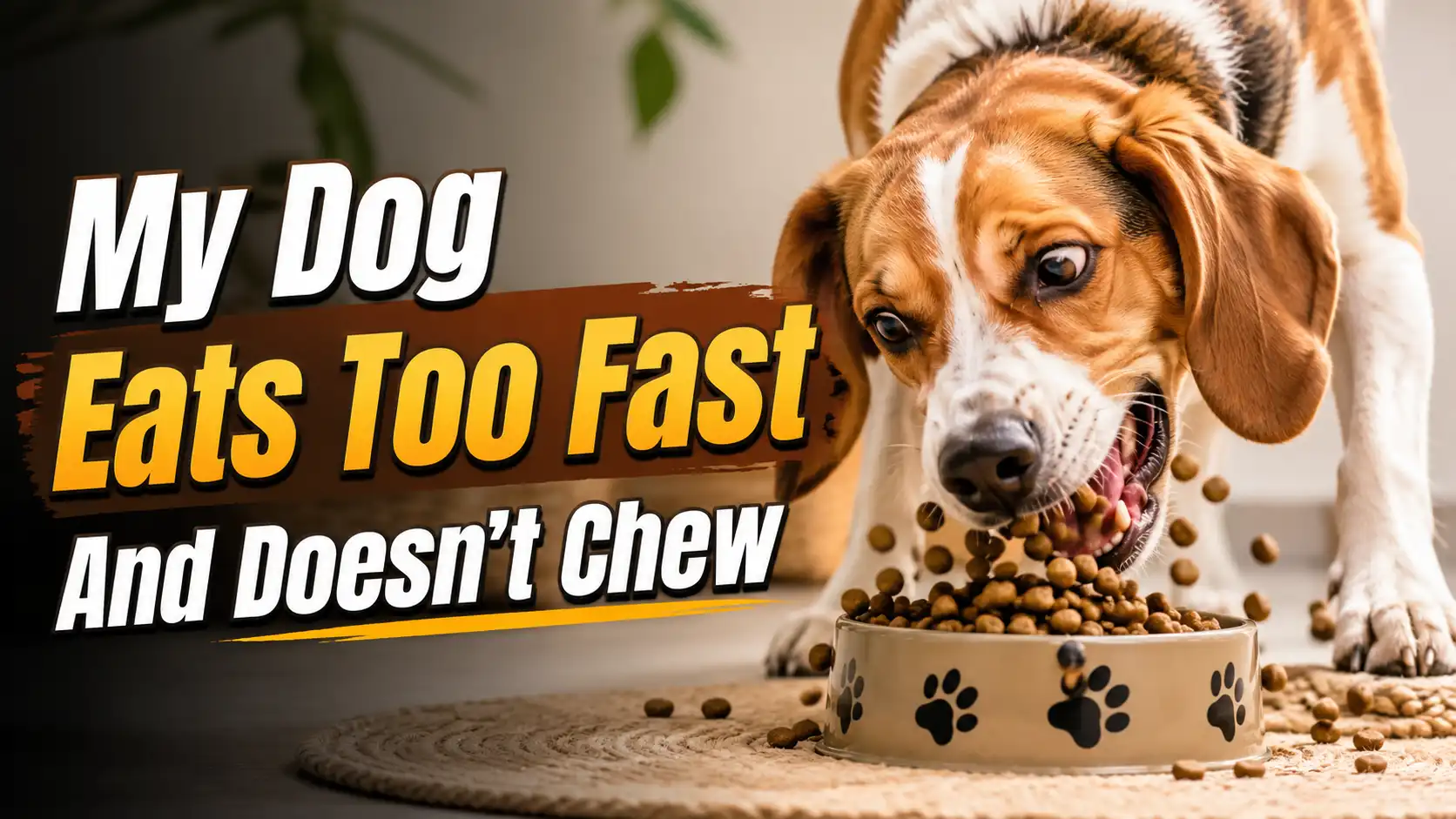
Dogs that eat too fast often swallow air, skip chewing, and raise their risk of choking and bloat.
If your dog eats too fast and doesn’t chew, you are not alone. I’ve seen this pattern many times with playful dogs, anxious dogs, and even food-motivated “vacuum cleaners” who act like every meal is a race. The good news is that this habit is common, fixable, and worth addressing early, because fast eating can affect comfort, digestion, and safety.

Why dogs eat too fast and don’t chew
A dog that eats too fast and doesn’t chew is usually responding to instinct, habit, or stress. In the wild, dogs did not always know when the next meal was coming, so gulping food quickly could be a survival move. That old instinct still shows up in many pets today, especially in multi-dog homes or in dogs that feel worried about losing food.
Some dogs also eat fast because the food is extra tasty, the meal schedule is irregular, or they learned that speed gets them more. In my experience, dogs often mirror the energy around them, so a rushed feeding routine can make the whole habit worse. When a dog eats too fast and doesn’t chew, the issue is usually behavioral first, but it can also point to hunger, anxiety, or an underlying health concern.
Is it dangerous when a dog eats too fast and doesn’t chew
Yes, it can be. The biggest concern is choking, especially in dogs that swallow large bites without breaking them down. Fast eating also increases the chance of swallowing air, which can lead to bloating, burping, discomfort, and in some cases more serious stomach problems.
One of the most serious risks is gastric dilatation-volvulus, often called bloat. This is a medical emergency that can happen when the stomach fills with gas and twists, and large, deep-chested breeds are at higher risk. Not every fast eater will develop bloat, but if your dog eats too fast and doesn’t chew, it is smart to take the habit seriously and make changes now.
Common reasons your dog eats too fast
There are several reasons a dog may eat too fast and not chew. Knowing the cause makes it much easier to fix the habit.
Hunger or long gaps between meals
If meals are too far apart, some dogs act like the bowl is their last chance to eat. They gulp because they are overly hungry and want the food gone quickly. This is common in dogs with high activity levels, growth spurts, or inconsistent feeding times.
Competition with other pets
Dogs in multi-pet homes often eat fast because they feel pressure to finish before another animal gets near the bowl. Even if the other pet is calm, the dog may still feel like the food is at risk. I have seen relaxed dogs turn into speed eaters the second another pet enters the room.
Learned habit
Some dogs simply learn that eating fast is normal. If they have always eaten that way, the habit can become automatic. Like any routine, the faster it is practiced, the harder it feels to change.
Anxiety or excitement
A dog that eats too fast and doesn’t chew may be overstimulated at meal time. Excitement, stress, or nervousness can all push a dog into a rushed eating pattern. This is especially common in sensitive dogs or dogs with noisy, busy homes.
Medical issues
Sometimes fast eating is linked to a medical problem, such as parasites, poor nutrient absorption, or other causes of increased appetite. If the behavior starts suddenly, or if your dog seems constantly hungry, a veterinary checkup is a good idea. A sudden change in eating speed deserves attention.
What happens when a dog does not chew food
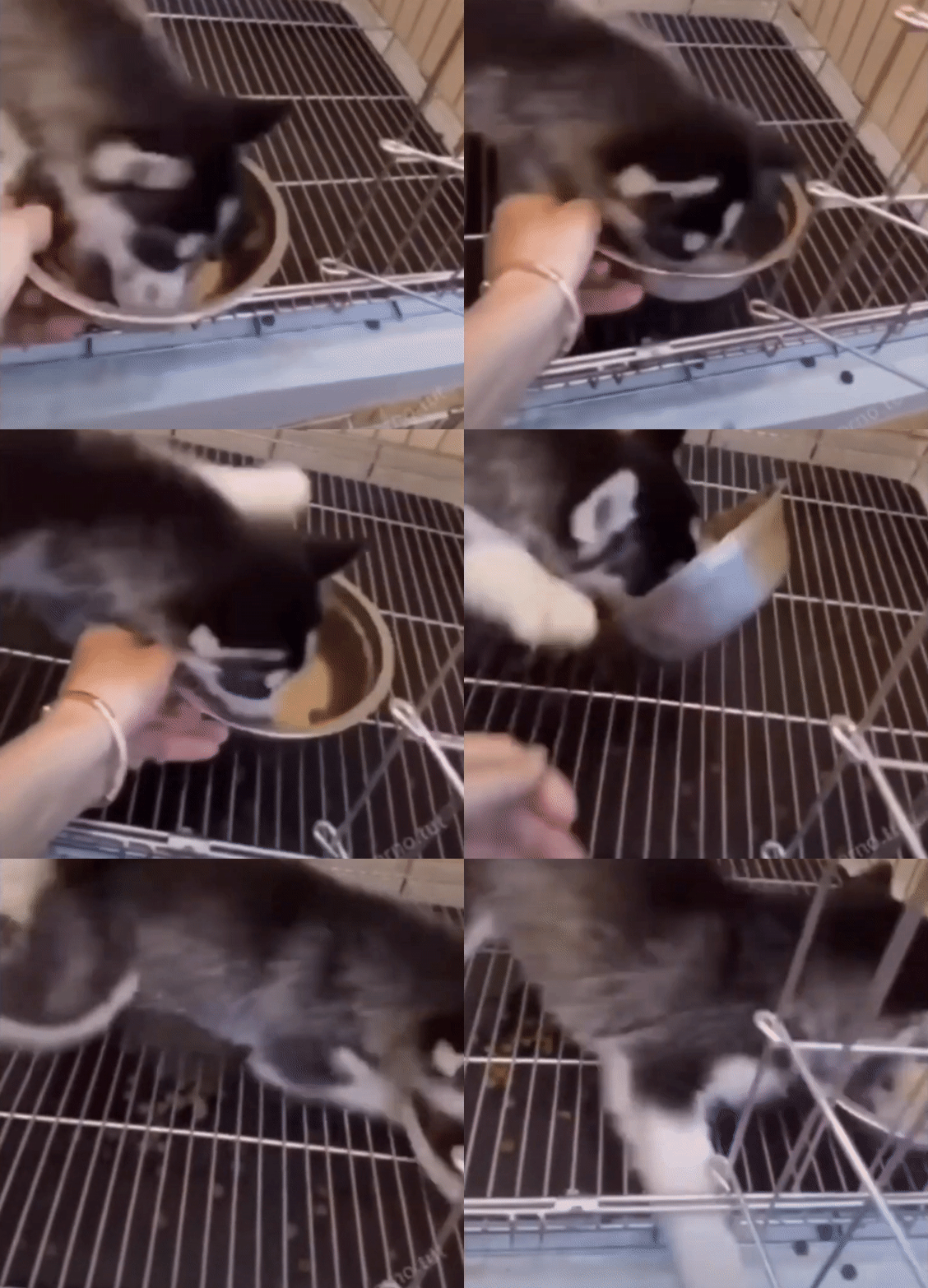
Dogs do not chew the same way humans do, but they still need to break food down enough to swallow safely. When a dog eats too fast and doesn’t chew, large pieces can go down the throat and into the stomach with little preparation. That can make digestion less efficient and increase the chance of vomiting or regurgitation.
In real life, this often looks like gulping, coughing, lip licking, or a quick “scatter and swallow” pattern around the bowl. Some dogs finish a meal in seconds and then pace, burp, or seem restless afterward. Those small signs are clues that the meal was not as easy on the body as it looked.
How to slow down a dog that eats too fast and doesn’t chew
The goal is not to punish the dog. The goal is to make eating slower, safer, and calmer. The best fix often combines feeding tools, routine changes, and simple training.
Use a slow feeder bowl
Slow feeder bowls are one of the easiest and most effective tools. They have ridges or maze-like shapes that make the dog work a little harder for each bite. This can slow the meal down without making it frustrating.
Try a puzzle feeder
Puzzle feeders turn mealtime into a mental game. They help dogs eat slower while also giving the brain something to do. This can be especially helpful for bored dogs or dogs that eat too fast because they are overly excited.
Split meals into smaller portions
Instead of one large bowl, offer two or three smaller meals. Smaller portions can reduce panic eating and help the dog feel less overwhelmed. This also works well for dogs that gulp food because they are very hungry.
Feed in a calm space
A quiet spot can make a big difference. If your dog eats too fast and doesn’t chew, remove distractions like other pets, loud kids, or constant foot traffic. Calm surroundings often lead to calmer chewing and less gulping.
Use hand feeding for training
Hand feeding part of the meal can slow a dog down and build focus. It also helps teach impulse control, which can carry over into other parts of life. I have used this with nervous dogs, and the change in pace is often immediate.
Add water or use wet food when appropriate
Some dogs do better with a moister meal. Adding a little water or offering wet food can make swallowing easier and may reduce the urge to gulp dry kibble. Just make sure the food stays safe and fresh if you choose this method.
Train a “wait” or “leave it” cue
Simple impulse-control training can help around food. A short pause before the bowl goes down teaches patience and reduces frantic energy. This is not a magic fix, but it supports better meal habits over time.
Best feeding tools for fast eaters
The right tools can make a big difference when a dog eats too fast and doesn’t chew. Not every tool works for every dog, so it helps to test a few options.
Slow feeder bowls
These are best for dogs who inhale kibble. Choose one that matches your dog’s face shape and size. If the bowl is too hard, too deep, or too small, it can frustrate the dog instead of helping.
Snuffle mats
Snuffle mats encourage dogs to use their nose to find food. This can slow eating and add enrichment at the same time. They work well for many dogs, but supervision is important so the dog does not chew the mat.
Puzzle toys
Puzzle toys are great for dogs that need both mental and physical engagement. They are especially useful for dogs that eat too fast because they are bored. Start easy and increase the challenge slowly.
Elevated feeders
These are often discussed online, but they are not automatically better for every dog. In some dogs, elevated feeders may feel comfortable, while in others they may not change speed at all. If you are unsure, ask your veterinarian what is best for your dog’s breed and body type.
When to call the vet
A dog that eats too fast and doesn’t chew does not always need medical care, but some signs should not be ignored. If the behavior is new, extreme, or paired with other symptoms, talk to your vet. I always advise owners to trust their gut when something feels off.
Watch for these warning signs:
• Vomiting or frequent regurgitation
• Weight loss despite a big appetite
• Diarrhea or very soft stool
• Coughing or gagging during meals
• Bloating, a tight belly, or restlessness after eating
• Sudden increase in hunger or eating speed
• Signs of pain, lethargy, or behavior change
If your dog eats too fast and doesn’t chew and then shows a swollen abdomen, repeated unproductive retching, or sudden distress, seek emergency care right away. Those signs can point to bloat, and that is not something to wait on.
A simple feeding plan that can help
If you want a practical starting point, keep it simple and consistent. Dogs often do best when the routine is predictable and calm. Here is a plan many owners can try at home.
- Feed at the same times each day.
- Use a slow feeder or puzzle bowl.
- Feed in a quiet spot away from other pets.
- Split the food into smaller portions if needed.
- Watch your dog for coughing, gulping, or burping after meals.
- Adjust the bowl, the portions, or the schedule based on what you see.
When I have helped people build a better feeding routine, the biggest wins usually came from consistency, not fancy gear. A simple routine often beats a complicated one.
What not to do
It is easy to accidentally make the problem worse. If your dog eats too fast and doesn’t chew, avoid these common mistakes.
• Do not let the dog eat from a huge pile of food all at once
• Do not feed in a stressful or noisy area if you can avoid it
• Do not assume fast eating is always harmless
• Do not use tools that frustrate the dog so much they stop eating
• Do not ignore sudden changes in appetite or swallowing behavior
The right fix should slow the meal without turning dinner into a battle. Think of it like adding bumps in the road, not building a wall.
Frequently Asked Questions of My Dog Eats Too Fast and Doesn't Chew
Why does my dog eat too fast and not chew?
Many dogs eat too fast because of instinct, excitement, hunger, or competition. It is often a learned habit, but sometimes it can also point to stress or a medical issue.
Can eating too fast make my dog throw up?
Yes, it can. Dogs that gulp food may swallow too much air or take in large bites that upset the stomach, which can lead to vomiting or regurgitation.
Are slow feeder bowls safe for all dogs?
Most dogs can use them safely, but the bowl should match your dog’s size and eating style. If a dog becomes frustrated, stressed, or unable to eat comfortably, try a different option.
Should I change my dog’s food if he eats too fast?
Changing the food is not always necessary. In many cases, the problem is the eating style, not the food itself, so feeding tools and routine changes are usually the first step.
When should I worry about my dog eating too fast?
Worry if the behavior is sudden, severe, or paired with symptoms like vomiting, bloating, coughing, or weight loss. Those signs can suggest a bigger issue and should be checked by a vet.
Conclusion
If your dog eats too fast and doesn’t chew, the problem is common, but it should not be ignored. Fast eating can raise the risk of choking, stomach upset, and other digestive problems, yet it is often manageable with the right feeding setup and a calmer routine.
The best results usually come from small, steady changes like slow feeders, puzzle toys, smaller meals, and a quiet feeding space. Start with one or two fixes, watch how your dog responds, and make adjustments as needed. If you notice warning signs or sudden changes, reach out to your vet so you can protect your dog’s health and peace of mind.
If this guide helped you, try one feeding change today and see what improves.